Sugar taxes · October 25, 2026
Thailand's sugary drinks tax trims about 14 calories a day from the average man's intake. Over 25 years, a new model says, that adds up to 376,297 fewer cases of type 2 diabetes. But the biggest gains in the model come from something else: drink makers cutting the sugar
Researchers at Mahidol and Griffith universities ran Thailand's stepped excise tax on sweet drinks through a population model. The tax raises far more in revenue than it saves hospitals, and the health gains depend heavily on assumptions. If companies took out a quarter of the sugar, the projected gain would be over five times larger.
In September 2017 Thailand began taxing sugar-sweetened drinks under its Excise Act. The tax is charged per litre, at rates set by drink type, and was designed to rise every two years in four phases, the last from 2025 onwards. Carbonated drinks, energy drinks and ready-to-drink tea and coffee were all included in the analysis. A team from Mahidol University in Thailand and Griffith University in Australia has now estimated what the full tax could do for the country's health over the long run. Their modelling study was published in BMJ Global Health on 14 October.
The starting point is worrying. Using Asian cut-offs, where a body mass index of 25 already counts as obesity, the share of Thais aged 15 and over with obesity rose from 37.5% in 2014 to 42.2% in 2019, and was higher in women (46.4%) than men (37.8%). The researchers took how much of each drink Thais drank in a 2018 to 2019 national survey, how much prices rise with the tax, and how strongly people buy less when prices rise. There is no Thai figure for that last step, so they borrowed one from a review of low- and middle-income countries: every 1% rise in price cuts purchases by about 1.2%.
Once the fourth phase is in force, the model has men taking in 59.8 kJ a day less and women 48.1 kJ less, roughly 14 and 11 kilocalories, a little under a teaspoon of sugar. That shaves 0.38 off average BMI in men and 0.33 in women. Small shifts across a whole country add up. Over the first 25 years, the model projects 376,297 fewer new cases of type 2 diabetes, about 87,000 fewer cases of heart disease and stroke combined, and about 10,700 fewer cancers. Stroke deaths fall the most, by 12,641. Over the lifetime of everyone alive in 2019, that comes to almost 2 million healthy life years gained, spread fairly evenly across income groups.
The money is lopsided. Hospital savings come to about US$71 million, but that counts only in-patient costs in the scheme that covers about 70% of Thais, so the authors call it conservative. Tax revenue over 25 years is put at US$23.8 billion, about 0.21% of the country's economy. The most striking line is in the sensitivity table: if manufacturers cut the sugar in their drinks by a quarter, the kind of change the authors point to after the UK's soft drinks levy, the gain jumps to 10.9 million healthy life years, and to 18.5 million with half the sugar removed.
This is a projection, not a measurement: no one has counted diabetes cases avoided in Thailand. The price sensitivity is borrowed from other countries. The model assumes shops pass on the whole tax; at 60% pass-through the gains shrink by about a third. It also assumes people do not replace the lost calories with other drinks or food; if half were replaced, the gain nearly halves, and switching to snacks was not modelled at all. Fruit juice and milk drinks were left out, and calories are turned into weight with a simple static formula. The study was funded by the Thai Health Promotion Foundation, which the authors say had no role in the design or analysis, and they declare no competing interests. We read the full open-access paper.
Modelled effects of Thailand's sugar-sweetened beverage excise tax, first 25 years and lifetime (BMJ Global Health, 14 October 2026)
−59.8 / −48.1 kJ
Daily energy from sugary drinks, men / women, once the tax's fourth phase is in force (about 14 and 11 kcal)
376,297
New cases of type 2 diabetes avoided over 25 years (177,735 in men, 198,562 in women)
12,641
Stroke deaths avoided over 25 years, the largest drop in deaths of any disease modelled
1.95 million
Healthy life years gained over the lifetime of Thailand's 2019 population
US$71m vs US$23.8bn
Hospital in-patient costs saved vs tax raised over 25 years
10.9 million
Healthy life years gained if drink makers also cut sugar by 25%, over five times the base case
Source: Ngam-a-roon W, Hunchangsith P, Veerman L, Aminde LN, Aekplakorn W, 'Estimating the potential health impact of taxing sugar-sweetened drinks in Thailand: a modelling study', BMJ Global Health 2026;11:e021625, published 14 October 2026, doi 10.1136/bmjgh-2025-021625, open access (CC BY-NC 4.0). Proportional multistate life table (Excel with Ersatz 1.3), base year 2019, 2,000 Monte Carlo runs, 3% discounting; inputs from GBD 2019, the Thai SSB consumption survey 2018-19, Euromonitor sales 2016-25, NHES V (2014) BMI and NCD-RisC trends; own-price elasticity -1.20 (95% CI -1.06 to -1.34) from a review of low- and middle-income countries; 100% tax pass-through and no substitution in the base case. Incidence avoided over 25 years: T2DM 177,735 men + 198,562 women; IHD 21,703 + 13,882; stroke 28,464 + 23,096; cancer 6,409 + 4,274. Deaths avoided: T2DM 4,819 + 5,980; IHD 5,065 + 3,086; stroke 8,240 + 4,401; cancer 5,164 + 2,307. HALYs: 1,949,064 (95% UI 1,626,359 to 2,314,292); healthcare savings US$71,033,799 (45.4m to 97.9m), in-patient costs in the Universal Coverage Scheme only; revenue US$23.8bn (22.8bn to 24.9bn), 0.21% of GDP. Sensitivity (HALYs): 80% pass-through 1,635,295; 60% pass-through 1,272,289; 20% caloric substitution 1,599,160; 50% substitution 1,044,373; 25% reformulation 10,940,035; 50% reformulation 18,519,919. The heart disease and stroke figure (87,145) adds the IHD and stroke incidence rows; kcal conversions (kJ / 4.184) and the teaspoon comparison (about 4 g of sugar, 16 kcal) are ours. Funding: Thai Health Promotion Foundation (64-00234).
- More than 100 countries now tax sugar-sweetened drinks, according to a 2023 review in JAMA Network Open cited by the authors.
- The World Health Organization advises keeping free sugars below 10% of daily energy, and says going below 5% brings further benefits.
- An earlier Thai cohort study found that after the tax began, people cut back on taxed sugary drinks more than on untaxed ones, carbonated drinks most of all, with the biggest drops among men, older people, low earners and the unemployed.
- In Mexico, purchases of taxed drinks fell by about 6% in the first year of a 10% tax on sugary drinks, with the largest falls in low-income households.
- Estimating the potential health impact of taxing sugar-sweetened drinks in Thailand: a modelling studyBMJ Global Health · The study, open access, published 14 October 2026, with the full tables and sensitivity analyses
- Changes in Population-Level Consumption of Taxed and Non-Taxed Sugar-Sweetened Beverages (SSB) after Implementation of SSB Excise Tax in Thailand: A Prospective Cohort StudyNutrients · Earlier Thai study of what people drank after the tax began (2020)
- Beverage purchases from stores in Mexico under the excise tax on sugar sweetened beverages: observational studyThe BMJ · Mexico's first-year purchase data (2016)
- Guideline: sugars intake for adults and childrenWorld Health Organization · The 10% and 5% free sugar advice (2015)
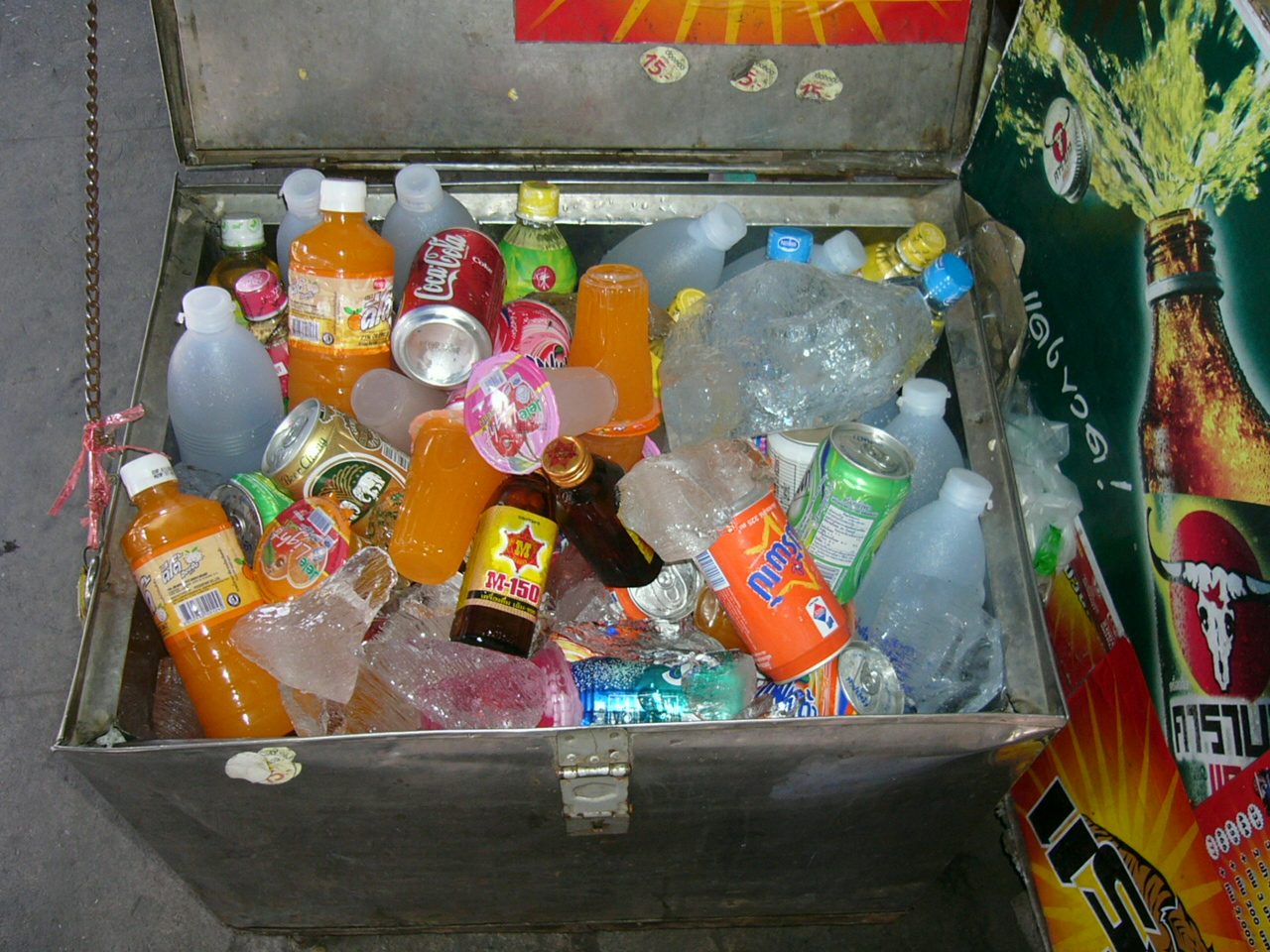
- Thai bevarages in iceWikimedia Commons · The photo, public domain
General information, not medical advice. These figures come from a computer model built on many assumptions, not from counting people who avoided disease. If you are worried about your weight, blood sugar or diabetes risk, talk to your doctor.
Analysis by NutroPractic from the sources listed. Written for general readers; it does not replace advice from your own doctor.
From our articles
Our guides on this subject
Plain-language guides on nutrition and wellness, backed by research.
Nutrition science
Sweeteners after the WHO advice: aspartame, stevia, erythritol and what the 2023 decisions meant
In 2023 the WHO advised against using sweeteners to control weight, and its cancer agency called aspartame 'possibly carcinogenic' a few weeks later. Neither means your diet drink is dangerous, and neither means it helps. What the reviews found, how much is allowed, why erythritol is the one to watch, and what to do if you have diabetes or simply want less sugar.
18 Oct 2026

Cardiovascular wellness
Psyllium husk: how much soluble fibre lowers LDL cholesterol and stabilizes post-meal glucose in clinical trials
Viscous soluble fibre forms a thick gel matrix in the small intestine that binds bile acids and blunts post-meal glucose spikes. Across dozens of randomized controlled trials, 7 to 10.2 grams of psyllium daily lowers LDL cholesterol by 6% to 12% without stripping HDL, while reducing postprandial glucose surges by 15% to 25% in metabolic syndrome and type 2 diabetes. Discover the bile acid sequestration mechanism, trial meta-analyses, exact timing before meals, water ratios, and titration protocols to avoid gas and cramping.
13 Nov 2026
Diabetes
Sourdough and blood sugar: what the glucose tests found against white and wholemeal bread
Sourdough did not beat white bread on average in a 20-person crossover trial, and half responded better to white. A trial-by-trial look at fermentation, flour, portions, GI and how to test your own loaf fairly.
6 Nov 2026
Newsfeed for your website
Want this feed on your website?
Add it to any site with one copy-and-paste snippet. No sign-up, and it updates itself every hour.
Start with a virtual consultation
Tell Dr. Triveni what you want to change. You will leave with a clear next step, whether you are in Toronto, London, New York or Chennai.