Athletic performance & lifestyle nutrition · November 26, 2026
Sport and supplements: in a survey of 1,668 adults, protein or creatine use was 2.3% in inactive people and 32.8% in competitive athletes
An online survey of 1,668 adults, mostly from Serbia, compared supplement use by self-reported sport level. About 80% used some supplement in every group, with no clear group differences, while protein or creatine use rose from 2.3% (inactive) to 32.8% (competitive athletes).
Is a supplement habit the same thing as a sports habit? This survey asked adults who exercise at different levels, and who don't, what they take and how they eat.
In a cross-sectional study in Nutrients, Pavle Jovanov and colleagues ran an online survey of 1,668 adults, a convenience sample mostly from Serbia. People classed themselves as inactive (n = 516), recreationally active (n = 1,036) or competitive athletes (n = 116). Results were adjusted for sex and age. Dietary patterns came from principal component analysis, and recalled pre-pandemic supplement use was compared with current use.
Current use of any supplement was 79.9% when 204 people with an unclear supplement status were counted as non-users, and 91.1% when they were left out. Neither way of counting showed clear differences between the groups. Protein or creatine was different: 2.3% of inactive, 13.5% of recreationally active and 32.8% of competitive participants used it (adjusted odds ratios 5.11 and 8.90 against inactive adults). Those are odds ratios, not a nine-fold rise in use.
Both active groups were less likely to smoke, ate breakfast more regularly and reported a more positive balance of feelings. Some results were fragile: the athlete difference in the 'meat and fish' pattern changed when the analysis was refitted, and lower body mass index in athletes did not hold when ages were limited to 18 to 44. This is one self-reported survey, so it shows associations, not that sport changes what people take. The authors say general and sports-specific supplements should be reported separately.
Cross-sectional survey of 1,668 adults by sports participation
1,668
adult survey participants evaluated (516 inactive, 1,036 recreational, 116 competitive)
79.9%
current use of any supplement overall (91.1% when 204 respondents with unclear status are excluded); no clear differences between groups
8.90
adjusted odds ratio for protein or creatine use, competitive athletes vs inactive adults (95% CI 4.33-18.30)
Breakfast
both active groups ate breakfast more regularly and were less likely to smoke
Cross-sectional online survey (convenience sample, mostly Serbia) published in Nutrients, November 2026. Associations only.
- The 2.3%, 13.5% and 32.8% are shares of each group using protein or creatine; the odds ratios of 5.11 and 8.90 are a different measure and are not the same as 'five-fold' or 'nine-fold' use.
- Principal component analysis lets researchers boil many food items down to a few dietary pattern scores.
- Dietary Supplement Use, Dietary Patterns and Lifestyle Behaviours by Self-Reported Sports Participation in Adults: A Cross-Sectional StudyNutrients · Peer-reviewed cross-sectional study. Published November 2026.
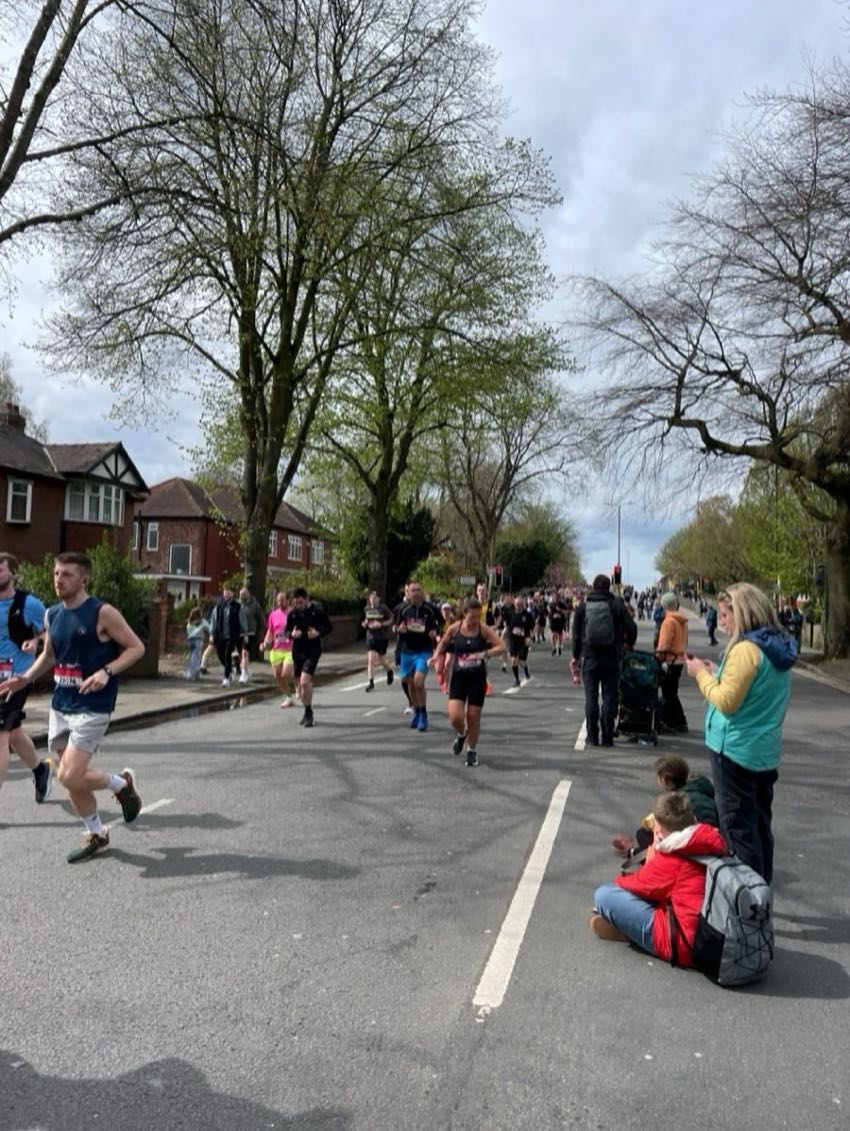
- File:Marathon runners on Edge Lane, Stretford - geograph.org.uk - 8107715.jpgWikimedia Commons · Photo by Eirian Evans, CC BY-SA 2.0.
Educational summary of nutrition research, not personal medical advice. Speak to your doctor or dietitian before changing your diet or supplements, especially if you are pregnant, take medicines or have a medical condition.
Analysis by NutroPractic from the sources listed. Written for general readers; it does not replace advice from your own doctor.
From our articles
Our guides on this subject
Plain-language guides on nutrition and wellness, backed by research.
Everyday eating
Protein bars and shakes: what you get per 100 calories
Four current labels range from 6.3 to 20 g protein per 100 kcal. Here is how bars, shakes, eggs, yogurt and lentils compare—and when a supplement actually helps.
6 Nov 2026
Children's nutrition
Feeding a teenage athlete: energy, iron, calcium and the sports drink question
Teenage athletes are growing and training at the same time, and under-eating (REDs) is found in up to 80% of female and 70% of male athletes in studies. A worked energy example for a 15-year-old footballer, protein and carbohydrate targets, iron and calcium in the growth spurt, when sports drinks help and when they are dessert, and the supplements to skip.
20 Oct 2026
Supplements and vitamins
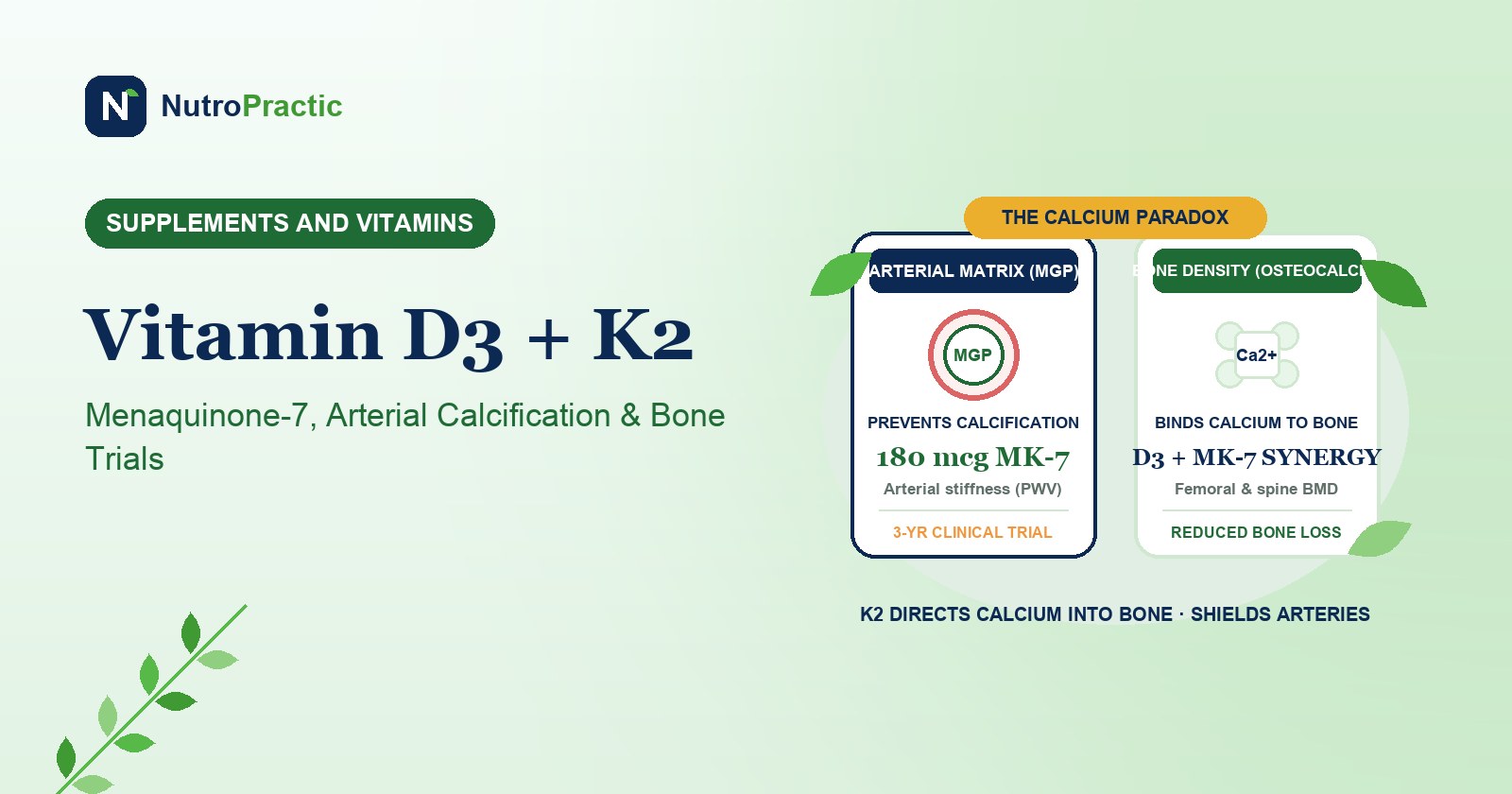
Vitamin D3 with K2: does adding menaquinone-7 actually protect arteries and bones in trials?
Vitamin D3 enhances intestinal calcium absorption, but without adequate vitamin K2, calcium can deposit in vascular walls instead of bone matrix. Clinical trials evaluating menaquinone-7 (MK-7) demonstrate improved carboxylation of Matrix Gla Protein, preserved arterial elasticity, and reduced bone mineral density loss. Discover what human clinical trials actually prove about cardiovascular calcification, bone density, MK-4 vs. MK-7 dosing, and critical drug interactions.
13 Nov 2026
Newsfeed for your website
Want this feed on your website?
Add it to any site with one copy-and-paste snippet. No sign-up, and it updates itself every hour.
Start with a virtual consultation
Tell Dr. Triveni what you want to change. You will leave with a clear next step, whether you are in Toronto, London, New York or Chennai.