Child anaemia · October 25, 2026
101,240 Indian children had a finger-prick blood test: those born less than 33 months after an older sibling had 18% higher odds of severe anaemia. A mother's own anaemia mattered far more, up to seven times the odds
Two in three Indian children under five are anaemic. A team from Mumbai and West Bengal went through the country's biggest health survey to ask whether closely spaced births push children into the moderate and severe grades. They do, modestly, and the survey points to a mother's iron stores, her schooling and her region as bigger factors. A snapshot survey, so a link, not proof.
India's fifth National Family Health Survey (NFHS-5, 2019-21) found that 67.1% of children aged six months to five years were anaemic, against a WHO estimate of 40% worldwide. The same survey found that nearly half of women (47.8%) had a short gap between births. Researchers at the International Institute for Population Sciences in Mumbai, Sadhu Ram Chand Murmu University of Jhargram and the Tata Institute of Social Sciences asked whether those two facts are connected, and in particular whether closely spaced births go with the more dangerous grades of anaemia rather than the mild one. Their analysis was published in Frontiers in Nutrition on 23 October.
They used 101,240 children aged 6 to 59 months who had an older sibling, a haemoglobin reading and complete answers on everything else the model needed. Haemoglobin was measured at home with a portable HemoCue finger-prick analyser and graded on the World Health Organization scale: mild 10.0-10.9 g/dL, moderate 7.0-9.9 and severe below 7.0. A short birth interval meant fewer than 33 months between the child's birth and the previous one, roughly the same as conceiving within 24 months of a birth. Only about three in ten of the children were not anaemic at all.
Children born after a short interval were a little worse off: 39.2% had moderate anaemia against 36.5% after a longer gap, and 2.3% against 2.1% severe. After adjusting for the child's age, sex, birth weight and birth order, the mother's age, schooling, anaemia and weight, the household's wealth, caste, religion, size and region, and whether the family used the local Anganwadi centre, a short interval went with 10% higher odds of moderate anaemia (adjusted odds ratio 1.10) and 18% higher odds of severe anaemia (1.18). There was no clear link with mild anaemia (1.03).
Other factors were much stronger. Children of mothers with severe anaemia had seven times the odds of severe anaemia themselves (7.04), and the odds rose step by step with the mother's anaemia grade. A birth weight under 2.5 kg went with 58% higher odds of severe anaemia, and an underweight mother with 23% higher odds. The youngest children were the most affected: 3.4% of those aged 6 to 23 months were severely anaemic against 1.0% of those aged 42 to 59 months. Children whose mothers had gone on to higher education had about half the odds of severe anaemia (0.52), children from Scheduled Caste and Scheduled Tribe households had higher odds (1.32), and region mattered a lot: against the East, the odds of severe anaemia were 2.88 in the West and 2.65 in the North, but 0.41 in the Northeast.
The authors are careful about what this shows. The survey is a single snapshot, so it cannot show that short spacing causes anaemia; the idea that a mother's iron and other nutrients have no time to recover between pregnancies is a plausible explanation they did not measure. Mothers' anaemia was measured at the survey, not during pregnancy. About a third of eligible children were dropped for missing data, which could bias the results if the missing families differ, and children of never-married mothers were left out. The effect of spacing is small next to maternal anaemia, education and region. The authors call for better birth spacing and family planning alongside nutrition support for mothers and young children, and for long-term studies. The work had no external funding and no conflicts were declared. We read the full open-access paper.
NFHS-5 national survey, India 2019-21: 101,240 children aged 6-59 months with an older sibling and a home haemoglobin test (published 23 October 2026)
101,240
Children aged 6-59 months in the analysis, each with a finger-prick haemoglobin test
2.3% vs 2.1%
Severe anaemia after a birth gap under 33 months against a longer gap (moderate: 39.2% vs 36.5%)
1.18
Adjusted odds ratio for severe anaemia after a short birth gap (1.10 for moderate, no link with mild)
7.04
Odds ratio for severe anaemia when the mother herself was severely anaemic
3.4% vs 1.0%
Severe anaemia at 6-23 months against 42-59 months of age
0.52
Odds ratio for severe anaemia when the mother had higher education, against no schooling
Source: Barik S, Show A, Sonune M, 'Association between short birth intervals and childhood anemia severity in India: evidence from the fifth National Family Health Survey (NFHS-5)', Frontiers in Nutrition 2026;13, published 23 October 2026, doi 10.3389/fnut.2026.1945328, open access (CC BY). International Institute for Population Sciences (Mumbai), Sadhu Ram Chand Murmu University of Jhargram (West Bengal) and Tata Institute of Social Sciences (Mumbai). Secondary analysis of NFHS-5 (2019-21) Kids Recode data: children of ever-married women with at least two live births, alive and aged 6-59 months; complete cases only (50,460 excluded for missing data, final n = 101,240). Haemoglobin by HemoCue Hb 201+, altitude-adjusted; not anaemic 11.0 g/dL or more, mild 10.0-10.9, moderate 7.0-9.9, severe under 7.0. Short birth interval: under 33 months since the preceding live birth (WHO/DHS). By interval (short vs not short): not anaemic 29.9% vs 32.2%, mild 28.6% vs 29.2%, moderate 39.2% vs 36.5%, severe 2.3% vs 2.1%. Survey-weighted multinomial logistic regression (reference: not anaemic), adjusted for child sex, age, birth weight, birth order, maternal age, education, age at first birth, place of delivery, maternal anaemia, maternal BMI, Anganwadi benefits, mass media exposure, wealth, household size, caste, religion, residence and region. Short interval: mild 1.03 (95% CI 0.98-1.08), moderate 1.10 (1.05-1.15), severe 1.18 (1.05-1.34). Severe anaemia: child aged 42-59 vs 6-23 months 0.12 (0.10-0.14); birth weight under 2,500 g 1.58 (1.38-1.82); maternal anaemia mild 1.63 (1.39-1.91), moderate 2.93 (2.54-3.38), severe 7.04 (5.42-9.14); maternal underweight 1.23 (1.08-1.42); maternal higher education 0.52 (0.40-0.67); SC/ST vs other castes 1.32 (1.10-1.59); girls 0.85 (0.76-0.96); region vs East: West 2.88 (2.25-3.69), North 2.65 (2.16-3.24), South 1.77 (1.40-2.23), Central 1.63 (1.36-1.97), Northeast 0.41 (0.28-0.59). Severe anaemia by age (weighted): 6-23 months 3.40%, 24-41 months 2.41%, 42-59 months 0.97%. Limitations stated by the authors: cross-sectional design (no causal inference), ever-married women only, maternal nutrient depletion not measured, complete-case analysis with possible selection bias. Maternal haemoglobin measured at the survey. No external funding; no conflicts of interest declared.
- The World Health Organization estimates that 40% of children aged 6 to 59 months worldwide, about 269 million, are anaemic, with 83 million of them in its South-East Asia Region.
- Among the ways to prevent anaemia, the WHO's fact sheet lists waiting at least 24 months between pregnancies, alongside iron-, folate-, vitamin B12- and vitamin A-rich foods, treating malaria and parasitic worms, and supplements when a health worker recommends them.
- The WHO says the largest causes of the healthy years lost to anaemia in 2019 were dietary iron deficiency, thalassaemia and sickle cell trait, and malaria. Tiredness, dizziness, cold hands and feet, headache and breathlessness on exertion are among the common signs.
- Association between short birth intervals and childhood anemia severity in India: evidence from the fifth National Family Health Survey (NFHS-5)Frontiers in Nutrition · The study, open access, published 23 October 2026
- Anaemia (fact sheet)World Health Organization · Global figures, causes, signs and prevention, including spacing pregnancies at least 24 months apart
- The DHS Program: dataThe DHS Program · Where the NFHS-5 survey data used in the study are published
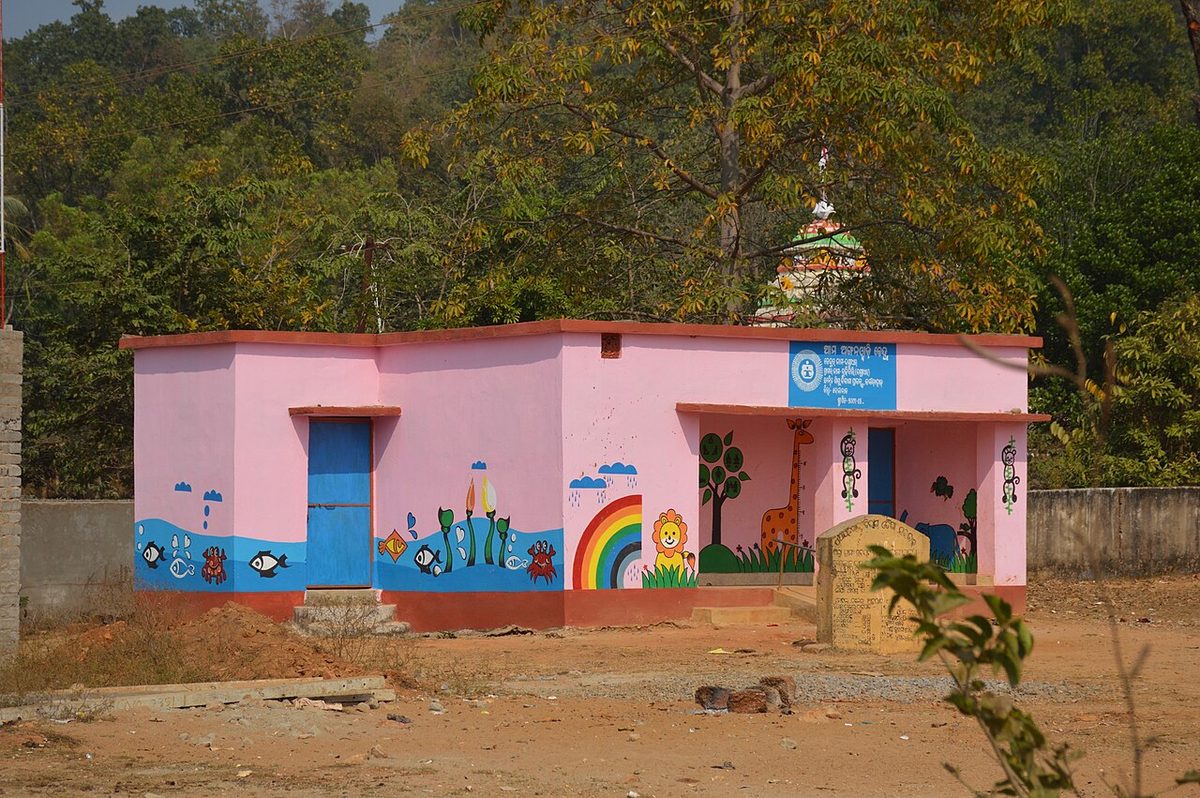
- Anganwadi Centre - Budhibili - Dandadhar Road - DhenkanalWikimedia Commons · The photo, CC BY 3.0 (Biswarup Ganguly)
General information, not medical advice. This survey shows an association at one point in time, not that birth spacing causes anaemia in children. If your child seems unusually tired, pale or breathless, see a doctor or paediatrician for a blood test, and talk to your doctor or a registered dietitian before giving iron or other supplements, since too much iron is dangerous for young children.
Analysis by NutroPractic from the sources listed. Written for general readers; it does not replace advice from your own doctor.
From our articles
Our guides on this subject
Plain-language guides on nutrition and wellness, backed by research.
Children's nutrition
Feeding a teenage athlete: energy, iron, calcium and the sports drink question
Teenage athletes are growing and training at the same time, and under-eating (REDs) is found in up to 80% of female and 70% of male athletes in studies. A worked energy example for a 15-year-old footballer, protein and carbohydrate targets, iron and calcium in the growth spurt, when sports drinks help and when they are dessert, and the supplements to skip.
20 Oct 2026
Children's nutrition
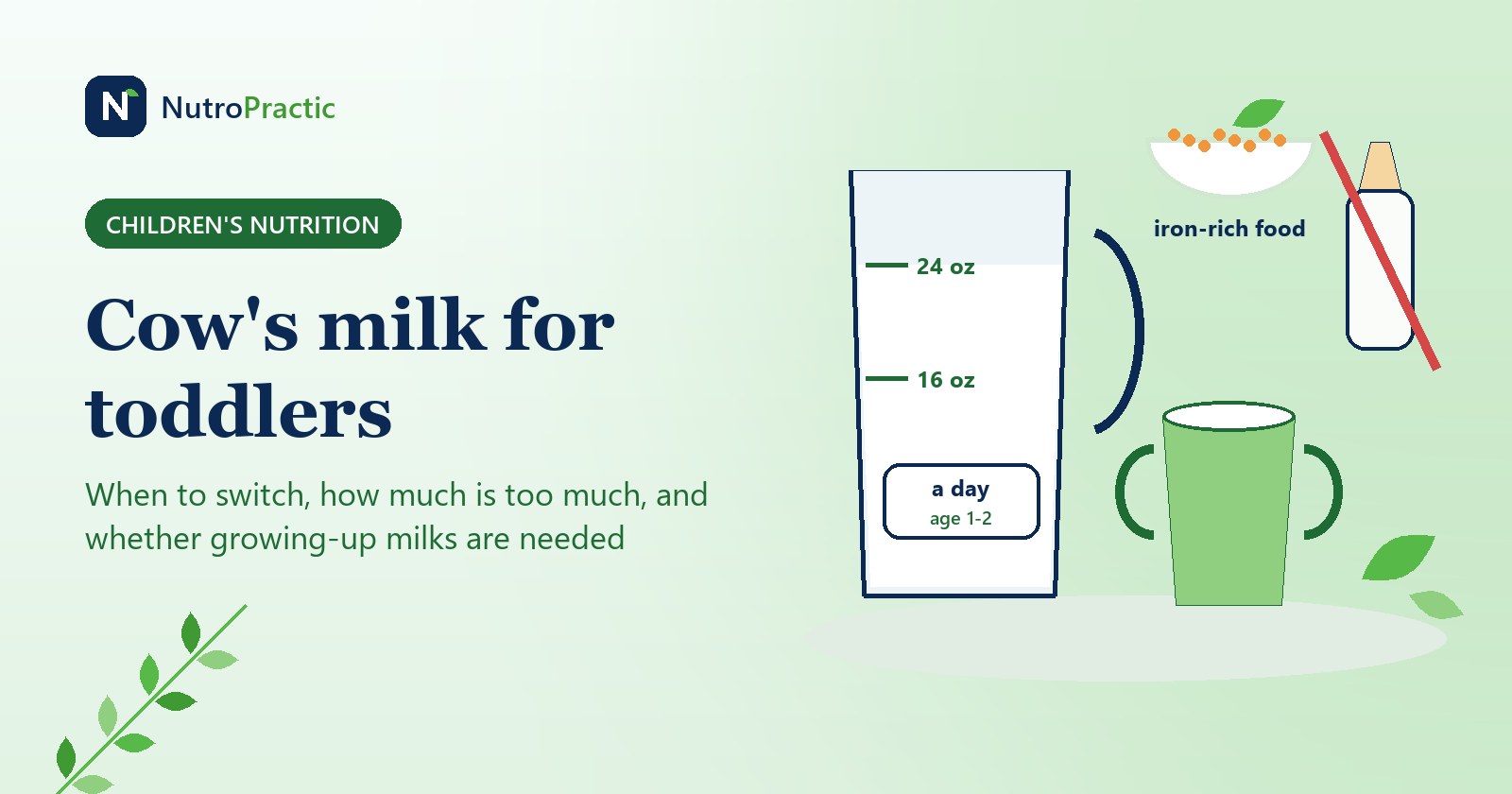
Cow's milk for toddlers: when to switch, how much is too much, and whether growing-up milks are needed
Whole milk as a drink from 12 months, about 2 cups a day, and no more than 24 oz or 750 ml: past that, milk crowds out the food that brings in iron. What the US, UK, Canadian, WHO and Indian guidance says, what the Toronto milk-and-iron study found, why toddler milks earn no place, and which plant milks work for under-5s.
27 Oct 2026
Medicines and nutrition
Oral iron or an infusion? Hepcidin, alternate-day dosing and when IV iron fits
A 60 mg iron dose can raise hepcidin into the next day. Here is what alternate-day trials measured, why more pills are not always more absorption, and the situations where clinicians move to IV iron.
12 Nov 2026
Newsfeed for your website
Want this feed on your website?
Add it to any site with one copy-and-paste snippet. No sign-up, and it updates itself every hour.
Start with a virtual consultation
Tell Dr. Triveni what you want to change. You will leave with a clear next step, whether you are in Toronto, London, New York or Chennai.