Running and diet · November 4, 2026
Seven runners, 21 days of plant-based meal kits, 3.4 kg less body fat. Nobody weighed what they left on the plate, and their usual diet always came first
Time to exhaustion rose against their usual diet and fat-free mass held. Then you notice that median weight had already fallen further before the first kit arrived, and that the fat loss implies a gap of about 1,250 calories a day from meals designed to match what they normally ate.
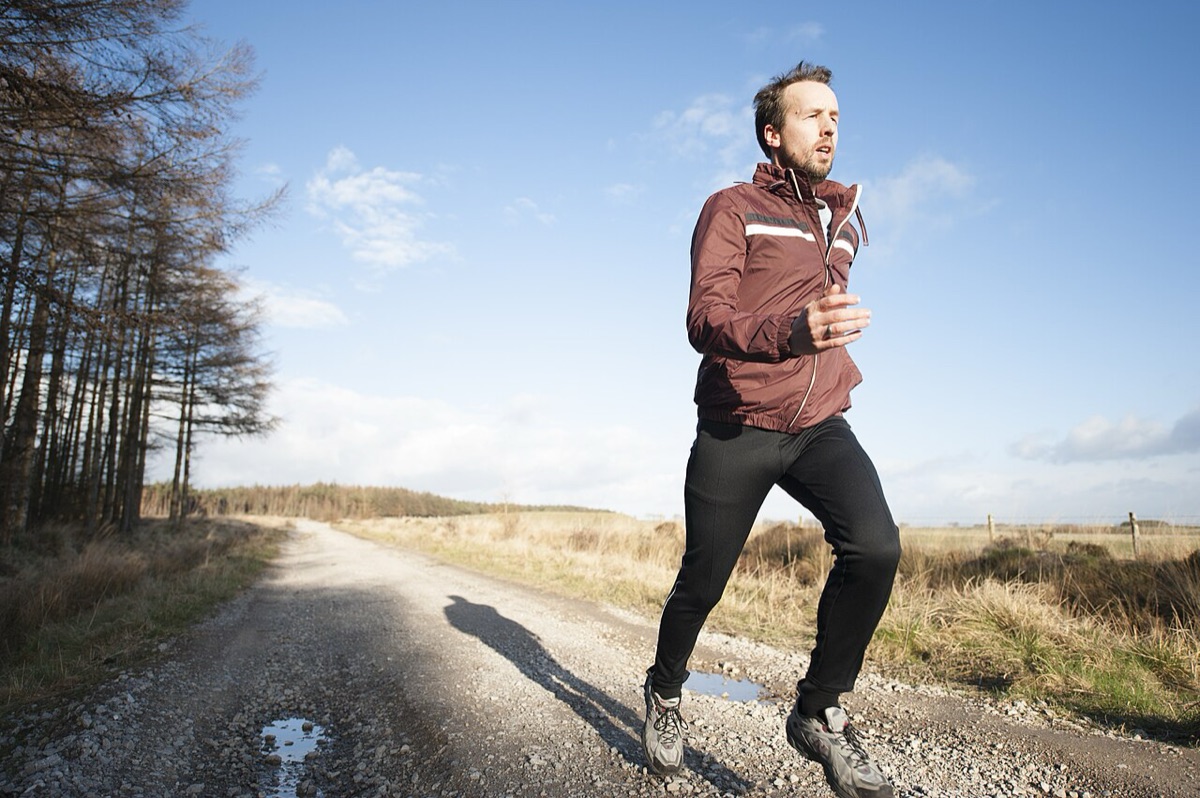
Plenty of runners wonder whether they can drop meat without losing anything on the road. A team from two Catholic universities in Brazil, in Campo Grande and Brasilia, gave it a small test, published in Frontiers in Nutrition on 2 November. Of 21 people who answered an online form, 7 men qualified: healthy, aged 25 to 45, eating meat and running for more than two years, with a median of 35 km a week.
The design is simple. Each man was tested at the start, ate his normal diet for 21 days and was tested again, then spent 21 days on a plant-based diet and was tested a third time. A company delivered four meals a day, with fruit, vegetables, whole grains, legumes, seeds and soy foods such as fermented tofu, and no meat, fish, eggs or dairy. The kits were calculated to match the calories and macronutrients each man reported eating, and he was told to eat all of it and nothing else.
After the plant-based weeks, median body fat stood at 9.1% against 13.3% after the normal diet. Fat mass was 5.7 kg against 9.1 kg, and weight 64.3 kg against 68.2 kg. Fat-free mass barely changed, at 60.7 kg against 60.3 kg. Time to exhaustion on the treadmill was longer than after the normal diet, though not significantly longer than at the first test, and the text gives only p-values, no minutes. For anyone hoping to swap the steak without paying for it in muscle, that reads well.
Now the sums. A common rule of thumb puts a kilo of body fat at about 7,700 calories. On that basis, and treating a difference in medians as if it were one man's change, losing 3.4 kg in 21 days would take a shortfall of about 1,250 calories a day (our rough arithmetic). These were lean men, with a median BMI of 23.3, on food meant to replace what they normally ate, calorie for calorie. And the kits were built from a three-day food recall, so if the men's memories fell short, the kits did too. Add that the ultrasound reading may have moved more than the fat did, or that they may have run more, and there's no shortage of explanations.
The paper can't tell us which, because leftovers weren't weighed or photographed and no food diaries were kept during the kit weeks. Contact was by phone and weekly symptom logs, and the men reported sticking to it. The authors themselves raise one explanation: fibre rose by 64.5 g, which may have filled the men up enough that they didn't finish their meals. Their guts noticed. Scores for flatulence went from 4 to 7 and for bloating from 1 to 2. Body composition came from an ultrasound device, and the normal diet was never monitored, just assumed to be stable because recreational athletes tend to be disciplined.
There's also a strange number the authors don't discuss. Median weight fell from 74.9 kg at the first test to 68.2 kg after the normal-diet weeks, a bigger drop than anything in the plant-based phase, before any kit had arrived, though the table doesn't mark that drop as significant. Body fat over that stretch hardly moved, at 13.6% and 13.3%. Medians from a group of seven can jump around like that, because a single man can shift them, but it's a warning not to lean on any one of these gaps. Whatever was going on, it wasn't the plant food.
The order matters as much as the food. Every man did the normal diet first and the kit second, with no randomisation and no washout, so anything that changes with time looks like a diet effect. The treadmill is the plainest case: there was no practice session, and the plant-based test was always a man's third go at it, a point the authors raise themselves. Training was meant to stay steady, but mileage and intensity weren't recorded in either phase.
The blood markers point in no clear direction. TNF-alpha, an inflammation signal, didn't differ between the two diets. An antioxidant enzyme, superoxide dismutase, came out lower after the kits than after the normal diet, but no different from the first test. Nitric oxide and calprotectin both rose significantly with exercise only in the plant-based phase, but those comparisons weren't adjusted for multiple testing. The authors are straightforward about all this. They call the work exploratory and hypothesis-generating, set no primary outcome and did no sample-size calculation, and they ask for randomised crossover trials with washout periods. Their funding came from Brazilian public research bodies, and they declare no conflicts. Seven men got through three weeks of it, with more wind. That's about as far as it goes.
21-day plant-based diet in seven recreational male runners: fixed-order, within-person exploratory study (Frontiers in Nutrition, 2 November 2026)
7 of 21
Volunteers who met the criteria and completed all phases; all men
13.3% to 9.1%
Median body fat, usual diet to plant-based (p = 0.023)
9.1 to 5.7 kg
Median fat mass, usual diet to plant-based (p = 0.023)
68.2 to 64.3 kg
Median weight, usual diet to plant-based (p = 0.048)
74.9 to 68.2 kg
Median weight, first test to the end of the usual-diet weeks, before any kit
60.3 to 60.7 kg
Median fat-free mass, usual diet to plant-based (no significant difference)
About 1,250 kcal
Daily shortfall that 3.4 kg of fat in 21 days would imply, at 7,700 kcal per kg (our rough arithmetic, not in the paper)
+64.5 g
Rise in fibre on the kits, as the discussion states it (we take it as per day)
4 to 7
Flatulence score, usual diet to plant-based (unadjusted p = 0.04); bloating went from 1 to 2
p = 0.010
Longer treadmill time after the kits than after the usual diet; no significant difference from the first test. No minutes in the text
All values are medians from seven men, and the fixed order means none of this shows the diet caused the change. The gaps between medians aren't the same as each man's change. Loose ends we couldn't resolve from the published text: the results describe a statistically significant nitric oxide difference between the two diets but give p > 0.05, and the discussion says no significant differences across the three points while the results report both later points lower than the first. The fall in TNF-alpha at the first test carries p = 0.018 in the results and p = 0.014 in the discussion. Calprotectin's rise is given as +0.09 pg/mL, far below the kit's stated sensitivity of 35 pg/mL, so we suspect a unit slip. And at the first test, median fat mass and fat-free mass come to 68.5 kg against a median weight of 74.9 kg; medians needn't add up, but that gap is wide. Supplementary tables, including the nutrient comparison and symptom scores, weren't checked.
- The researchers first considered a 7-day plant-based phase. Early experience suggested that wasn't enough time for adaptation and gut tolerance, so they made it 21.
- To qualify, the men had to run at least 20 km a week at an average of about 4 minutes 20 seconds per km. At that pace a 10 km run takes a little over 43 minutes (our arithmetic).
- Calprotectin is better known from stool tests for gut inflammation. This study measured it in blood, and the authors warn that the two shouldn't be equated, and that it doesn't directly measure a leaky gut.
- Nitric oxide wasn't measured directly. The lab measured nitrite with a colour reaction, and the men's nitrate intake wasn't tracked, so the authors won't credit leafy greens or beetroot for the rise.
- The same technician ran every treadmill test and, the paper says, didn't know which diet a man was on. All the tests were in the morning, in a gym kept at 19 to 22 °C.
- Short-term plant-based diet in recreational male runners and its associations with body composition and exercise-related physiological responsesFrontiers in Nutrition, 2 November 2026 · Open access (CC BY). Abstract, methods, results, Tables 1 and 2, discussion, limitations, funding and conflicts of interest. Figures and supplementary tables not checked.
- Runner in Stainburn ForestWikimedia Commons · CC0 image by Jenny Hill.
General information, not medical advice. This was a very small study with no randomisation, and it can't show what a plant-based diet does for runners. If you're training hard and planning a big change in how you eat, a doctor or dietitian can help you make sure you're getting enough, especially if you've a health condition or you're losing weight you didn't mean to lose.
Analysis by NutroPractic from the sources listed. Written for general readers; it does not replace advice from your own doctor.
From our articles
Read, then eat a little better
Plain-language guides on nutrition and wellness, backed by research.
Everyday eating
Fruit juice and smoothies for children and adults: how much counts, and what the AAP and NHS limits are based on
None under 1, 120 ml at 1 to 3, 150 ml for British adults, 250 ml for older Indian children. The limits side by side, sugar per glass against whole fruit, what the cohort studies on weight and diabetes found, and why smoothies are a closer call.
3 Nov 2026

Everyday eating
Serving sizes on food labels: why the numbers on the pack rarely match what you eat, and how to recalculate them
Adults in one UK test poured about 95 g of granola against a 45 g serving. Tropicana lists 150 ml in Britain and 240 ml in the US. What the FDA, EU and Indian rules require, and worked sums for cereal, crisps and peanut butter.
3 Nov 2026
Everyday eating
Food label claims decoded: 'no added sugar', 'multigrain', 'natural' and 'high protein'
A no-added-sugar biscuit with only 13% fewer calories. A 7-grain loaf with refined flour listed first. A 'high protein' bar that clears the legal line at 21%. What each claim legally requires in the EU/UK, US and India, with worked reads of real packs.
2 Nov 2026
Newsfeed for your website
Want this feed on your website?
Add it to any site with one copy-and-paste snippet. No sign-up, and it updates itself every hour.
Start with a virtual consultation
Tell Dr. Triveni what you want to change. You will leave with a clear next step, whether you are in Toronto, London, New York or Chennai.