Food marketing · October 24, 2026
The school bans the soda but keeps the logo on the scoreboard. In 134 Canadian sport centres, 86% of the food ads rated were for products of nutritional concern. A review of 42 studies finds the rules cover what is sold, not who gets to advertise
Most talk about junk food marketing to children is about TV and phones. Two researchers looked instead at the people who let brands in: school boards, parent groups, sports clubs and rink managers, trading signage, uniforms and reward schemes for cash and kit. Marketing turned up almost everywhere it was measured. Whether it changes what children actually eat is the part the evidence still cannot answer.
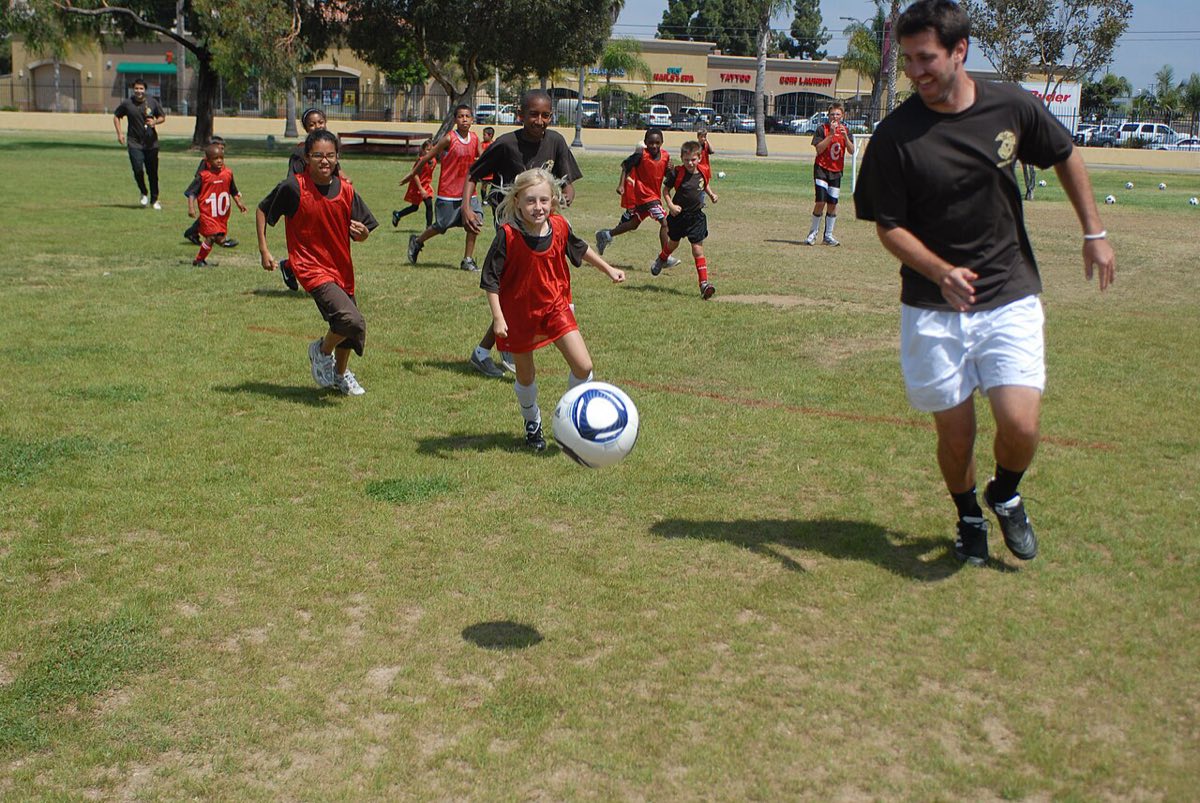
A school can stop selling sugary drinks and still have a drinks company's name on the fridge, the fundraising flyer and the sports-day banners. A town's ice rink can adopt healthy-eating guidance and keep the branded scoreboard it was given years ago. Research on food marketing to children usually treats it as a message from a company to a child. A mini review published in Frontiers in Nutrition on 19 October asks a different question: who opens the door?
Lu Xing and Xueqi Wu, education and culinary researchers at Changsha Normal University in China and Taylor's University in Malaysia, call these people gatekeepers. School boards, head teachers, parent associations, club committees, coaches, facility managers and catering contractors decide which brands get in, through fundraising, reward schemes, sponsorship, signage, uniforms, equipment and food-service contracts. The pair searched two research databases for English-language studies since 2000, found 893 records, and built their review on 42 of them: 29 studies of real schools or sports settings, two sponsorship experiments and 11 policy papers for context.
In schools, the marketing was easy to find. In a Canadian survey, 84% of participating schools reported at least one form of it. In Vancouver, promotions turned up in every secondary school surveyed and in 80% of elementary schools, and about a quarter of them showed products that provincial rules banned from sale in those same schools. In a large US brand-reward scheme, fewer than a third of the entrées and snacks involved met federal Smart Snacks standards. After the US state of Maine banned marketing in schools, an audit still found advertising that broke the rules in 85% of 20 high schools; administrators mostly asked for clearer guidance and help to apply it.
Youth sport looked similar. A Canadian project photographed marketing in 134 recreation and sport facilities and logged 2,576 instances; of the 1,846 that could be rated, 1,583 (85.8%) were for food or drinks classed as of nutritional concern, much of it on branded infrastructure, displays and furniture. Facilities with sponsorship agreements carried more marketing. Of 139 drinks contracts held by 132 US public universities, 15 covered youth sports camps and three covered high-school sports events. Having a written sponsorship policy did not go with less marketing, and voluntary nutrition guidelines went with a smaller share of the least healthy ads but not fewer ads overall.
The weak link is food on the plate. Of 27 school-marketing papers in an earlier review, only five measured diet, and three found a link with buying or eating. In Brazil's national ERICA study of teenagers, soft-drink advertising at school was not tied to how many sugary drinks pupils had, but selling the drinks on site was. In 12 schools in Addis Ababa, advertising showed no link with 217 teenagers' diets or weight. Chile, which brought in warning labels, marketing limits and school sales rules together in 2016, saw household purchases and school-time eating change. One analysis of 321,597 children aged four to six estimated a lower chance of excess weight after 18 months, although year-by-year surveillance from 2013 to 2019 showed no lasting fall in overweight and obesity, and either way those were effects of the whole package, not of the school rules alone.
Money is the knot. In Ireland, 38% of 331 schools surveyed accepted for-profit sponsorship, mostly because equipment budgets fell short; for most Australian clubs, sponsorship was less than a quarter of their income, while rugby managers in a New Zealand region called it important to keeping services running. In an Australian experiment, healthier or public-health sponsorship cut children's preference for some unhealthy sponsor products. Children who played soccer and hockey in Ontario said they would keep playing without the food rewards. The authors suggest rules that cover logos and contracts as well as products, public registers of sponsorship deals, audits, and replacement funding so that bans do not simply push up fees. This is a narrative review, not a systematic one: there was no formal quality grading, much of the detailed evidence comes from Canada and Australia, and the authors say they used GPT-5 to help select and extract studies, then checked all 42 against the originals by hand.
Food and drink marketing in schools and youth sport: a mini review of 42 publications
84%
Participating Canadian schools reporting at least one form of food or drink marketing
~1 in 4
Vancouver school promotions showing products the provincial rules banned from sale in schools
85%
Maine high schools (of 20 audited) with advertising that broke the state's school marketing ban
85.8%
Rated marketing in 134 Canadian sport and recreation facilities that was for food of nutritional concern (1,583 of 1,846)
38%
Irish schools (of 331) that accepted for-profit sponsorship, mostly for equipment
16%
Countries with national restrictions on food marketing in schools, in policies collected in 2022 to 2023
Source: Xing L, Wu X, 'Institutional gatekeeping of food and beverage marketing in schools and youth sport', Frontiers in Nutrition, mini review, published 19 October 2026, doi:10.3389/fnut.2026.1953630, open access (CC BY). Narrative review of 42 publications selected from 893 records found in Web of Science and Scopus on 29 July 2026 (English, since 2000): 29 setting studies, two sponsorship experiments and 11 contextual papers. The figures above come from different studies, countries and years and are quoted as the review reports them; they are not comparable with one another. No risk-of-bias or certainty grading. The authors report no funding and no competing interests, and say an AI model helped select and extract studies, with every included publication checked by both authors.
- In the Canadian sport facilities, the three published reports (contracts, manager survey and photo audit) come from the same project with different samples, so the review counts them as one population, not three.
- Both sponsorship experiments in the review were simulated: children or parents saw mock sponsorships and were asked about brands. Neither measured what anyone ate.
- In a parent experiment, unhealthy-food sponsorship of junior sport raised awareness of the brand, liking for it and preference for its products. Parents rated healthier-food brands and health campaigns as more appropriate sponsors.
- Repeated surveys of Minnesota secondary schools found that bans on advertising unhealthy food on school grounds became less common between 2008 and 2012, not more.
- A capacity-building programme for Canadian recreation facilities did not show an overall improvement in their marketing practices.
- Institutional gatekeeping of food and beverage marketing in schools and youth sportFrontiers in Nutrition · The review, open access, published 19 October 2026
- Full text with Table 1 and supplementary search stringsFrontiers · Sections 3 and 4 hold the school and youth-sport figures
- Military youth end summer with a ballWikimedia Commons · The photo, public domain
General information, not medical advice. This review maps where food marketing reaches children in schools and sport; it does not show that any single sponsorship or advert changes a child's diet or weight. For advice on a child's eating, talk to your doctor, a paediatrician or a registered dietitian.
Analysis by NutroPractic from the sources listed. Written for general readers; it does not replace advice from your own doctor.
From our articles
Our guides on this subject
Plain-language guides on nutrition and wellness, backed by research.
Everyday eating
Food label claims decoded: 'no added sugar', 'multigrain', 'natural' and 'high protein'
A no-added-sugar biscuit with only 13% fewer calories. A 7-grain loaf with refined flour listed first. A 'high protein' bar that clears the legal line at 21%. What each claim legally requires in the EU/UK, US and India, with worked reads of real packs.
2 Nov 2026
Nutrition science
Sweeteners after the WHO advice: aspartame, stevia, erythritol and what the 2023 decisions meant
In 2023 the WHO advised against using sweeteners to control weight, and its cancer agency called aspartame 'possibly carcinogenic' a few weeks later. Neither means your diet drink is dangerous, and neither means it helps. What the reviews found, how much is allowed, why erythritol is the one to watch, and what to do if you have diabetes or simply want less sugar.
18 Oct 2026

Women's health
Inositol for PCOS: the 40:1 ratio, trial doses, and food milligrams
Why do randomized trials in polycystic ovary syndrome prioritize the 40:1 myo to D-chiro inositol ratio? Here is the science behind the ovarian epimerase paradox, clinical ovulation and insulin metrics, and why cantaloupe cannot replace 4,000 mg trial powder.
21 Nov 2026
Newsfeed for your website
Want this feed on your website?
Add it to any site with one copy-and-paste snippet. No sign-up, and it updates itself every hour.
Start with a virtual consultation
Tell Dr. Triveni what you want to change. You will leave with a clear next step, whether you are in Toronto, London, New York or Chennai.