Children and families · November 4, 2026
One school put red, amber and green labels on its drink menu for two months. Students reported buying less sugar, energy and fat
The colour code was paired with one nutrition lesson, while another school received a standard poster. The result is promising — but the study cannot tell us whether labels alone changed what teenagers chose.

A coloured dot beside a school drink may be easier to use than a nutrition panel. A study published in the Asia-Pacific Journal of Public Health on 29 October 2026 tested that idea in two Indonesian high schools. At one school, beverage menus showed traffic-light labels for energy, sugar and fat for two months. Students first received a nutrition education session. The comparison school displayed a balanced-nutrition poster instead.
Researchers asked students about their beverage purchases at three points: before the intervention, after one month and after two months. Across those repeated measurements, reported purchases of beverage energy, sugar and fat fell significantly in the traffic-light school. Each of the three statistical tests was below the study's conventional p < 0.05 threshold.
That does not mean a red label, by itself, caused the change. The intervention bundled labels with education, so their separate effects cannot be disentangled. Only one school received each condition, which means differences between the schools could travel with the intervention. Purchases were recorded through an online self-report questionnaire rather than till receipts, and the abstract does not report the number of participating students or the size of the reductions.
The baseline comparison offers some reassurance but does not solve those limitations. Nutritional status and pocket money did not differ significantly between the groups. Mean BMI-for-age z-scores were 0.03 in the intervention school and 0.13 in the control school. Those figures describe the groups; they are not evidence that the menu changed body weight, which was not the result being tested over this short period.
The useful lesson is about decision design rather than a verdict on any one drink. The labels placed energy, sugar and fat information where students chose from the menu, and the education session gave the colours meaning. A stronger next study would randomise many schools, use sales records, report the actual change in drinks or grams of sugar, and follow students long enough to see whether the effect lasts after the labels become familiar.
What the two-school study tested
2 schools
One traffic-light intervention school and one poster comparison school
2 months
Time the coloured menu labels were displayed
3 checks
Baseline, one month and two months
3 nutrients
Energy, sugar and fat shown with traffic-light labels
All p < 0.05
Reported reductions across energy, sugar and fat beverage purchases
0.03 vs 0.13
Baseline mean BMI-for-age z-score, intervention vs comparison school
This was a two-school quasi-experiment, not a randomised trial of labels alone. Purchases were self-reported, and the accessible abstract does not give the student sample size, absolute purchase changes or individual p values.
- The researchers first used a qualitative stage to explore which traffic-light designs students preferred before running the school comparison.
- The comparison school was not label-free: it displayed a balanced-nutrition poster, so the study compared two different information approaches.
- Because labels and a teaching session arrived together, the study cannot say whether the colours, the lesson or their combination mattered most.
- A BMI-for-age z-score expresses how far a young person's BMI lies from the reference average for age and sex; it is not the same as BMI measured in kg/m².
- Statistical significance says the repeated patterns were unlikely under the analysis model; without effect sizes, it does not show whether the change was large enough to matter in everyday school sales.
- Implementation of School-Based Traffic Light Labeling and Calorie Information Intervention to Reduce Sugary Drink Purchases Among Indonesian AdolescentsAsia-Pacific Journal of Public Health, 29 October 2026 · Primary study; intervention design, timing, measurement points, baseline comparison and reported direction of purchase changes checked against the PubMed abstract.
- Healthy dietWorld Health Organization · General context on free sugars and healthy dietary patterns; not evidence for the school intervention.
- PSD School Canteen.jpgWikimedia Commons · CC0 photograph by Spotlight0968, reused as a general school-canteen illustration.
General information, not medical advice. This short two-school study did not test weight loss, diagnose health conditions or establish an ideal diet for any child. Families concerned about a young person's growth, nutrition or relationship with food should seek advice from a qualified paediatric clinician or dietitian.
Analysis by NutroPractic from the sources listed. Written for general readers; it does not replace advice from your own doctor.
From our articles
Read, then eat a little better
Plain-language guides on nutrition and wellness, backed by research.
Everyday eating
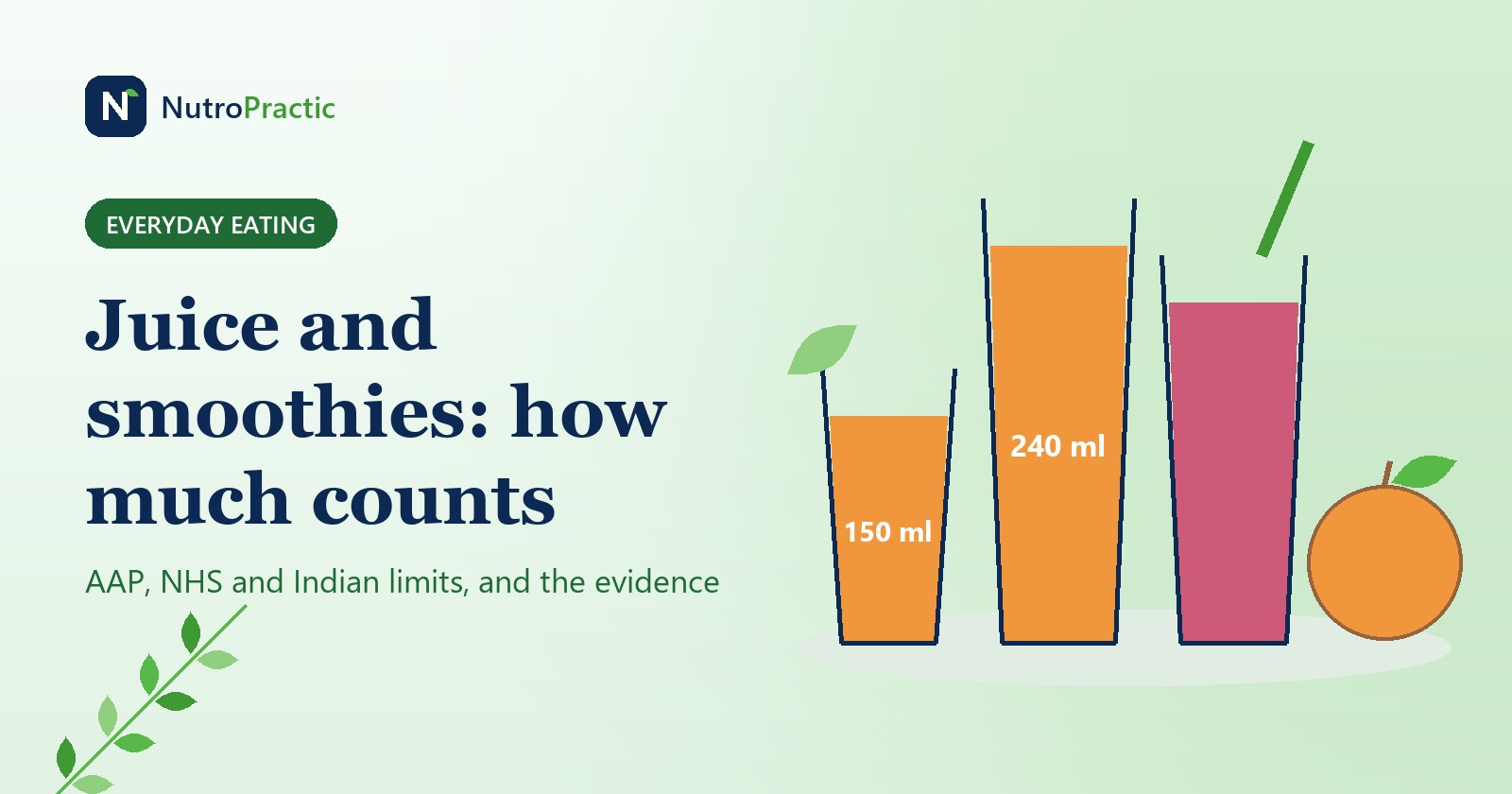
Fruit juice and smoothies for children and adults: how much counts, and what the AAP and NHS limits are based on
None under 1, 120 ml at 1 to 3, 150 ml for British adults, 250 ml for older Indian children. The limits side by side, sugar per glass against whole fruit, what the cohort studies on weight and diabetes found, and why smoothies are a closer call.
3 Nov 2026
Everyday eating
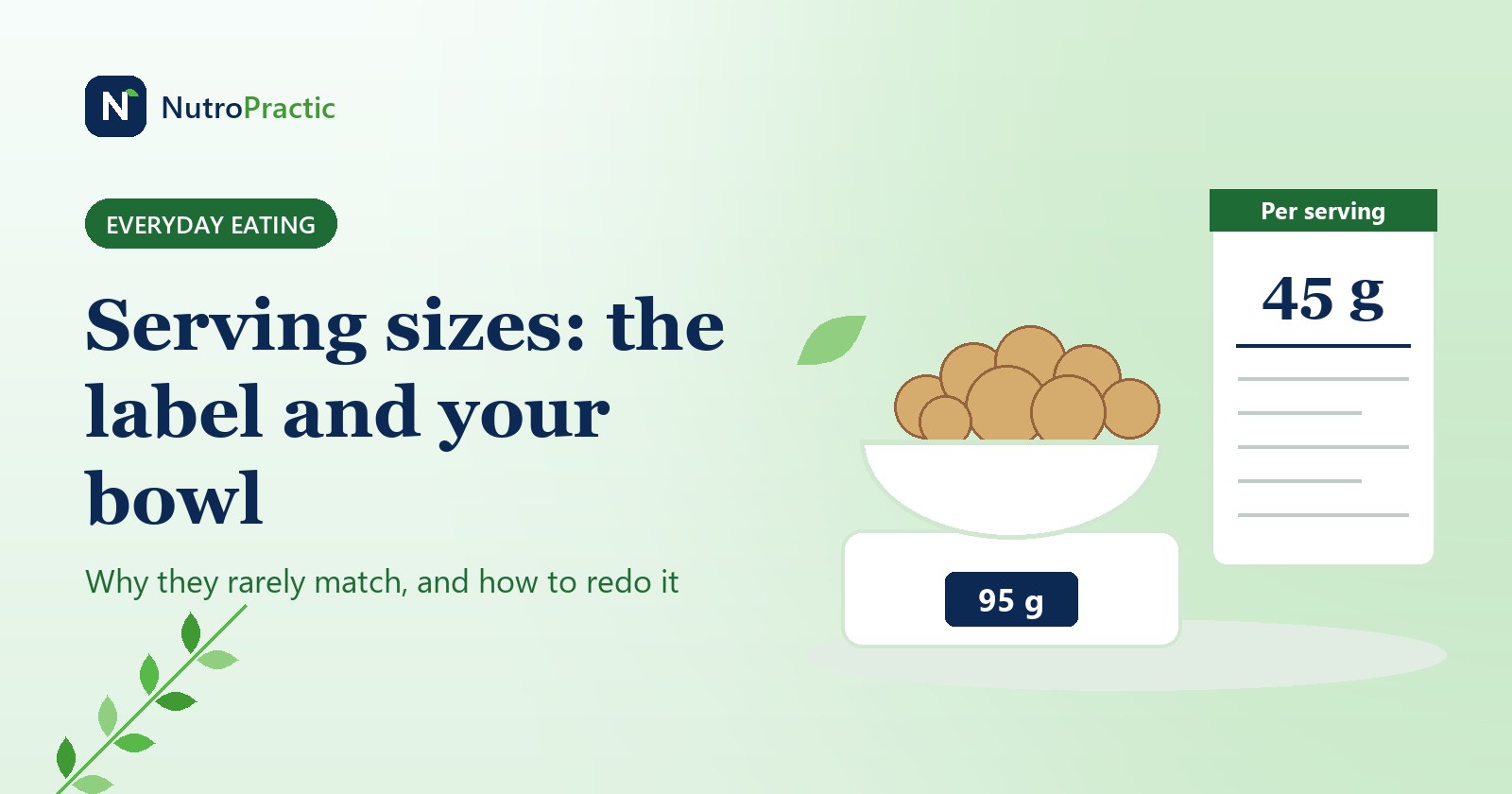
Serving sizes on food labels: why the numbers on the pack rarely match what you eat, and how to recalculate them
Adults in one UK test poured about 95 g of granola against a 45 g serving. Tropicana lists 150 ml in Britain and 240 ml in the US. What the FDA, EU and Indian rules require, and worked sums for cereal, crisps and peanut butter.
3 Nov 2026
Everyday eating
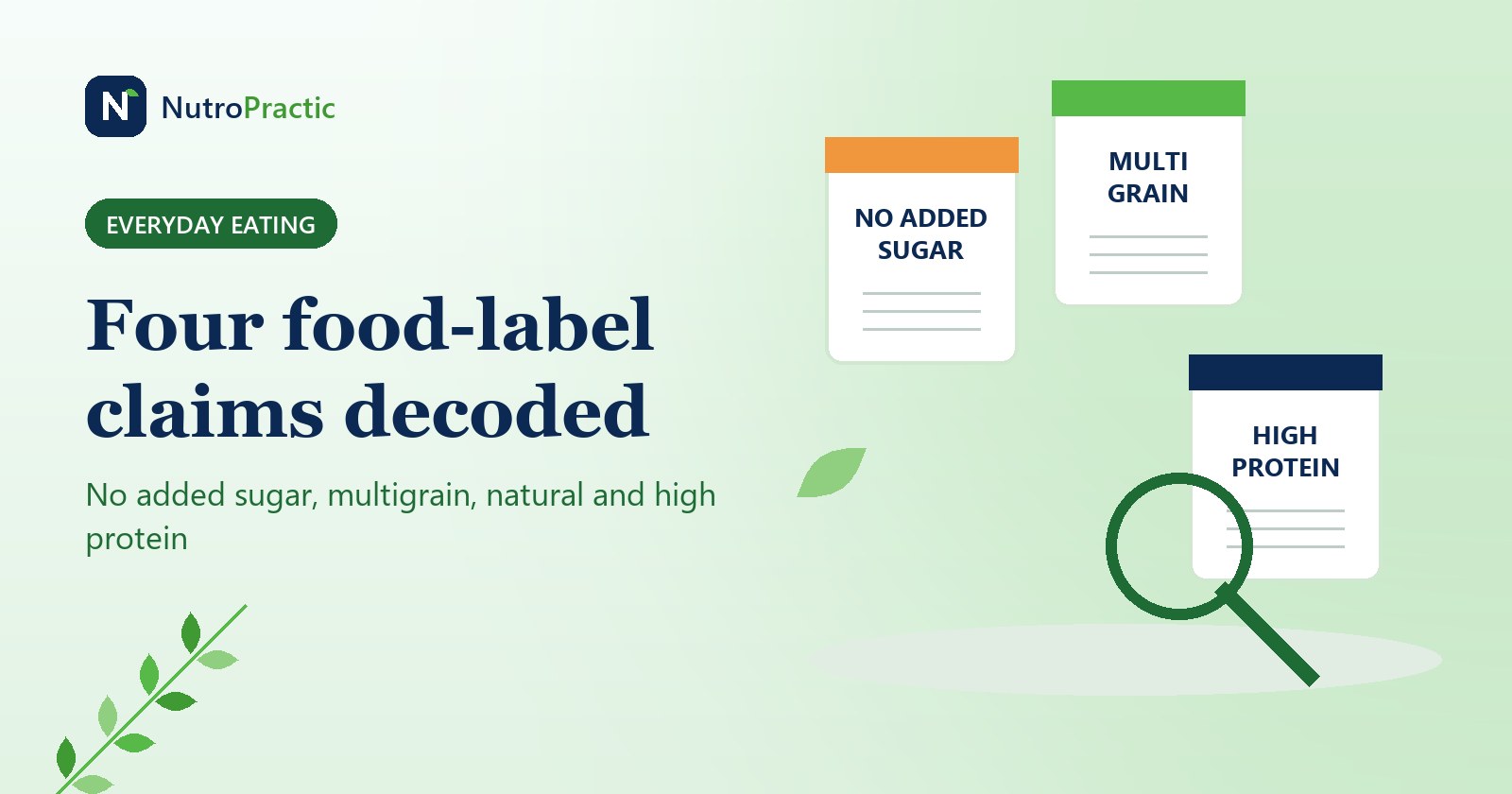
Food label claims decoded: 'no added sugar', 'multigrain', 'natural' and 'high protein'
A no-added-sugar biscuit with only 13% fewer calories. A 7-grain loaf with refined flour listed first. A 'high protein' bar that clears the legal line at 21%. What each claim legally requires in the EU/UK, US and India, with worked reads of real packs.
2 Nov 2026
Newsfeed for your website
Want this feed on your website?
Add it to any site with one copy-and-paste snippet. No sign-up, and it updates itself every hour.
Start with a virtual consultation
Tell Dr. Triveni what you want to change. You will leave with a clear next step, whether you are in Toronto, London, New York or Chennai.