Probiotics · October 21, 2026
36 Korean athletes took an eight-strain probiotic or a look-alike powder for a week each. On the probiotic they lasted about 33 seconds longer on a treadmill test, but their oxygen uptake did not budge, and the placebo week brought gains too
Taekwondo, hockey and badminton players ran to exhaustion before and after a week on a high-dose probiotic, and again on a placebo. The probiotic week came out ahead on time to exhaustion and on one antioxidant enzyme. Their VO2max, lactate clearance and a marker of oxidative damage did not change, and the trial was registered only after it ended.
Probiotics are mostly sold for the gut, but a few makers now pitch them at athletes. A team at Korea National Sport University in Seoul tested one of them, a mix of eight bacterial strains called SLAB51, on male elite athletes and published the results in Nutrients on 8 October.
The design was a crossover: every athlete took the probiotic for one week and an identical-looking powder with no bacteria for another week, in random order, with two weeks off in between. Neither the athletes nor the testers knew which was which. The dose was large, eight sachets a day taken in two lots on an empty stomach, about 1.6 trillion colony-forming units a day, and staff watched every dose being taken. The testing ran from late October to mid-December 2025.
48 athletes started and 36 were analysed. Five dropped out from one group and three from the other (injuries, withdrawals and two picked for a national team), and four more were removed because some of their blood or oxygen readings were judged unreliable. That left fewer than the 40 the authors had calculated they needed. The 36 were all men, about 21 years old: 19 taekwondo players, 12 field hockey players and 5 badminton players.
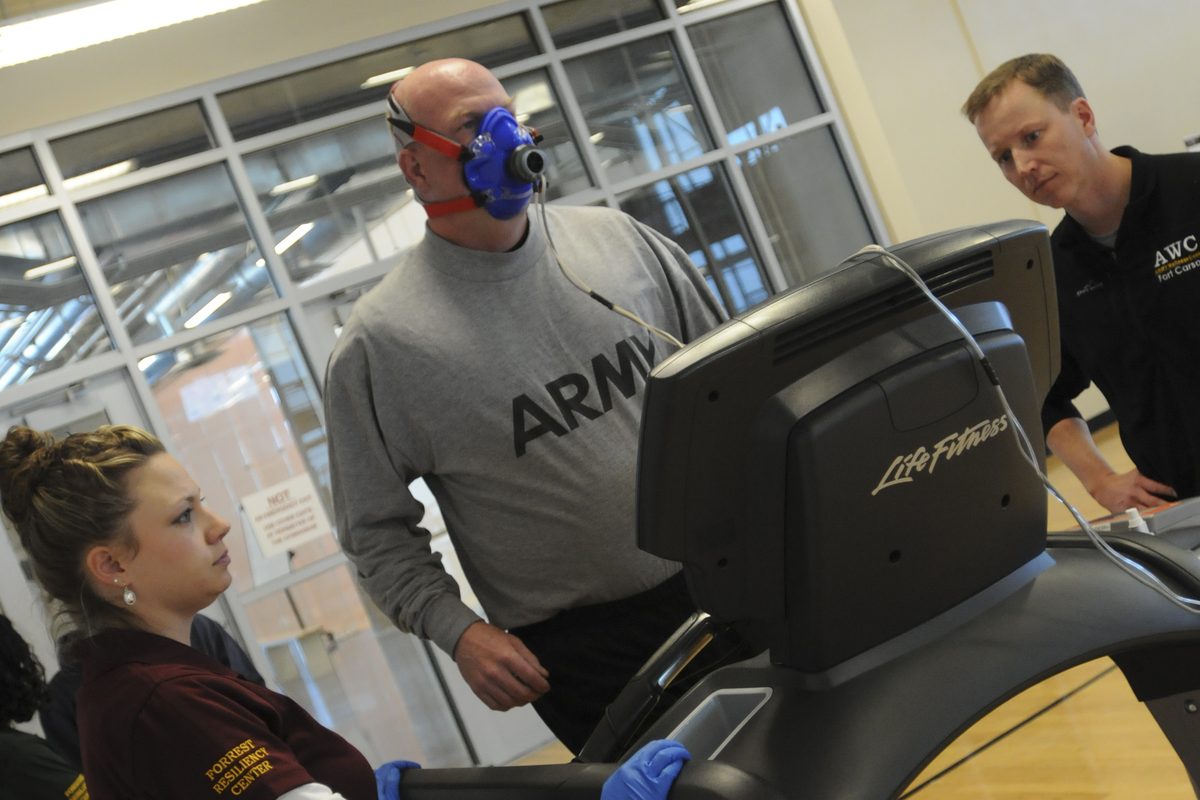
Each athlete ran the Bruce treadmill test, in which the belt gets faster and steeper every three minutes until the runner gives up. At the start they lasted 886 seconds on average, just under 15 minutes. After a week on the probiotic they lasted 954 seconds; after a week on the placebo, 921 seconds. A second analysis that allowed for which period and order each athlete had came to a 33-second edge for the probiotic week (range about 17 to 49 seconds), roughly 3.5% of the test time. A single dose four hours before the test made no difference.
The placebo matters here. Time on the treadmill rose by 35 seconds in the placebo weeks as well, which the authors put down mostly to athletes getting used to a maximal test they repeated five times. So the honest reading is the gap between the two weeks, not the 68-second rise from the first test to the probiotic week.
Two other measures moved with the probiotic. The time athletes kept going after their breathing showed they had moved mostly onto carbohydrate (respiratory exchange ratio above 1.0) was about 57 seconds longer, and the blood level of superoxide dismutase, an antioxidant enzyme, was higher by 0.2 units per millilitre. Several things did not change: VO2max, the usual measure of aerobic fitness, was 53.8 after the probiotic week against 54.9 after placebo; malondialdehyde, a marker of fat oxidation in blood, and the share of lactate cleared within 30 minutes showed no difference between the weeks.
The authors are open about the weak points. There was only one baseline test, before the first period, so nobody checked where the athletes stood before the second. Training load, sleep, caffeine, carbohydrate and hydration in the days before each test were not controlled. A week is short, gut bacteria were never measured, and the authors do not know how the probiotic might work. The trial was registered with the Korean registry in August 2026, months after it finished; the authors say they had not realised registration was required. A Korean company, Hecto Healthcare, supplied the product and placebo but no money, and the authors declare no conflicts of interest.
One week of the SLAB51 probiotic against one week of placebo in 36 male elite athletes (crossover, Seoul, late 2025)
+33 s
Longer on the Bruce treadmill test after a week on the probiotic than after a week on placebo (range 17 to 49 s)
886 → 954 s
Average test time at baseline and after the probiotic week; after the placebo week it was 921 s
+35 s
Rise in test time over the placebo week alone, likely from getting used to the test
+57 s
Longer time spent with the respiratory exchange ratio above 1.0 on the probiotic week
53.8 vs 54.9
VO2max (ml/kg/min) after the probiotic and placebo weeks: no difference
36 of 48
Athletes who started and were analysed; the authors had planned for at least 40
Study: Lee S-Y, Kim S, Park J-H, Yun H-J, Yoon J, 'The Effects of Multi-Strain Probiotic SLAB51 Intake on Aerobic Performance and Oxidative Stress Responses in Elite Athletes: A Randomized Crossover Trial', Nutrients 2026, 18(19), 3299, published 8 October 2026, doi 10.3390/nu18193299 (open access, CC BY). Randomised, double-blind, placebo-controlled crossover at Korea National Sport University, Seoul; assessments 28 October to 19 December 2025. Two one-week periods with a two-week washout; covariate-adaptive randomisation by sport, BMI, VO2max and lactate. SLAB51: Streptococcus thermophilus, two Bifidobacterium animalis subsp. lactis strains and five Lactobacillus strains (acidophilus, helveticus, paracasei, plantarum, brevis); four sachets before lunch and four before bed, 1.6 x 10^12 CFU a day, intake supervised. Tests 4 h after a single dose and after one week. 48 randomised (24 per sequence); 8 discontinued (2 withdrew consent, 4 injured, 2 national-team selection); 4 more excluded for unreliable measurements; per-protocol analysis of 36 (16 and 20). All men, age 20.95 (SD 1.25), BMI 23.1; 19 taekwondo, 12 field hockey, 5 badminton. Primary outcome, exercise duration (s): baseline 886.28 (SD 72.04); SLAB51 single dose 918.06, one week 953.94 (82.89); placebo single dose 914.36, one week 921.33 (72.18); ANOVA treatment x time p = 0.002. Post hoc linear mixed model (period, sequence, time): one-week difference 33.32 s (95% CI 17.42 to 49.22, p < 0.001); single dose 3.14 s (-12.77 to 19.04). Duration above RER 1.0: one week 316.25 s vs 258.78 s; mixed model 56.99 s (18.71 to 95.26, p = 0.004). Serum SOD: one week 1.77 vs 1.50 U/ml; mixed model 0.199 U/ml (0.037 to 0.361, p = 0.017), with period effects. VO2max 53.80 vs 54.92 ml/kg/min (interaction p = 0.159); MDA 49.95 vs 55.76 pmol/ml (p = 0.290); 30-minute lactate removal 68.67% vs 72.70% (p = 0.318). No correction across outcomes. Adverse events recorded non-systematically. Retrospectively registered CRIS KCT0012418 on 7 August 2026. Product and placebo supplied in kind by Hecto Healthcare; no external funding; no conflicts declared.
- The internationally used definition of a probiotic, from an FAO/WHO expert group in 2001 and kept by a 2014 expert consensus, is 'live microorganisms that, when administered in adequate amounts, confer a health benefit on the host'.
- The Bruce treadmill test dates from the early 1960s, when cardiologist Robert Bruce in Seattle published it for testing hearts. It starts at 1.7 mph (2.7 km/h) on a 10% slope and gets faster and steeper every three minutes.
- A respiratory exchange ratio, carbon dioxide breathed out divided by oxygen taken in, of about 0.7 means the body is burning mostly fat; at 1.0 it is burning almost only carbohydrate, which happens near maximal effort.
- In the EU, no health claim for a probiotic bacterium has been authorised, so the word 'probiotic' itself is treated as a health claim on food labels in many member states.
- The Effects of Multi-Strain Probiotic SLAB51 Intake on Aerobic Performance and Oxidative Stress Responses in Elite Athletes: A Randomized Crossover TrialNutrients, October 2026 · The study: full text, open access
- The International Scientific Association for Probiotics and Prebiotics consensus statement on the scope and appropriate use of the term probioticNature Reviews Gastroenterology & Hepatology, 2014 · The accepted definition of a probiotic
- Finding the maxWikimedia Commons · The photo, public domain (US Army)
General information, not medical advice. This was a small one-week trial in young male elite athletes; it does not show that probiotics improve fitness in anyone else. If you have a weakened immune system, a serious illness or a central line, check with a doctor before taking probiotics.
Analysis by NutroPractic from the sources listed. Written for general readers; it does not replace advice from your own doctor.
From our articles
Our guides on this subject
Plain-language guides on nutrition and wellness, backed by research.

Gut health
Probiotic capsules: which ones have trial evidence, what they can do, and when to skip them
Children on antibiotics: 8% got diarrhoea with a probiotic, 19% without. Older hospital patients: 10.8% with, 10.4% without. Which capsules have evidence, what three guidelines say about IBS, what a course costs per case prevented, and who shouldn't take them.
2 Nov 2026
Gut health
Gluten-free without coeliac disease: who actually benefits, and what the blinded gluten challenges found
In blinded trials only 16% of people who said gluten made them ill reacted to gluten rather than placebo, and in Oslo fructans caused more bloating than gluten. Who really needs to avoid it, how to get tested before you stop, how much gluten is in a slice of bread or a roti, and what gluten-free food costs (159% more in the UK) and lacks.
1 Nov 2026
Gut health
Lactose intolerance: how much milk most people can actually tolerate, and which dairy is easiest
Most adults who don't digest lactose well still handle about 12 g at once, roughly a 250 ml glass of milk, in blinded trials. What the 12 g studies found, a lactose table for milk, yoghurt, cheese, chai and dahi, how lactase tablets and A2 milk compare, why the famous 68% figure was retracted, and how to keep calcium up if you cut back.
25 Oct 2026
Newsfeed for your website
Want this feed on your website?
Add it to any site with one copy-and-paste snippet. No sign-up, and it updates itself every hour.
Start with a virtual consultation
Tell Dr. Triveni what you want to change. You will leave with a clear next step, whether you are in Toronto, London, New York or Chennai.