Prebiotics · October 22, 2026
A week of antibiotics cut the number of gut bacteria species in 18 Dutch adults by about 40%. Eight weeks of a breast-milk sugar taken as a prebiotic brought them back no faster than a dummy powder
Researchers at Maastricht University Medical Center gave volunteers a seven-day course of the antibiotic vancomycin, then 12 g a day of 2′-fucosyllactose, the most common sugar in human milk, or a placebo. Both groups' gut bacteria largely recovered. The prebiotic made no difference anyone could measure, to the bacteria or to the antibiotic-resistance genes they carry.
Prebiotics, the fibres and sugars that feed friendly gut bacteria, are often suggested as a way to help the gut bounce back after a course of antibiotics. A team from the NUTRIM institute at Maastricht University Medical Center+ in the Netherlands put one of them to a direct test, and also looked at something few studies check: the genes that let gut bacteria resist antibiotics, known together as the resistome. Their results came out in Gut Microbes on 15 October.
The volunteers were 18 adults, nine men and nine women, in their mid-40s, with overweight or obesity (average BMI about 32) but normal blood sugar, drawn at random from a larger placebo-controlled trial. All of them took oral vancomycin, 500 mg three times a day, for seven days. Taken by mouth, vancomycin is barely absorbed, so it acts mainly in the gut. After a two-day break, half took 4 g of 2′-fucosyllactose (2′-FL) three times a day for eight weeks, and half took a maltodextrin placebo; neither they nor the researchers knew who had which. Stool samples from the start, the end of the antibiotics and the end of the eight weeks were read with whole-genome sequencing.
The antibiotic hit hard. The estimated number of bacterial species per person fell from about 86 to 51, and 94 of the 121 species tracked changed significantly: 80 shrank, among them Faecalibacterium prausnitzii, Roseburia intestinalis and two Bifidobacterium species, while 14 grew, including Escherichia coli and Klebsiella pneumoniae. People's gut communities also became much less alike than before.
Over the next eight weeks both groups recovered most of the way, though not completely: the species that had shrunk grew back and E. coli fell again. The prebiotic group did no better. The change in species richness and diversity was the same in both groups (p = 0.90 and 0.65), no species changed only in the 2′-FL group, and the shift between the end of the antibiotics and the end of the study was nearly identical (0.833 against 0.842 on a 0-to-1 dissimilarity scale). In the resistome, vancomycin did not change the overall number or diversity of resistance genes, but it swapped which ones were present: genes linked to the bacteria that expanded, such as a sulphonamide and a fosfomycin resistance gene, turned up, while tetracycline and erythromycin resistance genes linked to the bacteria that died back largely disappeared. By the end most had drifted back towards where they started, again with no difference between 2′-FL and placebo.
This is a small study, and the authors note its limits. With nine people per group, only a sizeable effect would have shown up. They analysed three of the six sampling points from the original trial, which had found short-lived improvements during supplementation, so early changes may have been missed. Vancomycin acts mainly on one broad group of bacteria (the Gram-positives), and the authors point to studies of amoxicillin, cefprozil, azithromycin and cefpodoxime in which resistance genes rose and stayed raised for months, so other antibiotics may behave differently. The trial was funded by the Dutch Research Council and the Carbohydrate Competence Center in a public-private partnership; the 2′-FL came from FrieslandCampina. The authors declare no conflicts of interest. Their conclusion is that the results underline the harm of unnecessary antibiotic use, and that whether prebiotics can help needs testing with a wider range of them.
Seven days of vancomycin, then eight weeks of 2′-fucosyllactose or placebo, in 18 Dutch adults
18
Adults with overweight or obesity and normal blood sugar, 9 per group, picked at random from a larger double-blind trial in Maastricht
86 → 51
Estimated bacterial species per person before and after a week of oral vancomycin, 500 mg three times a day (Chao1, p < 0.001)
94 of 121
Bacterial species that changed significantly on vancomycin: 80 shrank, 14 grew, including E. coli and Klebsiella pneumoniae
12 g a day
2′-fucosyllactose taken for 8 weeks (3 × 4 g); the placebo group took 6 g a day of maltodextrin
p = 0.90
Difference between 2′-FL and placebo in how species richness recovered (diversity p = 0.65): none detected
0
Bacterial species that changed only in the 2′-FL group; 13 changed with 2′-FL and 30 with placebo
116
Antibiotic-resistance genes found across all samples; their overall number and diversity did not change on vancomycin, though which genes were present did
Study: Vliex LMM, Godinho Mimoso IF, Le GN, Blaak EE, Penders J, 'Modulation of the gut microbiome and resistome by antibiotic use, but not by subsequent 2′-fucosyllactose intake, in adults with overweight or obesity', Gut Microbes 2026, 18(1):2746814, published 15 October 2026, doi 10.1080/19490976.2026.2746814 (open access, CC BY 4.0; read in full). A secondary analysis of 18 of the participants in a randomised, double-blind, placebo-controlled trial (ClinicalTrials.gov NCT04561284), allocated by minimisation on age, sex and BMI. Inclusion: BMI 25 to 40, fasting glucose under 6.1 mmol/L and 2-hour glucose under 7.8 mmol/L, no antibiotics, prebiotics or probiotics in the previous three months. Stool sequenced with Oxford Nanopore whole-metagenome shotgun sequencing; resistance genes identified against the NCBI AMRFinderPlus database. The paper gives a mean age of 45 and BMI of 32.2 in the text and 46 and 32.6 in its table; we say mid-40s and about 32. Shannon diversity fell from 2.83 to 1.73 on vancomycin; between-person dissimilarity (Jaccard) rose from 0.494 to 0.765. Links between resistance genes and bacteria are correlations across samples, not direct proof of which species carries which gene. Weight, waist, blood pressure and glucose did not change differently between the groups. Funding: Dutch Research Council (NWO) and Carbohydrate Competence Center (CCC), public-private partnership ALWCC.2017.003; 2′-FL (Biotis) supplied by FrieslandCampina, placebo by Roquette. No conflicts of interest disclosed.
- 2′-fucosyllactose is the main oligosaccharide in the breast milk of about 80% of women, at roughly 2.5 g per litre. The 12 g a day used here is about what nearly 5 litres of such milk would contain.
- Human milk holds around 200 different oligosaccharides. Babies cannot digest them; they feed gut bacteria, especially bifidobacteria, which is why 2′-FL and a few others are now added to some infant formulas.
- Vancomycin is usually given into a vein for serious infections such as MRSA. Taken by mouth it is poorly absorbed, which is why oral vancomycin is used for Clostridioides difficile infection of the bowel.
- The study's introduction cites an estimated 46% rise in worldwide antibiotic use between 2000 and 2018, and 1.27 million deaths in 2019 directly caused by antibiotic-resistant infections.
- Placebo groups in gut studies still recover: in this trial, 30 species changed in the eight weeks after antibiotics in people taking only maltodextrin, a common starch-based food additive.
- Modulation of the gut microbiome and resistome by antibiotic use, but not by subsequent 2′-fucosyllactose intake, in adults with overweight or obesityGut Microbes, October 2026 · The paper: full text, open access
- Human milk oligosaccharideWikipedia · How much 2′-FL breast milk contains and its use in infant formula
- VancomycinWikipedia · How the antibiotic is used and why oral doses stay in the gut
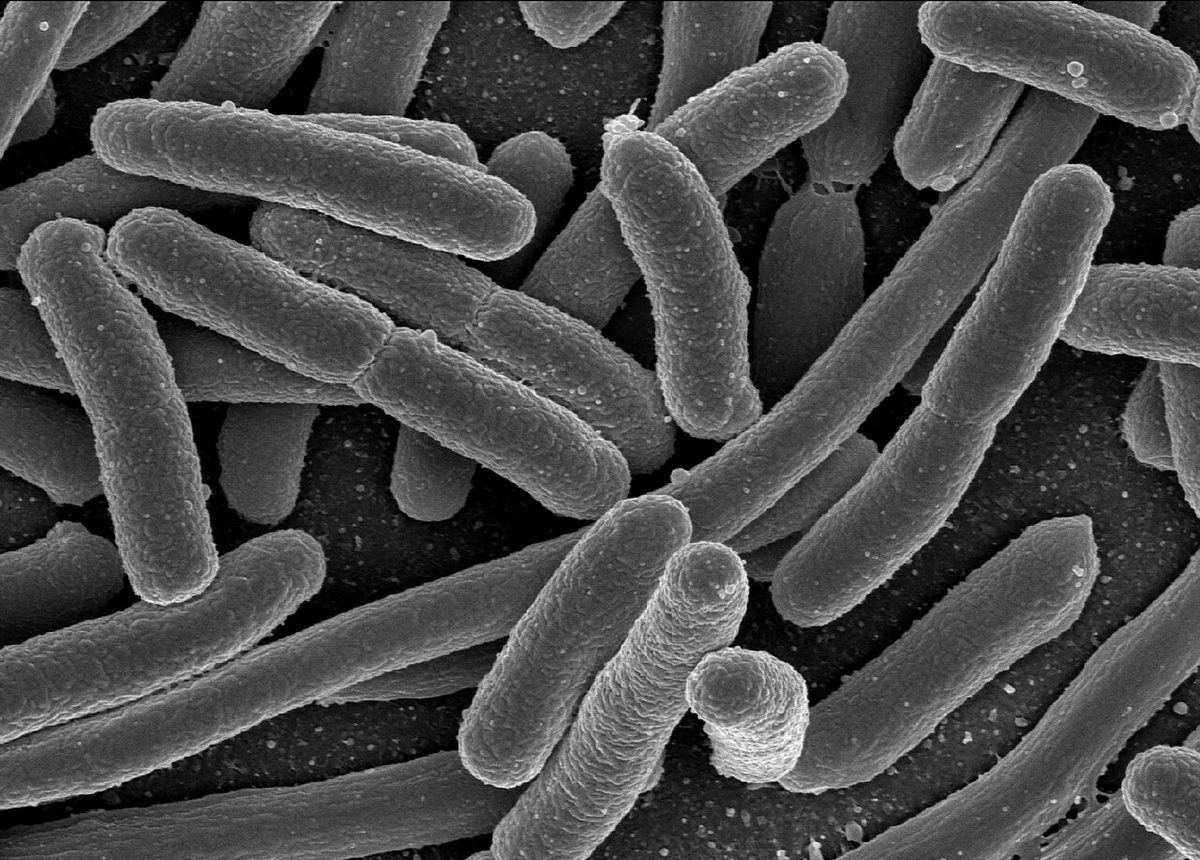
- E. coli BacteriaWikimedia Commons · The photo, public domain (NIAID)
General information, not medical advice. This small study tested one prebiotic after one antibiotic in healthy adults; it cannot say what happens with other antibiotics, other prebiotics or probiotics, or in people who are ill. Always finish an antibiotic course as prescribed, and ask a doctor or pharmacist before adding supplements alongside or after one.
Analysis by NutroPractic from the sources listed. Written for general readers; it does not replace advice from your own doctor.
From our articles
Our guides on this subject
Plain-language guides on nutrition and wellness, backed by research.

Gut health
Probiotic capsules: which ones have trial evidence, what they can do, and when to skip them
Children on antibiotics: 8% got diarrhoea with a probiotic, 19% without. Older hospital patients: 10.8% with, 10.4% without. Which capsules have evidence, what three guidelines say about IBS, what a course costs per case prevented, and who shouldn't take them.
2 Nov 2026
Gut health
Gluten-free without coeliac disease: who actually benefits, and what the blinded gluten challenges found
In blinded trials only 16% of people who said gluten made them ill reacted to gluten rather than placebo, and in Oslo fructans caused more bloating than gluten. Who really needs to avoid it, how to get tested before you stop, how much gluten is in a slice of bread or a roti, and what gluten-free food costs (159% more in the UK) and lacks.
1 Nov 2026
Gut health
Lactose intolerance: how much milk most people can actually tolerate, and which dairy is easiest
Most adults who don't digest lactose well still handle about 12 g at once, roughly a 250 ml glass of milk, in blinded trials. What the 12 g studies found, a lactose table for milk, yoghurt, cheese, chai and dahi, how lactase tablets and A2 milk compare, why the famous 68% figure was retracted, and how to keep calcium up if you cut back.
25 Oct 2026
Newsfeed for your website
Want this feed on your website?
Add it to any site with one copy-and-paste snippet. No sign-up, and it updates itself every hour.
Start with a virtual consultation
Tell Dr. Triveni what you want to change. You will leave with a clear next step, whether you are in Toronto, London, New York or Chennai.