Sleep and sport nutrition · October 23, 2026
A 40-gram protein shake half an hour before bed cost 21 college athletes no sleep. Neither did a sugary drink, and the milk protein sold as the sleepy one did no better than a dummy
Sports scientists at Florida State University gave women footballers, softball players and tennis players four late-night drinks, three nights each, without telling them which was which: casein, alpha-lactalbumin, carbohydrate and a near-calorie-free placebo. Sleep time, how fast they dropped off, heart rate overnight and how rested they felt all came out the same. The old rule against eating before bed did not hold here, but neither did the hope that one powder would help.
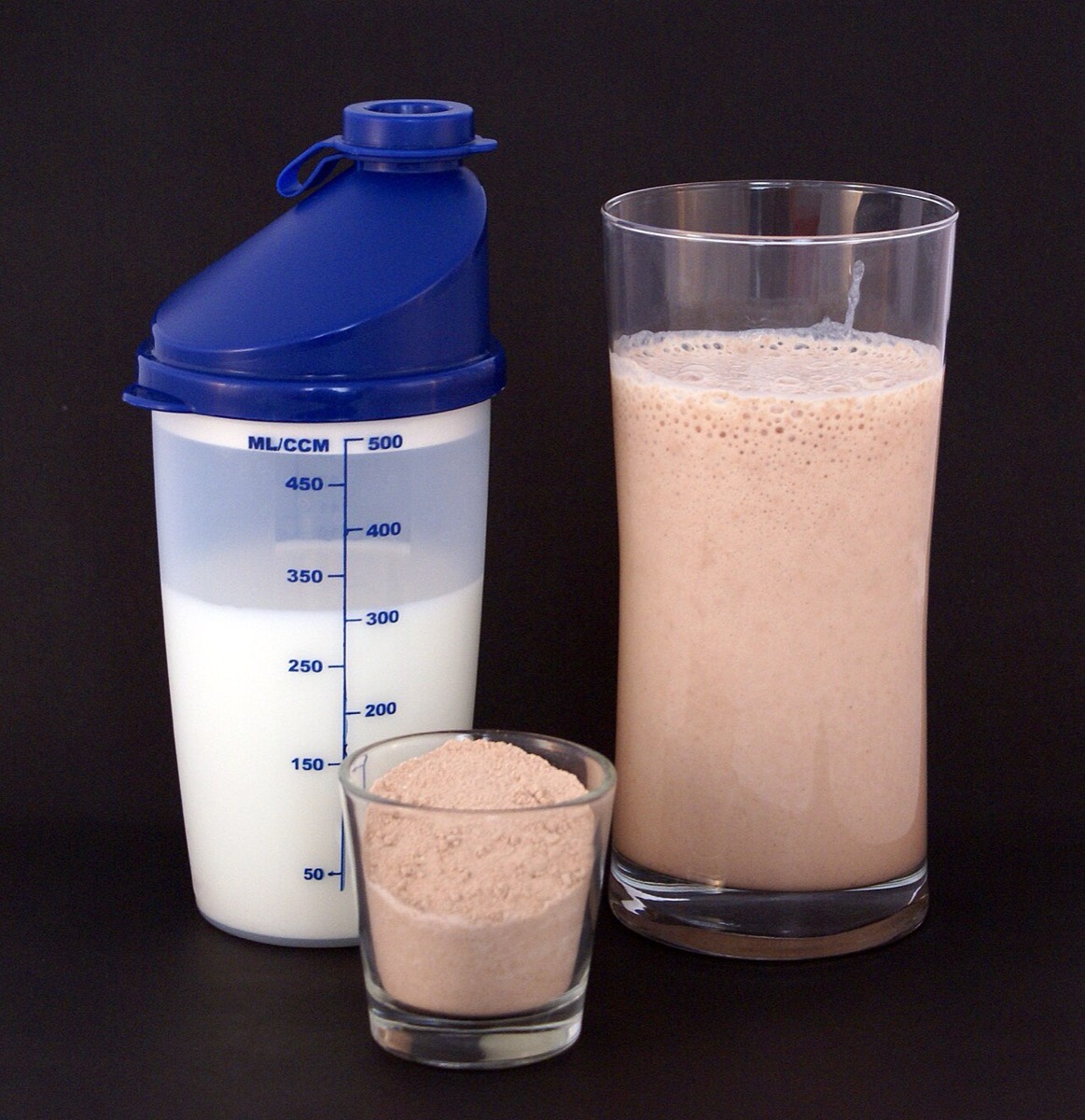
Two pieces of advice about eating at night pull in opposite directions. One says food close to bedtime spoils sleep. The other, popular in gyms and team kitchens, says a slow protein before bed feeds the muscles through the night, and that one dairy protein in particular, alpha-lactalbumin, is rich enough in tryptophan, the building block of serotonin and melatonin, to help you drop off faster.
A team at Florida State University's Institute of Sports Sciences and Medicine tested both ideas at once on women who train hard for a living. Their trial came out in the Journal of the International Society of Sports Nutrition on 20 October, open access. Twenty-five athletes from the university's top-division NCAA teams signed up and 21 finished: 12 footballers, 4 softball players and 5 tennis players, average age 21. None had a diagnosed sleep disorder or an eating disorder, and all were already wearing a WHOOP 4.0 wristband as part of their team's monitoring.
Each athlete had four drinks in a random order, three nights in a row each, with at least three days off in between. Three of them had 160 calories: 40 grams of casein, the slow-digesting protein in milk; 40 grams of an alpha-lactalbumin protein; or 40 grams of carbohydrate. The fourth was a placebo with flavouring, sweeteners and colouring and about 5 calories. A supplement maker packed and coded the powders so they looked and tasted alike, and neither the athletes nor the researchers knew which was which. The athletes mixed each one with a cup of water at home, about two hours after their last meal and 30 minutes before bed, and ate nothing after it.
Nothing moved. The wristbands logged between 7.47 and 7.62 hours of sleep a night across the four drinks, a sleep efficiency of 91.5% to 92.0%, an overnight resting heart rate of about 54 beats a minute and heart rate variability between 98 and 104 milliseconds, with no difference between drinks. Each morning the athletes rated their sleep quality at 69% to 75% and their recovery at 61% to 66%, again the same whichever drink they had taken. Asked at the end of each block which drink they thought it had been, they were right 36% of the time, not much better than the 25% a pure guess would give.
The alpha-lactalbumin drink was the one the team expected to win, and it did not. The authors point out that the powder they used was about 43% alpha-lactalbumin, while two earlier trials in elite women rugby players that did find small gains, including about 18 more minutes of sleep in one of them, used an isolate of about 93%. Their athletes also slept well to begin with, and already ate about 1.7 grams of protein per kilo of body weight a day, so there may have been little left to improve.
The limits are plain. Three nights per drink is short, the sample was small, and a wristband is not a sleep lab. Glucose monitors were meant to track blood sugar overnight, but sensors were knocked off in training and full records survived for only six women. The athletes' food logs added up to about 2,040 calories a day, which the authors think means under-reporting, under-eating or both. The study was paid for by Actus Nutrition, the company that made the powders, and the US National Dairy Council, and one author sits, unpaid, on an industry protein board.
What it does show is narrower and still useful. For well-rested young athletes, a modest 160-calorie drink half an hour before bed, protein or carbohydrate, did not cost them sleep or make them feel less recovered. So if a late shake helps someone reach their protein or energy needs, this trial gives no reason to fear it. It gives no reason to pay extra for a sleep-branded protein either.
Four drinks before bed, 21 NCAA Division I women athletes, three nights each
21 of 25
Athletes who finished the trial: 12 footballers, 4 softball players, 5 tennis players, average age 21
40 g
Casein, alpha-lactalbumin protein or carbohydrate per drink (160 kcal each), against a 5 kcal placebo, about 30 minutes before bed
7.47 to 7.62 h
Average sleep a night on the wristband across the four drinks, with no difference between them
91.5% to 92.0%
Sleep efficiency, the share of time in bed spent asleep, across the four drinks
36%
How often athletes correctly named the drink they had been given; a pure guess would be right 25% of the time
6
Athletes with a complete overnight glucose record; sensors came off during training and matches
Source: Paterson KGP, Griest TD, Angeles E, et al., 'Pre-sleep milk-derived proteins do not impair sleep or recovery in elite female athletes', Journal of the International Society of Sports Nutrition, 23(1):2746899, published online 20 October 2026, doi:10.1080/15502783.2026.2746899 (open access, CC BY 4.0). Randomized, double-blind, placebo-controlled crossover trial; sleep measured with a WHOOP 4.0 wristband and morning questionnaires; repeated-measures ANOVA. Co-funded by Actus Nutrition, which made and blinded the supplements, and the National Dairy Council; one author is a non-paid member of the International Protein Board.
- The wristband said the athletes fell asleep in about 2 to 3 minutes. Asked the next morning, they put it at 16 to 20 minutes. People often feel they take longer to drop off than devices record, and wristbands are not as precise as a sleep lab.
- Casein is the main protein in milk and forms curds in the stomach, so it digests slowly, which is why it is the usual choice for a bedtime shake. Alpha-lactalbumin is a smaller whey protein, also from milk, with more tryptophan than most food proteins.
- The researchers set out to recruit 18 athletes, the number their power calculation said they needed, and signed up 25 to allow for drop-outs.
- Eight of the 21 athletes used hormonal contraception and eight reported irregular periods. Nights were not timed to the menstrual cycle so that all four drinks fitted into the competitive season.
- Two athletes said they used a sleep aid on five to seven nights a week, a reminder that even well-supported elite athletes do not always sleep easily.
- Pre-sleep milk-derived proteins do not impair sleep or recovery in elite female athletesJournal of the International Society of Sports Nutrition (Taylor & Francis) · The study, open access, with the full sleep and recovery tables
- PubMed Central full text (PMC13686207)US National Library of Medicine · Free full text, including methods, funding and the glucose sub-study
- Protein shakeWikimedia Commons · The photo, CC BY 3.0
General information, not medical advice. This was a small, short trial in healthy, well-rested young women athletes, partly funded by the maker of the supplements tested. If you have trouble sleeping, reflux, diabetes or kidney disease, or are thinking about adding supplements, talk to your doctor or a registered dietitian first.
Analysis by NutroPractic from the sources listed. Written for general readers; it does not replace advice from your own doctor.
From our articles
Our guides on this subject
Plain-language guides on nutrition and wellness, backed by research.
Everyday eating
Food label claims decoded: 'no added sugar', 'multigrain', 'natural' and 'high protein'
A no-added-sugar biscuit with only 13% fewer calories. A 7-grain loaf with refined flour listed first. A 'high protein' bar that clears the legal line at 21%. What each claim legally requires in the EU/UK, US and India, with worked reads of real packs.
2 Nov 2026
Supplements and vitamins
Glycine before bed: the 3 g sleep trials, what they measured, and glycine in gelatin, bone broth and collagen
The 3 g dose comes from small Japanese trials: the sleep-restriction study analysed seven men. Here is what each trial measured, the grams of gelatin, collagen, pork rinds and bone broth that hold 3 g, and the clozapine warning.
17 Nov 2026
Botanicals and sleep
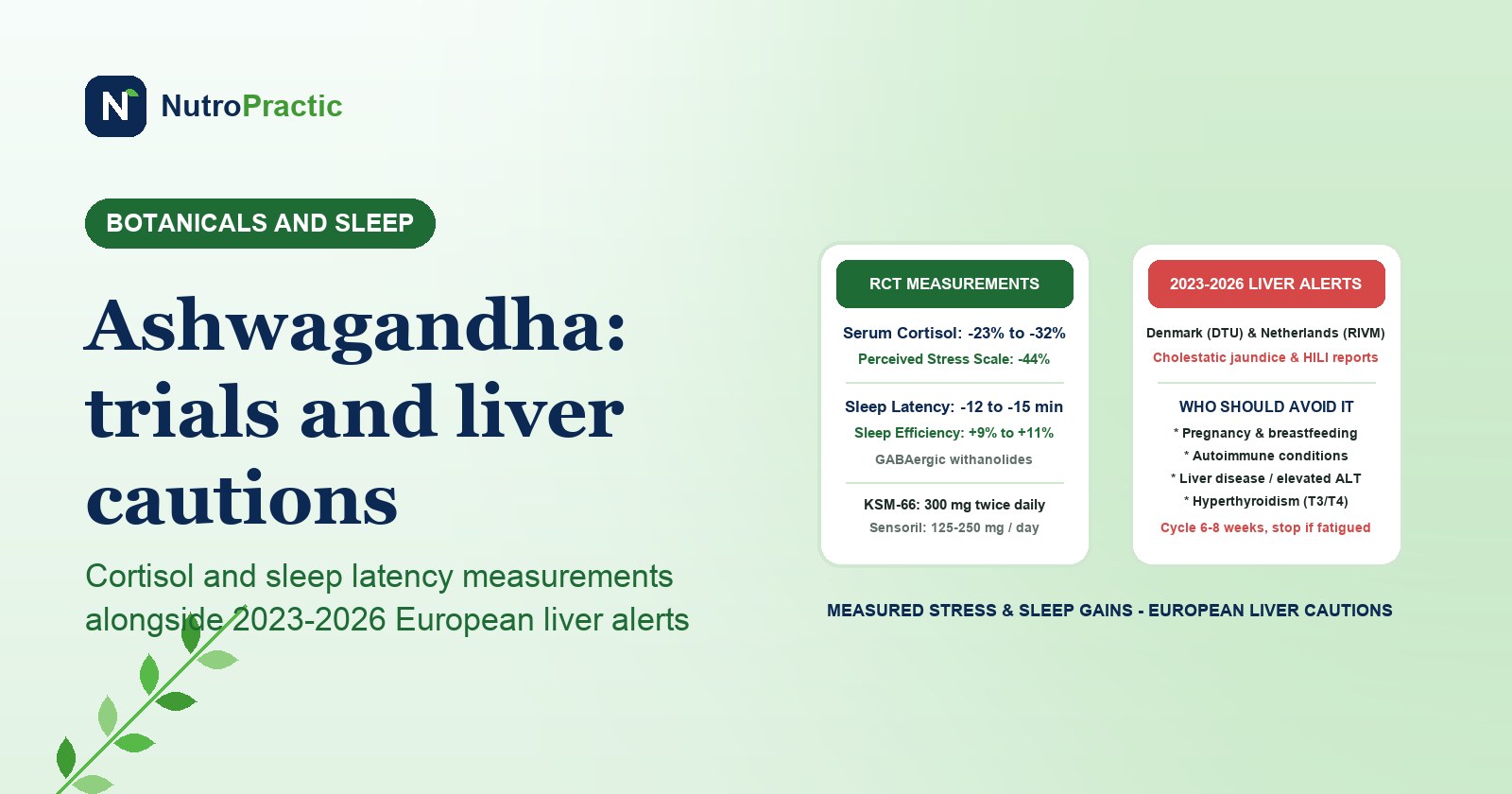
Ashwagandha for stress and sleep: what the randomised trials measured, and liver safety cautions
Standardized Ashwagandha extracts reduce serum cortisol by 23% to 32% and shorten sleep latency by 12 to 15 minutes in double-blind clinical trials. Yet 2023-2026 health alerts from Danish and Dutch authorities highlight serious herb-induced liver injury risks. Discover what the trials measured, extract differences (KSM-66 vs Sensoril), and who should strictly avoid it.
14 Nov 2026
Newsfeed for your website
Want this feed on your website?
Add it to any site with one copy-and-paste snippet. No sign-up, and it updates itself every hour.
Start with a virtual consultation
Tell Dr. Triveni what you want to change. You will leave with a clear next step, whether you are in Toronto, London, New York or Chennai.