Brain health · October 28, 2026
A sugarcane-wax pill for fading memory? In 56 older Koreans the memory scores didn't beat placebo, and they were 56 out of 151 people who started
Policosanol, a mix of waxy alcohols from sugarcane, is sold for cholesterol. A 12-week Korean trial gave it to people worried about their memory. After dropping statin users and anyone scoring too high or too low on a memory screen, the pill groups improved on a few test items, but so did the placebo group, and the gaps between them weren't significant. HDL cholesterol was the one clear difference.
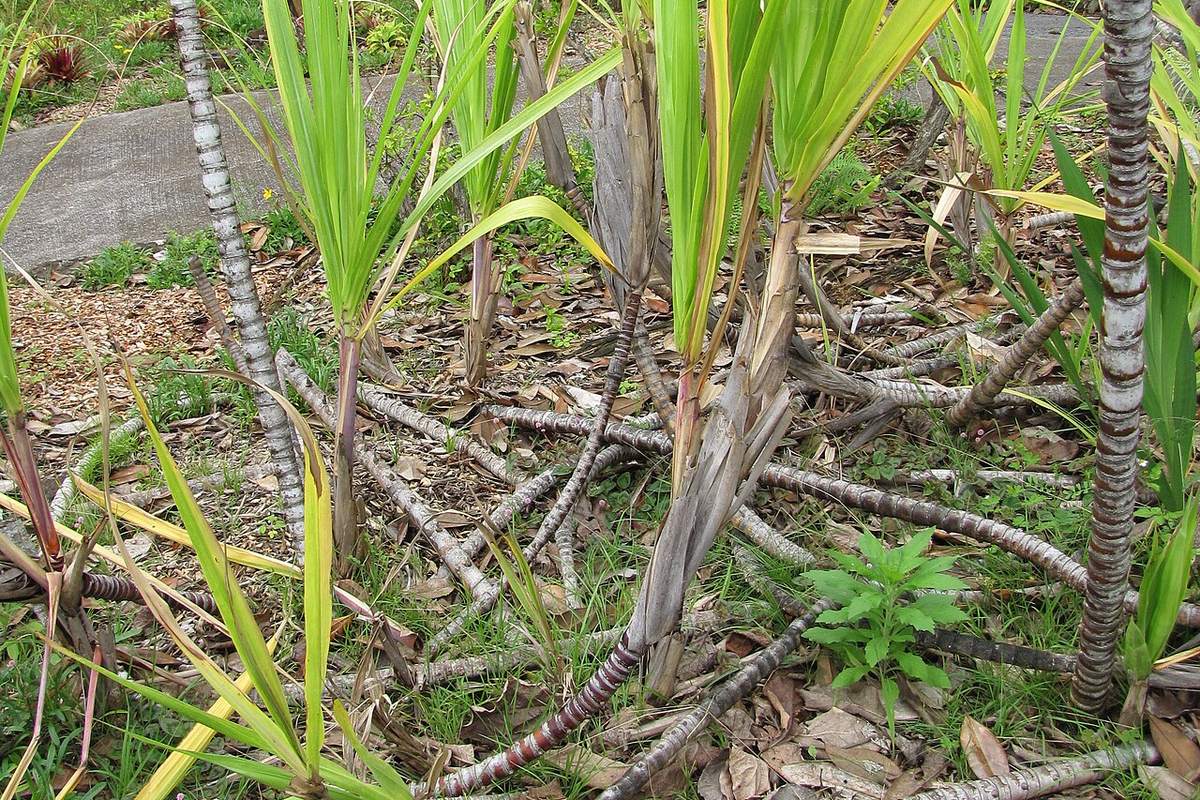
Many people in their 60s notice they forget names or lose their keys more often, even though memory tests still come out normal. Doctors call this subjective memory decline, and it matters because it raises the odds of later mild cognitive impairment. There is no pill for it, which leaves room for supplements. One being tested is policosanol, a purified blend of long-chain waxy alcohols scraped from sugarcane, mostly octacosanol, which is already sold for blood pressure and cholesterol. A trial run at two hospitals in Incheon and Seoul, published on 24 October in Nutrients, asked whether it helps memory.
The trial, called RAYDELP1, randomly gave 151 adults aged 55 to 85 with memory complaints a daily placebo, 20 mg or 40 mg of Cuban policosanol for 12 weeks, double-blind. It was planned around one main result, the change in the ADAS-Cog 11, a standard 11-part memory and thinking test, and sized for about 50 people a group. The paper does not report it for everyone who took part. Instead, the authors report what they call a post hoc, exploratory analysis: they removed the 24 people on statins, one person with a very high bilirubin result, and everyone whose Korean Mini-Mental State Examination score was 27 or more (too close to the top to show change) or 17 or less (more impaired than the target group). That left 56 people: 19 on placebo, 18 on 20 mg and 19 on 40 mg.
In those 56, the picture depends on how you read it. Within each pill group, a few test items improved from the start: the language part of the ADAS-Cog, the 'where are you' place questions on the mini-mental exam and, at 20 mg, false alarms on an attention test. But the placebo group moved the same way on the same items, just a little less, and when the three groups were compared with each other, or with starting scores taken into account, none of the memory and thinking differences was significant. The authors say so in their conclusions. They also note that they showed only selected parts of the tests, with no correction for checking many results at once.
The clearest signal was in the blood. HDL, the 'good' cholesterol, fell by 3.7 mg/dL on placebo and rose slightly on both doses, a difference between groups that was significant. An antioxidant enzyme, superoxide dismutase, rose by about a fifth within the 40 mg group, but the gap with placebo was not significant. Two inflammation markers, IL-6 and TNF-alpha, drifted down at 40 mg and up on placebo, again without significant differences. The pills were reported to be well tolerated.
A few things are worth knowing before reading the headlines that may follow. The policosanol came from Cuba's National Centre for Scientific Research and was supplied by Raydel, a company that sells it; the lead author and one co-author work at the Raydel HDL Research Institute, and the paper declares no external funding and no conflicts of interest. The trial was registered with Korea's trial registry in October 2026, after it had finished. The doses were picked by scaling up a mouse study. Taken together, this is a hypothesis to test in a larger trial that reports its planned main result, not evidence that a sugarcane extract sharpens memory.
Policosanol 20 mg or 40 mg vs placebo for 12 weeks in adults with subjective memory decline (two hospitals, South Korea): refined analysis of 56 of 151 randomised
151 → 56
Randomised (50 placebo, 50 on 20 mg, 51 on 40 mg) vs analysed (19, 18 and 19) after removing statin users and K-MMSE scores outside 18 to 26
−1.17 / −0.95 / −0.79
Change in ADAS-Cog 11 language score on 20 mg, 40 mg and placebo (lower is better); no significant difference between groups
+0.94 / +0.47 / +0.32
Change in K-MMSE place-orientation points on 20 mg, 40 mg and placebo; no significant difference between groups
+0.78 / +2.2 / −3.7 mg/dL
Change in HDL cholesterol on 20 mg, 40 mg and placebo; both doses differed significantly from placebo (p = 0.0124 and 0.0142)
+0.16 U/mL
Rise in superoxide dismutase activity within the 40 mg group (about 20%, p = 0.0109); +0.09 on 20 mg and +0.08 on placebo, neither significant
6.4 → 4.3 pg/mL
IL-6 in the 40 mg group, start to week 12; not significant within or between groups
Randomised, double-blind, placebo-controlled, parallel-group trial at Gachon University Gil Medical Center and Seoul Veterans Hospital; 244 screened. The trial was sized on the change in total ADAS-Cog 11 score; the paper reports a post hoc exploratory subgroup (statin users excluded, baseline K-MMSE 18 to 26) and selected test items only. Within-group changes by paired t-test; between-group by ANOVA or Kruskal-Wallis and baseline-adjusted ANCOVA; no adjustment for multiple comparisons, so p-values are nominal. Retrospectively registered as KCT0012761 (completed 11 October 2026). Product supplied by Raydel; no external funding declared. Published 24 October 2026, open access (CC BY 4.0).
- On the ADAS-Cog a lower score is better, because it counts errors, so the falls in the language score in all three groups count as improvements.
- Mean ages were close to 62 in the placebo group and about 63 in the two policosanol groups, and the 40 mg group spanned a wider range, 55 to 81.
- Policosanol in this trial was about 60 to 70% octacosanol, a 28-carbon alcohol, with smaller amounts of seven related waxy alcohols from 24 to 34 carbons long.
- South Korea's food and drug ministry recognises 20 mg a day of sugarcane-wax policosanol as an intake that may help with blood pressure and cholesterol, which is why the trial used it as the lower dose.
- The 20 mg dose was also close to what a mouse dose of 5 mg per kg works out to for a 60 kg adult using standard body-surface conversion, about 24 mg a day.
- Efficacy and Safety of Cuban Policosanol on Cognitive Function and Antioxidant Status in Adults with Subjective Memory Decline: A 12-Week Randomized, Double-Blinded, Placebo-Controlled Multicenter TrialNutrients · The study, published 24 October 2026; figures from the full text, sections 2.3, 2.10 and 3.2 and Table 5
- Clinical Research Information Service (CRIS), registration KCT0012761Korea Disease Control and Prevention Agency · Korea's trial registry; search for KCT0012761
- Saccharum officinarum habit, Kula Botanical Garden, MauiWikimedia Commons · The image, CC BY 3.0 US
General information, not medical advice. Memory changes can have many causes, some treatable, so mention them to your doctor. Policosanol has been studied for effects on blood clotting, so if you take aspirin or a blood thinner, talk to your doctor or pharmacist before trying it or any other supplement.
Analysis by NutroPractic from the sources listed. Written for general readers; it does not replace advice from your own doctor.
From our articles
Our guides on this subject
Plain-language guides on nutrition and wellness, backed by research.

Food and nutrition
L-theanine and caffeine: what cognitive trials measured on sustained attention, and milligrams in matcha vs green tea
Combining L-theanine with caffeine produces clean focus without caffeine jitters. Here is what randomized trials measured on attention-switching, EEG alpha brain waves, and the exact milligrams across ceremonial matcha, culinary powder, gyokuro, and sencha.
20 Nov 2026

Women's wellness and nutrition
Creatine for women: cognitive performance, menstrual cycle phases, and bone density beyond muscle building
Creatine is widely stereotyped as a bodybuilding supplement for men, but female physiology tells a very different story. Women exhibit 70% to 80% lower endogenous creatine stores, reduced dietary intake, and cyclical fluctuations in brain creatine kinase across the follicular and luteal phases. Robust clinical trials demonstrate that 3 to 5 grams of daily creatine monohydrate enhances cognitive performance during sleep deprivation, augments clinical response in unipolar depression, preserves femoral neck bone geometry in postmenopausal women, and causes cellular intracellular hydration rather than subcutaneous bloating.
13 Nov 2026
Heart health
Triglycerides: what food, alcohol, weight loss and omega-3 actually change
A 5-10% weight loss often lowers triglycerides by about 20-30%, as can 4 g/day of prescription omega-3. Here is what 150, 500 and 1,000 mg/dL mean, which changes have numbers behind them, and when a result needs prompt care.
9 Nov 2026
Newsfeed for your website
Want this feed on your website?
Add it to any site with one copy-and-paste snippet. No sign-up, and it updates itself every hour.
Start with a virtual consultation
Tell Dr. Triveni what you want to change. You will leave with a clear next step, whether you are in Toronto, London, New York or Chennai.