Weight management · October 28, 2026
On a low-fat vegan diet, 62 overweight adults ate about a third less protein and lost 6 kg. The more animal protein people cut, the more weight came off, but the swap can't be pulled apart from everything else that changed
A new look at a Washington, DC trial that put the same adults on a low-fat vegan diet and a Mediterranean diet for 16 weeks each. On the vegan diet protein fell by 33 g a day, almost all of it animal protein, and weight dropped by 6 kg, while the Mediterranean diet left both much as they were. Weight change tracked the protein swap, and four amino acids in particular. But fat, carbohydrate and calories shifted at the same time, the researchers stress that this doesn't show protein source drove the loss, and the work was funded by a non-profit that promotes plant-based diets.
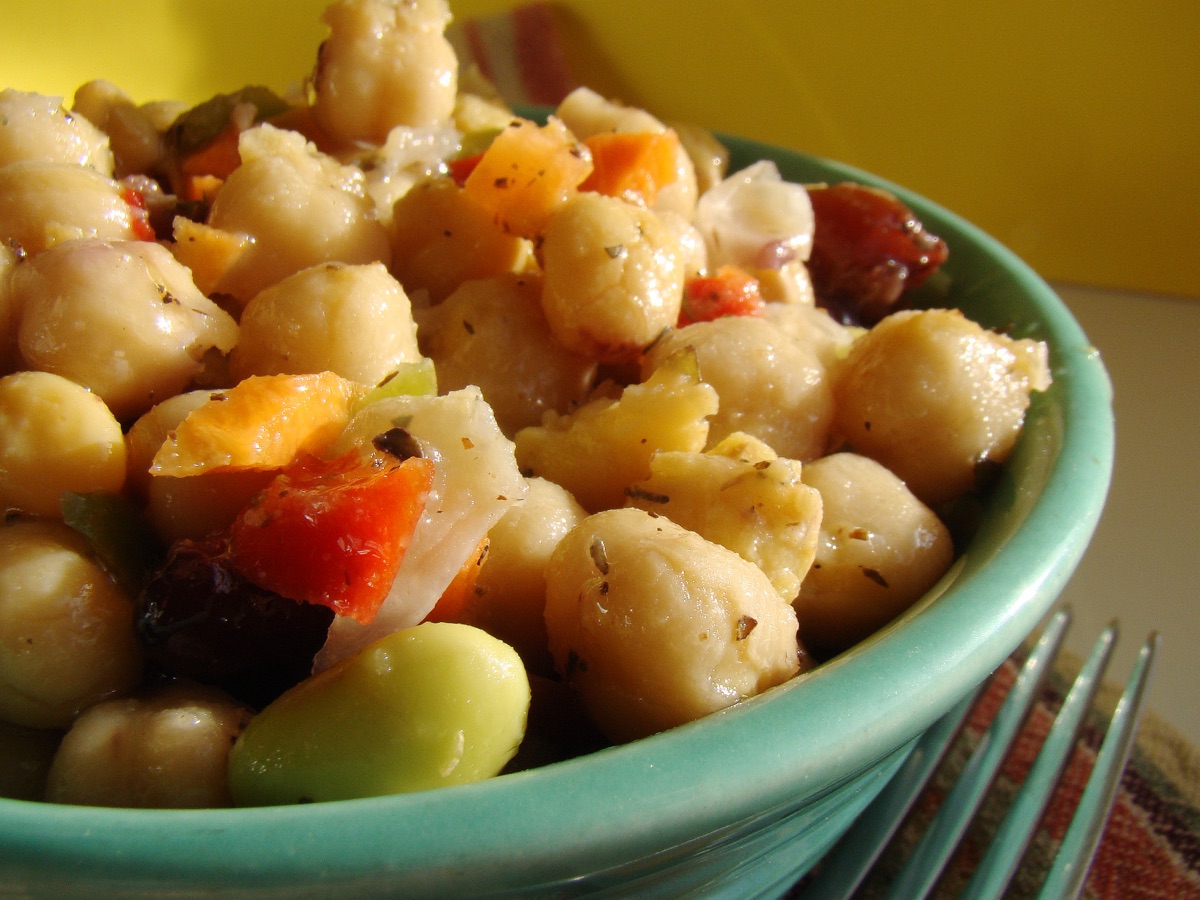
People who eat mostly plants tend to weigh less, and people who eat a lot of animal protein, especially red and processed meat, tend to weigh more. What nobody has pinned down is how much of that is the protein itself. Plant and animal proteins differ in their building blocks: animal protein carries more of the amino acids leucine, isoleucine, valine, lysine and methionine, and some studies link high levels of these to weight gain. A secondary analysis published on 20 October in BMJ Nutrition, Prevention & Health went back to a diet trial to see whether protein source and weight moved together.
The original trial ran from February to October 2019 in Washington, DC. Of 506 people screened by phone, 62 overweight adults took part: most were women (about 78%), the average age was 57, the average starting weight was about 98 kg and the average BMI about 34. Each person followed one diet for 16 weeks, went back to their usual food for four weeks, then followed the other diet for 16 weeks, in random order. The vegan diet was low in fat, built on fruit, vegetables, grains and legumes, with no animal products and no added oils. The Mediterranean diet followed the Spanish PREDIMED trial: vegetables, fruit, legumes, fish and nuts, lean white meat rather than red, and 50 g of extra-virgin olive oil a day. Nobody was told to count calories. Fifty-two people finished both diets.
As the trial reported in 2021, weight fell by 6.0 kg on the vegan diet and did not change significantly on the Mediterranean diet. The new analysis used three-day food records, analysed by a dietitian, from the start and end of each diet. On the vegan diet total protein fell by 33.3 g a day, animal protein by 47.7 g, and plant protein rose by 14.4 g. On the Mediterranean diet none of the three changed meaningfully, which makes sense: it kept fish, poultry, eggs and dairy.
Across both diets, the people whose animal protein fell most tended to lose the most weight (a correlation of 0.40), and those whose plant protein rose most did the same (−0.37). Nearly every one of the 21 amino acids measured moved in step with weight; the four the authors single out are isoleucine, lysine, methionine and tyrosine, with correlations of about 0.4. A correlation of that size is moderate: the protein changes line up with roughly a sixth of the spread in how much weight people lost.
The authors are unusually blunt about what this can't show. On the vegan diet, fat fell from about 38% of calories to 17%, carbohydrate rose from 42% to 69%, and dietary cholesterol dropped by more than 270 mg a day, all at the same time as the protein swap. With so much moving at once, they write, the link between protein source and weight 'should not be interpreted as evidence of a protein-source-specific effect'. The food records were self-reported, the volunteers were mostly well-educated middle-aged women from one city, and the work was funded by the Physicians Committee for Responsible Medicine, which promotes plant-based diets; three authors work for it and another is its president.
So the finding is a lead, not a rule. What the trial itself shows is that a low-fat vegan diet with no calorie target brought weight down by about 6 kg in four months for these adults, and that swapping animal protein for plant protein was part of the package. Whether the protein swap does any of the work on its own needs a trial that changes only the protein source while keeping fat, fibre and calories the same.
Low-fat vegan against Mediterranean diet: 16 weeks each, 62 overweight adults
62
Overweight adults, average age 57, about 78% women, each tried both diets in random order
−6.0 kg
Weight change on the low-fat vegan diet; no significant change on the Mediterranean diet
−33.3 g
Change in total protein a day on the vegan diet (animal −47.7 g, plant +14.4 g)
r = +0.40
Link between the change in animal protein and the change in weight, across both diets
r = −0.37
Link between the change in plant protein and the change in weight: more plant protein, more loss
38% → 17%
Share of calories from fat on the vegan diet; carbohydrate rose from 42% to 69% at the same time
Secondary analysis of a randomised cross-over trial (NCT03698955) run in Washington, DC in 2019; 16 weeks on each diet with a 4-week break; 52 of 62 finished. Protein and amino acid intakes come from self-reported three-day food records. Correlations are Spearman, from the first 16 weeks, and show association, not cause. Open access (CC BY-NC). Funded by the Physicians Committee for Responsible Medicine; three authors are its employees and one is its president.
- The US recommended dietary allowance for protein is 0.8 g per kg of body weight a day, about 78 g for a 98 kg adult like the average volunteer here. Many adults in rich countries eat well above it.
- Grains and legumes fill each other's gaps: most cereals are low in the amino acid lysine, while beans, lentils and chickpeas are rich in lysine but lower in methionine. Eaten over a day, they add up to a complete set.
- The Mediterranean diet in this trial was modelled on PREDIMED, a Spanish trial of 7,447 people at high heart risk that tested a Mediterranean diet with extra olive oil or nuts against a low-fat diet.
- Cutting methionine extends lifespan in rats and mice, which is one reason researchers are curious about sulphur amino acids and metabolism in people. Human evidence is still thin.
- The same 2019 trial has already been mined for other questions, including a 2024 analysis of advanced glycation end-products, compounds formed when food is browned at high heat, and their link with body weight.
- Effect of plant versus animal protein on body weight on a vegan and a Mediterranean diet: a secondary analysis of a randomised cross-over trialBMJ Nutrition, Prevention & Health · The study, open access, published online 20 October 2026; figures, funding and competing interests from the full text
- A Mediterranean Diet and Low-Fat Vegan Diet to Improve Body Weight and Cardiometabolic Risk Factors: A Randomized, Cross-over TrialJournal of the American Nutrition Association · The original trial, 2021
- Trial registration NCT03698955ClinicalTrials.gov · Low-Fat Vegan Diet Versus a Mediterranean Diet on Body Weight
- Dietary advanced glycation end-products and their associations with body weight on a Mediterranean diet and low-fat vegan diet: a randomized, cross-over trialFrontiers in Nutrition · An earlier analysis of the same trial, 2024
- Autumn Chickpea SaladWikimedia Commons · The image, CC BY 2.0 (Vegan Feast Catering)
General information, not medical advice. If you want to lose weight or change to a vegan or Mediterranean diet, talk to your doctor or a dietitian first, especially if you have a health condition, are pregnant, or take medicines for diabetes or blood pressure, which may need adjusting as your diet and weight change. A fully vegan diet needs a reliable source of vitamin B12.
Analysis by NutroPractic from the sources listed. Written for general readers; it does not replace advice from your own doctor.
From our articles
Our guides on this subject
Plain-language guides on nutrition and wellness, backed by research.
Weight-loss medicines
Eating on Ozempic, Wegovy or Mounjaro: protein first, so the weight you lose isn't your muscle
GLP-1 medicines shrink your appetite, and with it often your protein. In the big trials a quarter to more than a third of the weight lost was lean mass. What the 2025 joint nutrition advisory recommends, the arithmetic for your own target, and four small plates that get there.
8 Oct 2026
Everyday eating
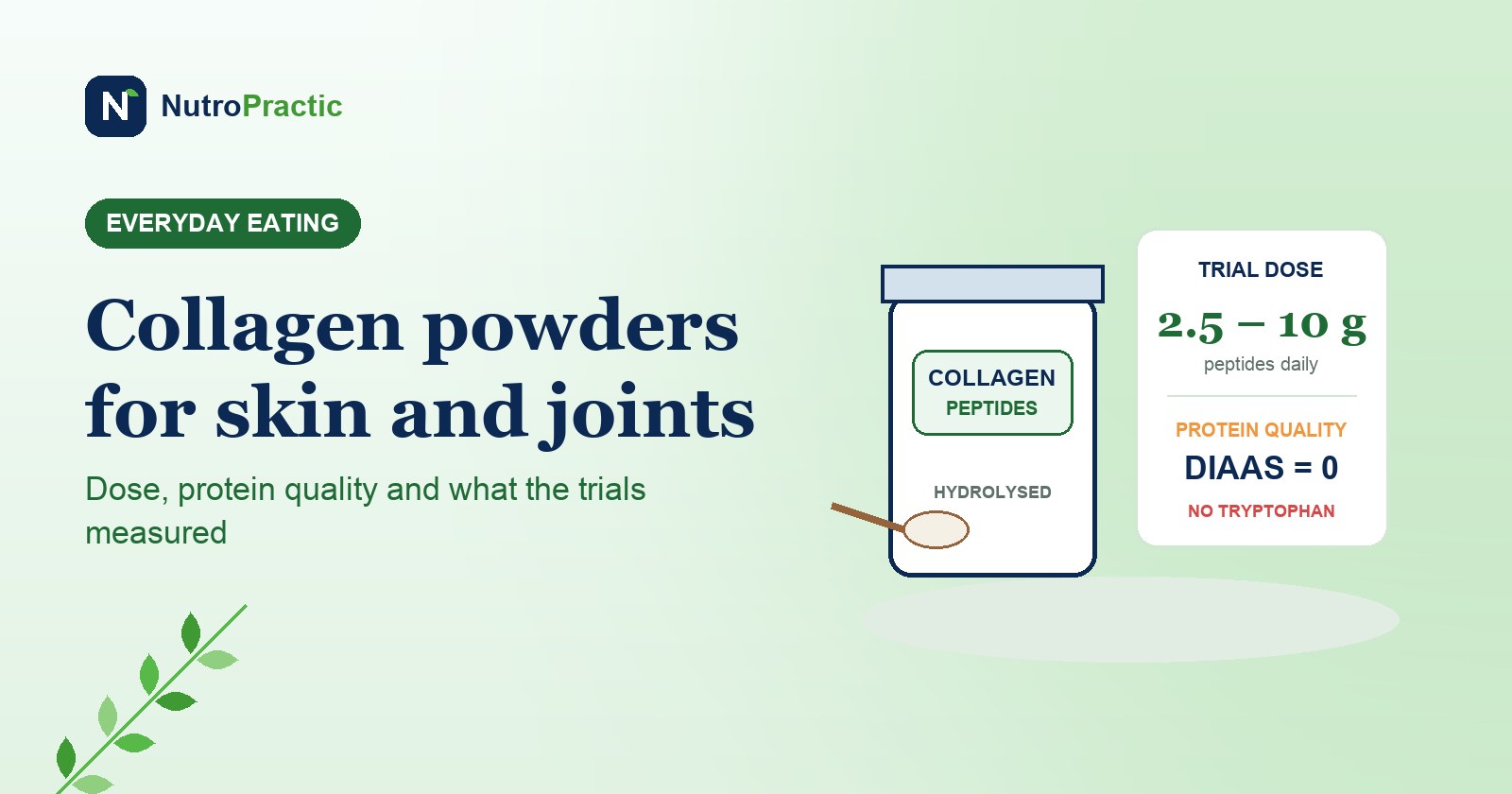
Collagen powders for skin and joints: dose, protein quality and what the trials measured
A 10 g scoop gives 9 g protein, but its protein quality score is zero. Here is what 19 skin trials and knee studies measured at 2.5 g to 10 g daily—and what collagen cannot do.
10 Nov 2026
Everyday eating
Protein bars and shakes: what you get per 100 calories
Four current labels range from 6.3 to 20 g protein per 100 kcal. Here is how bars, shakes, eggs, yogurt and lentils compare—and when a supplement actually helps.
6 Nov 2026
Newsfeed for your website
Want this feed on your website?
Add it to any site with one copy-and-paste snippet. No sign-up, and it updates itself every hour.
Start with a virtual consultation
Tell Dr. Triveni what you want to change. You will leave with a clear next step, whether you are in Toronto, London, New York or Chennai.