Cholesterol · October 19, 2026
Plant sterols are sold to lower cholesterol. In 23 adults with obesity in Valencia, two grams a day for eight weeks did nothing to their LDL
Plant sterols are one of the few supplements with an officially approved cholesterol claim in Europe: a couple of grams a day is meant to trim LDL by 7 to 12%. But most of that evidence comes from people of normal weight. Spanish researchers gave the same daily dose to adults with obesity and mildly high cholesterol, then swapped them onto a dummy powder. LDL barely moved either way. Here's why that might be, and what it does and doesn't mean.
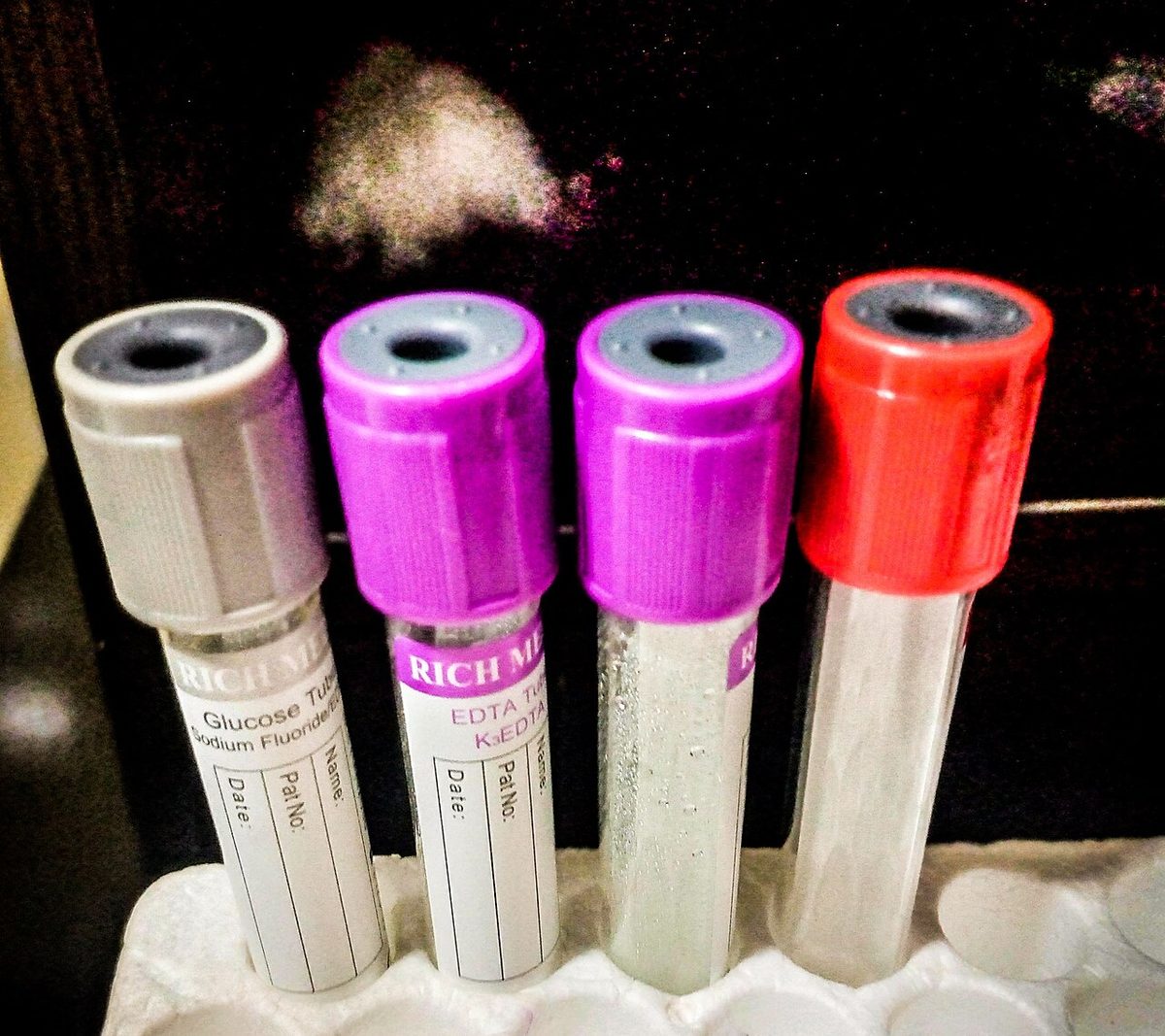
Plant sterols are cholesterol's look-alikes from the plant world. They occur naturally in vegetable oils, nuts, seeds and grains, and in the gut they compete with cholesterol for absorption, so less of it gets into the blood. That idea is well enough tested that the European Union allows foods with added plant sterols or stanols to claim that 1.5 to 3 grams a day lowers LDL cholesterol (the 'bad' kind) by 7 to 12% within two to three weeks. Spreads, yoghurt drinks and supplement sachets are sold on the back of it.
But does it work as well for everyone? Most of the trials behind the claim were run in people of normal weight, and obesity changes how the body handles cholesterol: people with more body fat tend to make more of their own cholesterol in the liver and absorb relatively less from the gut. If absorption is already low, a supplement that works by blocking absorption has less to block. A trial published online on 16 October in the American Journal of Clinical Nutrition set out to test exactly that.
The team from the University of Valencia and La Fe University Hospital recruited 23 adults with overweight or obesity (average BMI 36.4) whose LDL cholesterol was mildly raised (above 115 mg/dL, about 3 mmol/L) and who were not on cholesterol-lowering drugs. Each person took a daily sachet of powder for eight weeks: either 2 grams of microencapsulated plant sterols or a look-alike placebo with the same filler ingredients. After a six-week break, they switched to the other sachet for another eight weeks. Neither the participants nor the researchers knew which sachet was which.
The result was flat. LDL cholesterol changed by +0.1 mg/dL on plant sterols and +3.9 mg/dL on placebo, a difference that was not statistically significant (p = 0.632). Nor was there a difference in any other blood fat, in hs-CRP (a marker of inflammation), or in blood sugar and insulin measures. A few early differences in body composition, muscle and lifestyle measures did not hold up once the researchers corrected for the number of comparisons they had made.
The authors suggest plant sterols may simply work less well in people with obesity. That fits the absorption idea, but the trial didn't measure absorption, so it remains a hypothesis. It was also small: 23 people is enough to spot a typical LDL drop of the size seen in other trials, which is what it was designed for, but too few to say anything firm about the other outcomes. And it tested one product, a powder taken as a sachet; plant sterols mixed into a meal with some fat are generally thought to work best, so the form may matter too.
So this is not proof that plant sterols are useless, and it doesn't touch the many trials in which they did lower LDL. It is a reason not to assume a cholesterol-lowering food or supplement will work the same in every body. If you're using one, the honest test is your own blood result: a repeat cholesterol check after a couple of months will show whether it's doing anything for you.
2 g a day of plant sterols vs placebo, 8 weeks each, 23 adults with overweight or obesity and mildly raised LDL
23
Adults with overweight or obesity, each taking both the plant sterol and the placebo sachet in turn
36.4
Average BMI of the participants (± 4.2)
2 g/day
Plant sterols in the daily sachet, for 8 weeks, with a 6-week break before switching
+0.1 vs +3.9
Change in LDL cholesterol (mg/dL), plant sterols vs placebo
p = 0.632
No significant difference in LDL between the two sachets
7 to 12%
LDL drop the EU-approved claim promises for 1.5 to 3 g a day, mostly based on people of normal weight
Study: Musto L, Dura A, Merino-Torres JF, Alegría A, Garcia-Llatas G, 'Dietary supplementation with plant sterols for obesity management and related metabolic disorders: A randomized, double-blind, placebo-controlled crossover clinical trial', American Journal of Clinical Nutrition, published online 16 October 2026, article 101588, doi 10.1016/j.ajcnut.2026.101588. University of Valencia and Health Research Institute La Fe, Valencia, Spain; registered as NCT06481020. 23 participants with overweight or class I to III obesity and mild hypercholesterolaemia (BMI 36.4 ± 4.2 kg/m²); registration criteria included LDL cholesterol above 115 mg/dL, no cholesterol-lowering drugs, non-smokers, not vegan or vegetarian. Food supplement with 2 g/day plant sterols (powdered, microencapsulated free plant sterols in a sachet) or an excipient-based placebo for 8 weeks per phase, 6-week washout. Primary outcome LDL cholesterol: change from baseline +0.1 mg/dL (95% CI -7.1 to 7.3) after plant sterols vs +3.9 mg/dL (-7.6 to 15.4) after placebo, p = 0.632. No difference in other lipids, hs-CRP or glucose regulation; no between-treatment difference in body composition, sarcopenia or lifestyle measures after correction for multiple testing. The trial was powered only for LDL cholesterol; secondary findings are exploratory. Funding: Spanish Ministry of Science and Innovation (PID2019-104167RB-I00) and Generalitat Valenciana (CIAICO/2021/076). The 7 to 12% figure is the EU-authorised health claim wording for 1.5 to 3 g/day (Commission Regulation (EU) No 686/2014).
- Plant sterols are found naturally in vegetable oils, nuts, seeds, whole grains and legumes, but a typical diet supplies only a few hundred milligrams a day, far below the 1.5 to 3 grams used in cholesterol trials.
- In the EU, foods with added plant sterols must carry a label saying they are intended only for people who want to lower their blood cholesterol and may not be nutritionally appropriate for pregnant or breastfeeding women or children under five.
- A crossover trial, where each person tries both the real product and the placebo in turn, lets every participant act as their own comparison, which is why it can work with far fewer people than a standard trial.
- EFSA, the EU food safety agency, found that plant sterols reach their full effect on LDL cholesterol within two to three weeks, so eight weeks was plenty of time for an effect to show.
- Dietary supplementation with plant sterols for obesity management and related metabolic disorders: A randomized, double-blind, placebo-controlled crossover clinical trialAmerican Journal of Clinical Nutrition, October 2026 · The study
- Abstract on PubMedPubMed, PMID 42887695 · Methods, results with confidence intervals, funding and conflict-of-interest statements
- Trial registration NCT06481020ClinicalTrials.gov · Who could take part, the sachet and placebo, and the study schedule
- Commission Regulation (EU) No 686/2014 on the plant sterol and stanol cholesterol claimEUR-Lex · The EU-authorised claim: 1.5 to 3 g a day lowers LDL cholesterol by 7 to 12% in two to three weeks
General information, not medical advice. This was a small trial of one supplement in one group of people, and it does not cancel out the many trials in which plant sterols did lower LDL cholesterol. If your cholesterol is high, talk to your doctor or a registered dietitian before relying on supplements or fortified foods, and don't stop any prescribed medicine on the strength of a news story.
Analysis by NutroPractic from the sources listed. Written for general readers; it does not replace advice from your own doctor.
From our articles
Our guides on this subject
Plain-language guides on nutrition and wellness, backed by research.
Heart health
Triglycerides: what food, alcohol, weight loss and omega-3 actually change
A 5-10% weight loss often lowers triglycerides by about 20-30%, as can 4 g/day of prescription omega-3. Here is what 150, 500 and 1,000 mg/dL mean, which changes have numbers behind them, and when a result needs prompt care.
9 Nov 2026
Heart health
Oats and beta-glucan: how many grams lower LDL, and how much steel-cut, rolled and instant oats it takes
The 3 g a day of beta-glucan behind the FDA and EFSA claims lowers LDL by about 0.25 mmol/L (10 mg/dL). That is roughly 60 to 68 g of dry oats or 50 g of oat bran a day. Grams per portion, glycaemic index by oat type and the gluten caveat.
17 Nov 2026
Medicines and nutrition
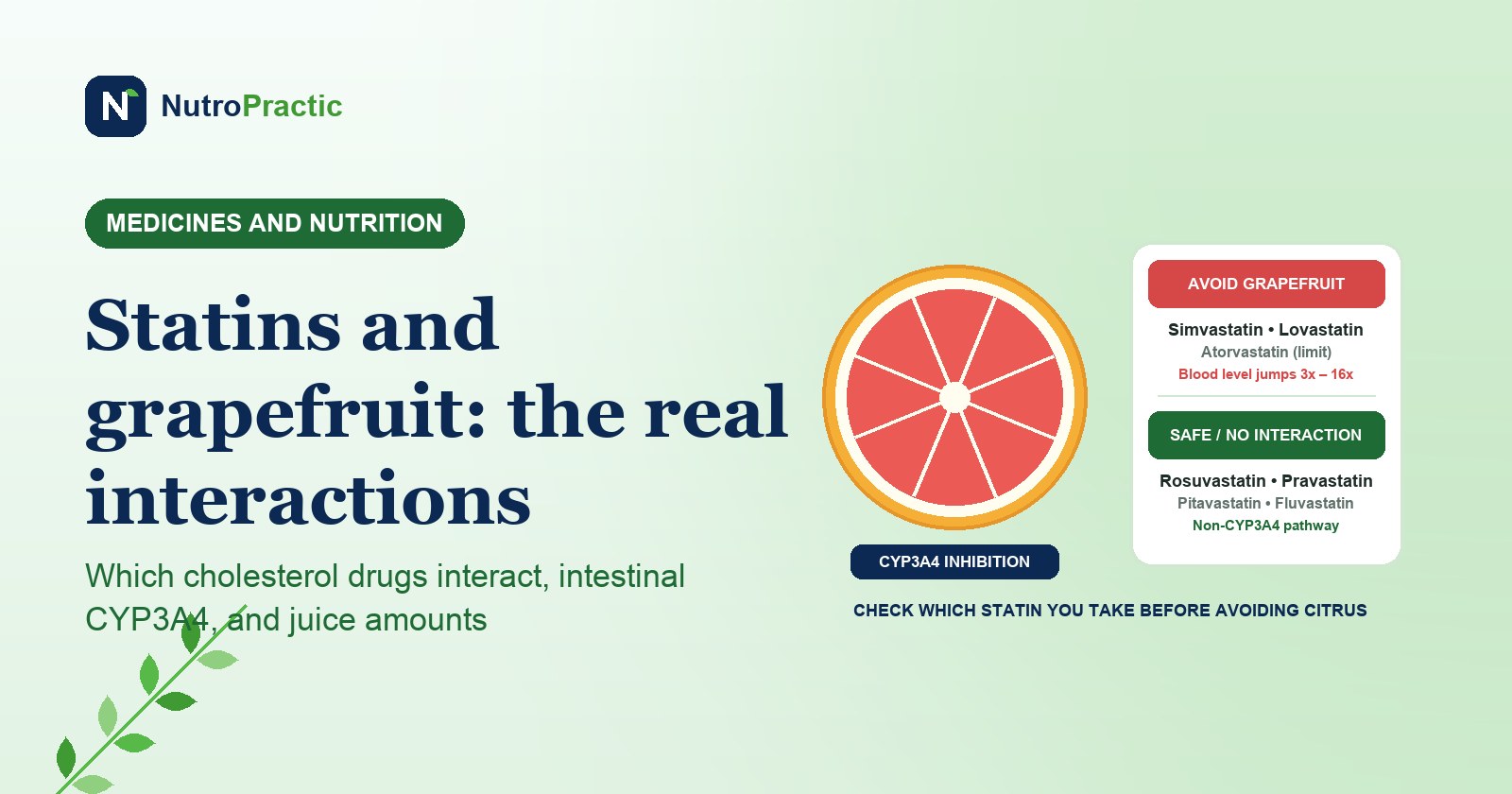
Statins and grapefruit: which cholesterol medicines actually interact, and how much fruit matters
A blanket ban on grapefruit is one of the most common warnings given to statin users, yet several widely prescribed cholesterol drugs do not interact with it at all. Learn the science of intestinal CYP3A4, actual AUC multipliers, portion thresholds, timing myths, and which statins allow you to safely enjoy citrus.
14 Nov 2026
Newsfeed for your website
Want this feed on your website?
Add it to any site with one copy-and-paste snippet. No sign-up, and it updates itself every hour.
Start with a virtual consultation
Tell Dr. Triveni what you want to change. You will leave with a clear next step, whether you are in Toronto, London, New York or Chennai.