Cholesterol · October 28, 2026
Two cartons of soymilk a day lowered LDL cholesterol in 242 Thai adults. The version with added plant sterols and fibre took off another 5.5 mg/dL
In a double-blind trial at two hospitals in Chiang Mai and Bangkok, adults with high LDL cholesterol drank two 180 mL cartons of soymilk a day for eight weeks, either plain or with plant sterols and inulin added. LDL fell in both groups, by 9.8% with the enriched drink against 6.3% with the plain one, and most of the drop came in the first two weeks. The extra benefit is modest, the drink caused more stomach complaints, and the company that made both drinks funded the study.
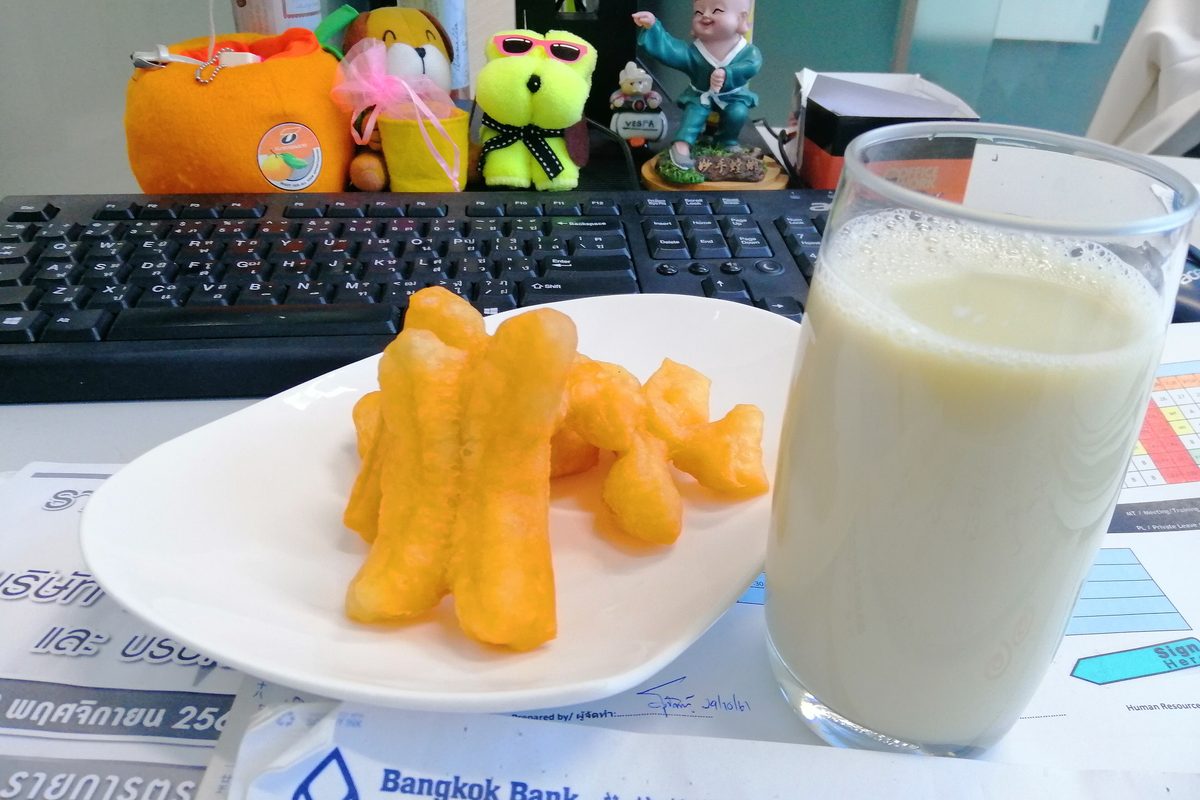
Plant sterols, soluble fibre and soy protein each lower LDL cholesterol a little on their own. They do it in different ways: sterols compete with cholesterol for absorption in the gut, soluble fibre carries bile acids out of the body, and soy protein seems to nudge the liver's cholesterol handling. A team at Chiang Mai University put all three into one ready-to-drink soymilk and tested it against plain soymilk. The results were published in the European Journal of Nutrition on 25 October.
The trial ran from April 2013 to April 2014 at Maharaj Nakorn Chiang Mai Hospital and Phramongkutklao Hospital in Bangkok. It enrolled 242 adults whose LDL cholesterol was above 130 mg/dL (about 3.4 mmol/L): 194 women and 48 men, average age 42, average BMI 24.3. Eighteen were already on a statin at a stable dose. Everyone got the same advice on diet and exercise, then drank two 180 mL cartons a day for eight weeks, one in the morning and one in the afternoon, as a snack on top of their usual food. The cartons looked identical, and neither the participants nor the researchers knew who had which.
Each carton of either drink had 5 g of soy protein, so both groups got 10 g a day. The enriched carton also carried 1 g of free plant sterols and 5 g of inulin, a soluble fibre found in plants such as chicory, making 2 g of sterols and 11.6 g of total fibre a day. The two drinks were close in energy (114 against 120 kcal a carton), and the enriched one had less sugar (1 g against 4 g). Returned empty cartons suggested that more than 99% of the drinks were taken.
LDL started at about 165 mg/dL in both groups (4.3 mmol/L). After eight weeks it was down 16.6 mg/dL with the enriched drink and 11.2 mg/dL with plain soymilk, 9.8% against 6.3%. Allowing for starting levels, the enriched drink lowered LDL by 5.5 mg/dL more (about 0.14 mmol/L), with a wide margin of uncertainty: anything from 0.6 to 10.4 mg/dL. Most of the effect showed up fast. By week two LDL was already 11.7% lower in the enriched group and 6.8% lower in the plain group, and it barely moved after that. Total cholesterol followed the same pattern, while HDL cholesterol, triglycerides and fasting glucose did not differ between the groups.
Fibre explains part of the contrast. Before the trial these adults ate only about 2.5 g of fibre a day by their food records, far below the 25 g or more most guidelines suggest. The plain drink lifted that to about 7 g and the enriched one to about 15 g. The cost was comfort: 16.3% of people on the enriched drink had a side effect judged related to it, mostly mild stomach and gut complaints, against 5.9% on plain soymilk, and two people stopped in the first fortnight because of a rash. There were no serious adverse events.
Some caution is due. Dairy Plus Company Limited in Thailand made both drinks and funded the study through an educational grant. The trial was registered only after it had started, it finished 12 years before this paper came out, and the final analysis used a different statistical model from the one in the original protocol. There was no group without soymilk, so the fall in the plain group can't be put down to soy alone: the diet advice, being in a study and the tendency of high readings to come down on retesting all play a part. Eight weeks says nothing about heart attacks or strokes, and because sterols and fibre were added together, the trial can't tell which one did the work. What it does show is the size of effect to expect from adding these ingredients to a daily drink: a few mg/dL, not a substitute for treatment when cholesterol is high.
Plant sterol and fibre soymilk against plain soymilk: 8 weeks, 242 adults
242
Adults with LDL cholesterol above 130 mg/dL, randomised at two Thai hospitals
2 × 180 mL
Cartons a day for 8 weeks; enriched cartons gave 2 g plant sterols and 10 g added inulin a day
−9.8% vs −6.3%
Change in LDL cholesterol at 8 weeks, enriched against plain soymilk
5.5 mg/dL
Extra LDL drop with the enriched drink after allowing for starting levels (95% CI 0.6 to 10.4)
−11.7% vs −6.8%
LDL change after only 2 weeks; the gap barely grew after that
16.3% vs 5.9%
People with a side effect judged related to the drink, mostly mild gut complaints
Double-blind, randomised, with plain soymilk as the comparison; 239 of 242 finished. Run in 2013–14 and published in October 2026 (open access, CC BY-NC-ND 4.0); registered after the start; the analysis model differed from the original protocol. Funded by an educational grant from Dairy Plus Company Limited, which made both drinks. Diet and activity came from self-reported records. HDL cholesterol, triglycerides and fasting glucose did not differ between groups.
- A normal diet supplies about 300 to 600 mg of plant sterols a day, from vegetable oils, nuts, seeds, grains, fruit and vegetables. Sterol-enriched foods are designed to give 1.5 to 3 g, several times that amount.
- The European Food Safety Authority allows foods giving 1.5 to 3 g of plant sterols a day to claim they lower blood cholesterol, and advises not going above 3 g a day because more brings no extra benefit.
- In a 2003 trial in JAMA, a 'portfolio' diet combining plant sterols, soy protein, viscous fibre and almonds lowered LDL cholesterol by about 29% in a month, close to what the statin lovastatin achieved in the same study.
- Inulin, the fibre added here, is a chain of fructose units found in chicory root, onions, garlic, leeks and bananas. Gut bacteria ferment it, which is why larger doses can cause wind and bloating.
- To convert cholesterol from mg/dL to mmol/L, divide by about 38.7. The trial's starting LDL of 165 mg/dL is about 4.3 mmol/L.
- A randomized study comparing plant sterol- and soluble fiber-enriched soymilk with plain soymilk in adults with elevated LDL cholesterolEuropean Journal of Nutrition · The study, open access (CC BY-NC-ND 4.0), published 25 October 2026; figures from the full text
- Trial registration NCT02459314ClinicalTrials.gov · Registered design of the soymilk trial
- Effects of a dietary portfolio of cholesterol-lowering foods vs lovastatin on serum lipids and C-reactive proteinJAMA · The 2003 portfolio diet trial
- Soy milk 2Wikimedia Commons · The image, CC BY 3.0 (Sittithai.Pim)
General information, not medical advice. If your cholesterol is high, talk to your doctor about your overall heart risk and what treatment you need. Don't stop or cut down a statin or any other medicine because of a food or drink, check with your doctor before taking plant sterol products alongside medicines, and ask a doctor or dietitian before big diet changes if you have a health condition.
Analysis by NutroPractic from the sources listed. Written for general readers; it does not replace advice from your own doctor.
From our articles
Our guides on this subject
Plain-language guides on nutrition and wellness, backed by research.

Cardiovascular wellness
Psyllium husk: how much soluble fibre lowers LDL cholesterol and stabilizes post-meal glucose in clinical trials
Viscous soluble fibre forms a thick gel matrix in the small intestine that binds bile acids and blunts post-meal glucose spikes. Across dozens of randomized controlled trials, 7 to 10.2 grams of psyllium daily lowers LDL cholesterol by 6% to 12% without stripping HDL, while reducing postprandial glucose surges by 15% to 25% in metabolic syndrome and type 2 diabetes. Discover the bile acid sequestration mechanism, trial meta-analyses, exact timing before meals, water ratios, and titration protocols to avoid gas and cramping.
13 Nov 2026
Heart health
Lowering LDL cholesterol with food: what the portfolio diet trials showed
In a 2003 trial, four foods eaten together (oats and other sticky fibre, plant sterols, soy and nuts) lowered LDL almost as much as a low-dose statin. At home the average was about half that. How much each food does, a realistic day, and when food is not enough.
30 Oct 2026
Heart health
Oats and beta-glucan: how many grams lower LDL, and how much steel-cut, rolled and instant oats it takes
The 3 g a day of beta-glucan behind the FDA and EFSA claims lowers LDL by about 0.25 mmol/L (10 mg/dL). That is roughly 60 to 68 g of dry oats or 50 g of oat bran a day. Grams per portion, glycaemic index by oat type and the gluten caveat.
17 Nov 2026
Newsfeed for your website
Want this feed on your website?
Add it to any site with one copy-and-paste snippet. No sign-up, and it updates itself every hour.
Start with a virtual consultation
Tell Dr. Triveni what you want to change. You will leave with a clear next step, whether you are in Toronto, London, New York or Chennai.