Plant-based diets · October 21, 2026
Eating mostly plants did nothing for survival in 5,872 older Chinese adults once the researchers allowed for age and lifestyle. Which plants they ate did: whole grains, vegetables and beans went with fewer deaths, white rice, pickles and sugar with more
A cohort from China's long-running longevity survey, followed for about nine years, was scored three ways on its plant-based eating. The plain 'more plants, less meat' score looked protective at first and then vanished in the adjusted analysis. The two scores that split plant foods into better and worse kept their link with death rates, although the gaps were modest and a check for who was left out of the study weakened them.
'Plant-based' sells everything from oat milk to vegan crisps, but a plate of white rice, pickled vegetables and sweet buns is plant-based too. A team led from Chengdu University of Traditional Chinese Medicine went back to a large survey of older Chinese adults to ask whether that difference shows up in who is still alive years later. The paper came out in Frontiers in Nutrition on 16 October.
The data come from the 2008 round of the Chinese Longitudinal Healthy Longevity Survey, which interviews people aged 65 and over across 23 provinces. The authors kept 5,872 people who had no heart disease or stroke and fell into the early stages (0 to 2) of what the American Heart Association now calls cardiovascular-kidney-metabolic syndrome: stage 0 had a normal weight and waist and none of the listed conditions, stage 1 was overweight or had a large waist, and stage 2 had a diagnosed high blood pressure, diabetes, high cholesterol or kidney inflammation. This was an old group. In stage 0 the median age was 85, and over a median of 108 months 2,870 of the 5,872, almost half, died.
Everyone answered a food frequency questionnaire once, in 2008. Each of 16 food groups was scored from 1 to 5 by how often it was eaten, and the scores were added up three ways. The overall plant-based diet index rewards any plant food and penalises animal foods. The healthful index rewards whole grains, fresh fruit, fresh vegetables, legumes, nuts and tea and penalises everything else. The unhealthful index rewards refined grains, preserved vegetables and sugar and penalises the rest.
Before any adjustment all three scores pointed the same way: the quarter of people who ate most plant-based overall had a 25% lower death rate than the quarter who ate least. After allowing for age, sex, education, income, occupation, marriage, smoking, drinking, exercise and sleep, that overall score lost its link with death entirely (hazard ratio 1.07, which could be chance). The healthful score kept it: the top quarter had a 13% lower death rate than the bottom quarter. The unhealthful score went the other way, with a 19% higher death rate in its top quarter. Per point on the 16 to 80 scale, the difference was about 1% either way.
The links looked stronger in stages 1 and 2 than in the healthiest stage 0, where they were not significant on their own. But the formal test of whether stage changes the effect was not significant either, so the authors say there is little evidence that diet matters more once weight or blood pressure starts to slip. Among the subgroups, the healthful score had a stronger link in people who exercised regularly.
The weak points are real. More people were dropped for missing health data (9,295) than were analysed, and when the authors weighted the results to stand in for those left out, the adjusted links shrank and were no longer significant. Diet was asked about once and could have changed over nine years. Kidney function, cholesterol and blood sugar were never measured, so the stages rest on self-reported diagnoses and a tape measure. There was no information on total calories, medicines, frailty or memory, and no cause of death, so it is unknown whether the extra deaths were from heart or kidney disease at all. It is an observational study, so it shows a link, not that the food caused the difference. The authors had no funding and declare no conflicts of interest.
What it adds is a careful replication, in very old people in China, of a pattern seen before in American health professionals: counting plants is not enough, and the kind of plant food is what tracks with health. White rice, pickles and sugar are plants too.
Plant-based diet scores and death from any cause in 5,872 Chinese adults aged 65 and over, followed for a median of nine years (CLHLS, 2008 to 2019)
2,870
Deaths among the 5,872 people over a median follow-up of 108 months
-13%
Death rate in the top quarter of the healthful plant score against the bottom quarter, after adjustment (HR 0.87)
+19%
Death rate in the top quarter of the unhealthful plant score against the bottom quarter, after adjustment (HR 1.19)
-25% → none
The overall 'more plants' score: top quarter's lower death rate before adjustment (HR 0.75) and after it (HR 1.07, not significant)
85
Median age of the 3,736 people in the healthiest group (stage 0)
9,295
People left out for missing health data, more than the number analysed
Study: Zhang S, Tang E, Jiang Y, Zhu K, Zhuang X, Wang H, He X, Lu Y, Zhang Q, Li X, Song J, 'The associations between healthful and unhealthful plant-based dietary patterns and all-cause mortality among older Chinese adults with data-adapted early-stage cardiovascular-kidney-metabolic syndrome (stages 0–2): a prospective cohort study from the CLHLS', Frontiers in Nutrition 2026, 13:1915953, published 16 October 2026, doi 10.3389/fnut.2026.1915953 (open access, CC BY). Prospective cohort from the 2008 wave of the Chinese Longitudinal Healthy Longevity Survey, 23 provinces; vital status followed to March 2019. 16,954 considered; 396 under 65 and 9,295 with missing diagnoses excluded, 166 without follow-up, 1,225 with heart disease or stroke; 5,872 analysed (stage 0: 3,736; stage 1: 811; stage 2: 1,325). CKM stages adapted to the data: BMI 24 and waist 90 cm (men) / 85 cm (women) cut-offs, and self-reported physician diagnoses; no laboratory measures. Food frequency questionnaire once at baseline; 16 food groups scored 1 to 5; PDI, hPDI and uPDI range 16 to 80. Model 2 adjusted for age, sex, ethnicity, marital status, education, smoking, drinking, income, exercise, occupation, sleep duration and sleep quality. Deaths 2,870, median follow-up 108 months. hPDI per point HR 0.989 (95% CI 0.982 to 0.995); Q4 vs Q1 0.868 (0.783 to 0.961), p for trend 0.020. uPDI per point 1.012 (1.006 to 1.019); Q4 vs Q1 1.192 (1.060 to 1.340), p for trend 0.006. PDI unadjusted Q4 vs Q1 0.749 (0.677 to 0.830); adjusted per point 1.001 (0.994 to 1.007), Q4 vs Q1 1.067 (0.956 to 1.191). Interaction with CKM stage: hPDI p = 0.062, uPDI p = 0.824 (adjusted). Results held after excluding early deaths, cancer at baseline and strict vegetarians, and with extra adjustment for chronic disease and BMI; in inverse probability-of-selection weighted models the adjusted estimates moved towards no effect and their confidence intervals included 1. No data on energy intake, medicines, frailty, cognition or cause of death. No funding; no conflicts declared.
- The healthful and unhealthful plant-based diet indices were introduced in 2016 by researchers at Harvard, who used them in about 200,000 US nurses and health professionals and found the healthful version went with less type 2 diabetes and the unhealthful one with more.
- In the original Harvard scoring, fruit juice, sugar-sweetened drinks, refined grains, potatoes and sweets count as the 'less healthy' plant foods, which is why a diet can be fully vegetarian and still score badly.
- The American Heart Association set out cardiovascular-kidney-metabolic syndrome in a 2023 advisory, with stages from 0 (no risk factors) to 4 (established heart disease), to treat obesity, diabetes, kidney disease and heart disease as one connected condition.
- The Chinese Longitudinal Healthy Longevity Survey began in 1998 and set out to interview large numbers of the oldest old, including thousands of centenarians, making it one of the largest studies of very old people anywhere.
- The associations between healthful and unhealthful plant-based dietary patterns and all-cause mortality among older Chinese adults with data-adapted early-stage cardiovascular-kidney-metabolic syndrome (stages 0–2): a prospective cohort study from the CLHLSFrontiers in Nutrition, October 2026 · The study: full text, open access
- Plant-Based Dietary Patterns and Incidence of Type 2 Diabetes in US Men and Women: Results from Three Prospective Cohort StudiesPLOS Medicine, 2016 · Where the healthful and unhealthful plant-based indices come from
- Cardiovascular-Kidney-Metabolic Health: A Presidential Advisory From the American Heart AssociationCirculation, 2023 · The definition and stages of CKM syndrome
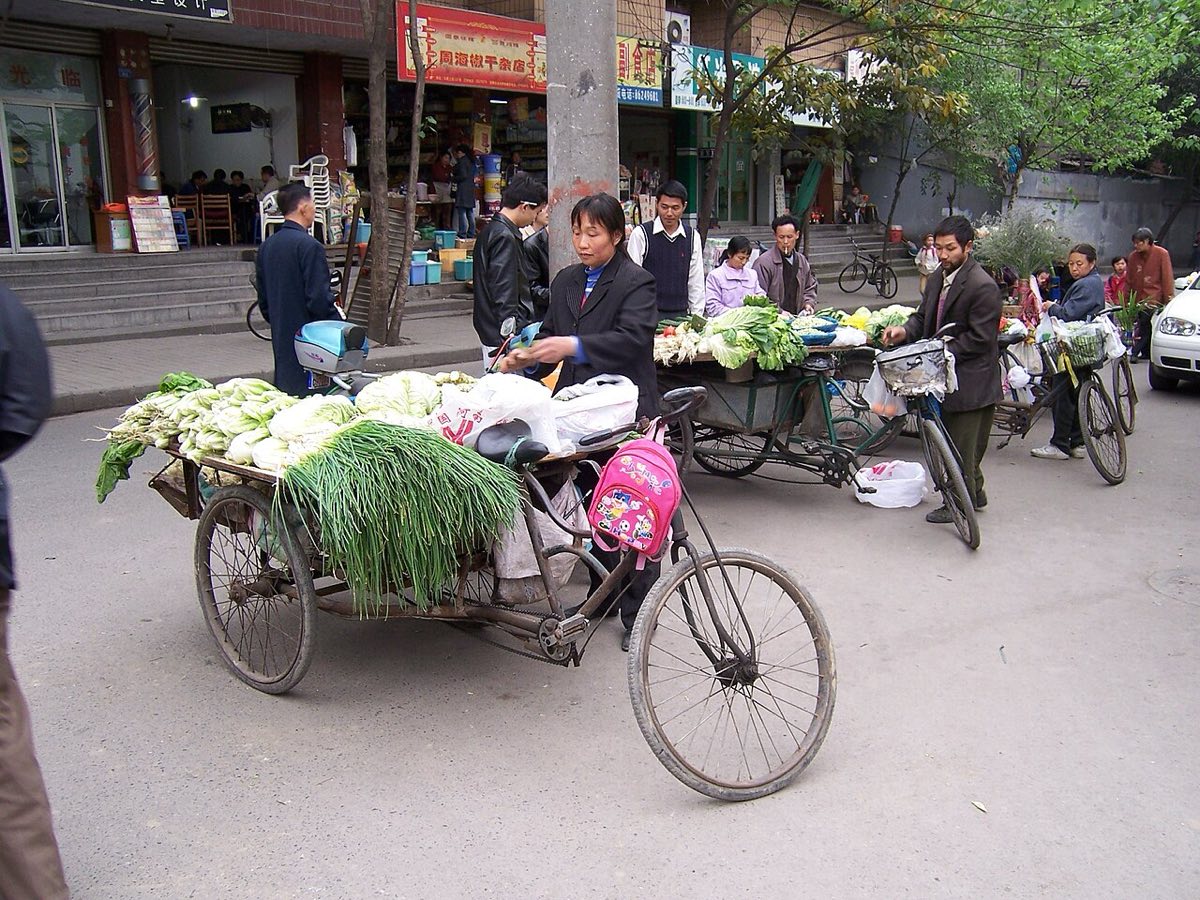
- China - Chengdu 5 - vegetable marketWikimedia Commons · The photo, CC BY 2.0 (McKay Savage)
General information, not medical advice. This was an observational study of people aged 65 and over in China; it shows a link between diet scores and survival, not that changing your diet will lengthen your life. If you have diabetes, kidney disease or high blood pressure, talk to your doctor or dietitian before changing your diet.
Analysis by NutroPractic from the sources listed. Written for general readers; it does not replace advice from your own doctor.
From our articles
Our guides on this subject
Plain-language guides on nutrition and wellness, backed by research.

Cardiovascular wellness
Psyllium husk: how much soluble fibre lowers LDL cholesterol and stabilizes post-meal glucose in clinical trials
Viscous soluble fibre forms a thick gel matrix in the small intestine that binds bile acids and blunts post-meal glucose spikes. Across dozens of randomized controlled trials, 7 to 10.2 grams of psyllium daily lowers LDL cholesterol by 6% to 12% without stripping HDL, while reducing postprandial glucose surges by 15% to 25% in metabolic syndrome and type 2 diabetes. Discover the bile acid sequestration mechanism, trial meta-analyses, exact timing before meals, water ratios, and titration protocols to avoid gas and cramping.
13 Nov 2026
Everyday eating
Eating well on a tight food budget: what the cost studies found, and the cheapest protein and fibre per dollar
Healthier diets cost about $1.48 a person a day more, according to a meta-analysis of 27 studies. What the USDA's Thrifty Food Plan costs in 2026, our price check of protein and fibre per dollar at September 2026 prices, why frozen and tinned vegetables are not second best, and a batch-cooked stew at $1.40 a serving.
20 Oct 2026
Everyday eating
The fibre gap: why most adults fall short, and an easy 30-gram day
Most adults in the US, Canada and Europe eat far less fibre than recommended, even though higher intakes are linked to lower rates of heart disease, type 2 diabetes and bowel cancer. How much you need, where it hides, and a sample day that gets you to 30 grams.
3 Oct 2026
Newsfeed for your website
Want this feed on your website?
Add it to any site with one copy-and-paste snippet. No sign-up, and it updates itself every hour.
Start with a virtual consultation
Tell Dr. Triveni what you want to change. You will leave with a clear next step, whether you are in Toronto, London, New York or Chennai.