Maternal & paternal nutrition · November 29, 2026
Fathers' 'Prudent' diet during pregnancy linked to 24% lower odds of obesity in their children at age 8 in Canadian CHILD cohort
In 1,693 father-child pairs from the Canadian CHILD study, fathers whose diet during their partner's pregnancy was rich in vegetables, fruit and legumes had children with less body fat and 24% lower odds of obesity per standard deviation at age 8, more so when mothers had overweight or obesity.

Maternal nutrition has been studied extensively in relation to childhood obesity, but the contribution of the father's diet is poorly understood.
In The American Journal of Clinical Nutrition, researchers analysed 1,693 father-child dyads from the prospective Canadian CHILD Cohort Study. Fathers' prenatal dietary patterns were derived by principal component analysis into a 'Prudent' pattern (high in vegetables, fruit and legumes) and a 'Western-like' pattern (high in potatoes, pasta and fast food). At 8 years, children's BMI z-score, fat mass percentage, waist-to-height ratio and obesity were measured, with models adjusted for paternal characteristics and maternal diet.
Each standard deviation increase in the fathers' Prudent score was associated with a lower child BMI z-score (beta -0.12), lower fat mass percentage (beta -0.76) and lower waist-to-height z-score (beta -0.12), as well as 24% lower odds of obesity by WHO criteria (OR 0.76, 95% CI 0.64 to 0.91) and 29% lower odds of pre-clinical obesity (OR 0.71, 95% CI 0.57 to 0.88). The associations were more pronounced among children of mothers with overweight or obesity and held in sensitivity analyses accounting for birth, infancy and postnatal factors.
Fathers' Western-like scores showed no consistent associations with child outcomes. As an observational study it cannot show that the fathers' diet caused the difference, but the authors say the findings support including both parents in future preconception dietary interventions aimed at reducing childhood obesity.
Fathers' prenatal diet and child obesity at age 8 (CHILD Cohort, n = 1,693)
OR 0.76
odds of obesity (WHO) at age 8 per SD of paternal Prudent score (95% CI 0.64-0.91)
OR 0.71
odds of pre-clinical obesity at age 8 per SD of paternal Prudent score (95% CI 0.57-0.88)
1,693
father-child dyads analysed
No link
no consistent association for paternal Western-like dietary scores
Prospective Canadian CHILD Cohort Study in The American Journal of Clinical Nutrition, 27 Nov 2026. Models adjusted for paternal prenatal characteristics and maternal diet.
- At age 8, 8.0% of the children in the study had obesity by WHO criteria.
- The links with the father's diet were stronger in families where the mother had overweight or obesity before pregnancy.
- Prenatal Paternal Dietary Patterns are Associated with Childhood Adiposity and Obesity in the Prospective Canadian CHILD Cohort StudyThe American Journal of Clinical Nutrition, 27 Nov 2026 · Prospective cohort study of fathers' prenatal dietary patterns and offspring adiposity at 8 years.
This article is general information about published research, not medical advice. It does not diagnose, treat or replace care from a qualified health professional. Talk to your doctor before starting a supplement or changing your diet, especially if you are pregnant, have a medical condition or take medicines.
Analysis by NutroPractic from the sources listed. Written for general readers; it does not replace advice from your own doctor.
From our articles
Our guides on this subject
Plain-language guides on nutrition and wellness, backed by research.
Women's health
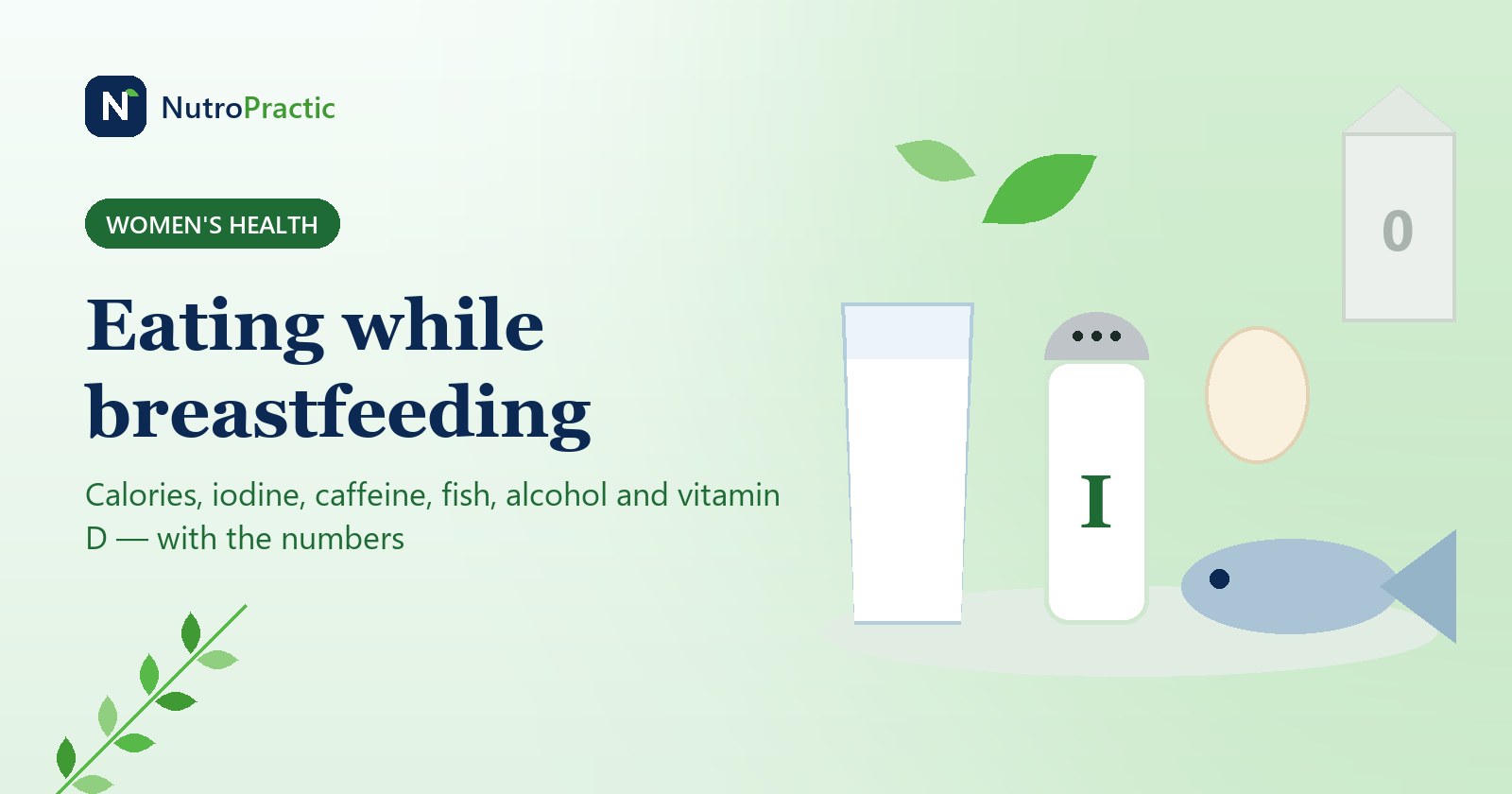
Eating while breastfeeding: extra calories, iodine, caffeine, fish and alcohol, with the actual numbers
Breastfeeding usually adds about 330–400 kcal a day, but the smaller numbers can matter more: 290 mcg iodine, 400 IU vitamin D for baby, 8–12 oz fish a week, and a caffeine total you can actually add up.
6 Nov 2026
Women's health
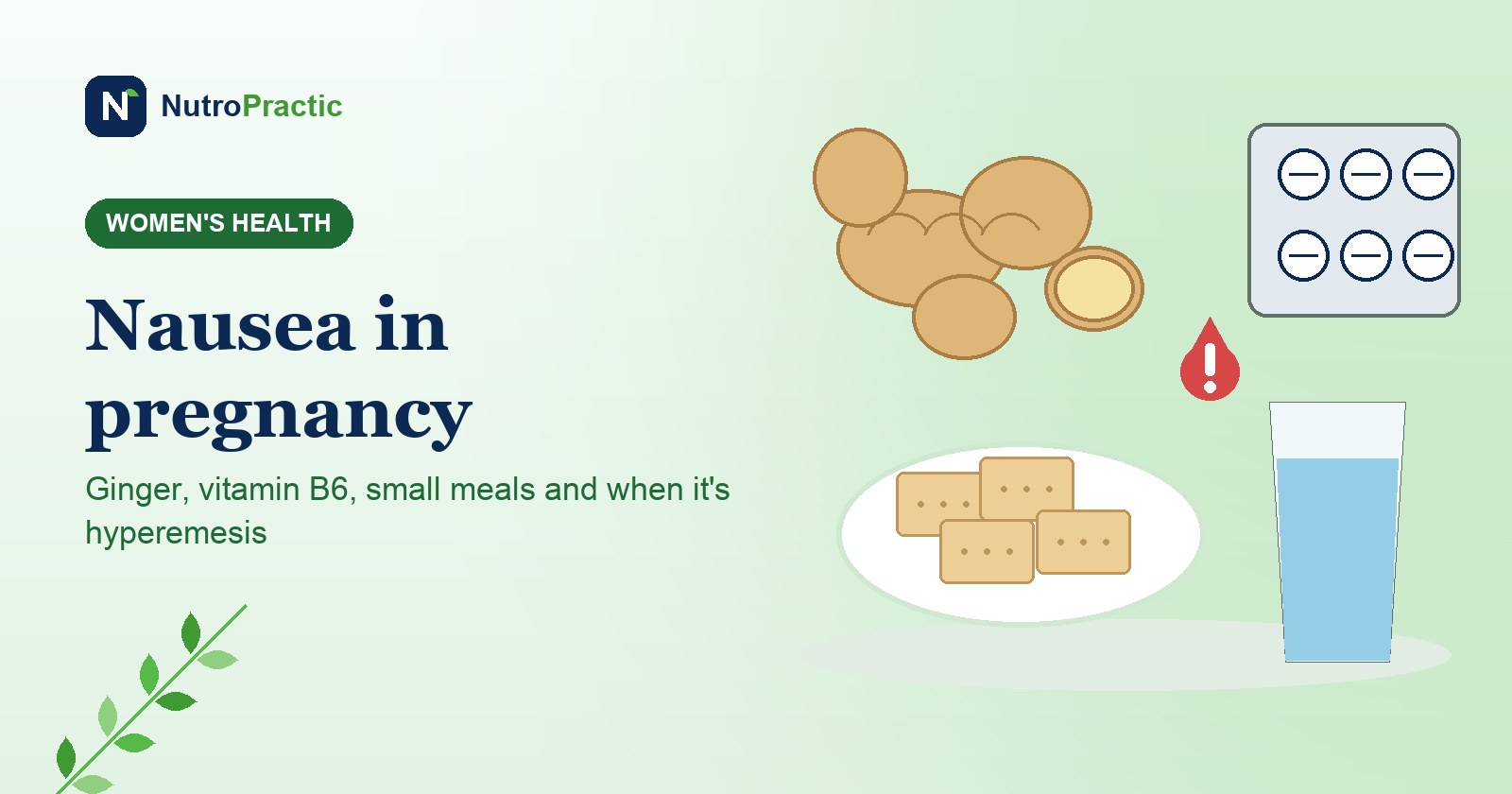
Nausea in pregnancy: ginger, vitamin B6, small meals and when it's hyperemesis, from the trials
Only 1.8% of women in one diary study had nausea just in the morning. Ginger at 1 g a day, B6 at 30 to 75 mg and doxylamine with B6 each have trial data, while diet advice has none. The score to track it, the doses, and the signs that mean a phone call.
5 Nov 2026
Women's health
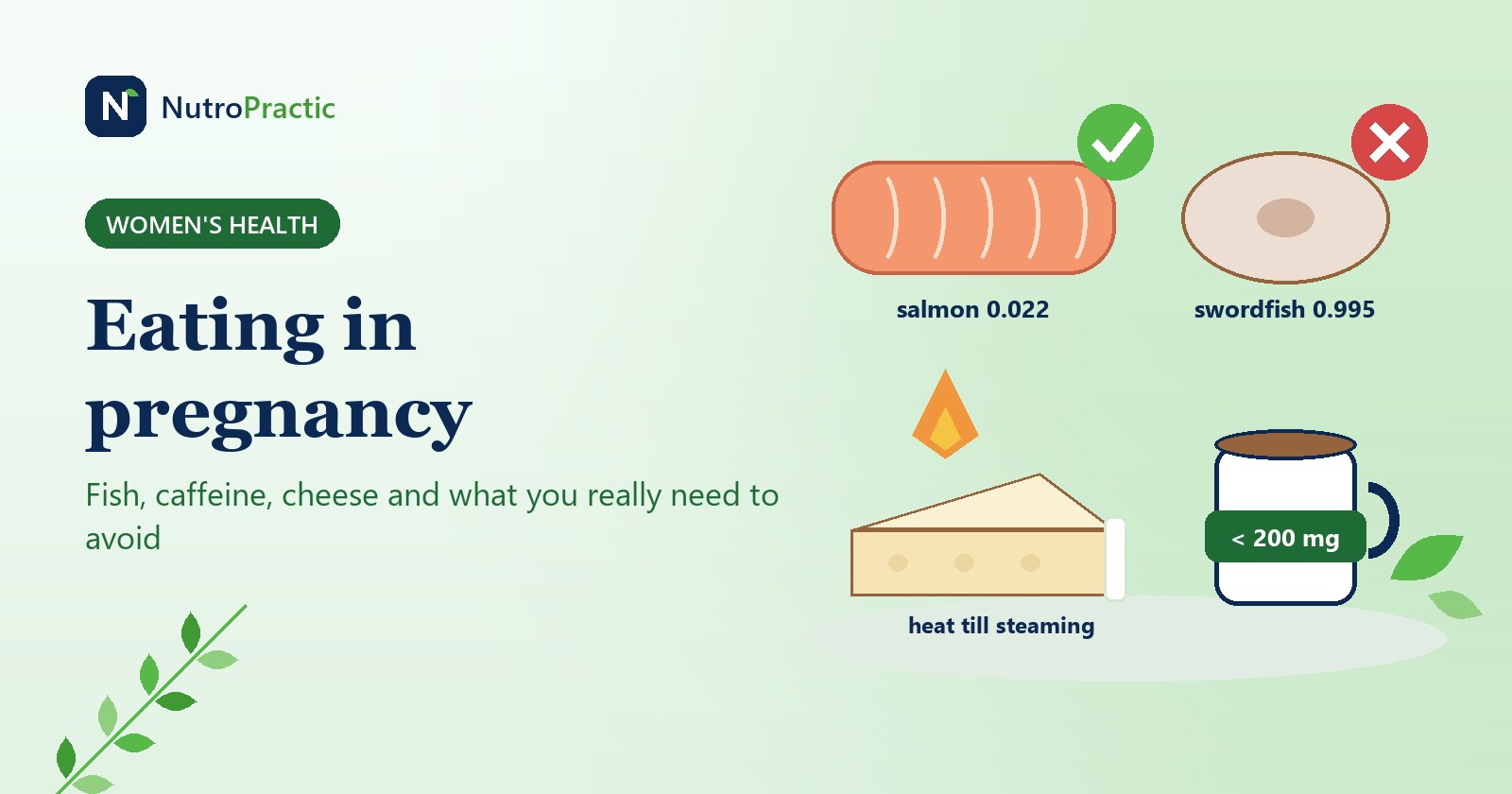
Eating in pregnancy: fish, caffeine, cheese and what you really need to avoid
Most fish is encouraged in pregnancy, not banned: 8-12 oz a week from the low-mercury list. The mercury numbers per fish, what 200 mg of caffeine looks like in real cups, which cheeses carry the listeria risk and how many cases there actually are, why liver is on the list, and how much weight to gain for your BMI.
29 Oct 2026
Newsfeed for your website
Want this feed on your website?
Add it to any site with one copy-and-paste snippet. No sign-up, and it updates itself every hour.
Start with a virtual consultation
Tell Dr. Triveni what you want to change. You will leave with a clear next step, whether you are in Toronto, London, New York or Chennai.