Clinical oncology & supportive nutrition · November 27, 2026
Palliative chemotherapy and nutrition: of 100 patients, 38% were at nutritional risk at the start, but only 8% were referred to a dietitian
A prospective cohort of 100 adults starting first-line palliative chemotherapy found 38% at nutritional risk, 63% with recent weight loss and 53% with a nutrition impact symptom at baseline. Only 8% saw a dietitian referral at baseline and 28% had any dietetic consultation over 24 weeks.

People starting palliative chemotherapy are vulnerable to losing weight and muscle. Do they get nutrition support?
In a prospective cohort study in Nutrients, Frederiksen and colleagues followed 100 adults starting first-line palliative chemotherapy for 24 weeks. Weight, nutritional risk, nutritional status and nutrition impact symptoms were checked at baseline, week 12 and week 24. Dietetic service use and one-year vital status came from patient records.
At baseline, 36 of 95 assessed (38%) were at nutritional risk, 58 of 92 (63%) had lost weight in the previous six months and 51 of 97 (53%) reported at least one nutrition impact symptom. Patients who died before week 24 had poorer baseline nutrition, so the follow-up numbers may be skewed by who dropped out.
Eight of 100 (8%) were referred to a dietitian at baseline, including 6 of 36 (17%) of those at nutritional risk. Over 24 weeks, 28 of 100 (28%) had at least one dietetic consultation, including 18 of 36 (50%) of those at risk. In an exploratory analysis, baseline nutritional risk was associated with higher one-year mortality (adjusted HR 2.02, 95% CI 1.02-4.01), though disease severity could not be ruled out as the cause. The authors stress that screening needs to be followed by further assessment and access to individual nutritional support.
Prospective nutritional tracking in 100 palliative cancer patients
100 patients
adults initiating first-line palliative chemotherapy followed prospectively for 24 weeks
38%
at nutritional risk at baseline (36 of 95 assessed)
8%
referred to a clinical dietitian at baseline (17% of those at nutritional risk; 28% had a consultation over 24 weeks)
2.02 aHR
adjusted hazard ratio for one-year mortality with baseline nutritional risk (exploratory; 95% CI 1.02-4.01)
Prospective clinical cohort study published in Nutrients, November 2026.
- Nutrition impact symptoms are symptoms such as poor appetite that make eating harder.
- Patients who died before week 24 had poorer baseline nutritional status, so the follow-up data may be affected by selective attrition.
- Nutritional Status and Dietetic Service Use in Patients with Cancer Receiving Palliative Chemotherapy: A Prospective Cohort StudyNutrients · Prospective cohort study by Frederiksen et al. Published November 2026.
- File:Doctor working in her office while using a computer and taking notes during a consultation with a patient.jpgWikimedia Commons · Photo by Shixart1985, CC BY 2.0.
Educational summary of nutrition research, not personal medical advice. Speak to your doctor or dietitian before changing your diet or supplements, especially if you are pregnant, take medicines or have a medical condition.
Analysis by NutroPractic from the sources listed. Written for general readers; it does not replace advice from your own doctor.
From our articles
Read, then eat a little better
Plain-language guides on nutrition and wellness, backed by research.
Gut health
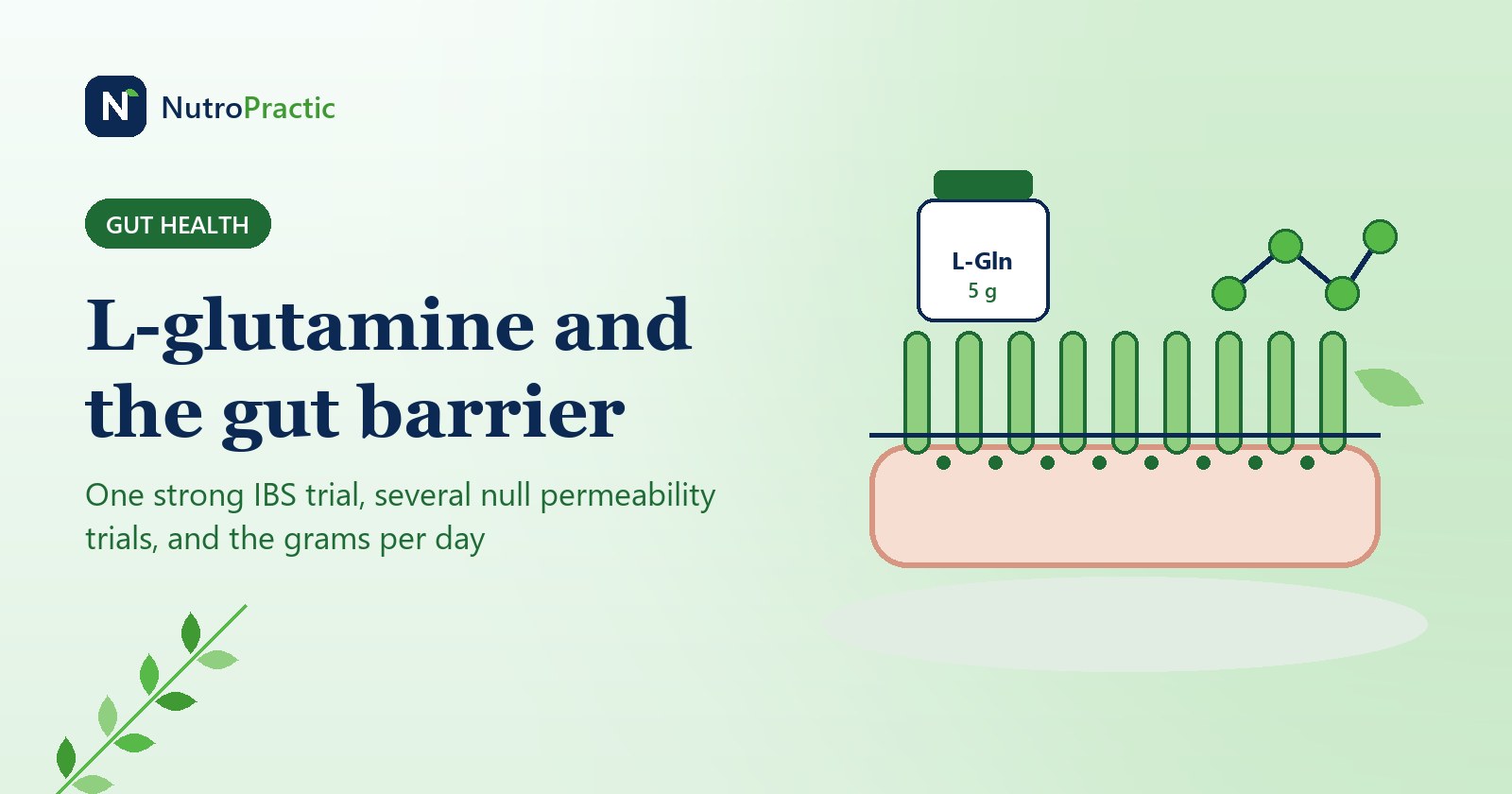
L-glutamine for gut barrier integrity: what the post-infectious IBS and permeability trials measured, and the dose in grams
At 15 g a day, glutamine took 79.6% of post-infection IBS-D patients to a clinical response against 5.8% on placebo. Trials that measured gut permeability directly in Crohn's, pancreatitis and heat stress found no clear benefit, and a 10-trial meta-analysis found none overall. The doses, the 14 g a day safe level, and who might try it.
27 Nov 2026
Supplements and vitamins
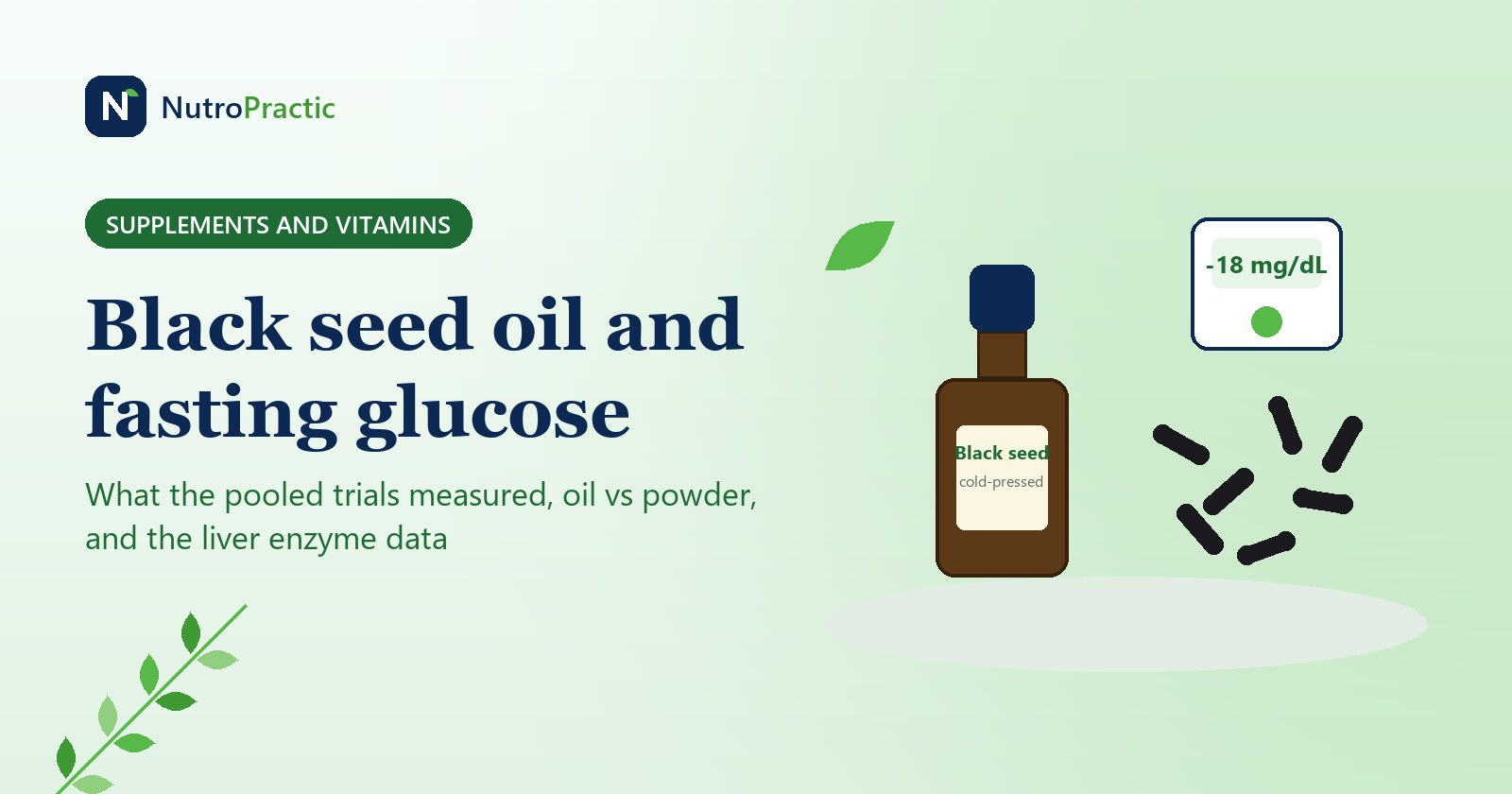
Black seed oil (Nigella sativa) and fasting glucose: what the pooled trials measured, oil vs powder doses, and the liver enzyme data
Meta-analyses of randomised trials put black seed's effect at roughly 10 to 20 mg/dL lower fasting glucose and about half a point of HbA1c, mostly as an add-on to diabetes tablets. The 1 to 3 g a day doses tested, why two bottles can differ 263-fold in thymoquinone, and what the liver and kidney markers showed.
27 Nov 2026
Supplements and vitamins
Chlorella and detox claims: what the human studies measured on hair metals, dioxins and vitamin B12, and what they did not
We found no placebo-controlled trial of chlorella removing mercury or lead. One 16-person study saw hair mercury and lead fall 39% on a chlorella-seaweed mix with no control group; breast-milk dioxin was about 30% lower in Japanese mothers; B12 ranges from under 0.1 to 415 micrograms per 100 g between brands.
26 Nov 2026
Newsfeed for your website
Want this feed on your website?
Add it to any site with one copy-and-paste snippet. No sign-up, and it updates itself every hour.
Start with a virtual consultation
Tell Dr. Triveni what you want to change. You will leave with a clear next step, whether you are in Toronto, London, New York or Chennai.