Geriatric nutrition & clinical screening · November 20, 2026
Nutritional vulnerability was tied to significantly higher odds of physical frailty in 410 community-dwelling older adults
A study of 410 older adults in primary care clinics found that 84.4% suffered from malnutrition or were at risk, and each 1-point improvement in Mini Nutritional Assessment scores lowered the odds of severe frailty by 14%.
Physical frailty and malnutrition represent two mutually reinforcing geriatric syndromes that impair functional independence, accelerate hospital admissions, and drive mortality among older adults. While clinical guidelines emphasize that inadequate dietary intake accelerates sarcopenia and muscle weakness, the direct quantitative relationship between routine clinical nutritional screening scores and frailty stages is rarely assessed in community primary care clinics.
A clinical cross-sectional study published in Nutrients evaluated 410 community-dwelling adults aged 60 and older attending primary health care centers in Abha, Saudi Arabia. Clinicians evaluated nutritional status using the validated Mini Nutritional Assessment Short-Form (MNA-SF), which screens for unintentional weight loss, mobility, acute illness, neuropsychological stress, and body mass index, alongside frailty screening with the FRAIL scale (fatigue, resistance, ambulation, illness, and weight loss).
The screening data revealed a startling degree of unrecognized vulnerability: 50.7% of older adults were at risk of malnutrition and 33.7% suffered from overt clinical malnutrition, leaving only 15.6% with normal nutritional status. Simultaneously, 44.6% of participants met criteria for frailty and 45.6% were prefrail, while only 9.8% remained robust.
Ordinal logistic regression models adjusting for age, sex, polypharmacy, and chronic conditions demonstrated a robust protective relationship: each single-point increase in the MNA-SF score (reflecting superior nutritional health) was associated with a 14% reduction in the odds of moving into a more severe frailty tier (adjusted odds ratio 0.86, 95% CI 0.80–0.92, p < 0.001). The researchers emphasize that integrating brief 5-minute nutritional screening into primary care check-ups could identify declining seniors well before irreversible physical disability takes hold.
Nutritional and frailty screening metrics across 410 older outpatients
410
Community-dwelling older adults (aged >= 60) evaluated in primary care
84.4%
Share of older adults either malnourished (33.7%) or at risk (50.7%)
44.6%
Participants classified as frail on the 5-item FRAIL scale
0.86
Adjusted odds ratio for severe frailty per 1-point increase in MNA-SF score
Cross-sectional clinical screening study utilizing the Mini Nutritional Assessment Short-Form and FRAIL scale in primary care health centers.
- The Mini Nutritional Assessment Short-Form (MNA-SF) is a 6-question clinical tool completed in under 5 minutes to screen for geriatric malnutrition.
- The FRAIL scale assesses five core domains: fatigue, resistance (climbing stairs), ambulation (walking a block), illness (5+ chronic diseases), and weight loss (>5%).
- Polypharmacy (taking 5 or more daily prescription medications) frequently blunts appetite, causes dry mouth, and impairs intestinal nutrient absorption in seniors.
- Sarcopenia—the age-related loss of skeletal muscle mass and strength—is accelerated when dietary protein drops below 1.0 to 1.2 grams per kilogram of body weight.
- Nutritional Vulnerability and Frailty Among Community-Dwelling Older Adults in Abha, Saudi Arabia: A Cross-Sectional StudyNutrients / MDPI · Cross-sectional screening study of 410 community-dwelling older adults. Published 17 November 2026.
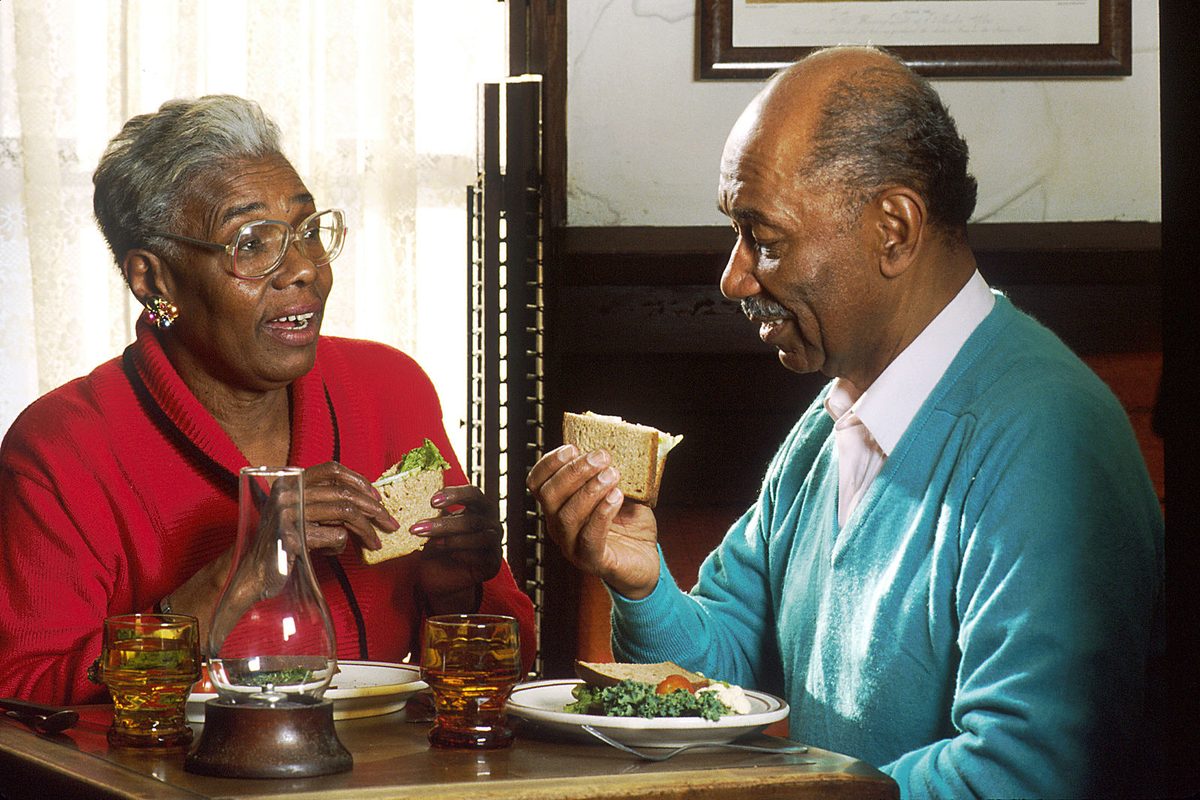
- Elderly Couple EatingWikimedia Commons · Photo by Bill Branson (1997), CC0 public domain dedication.
Educational summary of geriatric nutrition literature. Older adults experiencing unintended weight loss or difficulty walking should receive a thorough medical evaluation by their primary care physician.
Analysis by NutroPractic from the sources listed. Written for general readers; it does not replace advice from your own doctor.
From our articles
Our guides on this subject
Plain-language guides on nutrition and wellness, backed by research.
Medicines and nutrition
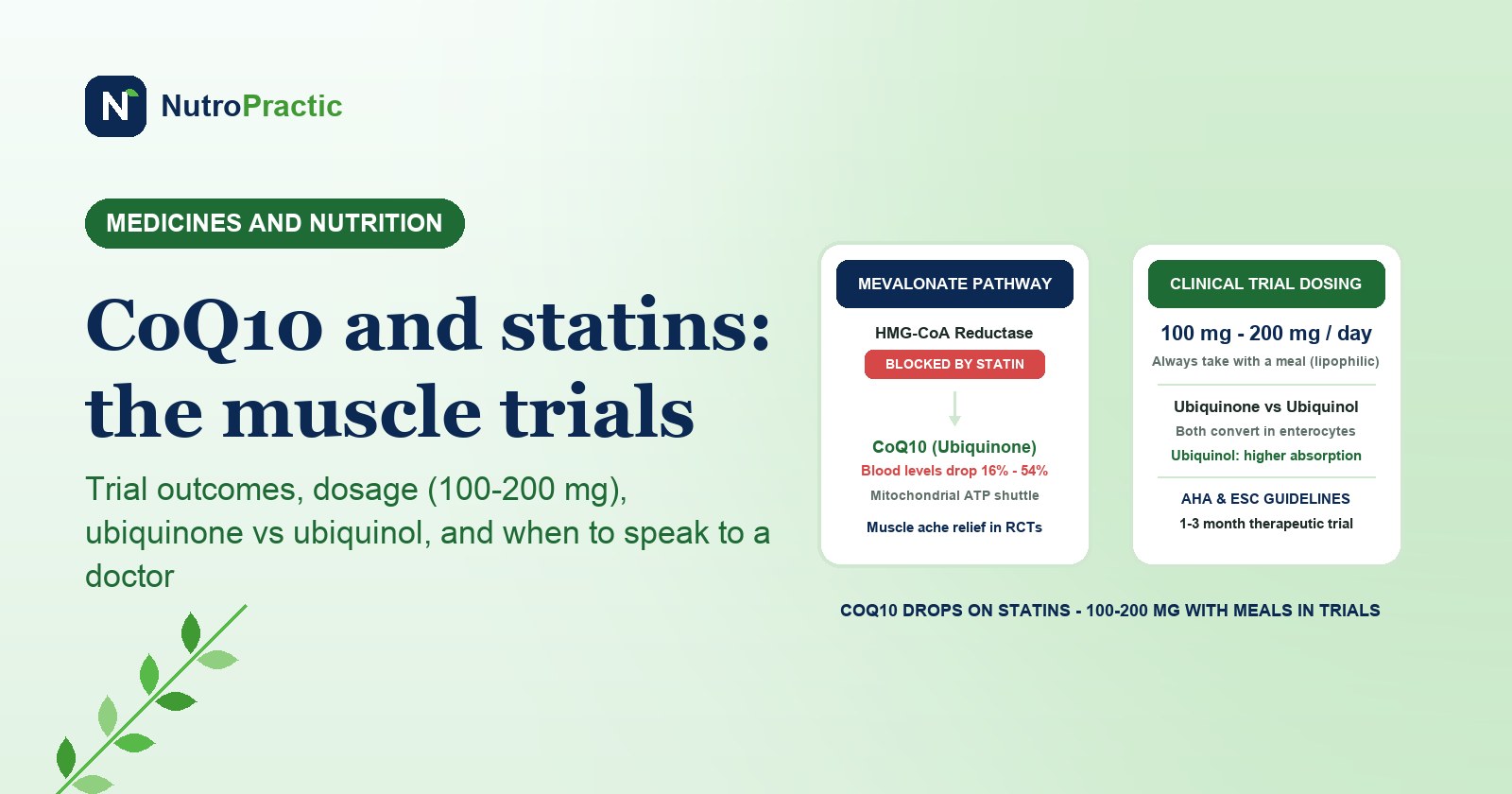
CoQ10 and statins: what the muscle symptom trials found, and who might benefit
Statin-associated muscle symptoms lead up to 30% of patients to discontinue life-saving cholesterol therapy. While statins deplete circulating CoQ10 by 16% to 54%, randomized clinical trials show mixed results for myalgia relief. Explore the trials, ubiquinone vs ubiquinol bioavailability, recommended doses, and clinical guideline recommendations.
14 Nov 2026

Women's wellness and nutrition
Creatine for women: cognitive performance, menstrual cycle phases, and bone density beyond muscle building
Creatine is widely stereotyped as a bodybuilding supplement for men, but female physiology tells a very different story. Women exhibit 70% to 80% lower endogenous creatine stores, reduced dietary intake, and cyclical fluctuations in brain creatine kinase across the follicular and luteal phases. Robust clinical trials demonstrate that 3 to 5 grams of daily creatine monohydrate enhances cognitive performance during sleep deprivation, augments clinical response in unipolar depression, preserves femoral neck bone geometry in postmenopausal women, and causes cellular intracellular hydration rather than subcutaneous bloating.
13 Nov 2026
Healthy ageing
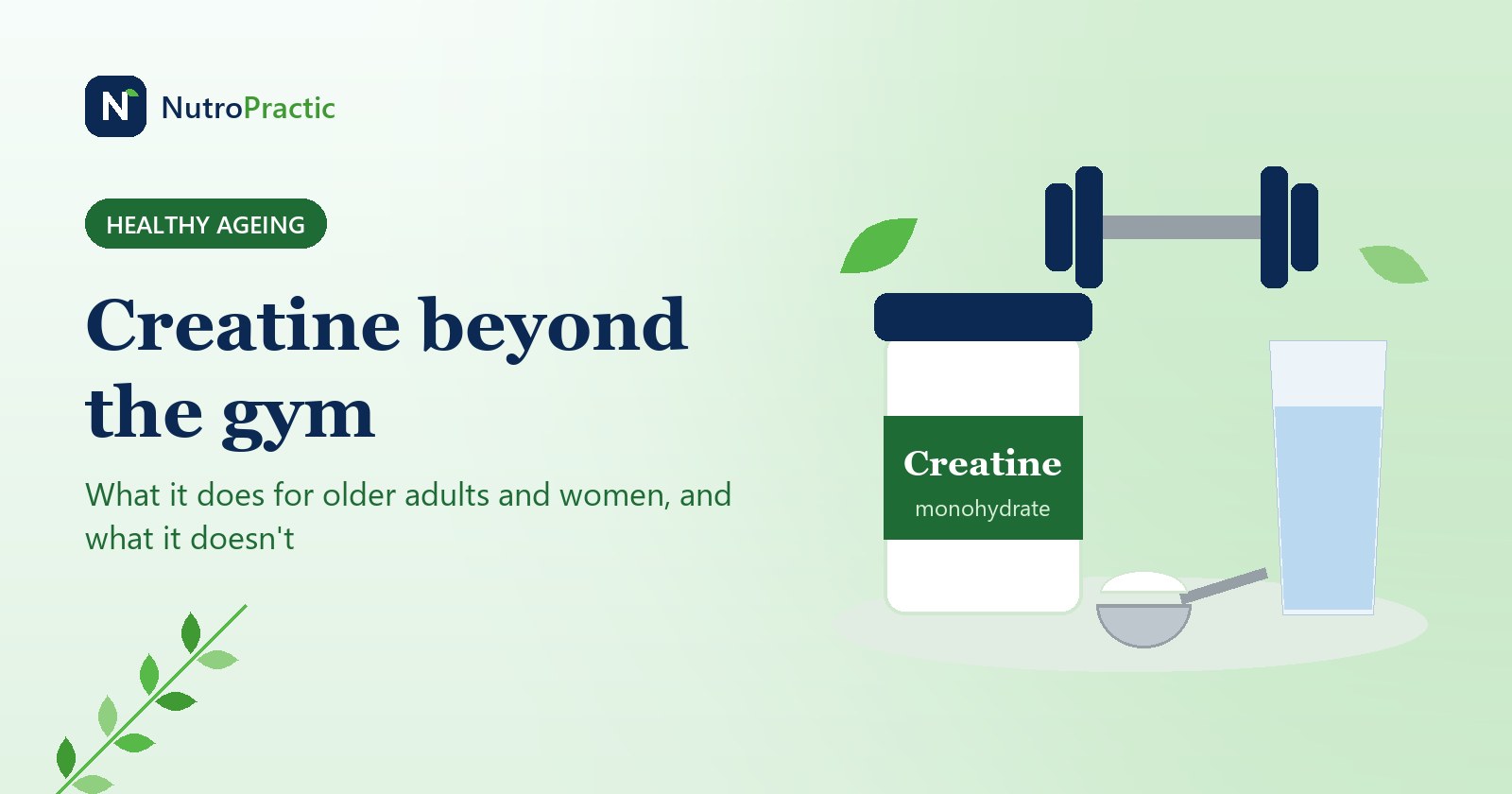
Creatine beyond the gym: what it does for older adults and women, and what it doesn't
Across 22 trials, adults in their late fifties to seventies who took creatine while doing resistance training gained about 1.4 kg more lean mass than those who trained without it. Two two-year trials found it did nothing for bone density after menopause. Where the evidence is solid, where it's early (memory, short nights), how much to take, and who should leave it alone.
10 Oct 2026
Newsfeed for your website
Want this feed on your website?
Add it to any site with one copy-and-paste snippet. No sign-up, and it updates itself every hour.
Start with a virtual consultation
Tell Dr. Triveni what you want to change. You will leave with a clear next step, whether you are in Toronto, London, New York or Chennai.