Food labels & added sugar · November 18, 2026
Adults who check food labels eat about 43 g less added sugar a day
A CDC analysis of 9,416 people in NHANES found frequent label readers averaged 61.7 g of added sugar a day versus 104.4 g for those who rarely check.
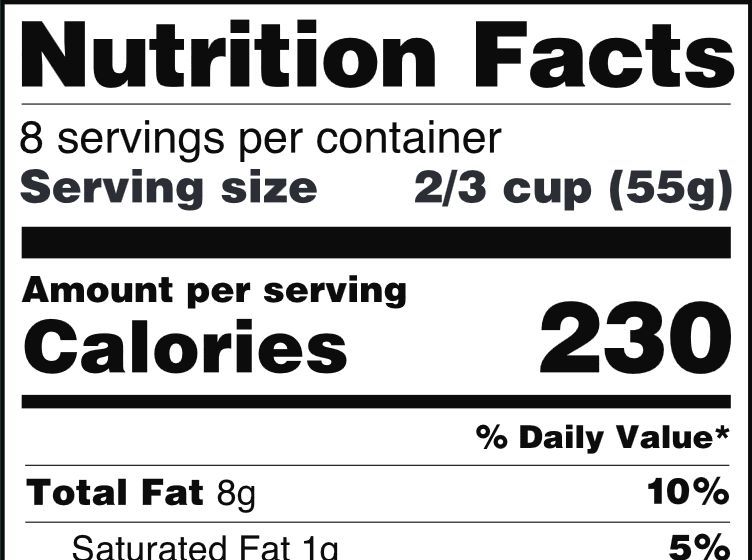
Most packaged foods in the US carry a Nutrition Facts label, but who actually reads it, and does it go with eating less sugar? Researchers at the CDC looked at this in Nutrients using NHANES data from 2017 to March 2020.
The sample was 9,416 people (6,457 adults and 2,959 children). Intake came from two 24-hour recalls, and label use from a consumer behaviour survey. Overall usual added sugar intake averaged 70.3 g a day, or 13.2% of calories. About 78.1% of adults and 76.3% of children (or their caregivers) checked labels at least sometimes.
Among adults, frequent label users ate 61.7 g of added sugar a day against 104.4 g for infrequent users, a gap of 42.8 g, or 11.7% versus 17.5% of calories. In children the gap was smaller: 64.5 g versus 79.0 g (14.5 g). Label use was lower in people with less education: 90.3% of college graduates checked labels at least sometimes, against 62.6% of adults without a high school diploma.
This is a cross-sectional study, so it cannot show that reading labels causes lower sugar intake. People who already care about healthy eating may be more likely to read labels, and income and education may explain part of the gap. Among children from the lowest-income households the difference was not statistically significant.
Label use and added sugar, NHANES 2017-2020
9,416
People analysed (6,457 adults, 2,959 children)
61.7 g vs 104.4 g
Adult added sugar a day, frequent vs infrequent label users
78.1%
Adults who check labels at least sometimes
62.6%
Adults without a high school diploma who check labels
Cross-sectional, self-reported label use and 24-hour recalls. Association only; it does not show that label reading lowers sugar intake.
- Frequent users in the study included anyone who checked labels always, most of the time or sometimes.
- Data collection overlapped with the rollout of the updated Nutrition Facts label.
- Usual intake was estimated with the National Cancer Institute method from two 24-hour recalls.
- Nutrition Label Use and Intake of Added Sugars in US Children and AdultsNutrients 18(22), 3733 (Koyama, Pejavara, Self; CDC) · Primary paper, DOI 10.3390/nu18223733.
- Image pageWikimedia Commons · U.S. Food and Drug Administration, Public domain. General illustration.
General nutrition information, not medical advice. Talk to your doctor or a registered dietitian before changing your diet, supplements or medication.
Analysis by NutroPractic from the sources listed. Written for general readers; it does not replace advice from your own doctor.
From our articles
Our guides on this subject
Plain-language guides on nutrition and wellness, backed by research.
Everyday eating
Food label claims decoded: 'no added sugar', 'multigrain', 'natural' and 'high protein'
A no-added-sugar biscuit with only 13% fewer calories. A 7-grain loaf with refined flour listed first. A 'high protein' bar that clears the legal line at 21%. What each claim legally requires in the EU/UK, US and India, with worked reads of real packs.
2 Nov 2026
Nutrition science
Sweeteners after the WHO advice: aspartame, stevia, erythritol and what the 2023 decisions meant
In 2023 the WHO advised against using sweeteners to control weight, and its cancer agency called aspartame 'possibly carcinogenic' a few weeks later. Neither means your diet drink is dangerous, and neither means it helps. What the reviews found, how much is allowed, why erythritol is the one to watch, and what to do if you have diabetes or simply want less sugar.
18 Oct 2026

Women's health
Inositol for PCOS: the 40:1 ratio, trial doses, and food milligrams
Why do randomized trials in polycystic ovary syndrome prioritize the 40:1 myo to D-chiro inositol ratio? Here is the science behind the ovarian epimerase paradox, clinical ovulation and insulin metrics, and why cantaloupe cannot replace 4,000 mg trial powder.
21 Nov 2026
Newsfeed for your website
Want this feed on your website?
Add it to any site with one copy-and-paste snippet. No sign-up, and it updates itself every hour.
Start with a virtual consultation
Tell Dr. Triveni what you want to change. You will leave with a clear next step, whether you are in Toronto, London, New York or Chennai.