Teen health · October 20, 2026
27,104 Korean teenagers: the ones who watched mukbang eating videos almost every day were more likely to drink sugary drinks 7 or more times a week. Boys among them had four times the odds of drinking 'zero' sodas that often
Mukbang, videos of people eating big meals on camera, is a fixture of teenage screen time in Korea. A new analysis of a national survey asked whether heavy viewers drink differently. They did, for both sugary and sugar-free drinks, and the gap was widest in boys and in younger teens, not where the researchers expected.
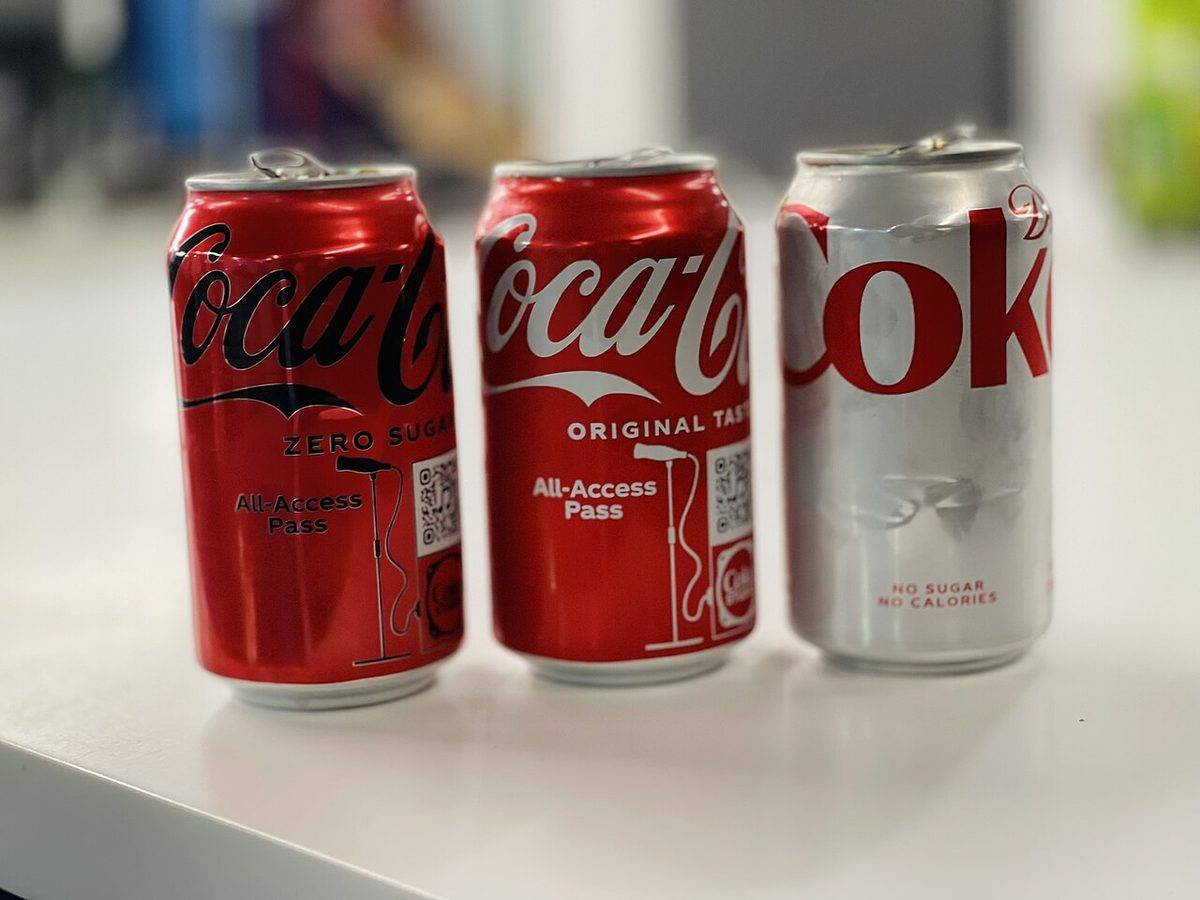
Mukbang is a Korean word for an eating broadcast: a host sits in front of a camera with a large spread of food and eats it while chatting to viewers. Its cousin, cookbang, shows the host cooking first. Both are hugely popular with Korean teenagers, and earlier studies have linked heavy viewing to food choices, late-night eating and ordering delivery food. A study published on 16 October in Nutrients looked at something less studied: what these teenagers drink.
Researchers at Pusan National University used the 2025 Korea Youth Risk Behavior Survey, an anonymous online questionnaire that 54,170 students aged 12 to 18 answered (a 93.9% response rate). Students said how often they had watched mukbang or cookbang over the past 12 months, and how often in the past 7 days they had drunk sweetened drinks (fizzy drinks, energy drinks, sports drinks, fruit drinks, coffee drinks and sweetened milk) and 'zero' drinks sweetened without sugar, such as Coke Zero or Sprite Zero. To sharpen the contrast, the team compared only the two ends of the scale: 4,354 frequent viewers, who watched 5 or more times a week, and 22,750 infrequent viewers, who watched less than once a month. The 23,805 students in between were left out of the main analysis.
The two groups were not alike. Frequent viewers were mostly girls (69.9% versus 35.4% of infrequent viewers), spent more time on their phones (5.85 versus 4.51 hours a day), slept a little less, and were far more likely to have tried to lose weight in the past month (46.4% versus 28.6%). The researchers adjusted for these and other differences, including age, school grades, family finances, exercise, smoking, alcohol and body mass index.
After those adjustments, frequent viewers had higher odds of drinking sugary drinks 7 or more times a week, compared with students who had none that week: 1.79 times the odds in boys and 1.37 times in girls. The gap was bigger in middle school students (2.07) than in high school students (1.28). Drinking sugary drinks only once or twice a week showed no link.
The surprise was the sugar-free drinks. The team had expected girls and older teens, who more often worry about their weight, to show the stronger link with zero drinks. Instead boys did: frequent viewers among boys had 3.98 times the odds of drinking zero drinks 7 or more times a week, against 2.20 in girls, and at that top frequency middle schoolers (3.45) outpaced high schoolers (2.28). The authors suggest some heavy viewers may reach for sugary drinks for pleasure and for zero drinks as a lighter-seeming option at the same time, and point to growing concern about muscles and physique among boys, but these are explanations to test, not findings.
This is a one-time survey, so it cannot show that watching eating videos makes teenagers drink more; teenagers who like sweet drinks might simply also be drawn to food content, or both could reflect wider screen habits. Viewing was asked about over a year and drinks over a week, the survey lumped mukbang and cookbang together, it counted how often students drank rather than how much, and leaving out the middle group (about 44% of students with complete answers) means the main results describe the extremes. Still, in a sensitivity analysis the in-between viewers also tended to report sweet and zero drinks more often than the lightest viewers. The practical point is a modest one: for families trying to cut back on sweet drinks, what a teenager watches may be part of the picture.
Mukbang and cookbang viewing and sweet drinks: 2025 Korea Youth Risk Behavior Survey, 27,104 students aged 12 to 18
27,104
Students analysed: 4,354 frequent viewers (5+ times a week) and 22,750 infrequent viewers (less than once a month)
1.79x
Odds of sugary drinks 7+ times a week, boys who watched often (95% CI 1.39 to 2.31); girls 1.37x (1.14 to 1.65)
3.98x
Odds of zero (sugar-free) drinks 7+ times a week, boys who watched often (95% CI 3.23 to 4.91); girls 2.20x (1.78 to 2.71)
2.07x
Odds of sugary drinks 7+ times a week, middle school frequent viewers (95% CI 1.66 to 2.57); high school 1.28x (1.05 to 1.56)
46.4%
Frequent viewers who had tried to lose weight in the past 30 days, against 28.6% of infrequent viewers
5.85 h
Average daily smartphone time of frequent viewers, against 4.51 hours for infrequent viewers
Study: Lee SJ, Park SH, Yoon CY, 'Food-Related Online Media Viewing (Mukbang and Cookbang) and Sugar-Sweetened Beverage and Artificially Sweetened Beverage Consumption Among Korean Adolescents: Using the 2025 Korea Youth Risk Behavior Survey', Nutrients 2026, 18(20), 3402, published 16 October 2026, doi 10.3390/nu18203402 (open access, CC BY). Cross-sectional; survey-weighted multinomial logistic regression with 'did not drink in the past 7 days' as the reference outcome and infrequent viewing as the reference exposure. All odds ratios above are from Model 2, adjusted for age, academic performance, perceived socioeconomic status, perceived health, weight-control effort, physical activity, sleep duration, smoking, alcohol use, BMI percentile and smartphone screen time (plus sex in the school-level models). Percentages are survey-weighted. Intermediate viewers (1 to 3 times a month up to 3 to 4 times a week, n = 23,805) and students with missing covariates (n = 3,261) were excluded from the main analysis. Interaction p-values: sex 0.014 for sugary drinks and 0.040 for zero drinks; school level below 0.001 for sugary drinks and 0.165 (not significant) for zero drinks. Odds ratios are not risk ratios, and the survey measured how often students drank, not how much.
- The survey question calls mukbang an 'eating broadcast' and cookbang a 'cooking broadcast', and asks about the two together, so this study could not tell them apart.
- The survey's sugary drinks list went well beyond fizzy drinks: energy drinks, sports drinks, fruit drinks, ready-made coffee drinks and sweetened milks such as chocolate and banana milk all counted.
- The WHO advises keeping free sugars below 10% of daily energy, which for someone eating about 2,000 calories a day is 50 g or about 12 level teaspoons, and says going down to 5% or less may bring extra benefits.
- The 2025 survey was the 21st wave of the Korea Youth Risk Behavior Survey: 57,682 students were selected and 54,170 answered, a response rate of 93.9%.
- Food-Related Online Media Viewing (Mukbang and Cookbang) and Sugar-Sweetened Beverage and Artificially Sweetened Beverage Consumption Among Korean Adolescents: Using the 2025 Korea Youth Risk Behavior SurveyNutrients, October 2026 · The study: full text, open access
- Healthy diet (fact sheet)World Health Organization · The WHO limits for free sugars
- Coca-Cola Trio: Zero Sugar, Original, and Diet CokeWikimedia Commons, photo by James Larrison · The photo, CC BY 2.0
General information, not medical advice. This survey shows an association, not cause and effect, and it says nothing about any one teenager. If you are concerned about a child's eating, drinking, weight or screen habits, talk to your doctor, paediatrician or a registered dietitian.
Analysis by NutroPractic from the sources listed. Written for general readers; it does not replace advice from your own doctor.
From our articles
Our guides on this subject
Plain-language guides on nutrition and wellness, backed by research.
Everyday eating
Food label claims decoded: 'no added sugar', 'multigrain', 'natural' and 'high protein'
A no-added-sugar biscuit with only 13% fewer calories. A 7-grain loaf with refined flour listed first. A 'high protein' bar that clears the legal line at 21%. What each claim legally requires in the EU/UK, US and India, with worked reads of real packs.
2 Nov 2026
Nutrition science
Sweeteners after the WHO advice: aspartame, stevia, erythritol and what the 2023 decisions meant
In 2023 the WHO advised against using sweeteners to control weight, and its cancer agency called aspartame 'possibly carcinogenic' a few weeks later. Neither means your diet drink is dangerous, and neither means it helps. What the reviews found, how much is allowed, why erythritol is the one to watch, and what to do if you have diabetes or simply want less sugar.
18 Oct 2026

Women's health
Inositol for PCOS: the 40:1 ratio, trial doses, and food milligrams
Why do randomized trials in polycystic ovary syndrome prioritize the 40:1 myo to D-chiro inositol ratio? Here is the science behind the ovarian epimerase paradox, clinical ovulation and insulin metrics, and why cantaloupe cannot replace 4,000 mg trial powder.
21 Nov 2026
Newsfeed for your website
Want this feed on your website?
Add it to any site with one copy-and-paste snippet. No sign-up, and it updates itself every hour.
Start with a virtual consultation
Tell Dr. Triveni what you want to change. You will leave with a clear next step, whether you are in Toronto, London, New York or Chennai.