Breastfeeding · October 17, 2026
Feed the mother, change the milk? Across 640 breastfeeding women in Burkina Faso, Pakistan and Tanzania, supplements raised the B vitamins in their milk. The fat, protein and sugars barely budged
A study in Science pooled milk from three randomised trials and found that what reaches the baby is partly up to the mother's diet and partly guarded by the breast itself. Infant growth improved in only one setting: where mothers were the most undernourished.
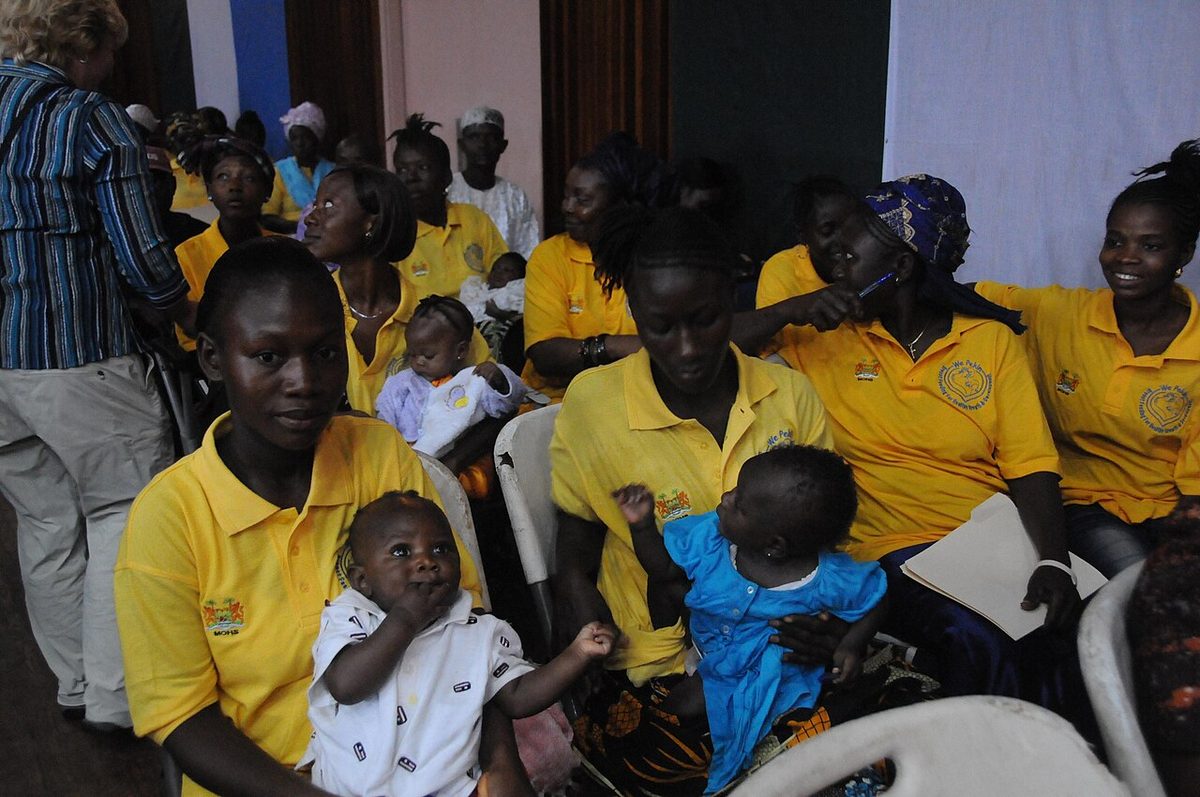
If a breastfeeding mother eats better, does her baby get better milk? It sounds like it should be simple, but the honest answer has been 'partly, and it depends on the nutrient'. Much of what we know comes from small studies measuring one or two things at a time. The mothers who most need an answer, those short of food while feeding a baby, have been studied far less.
A paper published in Science on 8 October 2026 tackles the question with milk from 640 mothers in three randomised trials. The International Milk Composition (IMiC) Consortium, led from the University of Manitoba and funded by the Gates Foundation, analysed samples from rural Burkina Faso (the MISAME-III trial, 290 mothers), the city of Karachi in Pakistan (the Mumta-LW trial, 150 mothers) and rural Haydom in Tanzania (the ELICIT trial, 200 mothers). Because each trial randomly chose which mothers got a supplement, the researchers could compare like with like rather than guess from what women happened to eat.
The supplements differed. In Burkina Faso and Pakistan, mothers were given a balanced energy-protein supplement, a food-based product that adds calories, protein and micronutrients; in Burkina Faso it was tested during pregnancy, breastfeeding or both, and in Pakistan mothers took two sachets a day from birth to six months. In Tanzania, mothers took 250 mg of nicotinamide, a form of vitamin B3, every day for the first six months. The team measured the milk's fat, protein and sugars, the complex sugars called oligosaccharides, bioactive proteins, B vitamins and other micronutrients, thousands of metabolites and proteins, and the bacteria in it.
The result splits the milk in two. B vitamins went up in the milk of mothers who got either kind of supplement, and the paper reports matching shifts in vitamin-related metabolites and in the make-up of the milk's fats; the University of Manitoba's summary adds selenium to the list of things that moved. In a subset of the Burkina Faso families, the mothers' and babies' blood changed in step with the milk. But the main building blocks, along with the oligosaccharides, the bioactive proteins and the milk's bacteria, stayed much the same. The authors call them 'physiologically buffered': the breast seems to hold them steady whatever the mother's diet.
Did the babies grow better? Only in one setting. Balanced energy-protein given after birth improved infant growth only in the more undernourished of the trial populations, the abstract says. A richer milk on paper does not automatically mean a bigger baby. Still, the authors conclude that the better micronutrient quality of the milk, seen in all three countries, supports extending mothers' supplements past the birth and into breastfeeding. 'Human milk is neither completely fixed nor simply a reflection of maternal diet,' said Meghan Azad, who leads the consortium.
Some caution is due. These are three specific groups of women, many of them short of food, and the findings may not carry over to well-nourished mothers. The paper is a pooled, secondary analysis of trials designed mainly around growth and birth outcomes, not milk. And the full numbers, how much each vitamin rose and how much the babies grew, sit behind the journal's paywall; we report only what the abstract, the university and the consortium's published protocol state.
IMiC Consortium, Science, 8 October 2026: milk from 640 mothers in three randomised trials of maternal supplements
640
Mother-infant pairs: 290 in Burkina Faso, 150 in Pakistan, 200 in Tanzania
3
Randomised trials pooled: MISAME-III, Mumta-LW and ELICIT
250 mg
Daily nicotinamide (vitamin B3) for Tanzanian mothers, birth to 6 months
2 sachets
Daily balanced energy-protein supplement for Pakistani mothers, birth to 6 months
Up
Milk B vitamins with either kind of supplement
Steady
Milk fat, protein, sugars, oligosaccharides, bioactive proteins and bacteria
Findings are from Dailey-Chwalibóg, Mertens, Fehr and colleagues, 'Nutritional interventions' impacts on human milk: Three trials in low-resource settings', Science, published 8 October 2026, doi 10.1126/science.aee9284 (abstract; full text paywalled). Trial sizes, supplements, doses and sampling come from the consortium's open-access protocol (Frontiers in Nutrition, 2025, doi 10.3389/fnut.2025.1548739). Selenium and the quote are from the University of Manitoba release of 8 October 2026. The paper's effect sizes for each vitamin and for infant growth are not given here because we could not check them against the full text.
- The Pakistani trial also tested a single dose of the antibiotic azithromycin given to babies at 42 days old, alongside the mothers' supplement. Its milk samples were taken 42 and 56 days after birth.
- In Tanzania the babies themselves went on to take 100 mg of nicotinamide a day from 6 to 18 months, after their mothers' six months on the vitamin.
- The consortium's protocol describes the mothers: 20% were underweight in the Pakistan study, 10% in Tanzania and 7% in Burkina Faso. Only 59% of the Burkina Faso households and 66% of the Tanzanian ones had an improved water source.
- A companion paper in the same issue of Science, 'Shared patterns of human milk composition link mammary gland function to infant growth', linked patterns in milk to how the breast makes and secretes it. Across both papers the consortium analysed more than 25,000 compounds in nearly 2,000 milk samples from over 1,000 mother-infant pairs, including families in Canada.
- A baby who is exclusively breastfed has no other source of B vitamins than the milk, which is why the vitamin content of milk matters most where mothers' diets are poorest.
- Nutritional interventions' impacts on human milk: Three trials in low-resource settingsScience, published 8 October 2026 · The paper: three trials, what changed in the milk and what stayed steady, infant growth
- Nutritional interventions' impacts on human milk (abstract)Europe PMC, PMID 42848938 · Free abstract of the Science paper
- New research reveals the remarkable complexity of human milkUniversity of Manitoba via Newswise, 8 October 2026 · The university's summary of both IMiC papers, selenium, and the quote
- Protocol: the International Milk Composition (IMiC) Consortium, a harmonized secondary analysis of human milk from four studiesFrontiers in Nutrition, 2025 (open access) · Trial designs, supplements and doses, sample numbers and the mothers' characteristics
General information, not medical advice. If you are breastfeeding, talk to your doctor, midwife or a registered dietitian before starting supplements, and keep taking any your doctor has prescribed. The supplements in these trials were given to undernourished mothers under study conditions.
Analysis by NutroPractic from the sources listed. Written for general readers; it does not replace advice from your own doctor.
From our articles
Our guides on this subject
Plain-language guides on nutrition and wellness, backed by research.
Women's health
Nausea in pregnancy: ginger, vitamin B6, small meals and when it's hyperemesis, from the trials
Only 1.8% of women in one diary study had nausea just in the morning. Ginger at 1 g a day, B6 at 30 to 75 mg and doxylamine with B6 each have trial data, while diet advice has none. The score to track it, the doses, and the signs that mean a phone call.
5 Nov 2026
Women's health
Folic acid before pregnancy: why it has to start before you know, and who needs the higher dose
The neural tube closes 26 to 28 days after conception, about six weeks after the last period and before many people know they are pregnant. Folic acid cut neural tube defects by about 72% in the 1991 MRC trial, yet only about a third of women take it beforehand. The dose, who needs 4 or 5 mg, what changed for higher BMI, fortified flour from the US to the UK's 2026 law, folate foods and the B12 link.
25 Oct 2026
Everyday eating
Protein bars and shakes: what you get per 100 calories
Four current labels range from 6.3 to 20 g protein per 100 kcal. Here is how bars, shakes, eggs, yogurt and lentils compare—and when a supplement actually helps.
6 Nov 2026
Newsfeed for your website
Want this feed on your website?
Add it to any site with one copy-and-paste snippet. No sign-up, and it updates itself every hour.
Start with a virtual consultation
Tell Dr. Triveni what you want to change. You will leave with a clear next step, whether you are in Toronto, London, New York or Chennai.