Healthy ageing · October 20, 2026
100 older adults at Singapore day-care centres: more than half said chewing or swallowing was hard, and two in three of those had never been offered softer food. Then a panel tasted purees set back into the shape of dumplings and cake
Pureed meals for people who struggle to swallow usually arrive as a row of coloured mush. A Singapore team asked older adults what they like to eat, found that those with chewing or swallowing trouble wanted the same dishes as everyone else, and then moulded familiar food back into its own shape. A small tasting panel rated the marble cake 6.6 out of 7.
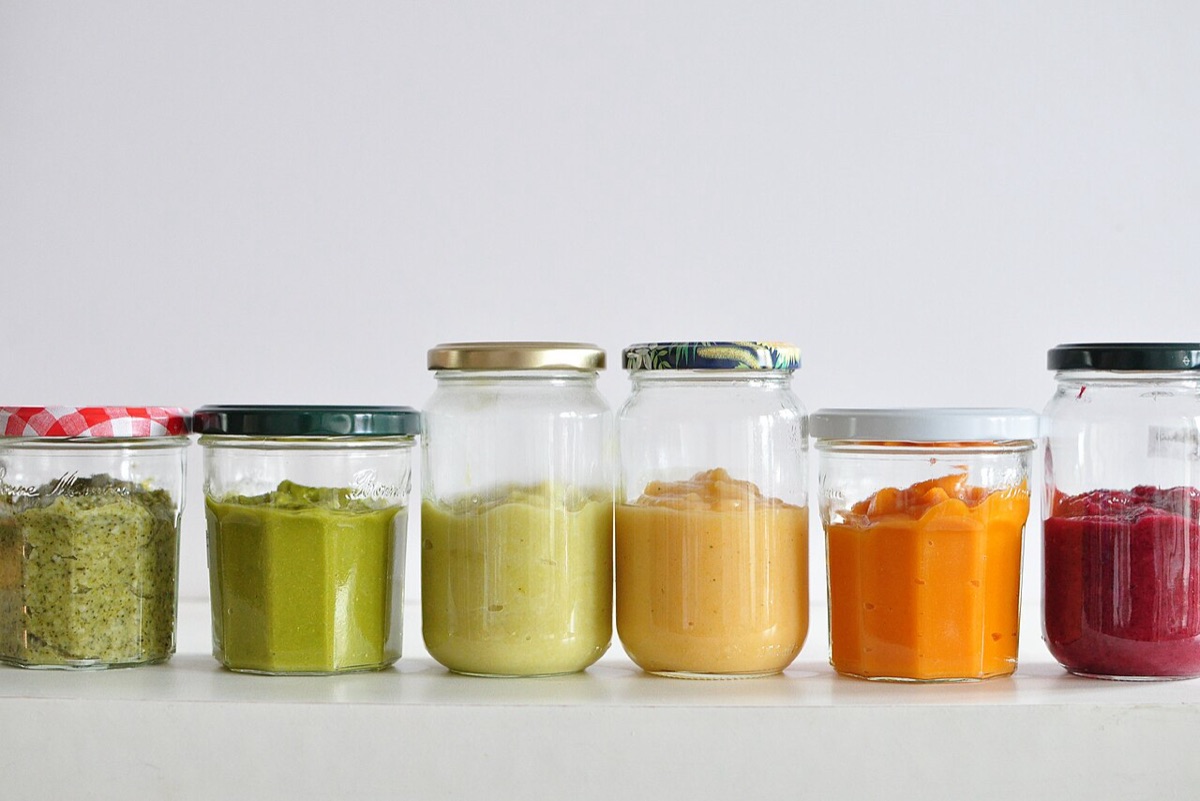
When chewing or swallowing gets difficult, the usual answer is a texture-modified diet: food blended or softened to a set level so it is less likely to cause choking or slip into the airway. The lowest levels are purees, and they have two well-known problems. Blending needs added liquid, which thins out the calories and protein, and every part of the meal ends up looking like the same smooth paste. People eat less of food they don't like the look of, and older adults on these diets tend to be less well nourished. A study published on 18 October in Nutrients by dietitians and food scientists at the Singapore Institute of Technology asked two questions: do older people with chewing or swallowing trouble want different food from everyone else, and would they accept purees made from local dishes and set back into the shape of the original?
First, a research dietitian interviewed 100 adults aged 60 and over at 14 senior day-care centres across Singapore between March and October 2025, in English or Mandarin. Their average age was about 80 and 93% were Chinese. Two yes-or-no questions asked whether they had difficulty chewing and whether they had difficulty swallowing. 56 said yes to at least one: 33 to chewing only, 6 to swallowing only and 17 to both. Of those 56, only 19 had ever been told by a health professional to eat softer food, 15 were eating it, and 37 (66%) had neither been advised to nor were doing so.
Dentures turned up in an unexpected direction: 86% of people without any difficulty wore them, against 55% of those with difficulty. The authors read this as a hint that some of the chewing trouble may come from missing teeth that were never replaced, which a dentist might fix without any change in diet. The study did not include a dental check, so that remains a guess.
On food, the two groups were hard to tell apart. Asked to name up to five favourite foods, both put Chinese noodle dishes first, then chicken and pork dishes; for snacks, savoury and sweet ones led. Both rated taste as the most important thing about a meal and were moderately satisfied with what their centres served. None of the 12 attitude and portion questions, and none of the food or snack categories, differed clearly between people with and without difficulty. The point the authors draw is practical: softer meals do not need a special menu, they need to be the dishes people already love.
So they made four. Teriyaki chicken with porridge, stir-fried long cabbage, a prawn dumpling with thickened soup and a slice of marble cake were bought ready-made, blended with water and an enzyme-based gelling powder, heated past 70 °C, poured into silicone moulds shaped like the original food and left to set for 20 minutes. Each one passed the standard spoon-tilt and fork-drip tests for a level 4 puree. Sixteen different older adults from an active ageing centre, average age 71, none with swallowing trouble and three with some chewing difficulty, then tasted all four, told what each dish was and shown a photo of the real thing.
Every dish scored above the middle of the 7-point scale on look, texture, taste and smell, from 4.7 to 6.6. The cake did best on all four counts (6.6 for look, texture and taste), and the dumpling came close on looks (6.4). The chicken with porridge (4.7) and the cabbage (5.1) looked least appealing, though they still tasted fine at 5.9 and 5.8. Overall the panel rated the idea 8.1 out of 10; 15 of 16 said they would make such meals at home, 13 would buy them and 11 would eat them regularly if they ever needed to.
The limits are plain. Both parts were small, drawn from convenience samples, and mostly Chinese, so Malay and Indian older adults, and their cuisines, are barely represented. Chewing and swallowing trouble rested on one unvalidated question each, not a clinical assessment, so the 66% cannot be read as two in three going untreated. The tasting panel did not have the problem the food is meant for, there was no ordinary scooped puree to compare against, every taster ate the dishes in the same order knowing what they were, and the paper measured stated intentions, not how much anyone actually ate or how safely they swallowed. The gelling powder was developed by the lead author's own university programme, which the paper declares, noting there is no licensing deal or plan to sell it. The work was funded by Singapore's National Medical Research Council and Ministry of Health.
Chewing and swallowing difficulty in 100 older adults at Singapore day-care centres, and a tasting of four moulded purees by 16 others
56 of 100
Said chewing or swallowing was difficult (33 chewing only, 6 swallowing only, 17 both); average age about 80
37 of 56
Of those with difficulty, never advised to eat softer food and not eating it (66%); 15 were on a texture-modified diet
86% vs 55%
Wore dentures: people without difficulty against people with it
None
Food, snack or meal attitude questions that differed clearly between people with and without difficulty
4.7 to 6.6
Mean scores out of 7 for look, texture, taste and smell across the four moulded purees; marble cake highest, chicken with porridge lowest on look
8.1 of 10
Overall rating of the moulded puree idea from 16 tasters; 15 would make it at home, 13 would buy it
Study: Tan VMH, Chiah GTL, Lim IY, Mah WY, Lim PP, Tan KBL, 'Food Preferences and Acceptability of Molded Pureed Foods in Community-Dwelling Older Adults in Singapore', Nutrients 2026, 18(20), 3413, published 18 October 2026, doi 10.3390/nu18203413 (open access, CC BY). Survey: 100 adults aged 60 or over from 14 senior day-care centres, convenience sample, March to October 2025, interviewer-administered in English or Mandarin by a research dietitian; people with dementia or cognitive impairment excluded; mean age 79.9 (SD 8.9), 58% women, 93% Chinese. Chewing and swallowing difficulty were each a single self-reported yes/no item. With difficulty n = 56, without n = 44; no difference in age (80.3 against 79.5), BMI (22.7 against 22.3), sex or marital status. Dentures 31/56 (55.4%) against 38/44 (86.4%), p = 0.001. Among the 56: texture-modified diet ever recommended 19 (33.9%), currently eaten 15 (26.8%), neither 37 (66.1%). Most-recalled food categories: Chinese noodle dishes (80 participants), chicken dishes (62), pork dishes (46); no category differed by group after false discovery rate correction. Sensory pilot: 16 different adults from one active ageing centre, mean age 71.1 (SD 5.8), 62.5% women, all Chinese, 3 with chewing difficulty, none with swallowing difficulty. Prototypes made with an enzyme gellant (MAKANsoft, DIGNIFIED programme, Singapore Institute of Technology) and checked as IDDSI level 4. Mean scores on a 7-point scale (appearance, texture, taste, smell): teriyaki chicken with porridge 4.7, 5.6, 5.9, 5.6; stir-fried long cabbage 5.1, 5.6, 5.8, 5.6; prawn dumpling with thickened soup 6.4, 6.0, 6.3, 5.9; marble cake 6.6, 6.6, 6.6, 6.3. Overall acceptability 8.1 (SD 1.4) of 10; willing to prepare 15 (93.8%), purchase 13 (81.3%), incorporate into regular diet 11 (68.8%). No comparison puree, fixed and named order of tasting, no measurement of nutrient content, intake or swallowing safety. Funding: National Medical Research Council and Ministry of Health, Healthy Longevity Catalyst Award. The lead author leads the programme that developed the gellant; the paper reports no licensing agreement or commercialisation plans.
- The International Dysphagia Diet Standardisation Initiative (IDDSI) sorts foods and drinks into levels from 0 (thin liquids) to 7 (regular food); level 4 is a smooth puree that holds its shape on a spoon.
- The fork drip test used here checks a level 4 puree by tipping it on a fork: it should sit in a mound on top, perhaps with a small tail below, and not drip steadily through the prongs.
- The paper cites an estimate that 58,000 to 174,000 older people living at home in Singapore have dysphagia, the medical term for difficulty swallowing.
- Japan has labelled shop-bought foods for chewing and swallowing ability since 2002 with its Universal Design Food scheme, and added the colour-coded 'Smile Care' food labels in 2015.
- Food Preferences and Acceptability of Molded Pureed Foods in Community-Dwelling Older Adults in SingaporeNutrients, October 2026 · The study: full text, open access
- The IDDSI FrameworkInternational Dysphagia Diet Standardisation Initiative · The texture levels for foods and drinks, and how to test them
- Swallowing problems (dysphagia)NHS · Signs of swallowing problems and when to get help
- Puréed veggiesWikimedia Commons · The photo, CC BY 2.0
General information, not medical advice. This small study did not test whether moulded purees are safe or improve eating in people who have trouble swallowing. If you or someone you care for coughs or chokes when eating or drinking, ask a doctor for a swallowing assessment before changing food textures.
Analysis by NutroPractic from the sources listed. Written for general readers; it does not replace advice from your own doctor.
From our articles
Our guides on this subject
Plain-language guides on nutrition and wellness, backed by research.

Medicines and nutrition
CoQ10 and statins: what the muscle symptom trials found, and who might benefit
Statin-associated muscle symptoms lead up to 30% of patients to discontinue life-saving cholesterol therapy. While statins deplete circulating CoQ10 by 16% to 54%, randomized clinical trials show mixed results for myalgia relief. Explore the trials, ubiquinone vs ubiquinol bioavailability, recommended doses, and clinical guideline recommendations.
14 Nov 2026

Women's wellness and nutrition
Creatine for women: cognitive performance, menstrual cycle phases, and bone density beyond muscle building
Creatine is widely stereotyped as a bodybuilding supplement for men, but female physiology tells a very different story. Women exhibit 70% to 80% lower endogenous creatine stores, reduced dietary intake, and cyclical fluctuations in brain creatine kinase across the follicular and luteal phases. Robust clinical trials demonstrate that 3 to 5 grams of daily creatine monohydrate enhances cognitive performance during sleep deprivation, augments clinical response in unipolar depression, preserves femoral neck bone geometry in postmenopausal women, and causes cellular intracellular hydration rather than subcutaneous bloating.
13 Nov 2026

Healthy ageing
Creatine beyond the gym: what it does for older adults and women, and what it doesn't
Across 22 trials, adults in their late fifties to seventies who took creatine while doing resistance training gained about 1.4 kg more lean mass than those who trained without it. Two two-year trials found it did nothing for bone density after menopause. Where the evidence is solid, where it's early (memory, short nights), how much to take, and who should leave it alone.
10 Oct 2026
Newsfeed for your website
Want this feed on your website?
Add it to any site with one copy-and-paste snippet. No sign-up, and it updates itself every hour.
Start with a virtual consultation
Tell Dr. Triveni what you want to change. You will leave with a clear next step, whether you are in Toronto, London, New York or Chennai.