Infant nutrition · November 5, 2026
A richer baby ration added about 115 calories a day. The growth measure the trial was built around still didn't clearly move
Babies in 24 Indian village clusters ate more protein, more fat and a wider range of foods, and some of their measurements improved. Stunting still rose in both groups, and the most eye-catching numbers come with a catch that is easy to miss.
Around six months, a baby's need for energy and nutrients starts to outrun what breast milk supplies. Getting the next foods right is hard in many places, and India has tried to help for years with a take-home ration for children under three. In Chitradurga district, Karnataka, earlier work found that babies on the scheme still fell short by about 150 kcal a day and on fat. The monthly pack is raw ingredients: broken rice, mung beans, jaggery, a little milk powder. So researchers designed a ready-portioned powder based on milk and legumes, roughly 200 kcal a day, inside the government's cost limit of 8 rupees a day, and tested it.
The trial, published in Nutrients on 3 November, enrolled 134 breastfed babies aged 6 to 9 months across 24 village clusters. Half the clusters got the new powder on top of the usual ration for three months; the other half kept the usual ration alone. Caregivers in both arms got feeding and hygiene education, plus buckets and soap. The diet changed as hoped. At the end, reported intake averaged 774 kcal a day against 660, a gap of about 115 (our subtraction), with 16.4 g of protein against 12.7 and 32.3 g of fat against 26.9. Minimum dietary diversity was met by 84% of babies against 61%.
Whether that became growth is the harder question. The trial's primary outcome was length-for-age z-score, which measures a baby's length against WHO standards for age and sex. The difference between groups was 0.063 per month, with a 95% confidence interval of −0.019 to 0.145 and p = 0.130. That is not a statistically clear effect. Multiplied over three months it comes to about 0.19, by our arithmetic, while the trial's sample size was calculated around a difference of 0.27. So it may have been too small to confirm a real but more modest benefit. It equally cannot claim one. The authors name the small sample and a duration cut short by money as a major limitation.
Stunting, meaning a length-for-age z-score below −2, started at about 19% to 20% in both groups. By the end it was 28.1% with the new powder and 32.3% without. The gap wasn't statistically significant, and the rise in both groups is the sobering part. Babies in this age window tend to fall further behind the growth standards, and three months of better food slowed that at most. In an exploratory analysis using all four measurement points, the z-score's downward slope was −0.016 with the powder and −0.066 without, a difference with p = 0.027. The paper's conclusion leans on this 'favourable trajectory', though the authors also write that the findings do not establish a significant effect on standardised growth.
The secondary results look better at first and need care. The mixed models favoured the powder for length (0.213 cm a month), weight (0.040 kg a month) and head circumference (0.067 cm a month), with p-values from 0.027 to 0.044, and the methods describe no correction for testing many outcomes. Simpler figures in the same paper are less flattering: length gain was 1.19 against 1.06 cm a month (p = 0.123) and weight gain 213 against 217 g a month (p = 0.907), slightly lower with the powder. The main text doesn't reconcile the two, and we did not read the supplementary tables. Fat-free mass at the end, 80.7% against 77.6% with p = 0.037, looks like a win until you see the groups differed at the start too (80.4% against about 78%), and that the change was almost identical (0.83 against 0.79, p = 0.970). Diarrhoea at the end was more common in control babies (30.6% against 14.3%, p = 0.048), yet the rate across the whole trial showed no clear difference (rate ratio 0.85, 95% CI 0.53 to 1.36).
None of this makes the powder a failure. Roughly 80% of it was used by the leftover-sachet count, no allergies were reported, the funder had no role, and the intake gain is real enough for a product built on a tight budget. Two questions remain open: does it change growth over a longer stretch, and would the same happen elsewhere? The education both arms received may also have narrowed the gap, since nearly all caregivers ended up in the 'good' knowledge band. For parents anywhere, this says little about any product on a shop shelf. It does fit the plainer message that the food a baby gets from six months on deserves attention for its quality as well as its quantity, and that one short fix rarely undoes growth faltering by itself.
Milk-legume ration: what changed after three months
134
Breastfed infants aged 6–9 months, in 24 village clusters in Karnataka, India
0.063 / month
Primary outcome: difference in length-for-age z-score; 95% CI −0.019 to 0.145; p = 0.130, not significant
28.1% v 32.3%
Stunted at the end, new powder versus usual ration, not significant; about 19–20% in both at the start
774 v 660 kcal
Usual daily energy intake at the end, from caregiver recalls (p < 0.001)
16.4 v 12.7 g
Usual daily protein at the end (p < 0.001)
0.213 cm / month
Length difference in the mixed model, secondary outcome; 95% CI 0.025 to 0.400; p = 0.027
1.19 v 1.06 cm
Simple monthly length gain, same trial (p = 0.123); WHO standard about 1.3 cm
79.9%
Average use of the powder, from returned sachets and not direct observation
Cluster-randomised trial, three months, not blinded for families or field staff (the data analyst was blinded). Length, weight and head circumference were secondary outcomes, and the trajectory analysis was exploratory. Diet and illness came from caregiver reports. Some baseline figures differed, as can happen in a small trial, such as boys (42% v 55%) and mothers with a degree (3% v 13%). The 115 kcal gap and the 0.19 three-month figure are our own arithmetic from the paper's numbers. Results come from one rural district and the authors call for validation elsewhere.
- The researchers measured babies' body composition with heavy water: a tiny oral dose of deuterium, then saliva samples about three hours later. Dose spitting was among the reasons samples were lost, and paired samples existed for only 25 control and 37 intervention babies.
- The powder came in 46 g single-day sachets, seven to a pack. Unreturned sachets were counted as unused, which pulls the 79.9% figure down if anything, but an empty sachet can't show who in the household ate the food.
- At the start, the usual ration was reported as eaten by the infant alone in only 45% and 42% of households across the two arms. In 27% and 39% it was shared with family members.
- Folate was the one nutrient of the twelve in the paper's table that didn't differ between groups at the end. Vitamin B6 showed the widest gap in proportion, a median of 1.09 mg against 0.15 mg.
- Before it went to families the powder was stored for shelf-life testing at 38 °C and 92% humidity for 90 days, and it was given a shelf life of four months.
- WHO estimates that 150 million children under five were stunted in 2024. It recommends breastfeeding up to two years or beyond, with safe and nutritionally adequate solid foods from six months.
- Effect of a 3-Month Modified, High-Quality Take-Home Ration on Linear Growth and Body Composition in Rural South Indian Infants Aged 6–9 Months: A Cluster-Randomized Controlled TrialNutrients, 3 November 2026 · Open-access paper (CC BY 4.0); design, tables, primary and secondary results, diet, illness, funding and limitations checked against the full text. Supplementary tables not read. Trial registration CTRI/2020/06/025825.
- Infant and young child feedingWorld Health Organization · Fact sheet: why needs outgrow breast milk around six months, breastfeeding recommendation, stunting estimate for 2024.
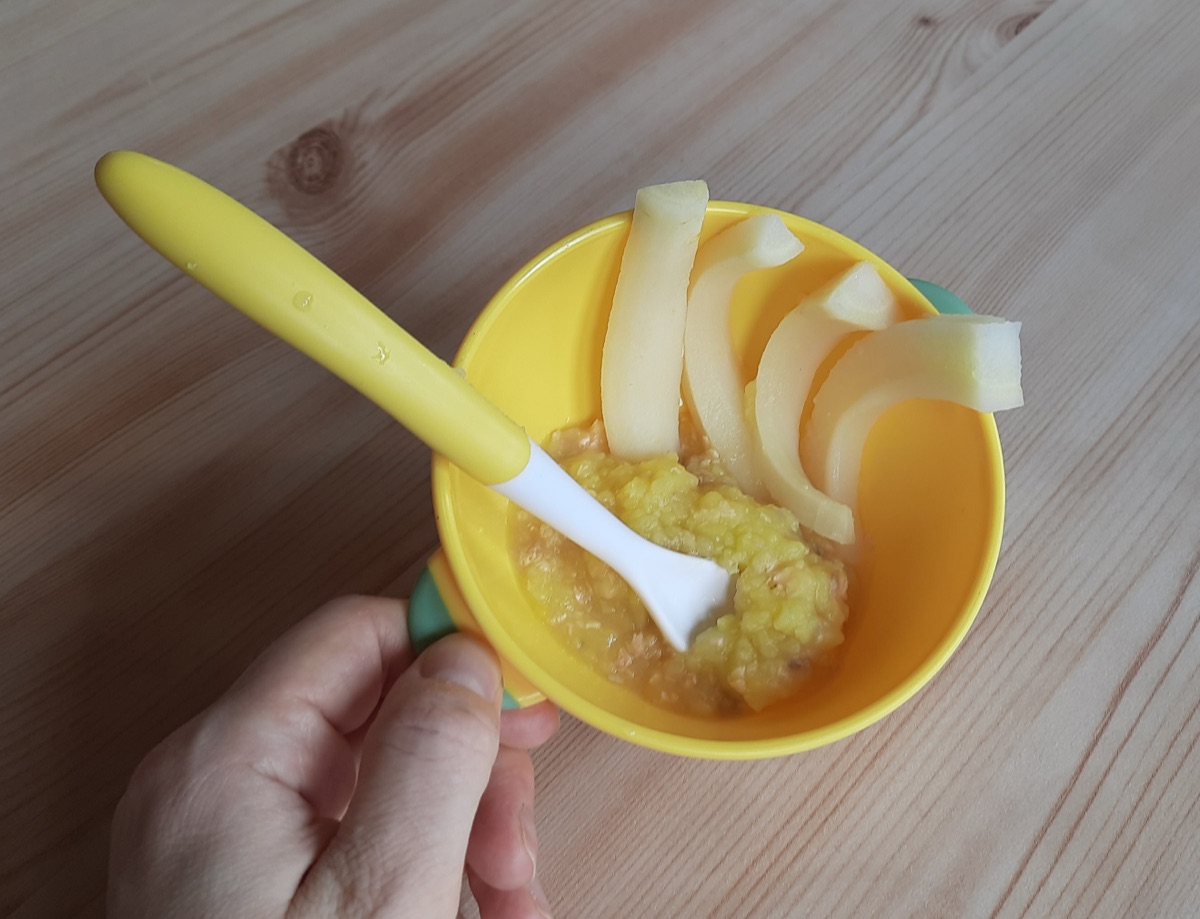
- Starting solids - homemade baby food in a bowl.jpgWikimedia Commons · Photograph by MAKY.OREL, CC0; reused as a general illustration of first foods.
General information, not medical advice. This trial tested one specially made food in one rural district, and it excluded babies with reported milk or legume allergy. Ask a paediatrician or dietitian about your own baby's feeding or growth, and before giving any supplement.
Analysis by NutroPractic from the sources listed. Written for general readers; it does not replace advice from your own doctor.
From our articles
Our guides on this subject
Plain-language guides on nutrition and wellness, backed by research.
Global data
Diabetes, obesity, child malnutrition and hunger, 1980 to 2050: what the numbers show
How diabetes, obesity, child malnutrition and hunger have changed since 1980, with sourced figures and a basic projection to 2050. Click a condition to explore the chart and its facts.
5 Oct 2026
Diabetes
Pasta and blood sugar: al dente, cooled and reheated, and what the glucose tests measured
Head-to-head tests found little gap between 5 and 15 minutes of boiling. Chilling and reheating ranged from no change to a large drop. Moving from 80 g to 150 g adds 50 g of carbs. The tests, the sums, and legume and whole-wheat pastas per 100 g.
4 Nov 2026
Lifestyle
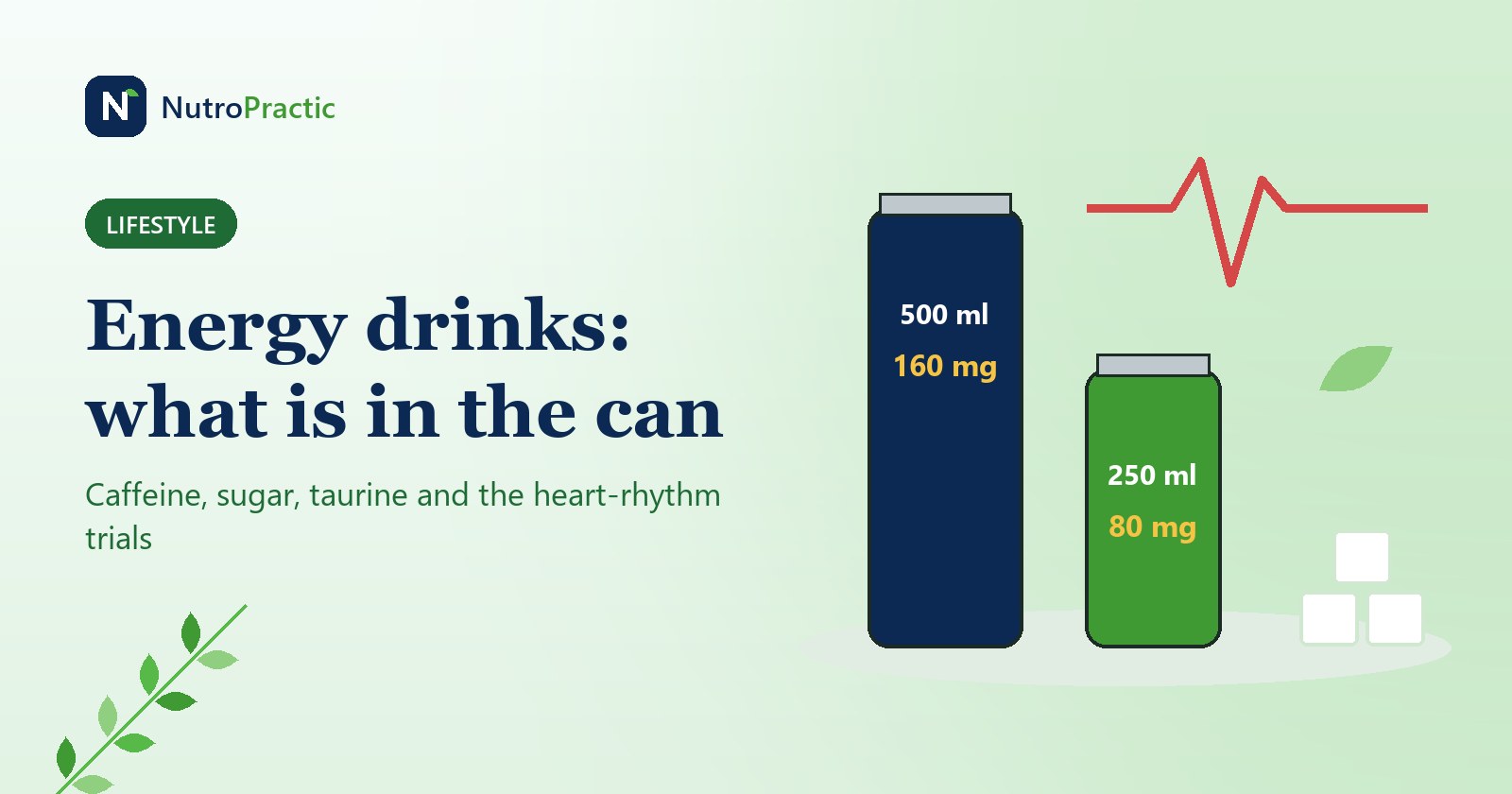
Energy drinks: caffeine, sugar and taurine per can, and what the emergency-visit and heart-rhythm studies found
From 80 mg to 300 mg of caffeine, and up to 55 g of sugar in one can. The numbers by brand, what they mean for a 50 kg teenager, what the QT and blood pressure trials measured, the old emergency-visit data and England's coming under-16 ban.
4 Nov 2026
Newsfeed for your website
Want this feed on your website?
Add it to any site with one copy-and-paste snippet. No sign-up, and it updates itself every hour.
Start with a virtual consultation
Tell Dr. Triveni what you want to change. You will leave with a clear next step, whether you are in Toronto, London, New York or Chennai.