Ocular nutrition & gut-retina axis · November 19, 2026
Targeted antioxidants and saffron eased gut dysbiosis and improved vision in macular degeneration
A randomized trial in patients with neovascular age-related macular degeneration found that combining anti-VEGF therapy with an oral micronutrient formula (lutein, zeaxanthin, saffron) restored the gut–retina axis, lowered inflammatory fatty acids, and boosted visual acuity.
Neovascular age-related macular degeneration (nAMD) represents a major cause of irreversible central vision loss among older adults, driven by abnormal choroidal neovascularization, vascular leakage, and chronic retinal inflammation. Standard clinical management relies on regular intravitreal injections of vascular endothelial growth factor (anti-VEGF) inhibitors. However, emerging ophthalmological research suggests that systemic inflammatory signals originating from gut microbiome dysbiosis—termed the gut–retina axis—contribute to disease progression.
A randomized clinical trial published in Nutrients explored whether adjuvant oral micronutrient supplementation could therapeutically remodel the intestinal microbiome and improve visual outcomes in treatment-naive patients diagnosed with nAMD. Investigators enrolled 30 nAMD patients receiving monthly anti-VEGF therapy, randomizing them to either anti-VEGF therapy alone or combined with a daily oral formula containing lutein, zeaxanthin, saffron extract, vitamin C, vitamin E, and zinc for six months, benchmarked against 15 healthy controls.
At baseline, nAMD patients exhibited distinct microbial dysbiosis, including significantly reduced fecal alpha-diversity and an accumulation of pro-inflammatory medium-chain fatty acids (MCFAs), specifically octanoic and nonanoic acids. Over the six-month intervention, the micronutrient-supplemented group achieved a marked reduction in these detrimental circulating MCFAs alongside a favorable expansion of short-chain fatty acid-producing commensal bacteria.
Crucially, these microbial improvements translated into superior functional clinical outcomes: patients receiving the combined micronutrient and anti-VEGF therapy demonstrated greater improvements in best-corrected visual acuity and central macular retinal thickness stabilization compared to those receiving anti-VEGF monotherapy alone. The study illustrates that targeting the gut–retina axis through nutritional supplementation provides a promising complementary approach to conventional ophthalmic treatments.
Gut microbiota and visual outcomes following adjuvant micronutrient therapy in nAMD
30
Treatment-naive nAMD patients randomized across 6 months of therapy
15
Healthy age-matched control participants evaluated for baseline comparisons
-MCFAs
Statistically significant suppression of pro-inflammatory medium-chain fatty acids
+Acuity
Superior best-corrected visual acuity improvement vs anti-VEGF alone
Randomized clinical trial. Oral supplementation with carotenoids and saffron modulated gut microbiota, suppressed toxic MCFAs, and improved retinal outcomes.
- The gut–retina axis describes the biological communication network whereby intestinal microbes and their metabolites influence retinal inflammation.
- Medium-chain fatty acids like octanoic acid can stimulate pro-angiogenic and pro-inflammatory signaling pathways when present at elevated levels.
- Macular carotenoids (lutein and zeaxanthin) preferentially concentrate in the fovea, where they filter damaging blue light and neutralize singlet oxygen.
- Saffron contains bioactive crocins and safranal, phytochemicals shown in clinical models to protect retinal photoreceptors against apoptotic stress.
- Beneficial Effects of Micronutrient Supplementation in Restoring the Altered Microbiota and Gut–Retina Axis in Patients with Neovascular Age-Related Macular Degeneration—A Randomized Clinical TrialNutrients / MDPI · Randomized clinical trial in 30 patients with nAMD and 15 controls. Published November 2026.
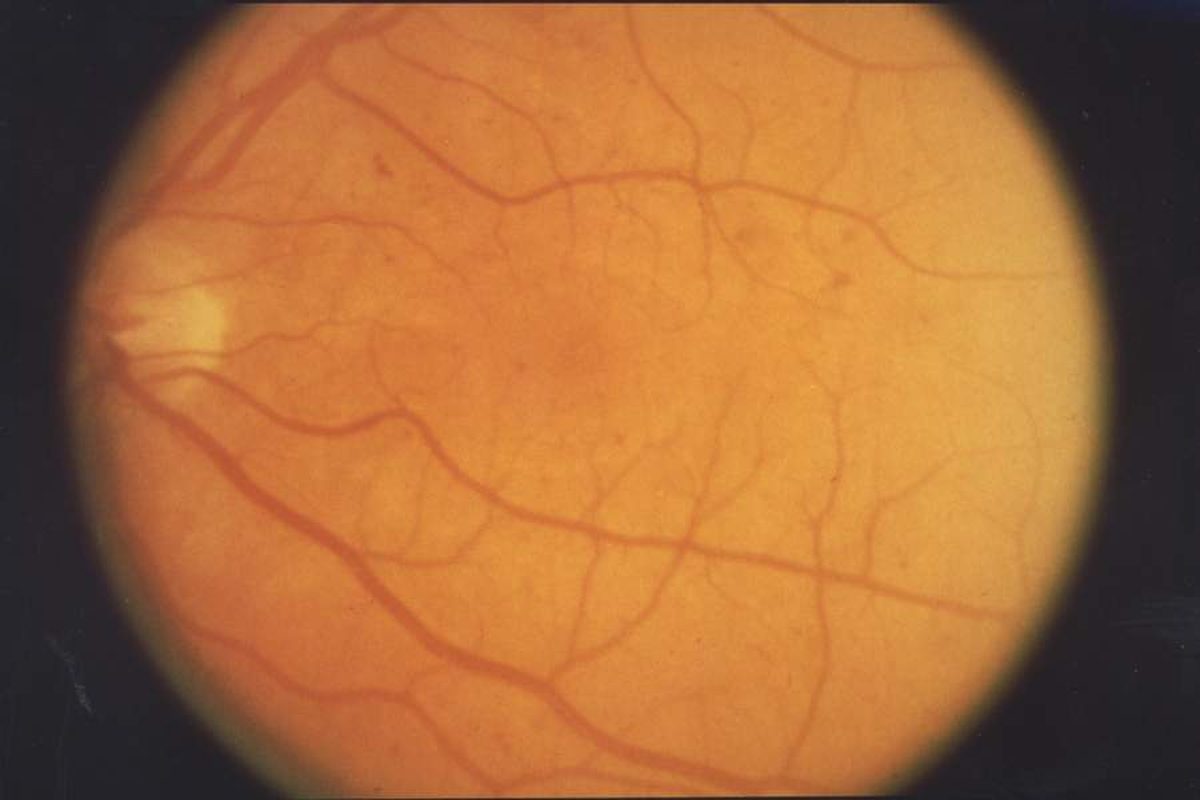
- Fundus photograph showing retinal vasculatureWikimedia Commons · Public domain image from the National Eye Institute, National Institutes of Health.
Ophthalmic nutrition research summary, not therapeutic prescription. Patients receiving anti-VEGF treatments for macular degeneration should maintain all scheduled medical visits and consult their retinologist.
Analysis by NutroPractic from the sources listed. Written for general readers; it does not replace advice from your own doctor.
From our articles
Our guides on this subject
Plain-language guides on nutrition and wellness, backed by research.

Gut health
Probiotic capsules: which ones have trial evidence, what they can do, and when to skip them
Children on antibiotics: 8% got diarrhoea with a probiotic, 19% without. Older hospital patients: 10.8% with, 10.4% without. Which capsules have evidence, what three guidelines say about IBS, what a course costs per case prevented, and who shouldn't take them.
2 Nov 2026

Gut health
Gluten-free without coeliac disease: who actually benefits, and what the blinded gluten challenges found
In blinded trials only 16% of people who said gluten made them ill reacted to gluten rather than placebo, and in Oslo fructans caused more bloating than gluten. Who really needs to avoid it, how to get tested before you stop, how much gluten is in a slice of bread or a roti, and what gluten-free food costs (159% more in the UK) and lacks.
1 Nov 2026

Gut health
Lactose intolerance: how much milk most people can actually tolerate, and which dairy is easiest
Most adults who don't digest lactose well still handle about 12 g at once, roughly a 250 ml glass of milk, in blinded trials. What the 12 g studies found, a lactose table for milk, yoghurt, cheese, chai and dahi, how lactase tablets and A2 milk compare, why the famous 68% figure was retracted, and how to keep calcium up if you cut back.
25 Oct 2026
Newsfeed for your website
Want this feed on your website?
Add it to any site with one copy-and-paste snippet. No sign-up, and it updates itself every hour.
Start with a virtual consultation
Tell Dr. Triveni what you want to change. You will leave with a clear next step, whether you are in Toronto, London, New York or Chennai.