Plant-based diets · October 18, 2026
63 pregnant women in Melbourne: the ones who ate no meat had about 30% less creatine in their blood all pregnancy long. Their babies were, if anything, a little bigger
Creatine helps cells store quick energy, and most of what we eat comes from meat and fish. Vegetarian mothers ran low on it from 15 weeks to birth, yet their placentas and cord blood looked much the same, and their babies weighed about 250 g more.
Creatine is best known as a gym supplement, but every body makes and uses it. Muscles, the brain and other busy tissues use it as a quick energy buffer, and pregnancy, with a placenta and a baby to build, seems to lean on that system harder than usual. We get creatine two ways: the body makes some, and the rest comes from food, almost all of it from meat and fish. So what happens in a pregnancy without meat? A team from Monash University, the Hudson Institute of Medical Research, Deakin University and Swinburne University of Technology says theirs is the first study to look, and published it in Nutrition Journal on 16 October 2026.
The women came from the Creatine and Pregnancy Outcomes cohort, 225 healthy pregnant women recruited at two Monash Health hospitals in Melbourne between 2015 and 2017. From it the researchers took 24 who ate no meat, poultry or fish (21 vegetarians who ate eggs and dairy, and three vegans) and 39 meat eaters picked to match them on age, weight, ethnicity and number of previous births. About two-thirds of both groups were of South Asian background. At five clinic visits, from about 15 to 36 weeks, each woman gave blood and urine and described everything she had eaten the day before; at birth the team also collected placenta and cord blood.
The difference in the mothers was clear and steady. Creatine in the blood of the women who ate no meat was about 30% lower than in the meat eaters across the visits, and about 55% lower in their urine. At birth the averages were 27 against 40 micromoles per litre. At birth their blood also carried more guanidinoacetate, the building block the body turns into creatine, which looks like the body making more of its own to make up the gap, though not enough to close it. The authors point out that pregnancy alone lowers creatine by about a third, so the meat-free mothers had roughly half the level reported in women who eat meat and are not pregnant.
Then come the surprises. Placentas and cord blood showed no clear difference between the groups, although only some of these samples were available (cord blood from the artery, for example, from just 19 babies). The babies of the women who ate no meat were not smaller either: they averaged 3,461 g against 3,213 g, about 248 g heavier, and 1.3 cm longer, and five of the 24 were classed as large for their age against one of the 39. Those mothers also gained about 2.2 kg more weight over the pregnancy. They got less of their energy from protein (13.6% against 17.5%) and more from carbohydrate, though total calories were the same.
Across all 63 mothers, those with more creatine in their blood had babies with slightly longer bodies and slightly larger heads, and higher guanidinoacetate went with slightly smaller heads. The authors are careful with these links. They come from many comparisons of several substances against several measurements, the p-values were not corrected for that, and when the team tested whether diet changed the links, the creatine ones did not hold up after correction. They call these findings hypothesis-generating. Other limits: food was recorded by one-day recalls, muscle mass (which affects creatine) was not measured, only three women were vegan, and the cohort was registered in 2018, after recruitment had ended. One author now sits on a scientific advisory board linked to a creatine maker; the paper says that began after the study and the company played no part.
What does this mean for a vegetarian pregnancy? Not much yet, and certainly not a reason to buy creatine. Women taking creatine supplements were left out of this analysis, and it tells us nothing about whether supplements in pregnancy are safe or helpful. The useful takeaway is that a meat-free diet does change a mother's chemistry in ways that are easy to measure, the body appears to work to make up for it, and the babies here grew well. The researchers' next step is bigger studies, and eventually trials, to see whether creatine matters for women who eat no meat. In the meantime, the established advice for vegetarian and vegan pregnancies still stands: plan enough protein, iron, vitamin B12, iodine and omega-3, and talk to your midwife or doctor about supplements.
Creatine in 24 pregnant women who ate no meat vs 39 meat eaters, followed from about 15 weeks to birth: nested cohort, Melbourne, Australia
63
Women studied: 24 who ate no meat, poultry or fish (21 vegetarian, 3 vegan) and 39 matched meat eaters
About 30% lower
Blood creatine in the meat-free group across pregnancy (p = 0.001); about 55% lower in urine
27 vs 40 µM
Average maternal blood creatine at birth: meat-free vs meat eaters
No clear difference
Creatine in the placenta and cord blood (smaller subsets of samples)
3,461 vs 3,213 g
Average birth weight: babies of meat-free vs meat-eating mothers (p = 0.05)
5 of 24 vs 1 of 39
Babies classed as large for gestational age
12.3 vs 10.1 kg
Average weight gained in pregnancy: meat-free vs meat eaters
13.6% vs 17.5%
Share of daily energy from protein: meat-free vs meat eaters (total calories the same)
Figures from de Guingand DL, van der Pligt PF, Callahan DL and colleagues, 'Does a meat-free diet modify creatine homeostasis in pregnancy? A nested cohort study', Nutrition Journal, published online 16 October 2026 as an article in press, doi 10.1186/s12937-026-01409-4 (abstract, Results, Tables 2 and 3). The 30% and 55% figures are model estimates across five antenatal visits; birth figures are group averages. Links between creatine and newborn size were secondary, exploratory and not corrected for multiple testing. µM = micromoles per litre.
- Meat and fish carry about 3 to 5 g of creatine per kilogram. Cow's milk has about 0.1 g per litre and eggs only traces, which is why vegetarians who eat dairy and eggs still get very little from food.
- An adult loses about 1 to 2 g of creatine a day as it breaks down into creatinine, a waste product the kidneys clear. That is the same creatinine doctors measure in a routine kidney blood test.
- Making creatine is costly for the body: by the paper's account it uses about 40% of the 'methyl groups' the body hands out for chemical reactions, and 20 to 30% of a key part of the amino acid arginine.
- The human placenta has the enzymes needed to make creatine itself, one reason the authors think babies may be partly shielded when the mother runs low.
- Diet can swing creatine intake enormously, from zero for vegans to as much as 15 g a day for an adult on a very meat-heavy diet.
- Does a meat-free diet modify creatine homeostasis in pregnancy? A nested cohort studyNutrition Journal, 16 October 2026 · The study: who took part, creatine in mothers, placentas and cord blood, birth outcomes and limitations
- Creatine and pregnancy outcomes, a prospective cohort study in low-risk pregnant women: study protocolBMJ Open, 2019 · How the parent cohort of Melbourne women was set up
- Registration ACTRN12618001558213Australian New Zealand Clinical Trials Registry · The cohort's registry entry
- Vegetarian and vegan diets during pregnancyBritish Nutrition Foundation · Plain-language guide to the nutrients to plan for in a meat-free pregnancy
General information, not medical advice. This was a small observational study of healthy pregnancies in Melbourne, and it did not test creatine supplements. If you are pregnant or planning a pregnancy and eat no meat or fish, talk to your midwife, doctor or a registered dietitian about your diet and any supplements before making changes.
Analysis by NutroPractic from the sources listed. Written for general readers; it does not replace advice from your own doctor.
From our articles
Our guides on this subject
Plain-language guides on nutrition and wellness, backed by research.
Women's health
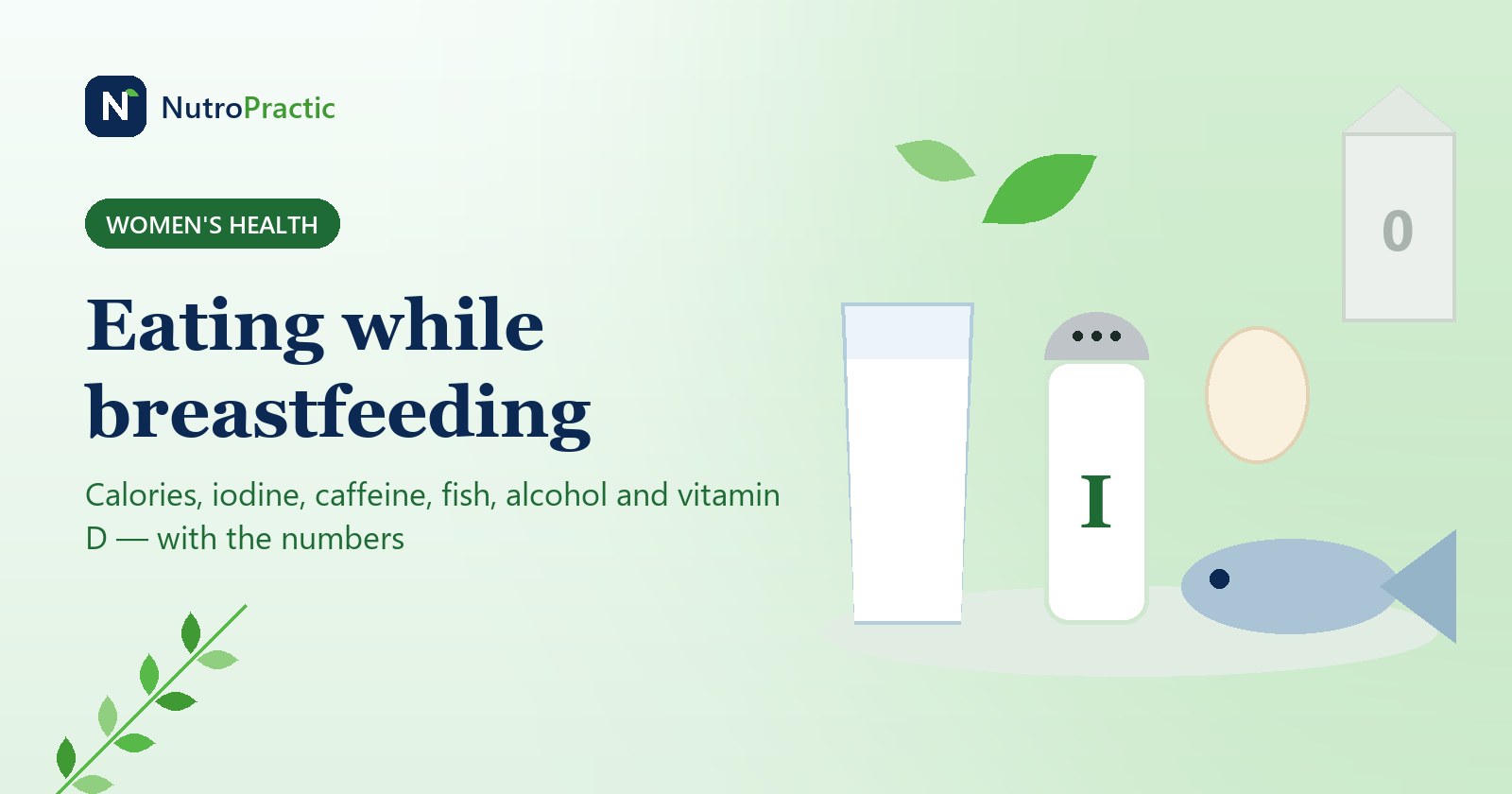
Eating while breastfeeding: extra calories, iodine, caffeine, fish and alcohol, with the actual numbers
Breastfeeding usually adds about 330–400 kcal a day, but the smaller numbers can matter more: 290 mcg iodine, 400 IU vitamin D for baby, 8–12 oz fish a week, and a caffeine total you can actually add up.
6 Nov 2026
Women's health
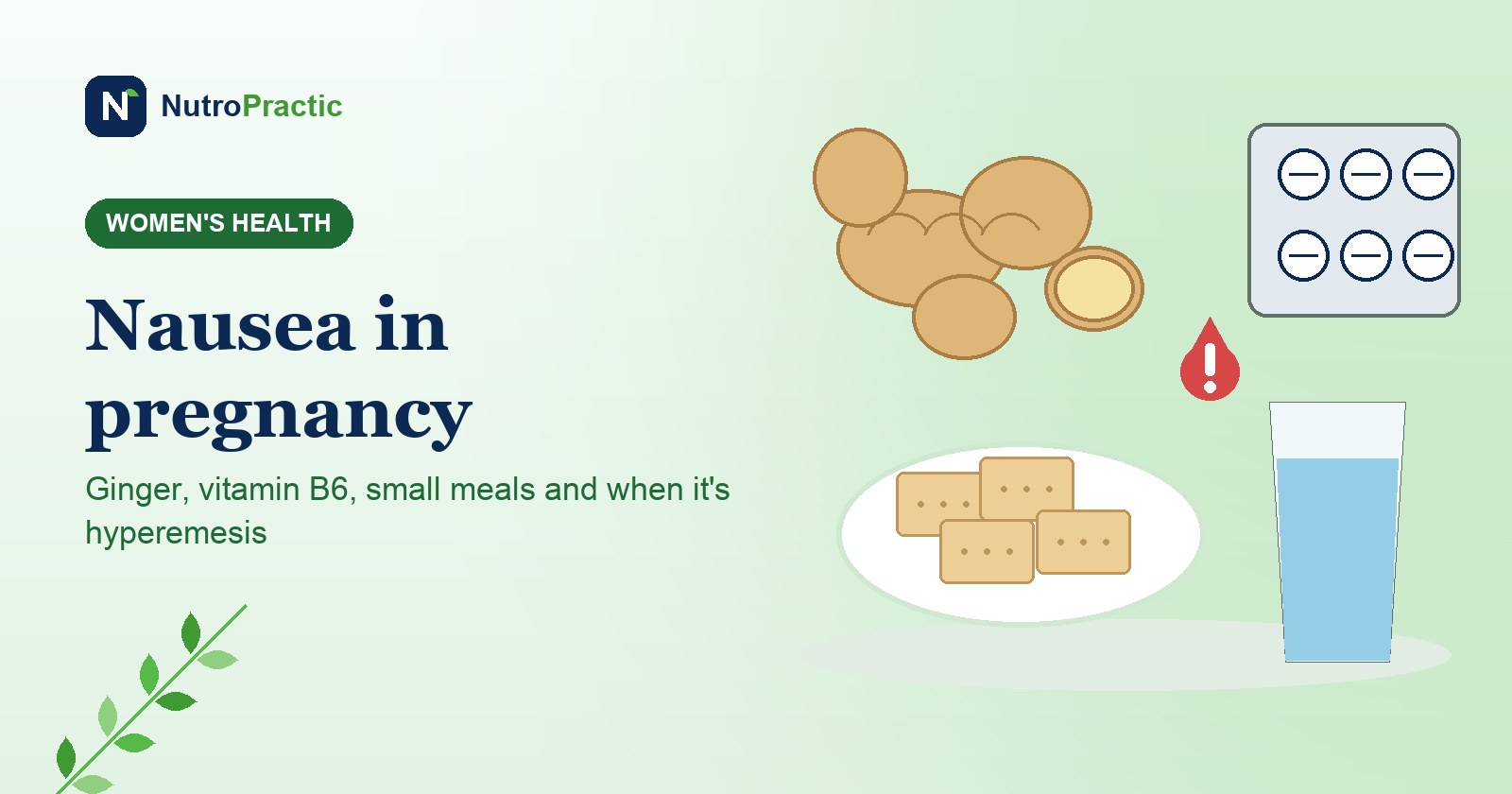
Nausea in pregnancy: ginger, vitamin B6, small meals and when it's hyperemesis, from the trials
Only 1.8% of women in one diary study had nausea just in the morning. Ginger at 1 g a day, B6 at 30 to 75 mg and doxylamine with B6 each have trial data, while diet advice has none. The score to track it, the doses, and the signs that mean a phone call.
5 Nov 2026
Women's health
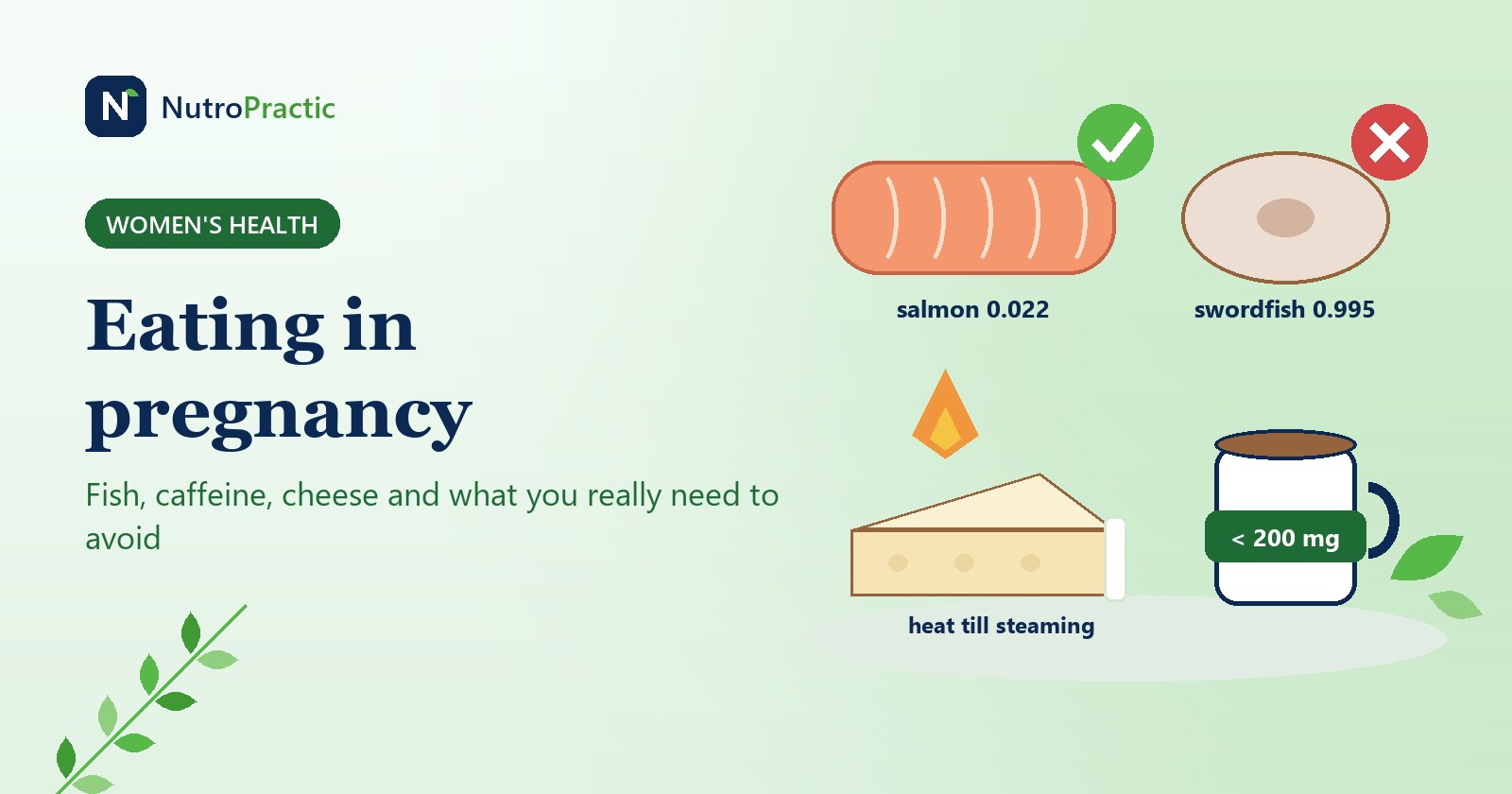
Eating in pregnancy: fish, caffeine, cheese and what you really need to avoid
Most fish is encouraged in pregnancy, not banned: 8-12 oz a week from the low-mercury list. The mercury numbers per fish, what 200 mg of caffeine looks like in real cups, which cheeses carry the listeria risk and how many cases there actually are, why liver is on the list, and how much weight to gain for your BMI.
29 Oct 2026
Newsfeed for your website
Want this feed on your website?
Add it to any site with one copy-and-paste snippet. No sign-up, and it updates itself every hour.
Start with a virtual consultation
Tell Dr. Triveni what you want to change. You will leave with a clear next step, whether you are in Toronto, London, New York or Chennai.