Liver health · November 9, 2026
Fatty liver in people with a lean BMI still came with 5.6 times the diabetes hazard — in a Japanese cohort of 14,271
Two Asian datasets compared lean and non-lean fatty liver. Both groups fared worse than people without fatty liver; the study could not show that one was worse than the other.
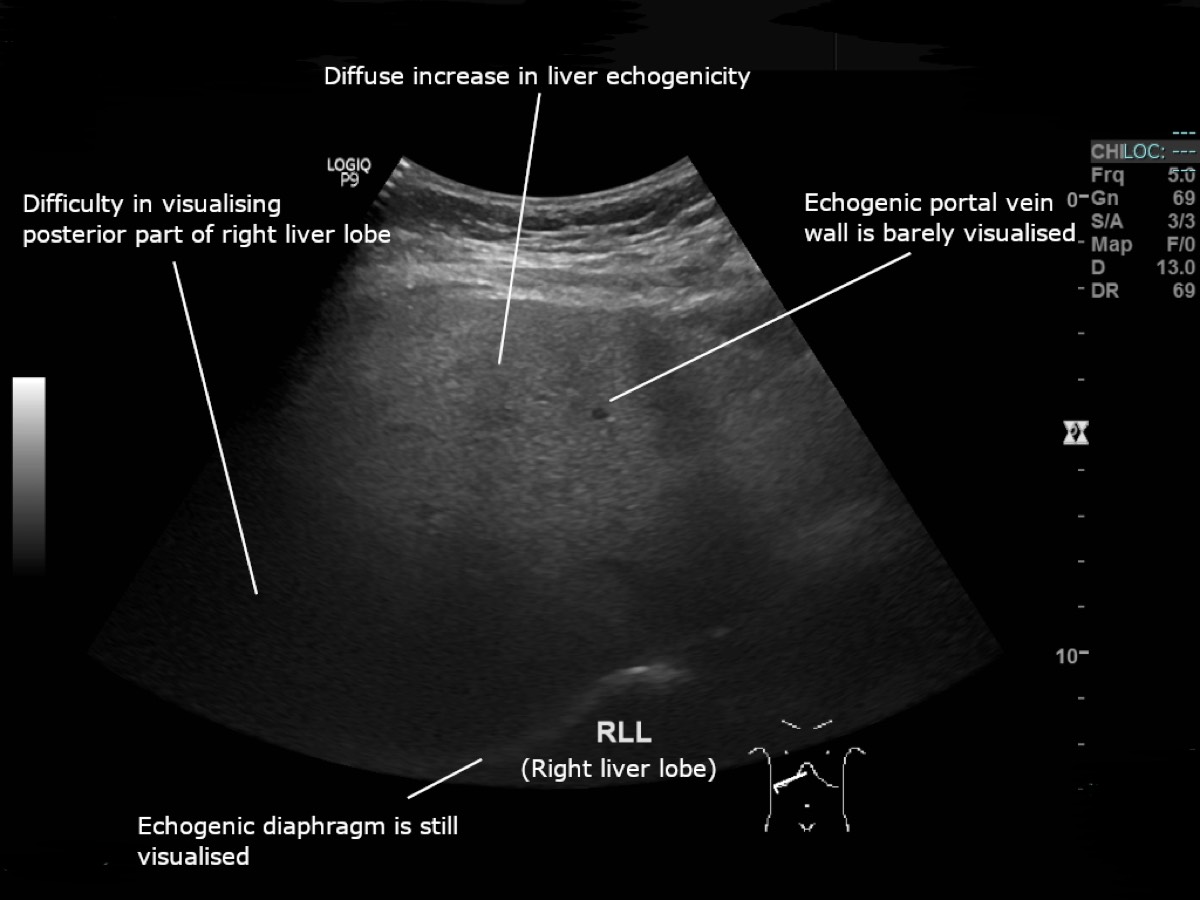
The study used two separate groups. A cross-sectional analysis of 12,283 people at a Chinese health check-up looked at carotid artery plaque. A Japanese cohort of 14,271 people was followed for new diabetes. In both, participants were sorted into four groups by BMI (a cut-off of 23 kg/m²) and by whether they had non-alcoholic fatty liver disease.
Compared with lean people without fatty liver, lean people with fatty liver had 1.60 times the odds of carotid plaque (95% CI 1.28 to 1.98) and non-lean people with fatty liver 1.46 times (1.28 to 1.67). In the Japanese cohort, the diabetes hazard ratios were 5.64 (3.63 to 8.76) for lean fatty liver and 8.13 (5.97 to 11.08) for non-lean fatty liver.
The two fatty-liver groups did not differ significantly from each other, but the authors stress that this does not mean the risks are equal: there were relatively few diabetes events in the lean fatty-liver group, so the study may have lacked power. The data are observational and from two different populations, so they show an association, not a cause.
Lean vs non-lean fatty liver
12,283
People in the Chinese carotid-plaque analysis
14,271
People in the Japanese diabetes cohort
OR 1.60
Carotid plaque, lean fatty liver vs lean without
HR 5.64
Incident diabetes, lean fatty liver vs lean without
HR 8.13
Incident diabetes, non-lean fatty liver vs lean without
Cross-sectional analysis (China) and prospective cohort (Japan) analysed separately; lean was defined as BMI up to 23 kg/m², a threshold used for Asian populations.
- Fatty liver is common in people of normal weight, particularly in some Asian populations, which is why researchers study 'lean' disease separately.
- Carotid plaque is fatty build-up in the neck arteries and is seen on ultrasound.
- Hazard ratios compare the speed at which new cases arise, not the total number of people affected.
- A BMI under 23 does not guarantee low liver fat; where fat is stored matters as well as how much.
- Association of lean NAFLD with carotid plaque prevalence and incident diabetes: separate analyses in two Asian populationsFrontiers in Nutrition, 4 November 2026 · Open-access study; sample sizes, odds ratios, hazard ratios and the authors' power caveat checked against the published abstract.
- Ultrasound of grade 2 fatty right liver lobeWikimedia Commons · CC BY-SA 4.0 image; general illustration only.
General information, not medical advice. Liver disease and diabetes risk need individual testing and clinical advice; a normal BMI does not rule out either.
Analysis by NutroPractic from the sources listed. Written for general readers; it does not replace advice from your own doctor.
From our articles
Our guides on this subject
Plain-language guides on nutrition and wellness, backed by research.

Liver health
Choline: how much you need, which foods have it, and what the PEMT gene variant and fatty liver research found
Most adults eat less choline than the 425 mg (women) or 550 mg (men) target: the average is 278 mg for women and 402 mg for men. In one feeding trial, 80% of women with two copies of a common PEMT gene variant developed liver or muscle damage on a low-choline diet, against 13% with none. A table of foods in mg, a worked day that reaches 540 mg, and what the fatty-liver studies do and don't show.
16 Nov 2026

Cardiovascular wellness
Psyllium husk: how much soluble fibre lowers LDL cholesterol and stabilizes post-meal glucose in clinical trials
Viscous soluble fibre forms a thick gel matrix in the small intestine that binds bile acids and blunts post-meal glucose spikes. Across dozens of randomized controlled trials, 7 to 10.2 grams of psyllium daily lowers LDL cholesterol by 6% to 12% without stripping HDL, while reducing postprandial glucose surges by 15% to 25% in metabolic syndrome and type 2 diabetes. Discover the bile acid sequestration mechanism, trial meta-analyses, exact timing before meals, water ratios, and titration protocols to avoid gas and cramping.
13 Nov 2026
Diabetes
Sourdough and blood sugar: what the glucose tests found against white and wholemeal bread
Sourdough did not beat white bread on average in a 20-person crossover trial, and half responded better to white. A trial-by-trial look at fermentation, flour, portions, GI and how to test your own loaf fairly.
6 Nov 2026
Newsfeed for your website
Want this feed on your website?
Add it to any site with one copy-and-paste snippet. No sign-up, and it updates itself every hour.
Start with a virtual consultation
Tell Dr. Triveni what you want to change. You will leave with a clear next step, whether you are in Toronto, London, New York or Chennai.