Gut health · November 4, 2026
Going lactose-free eased the belly pain of most people with a positive breath test. The proof: nine studies going back to 1979, and not one randomised trial made the cut
Across the studies that reported it, 59% to 100% of test-positive patients improved, against 0% to 32% of those who tested negative. It looks decisive until you see who knew the test result, how the improvement was judged and how small some of those groups were.
Plenty of people with irritable bowel syndrome try dropping milk, and plenty of them have already been sent for a lactose breath test. Gastroenterologists and paediatric specialists in Brussels and Rouen set out to see what the evidence says about whether it helps. Their systematic review, in Nutrients on 31 October, covers adults with IBS and children with recurrent abdominal pain, the older label for what would now largely be called IBS in a child.
They searched four databases up to 15 August 2026 with no limits on language or date, and went through 973 records. Studies had to cut lactose for at least four weeks. Nine qualified: three in adults, all in Europe, and six in children, from Europe, the USA and India. Between them the study groups come to 455 people, 224 adults and 231 children (our addition). No randomised controlled trial met the criteria. Shorter trials were excluded by design, so some may exist, but what's reviewed here rests on cohorts. The studies date from 1979 to 2017, and seven of the nine came out in 2006 or earlier (our count).
On the face of it the results are striking. Among children with a positive test, pain improved in 59% to 100%, depending on the study. In children who tested negative, the three studies reporting it found 0% to 32%. In one Italian study of 18 test-positive children, pain episodes fell from an average of 16.9 a month to 1.6, and that's the only study in the review to put a number on how often pain happened. In the largest adult study, also Italian, 44% of 110 test-positive patients on the diet reported complete remission of symptoms and 39% partial. Among 22 test-positive patients who stayed off the diet, the review gives 18% with partial remission. It doesn't say how those 22 came to skip it.
Now look at how those figures were made. The authors rated the risk of bias as high in every study, and critical in several categories. Four of the nine had no control group. Where there was one, patients and investigators knew the breath test result, and the authors warn that this could have biased how the diet's effect was seen. Improvement was often just that word, undefined, or the judgement of the treating doctor. None of the studies used a validated symptom questionnaire, and adherence to the diet wasn't checked. Some of the comparison groups were also tiny: the 0% comes from 6 children and another test-negative figure from 4.
Expectation isn't a small matter in this condition. The review points to work in which IBS patients who believed they were sensitive to gluten reacted similarly to gluten, wheat and a sham, and to a low-fructose diet that helped regardless of breath test result. Either finding, if it applied here, would muddy the idea that a positive lactose test picks out the people who'll benefit.
The long-term picture is thin too. A Dutch study saw improvement fall from 17 of 18 children at 5 months to 11 of 18 at 15 months, while a German one held at 15 of 17 at 6 months. The adult results are odder. In a Spanish study, 1 of 50 test-positive adults on the diet for six months reached complete symptom resolution, and which symptoms that covered wasn't specified. And IBS was defined by criteria now well out of date: Manning or Rome II in the adult studies, with only one of the children's studies using any Rome definition, Rome III. Rome V is current.
Nobody measured quality of life, healthcare visits, days of work lost or how hard the diet was to live with. Those are what a person weighing up a lasting change would want to know. The authors still conclude that pain improves on the diet when malabsorption is present, and in the same breath that the studies are at high risk of bias and hard to generalise. To us, that reads as a signal and not yet a settled result. They note that guidelines advise against routine testing for carbohydrate malabsorption in IBS, and say a lactose breath test should be kept for patients whose history strongly suggests a link. What they want next is a trial with current diagnostic criteria, validated measures and patients and staff kept blind to the test result.
The paper reports no external funding. Three of the nine authors declare speaker fees or consultancy with companies, among them Nestlé HealthScience, Biocodex and Norgine. The review also has loose ends, listed in the data tab, that we couldn't resolve from the published text.
Lactose reduction in IBS and recurrent abdominal pain: systematic review without meta-analysis (Nutrients, 31 October 2026)
9 of 973
Studies included, from the records screened (3 in adults, 6 in children)
0
Randomised controlled trials that met the criteria (at least 4 weeks on the diet)
1979 to 2017
Publication years of the nine studies
59% to 100%
Children with a positive breath test whose pain improved, across five studies
0% to 32%
Children with a negative test whose pain improved, across three studies (0 of 6, 1 of 4, 28 of 88)
16.9 to 1.6
Mean pain episodes a month in 18 test-positive children, the only study with a number for pain frequency
44% + 39%
Complete and partial remission in 110 test-positive adults on the diet
18%
Partial remission in 22 test-positive adults not on the diet
94% to 61%
Children improved at 5 and at 15 months in one study (17 and 11 of 18)
1 of 50
Adults with complete symptom resolution after six months in a Spanish study (symptoms not specified)
These are before-and-after and group comparisons from unblinded cohorts, so they don't show that the diet caused the change. The authors didn't pool the results, because only one study measured pain quantitatively. Loose ends in the paper: the abstract says only test-positive patients got the diet in eight of nine studies, but the results describe test-negative patients on it in several. The text gives 221 children in control groups, while Table 1's groups add up to 137 by our addition. The text assigns the 22 no-diet patients to one adult study, while Table 1 and the results place them in another, and we've followed the table. Risk-of-bias colours for each study are in a graphic we didn't check study by study; we report the authors' summary.
- The review says a 2017 publication putting lactose malabsorption at 68% of the world's people was retracted in 2025, and it calls the true prevalence uncertain.
- Malabsorbing lactose and being intolerant of it aren't the same. In one IBS study 68.2% malabsorbed lactose on the breath test, but 22.6% were intolerant, which needs symptoms as well.
- The breath test measures hydrogen or methane made when gut bacteria ferment lactose that wasn't absorbed. Guidelines use 25 g of lactose for adults, but one study in this review gave 50 g and one children's study half the usual dose per kilo.
- Estimates of IBS run from 4% to 10% of people worldwide, depending on the criteria. Recurrent abdominal pain in children has a pooled estimate of 11.7%, though one Swedish study found at least 26.2% at a single point in time.
- Lactose is one of the sugars cut on a low-FODMAP diet, which the review says has been shown to help IBS. So a person who feels better on that diet can't tell from that alone that lactose was the cause.
- Efficacy of Lactose Reduction in Irritable Bowel Syndrome and Recurrent Abdominal Pain: A Systematic ReviewNutrients, 31 October 2026 · Open access (CC BY). Abstract, methods, results, Tables 1 and 2, discussion, limitations, funding and conflicts of interest. Supplementary files not checked; the nine original studies are described as the review reports them.
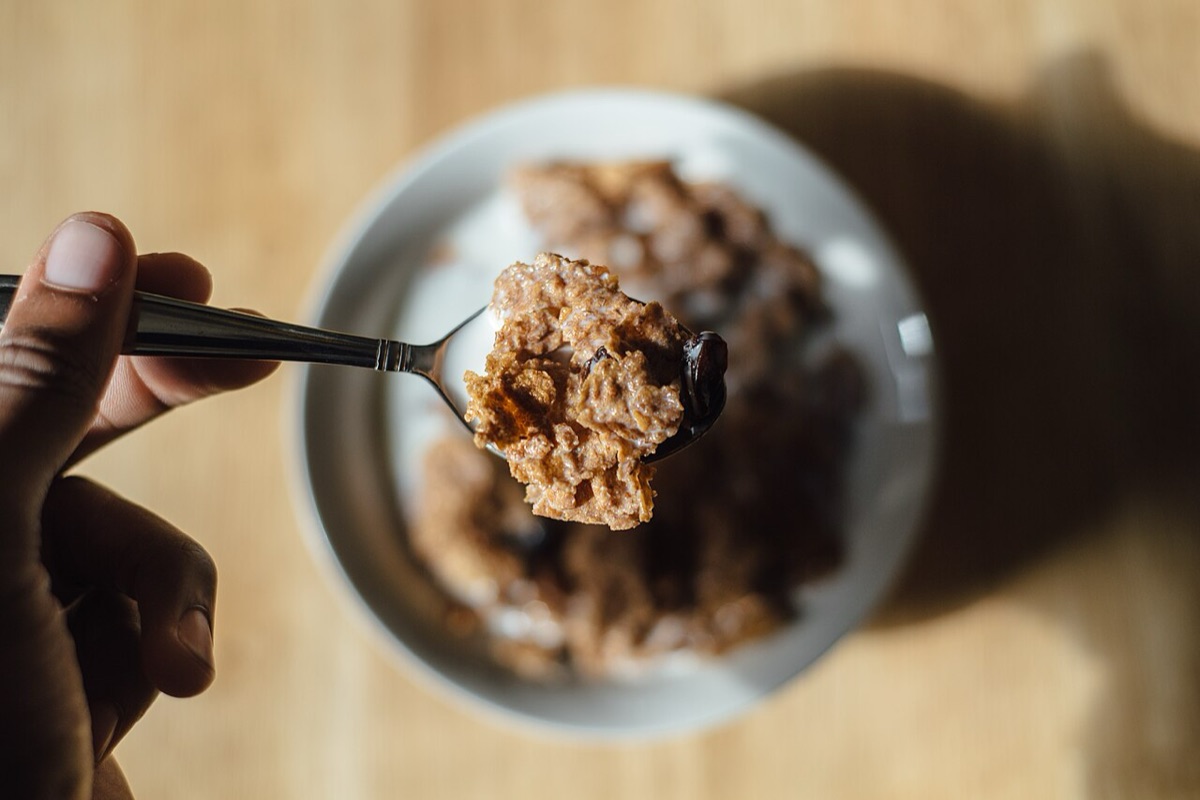
- Cereal with MilkWikimedia Commons · CC0 image by Ryan Pouncy.
General information, not medical advice. This review found weak, mostly old evidence and can't say who will benefit from cutting lactose. Ongoing belly pain or a change in bowel habits deserves a proper assessment, so speak to your doctor or a dietitian, and check with your child's doctor before removing dairy from a child's diet.
Analysis by NutroPractic from the sources listed. Written for general readers; it does not replace advice from your own doctor.
From our articles
Our guides on this subject
Plain-language guides on nutrition and wellness, backed by research.
Gut health
Probiotic capsules: which ones have trial evidence, what they can do, and when to skip them
Children on antibiotics: 8% got diarrhoea with a probiotic, 19% without. Older hospital patients: 10.8% with, 10.4% without. Which capsules have evidence, what three guidelines say about IBS, what a course costs per case prevented, and who shouldn't take them.
2 Nov 2026
Gut health
Gluten-free without coeliac disease: who actually benefits, and what the blinded gluten challenges found
In blinded trials only 16% of people who said gluten made them ill reacted to gluten rather than placebo, and in Oslo fructans caused more bloating than gluten. Who really needs to avoid it, how to get tested before you stop, how much gluten is in a slice of bread or a roti, and what gluten-free food costs (159% more in the UK) and lacks.
1 Nov 2026
Gut health
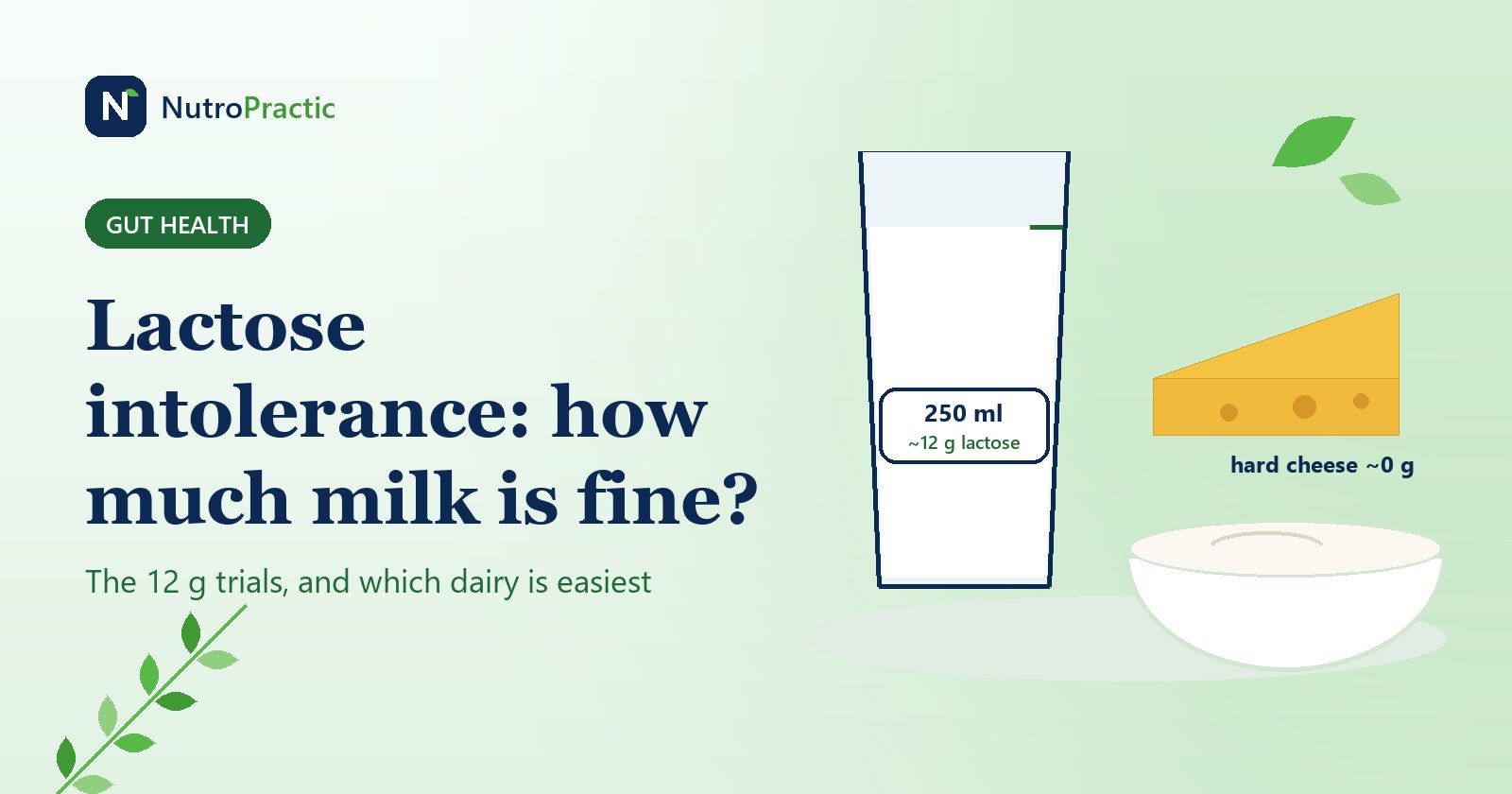
Lactose intolerance: how much milk most people can actually tolerate, and which dairy is easiest
Most adults who don't digest lactose well still handle about 12 g at once, roughly a 250 ml glass of milk, in blinded trials. What the 12 g studies found, a lactose table for milk, yoghurt, cheese, chai and dahi, how lactase tablets and A2 milk compare, why the famous 68% figure was retracted, and how to keep calcium up if you cut back.
25 Oct 2026
Newsfeed for your website
Want this feed on your website?
Add it to any site with one copy-and-paste snippet. No sign-up, and it updates itself every hour.
Start with a virtual consultation
Tell Dr. Triveni what you want to change. You will leave with a clear next step, whether you are in Toronto, London, New York or Chennai.