Caffeine · October 22, 2026
Korean adults have drunk a little more caffeine every year since 2016, as instant coffee-mix sticks gave way to brewed coffee. On the day they were asked, about 1 in 15 men in their 30s and early 40s went past 400 mg
A nine-year look at what 48,991 Korean adults drank in a day found caffeine creeping up by about 1.7 mg a day per year, and the odds of a 400 mg-plus day rising about 5% a year. Coffee supplied almost all of it. People over 65 were far less likely to hit the high mark, and the study counts one day per person, so it says more about the country than about any one drinker.
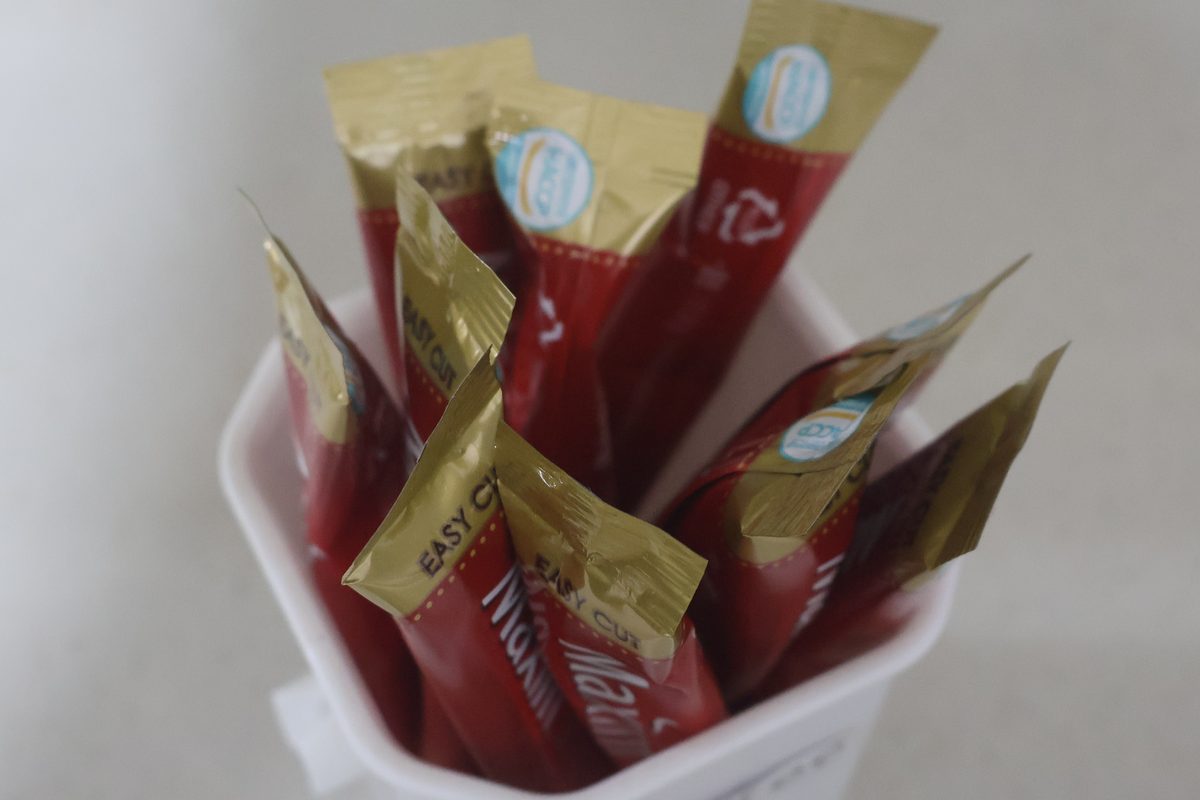
Health agencies in Europe and elsewhere use 400 mg of caffeine a day as the level most healthy adults can take without concern, roughly four to five ordinary cups of brewed coffee. Most studies of how much people actually drink report an average and stop there. A team at Pusan National University Hospital wanted to know whether the high end was growing in South Korea, a country whose coffee habits have changed fast, from sweet instant 'coffee mix' sticks to cafe and home-brewed coffee.
They used the Korea National Health and Nutrition Examination Survey, a nationally representative survey in which a trained interviewer takes each person through everything they ate and drank the day before. From 2016 to 2024 that gave 48,991 adults aged 19 and over. The researchers sorted every drink into coffee, tea, energy drinks, cola and cocoa, split coffee further into coffee mix, instant powder, ready-to-drink and brewed (bean or capsule), and gave each type a fixed caffeine content per litre from national testing by Korea's Ministry of Food and Drug Safety. Keeping the same values for all nine years means the trend reflects what and how much people drank, not changes in the products. The paper was published in Frontiers in Nutrition on 19 October.
On the day surveyed, 64.5% of adults had a caffeinated drink, and 90.8% of those had coffee; cola came a distant second at 13.4%, tea 4.7% and energy drinks 1.6%. Average intake rose by 1.66 mg a day each year, faster in men (2.22 mg) than women (1.10 mg), and among 19 to 64 year olds but not in people 65 and over. The odds of a day at 400 mg or more rose about 5% a year. Over the same years brewed coffee climbed and coffee mix declined, and the authors suggest the bigger servings of brewed and specialty coffee help explain the rise.
Who crossed 400 mg? Men aged 30 to 44 were the most likely, at 6.8% on the recall day, against 4.5% of men aged 19 to 29 and 1.2% of men over 65; once smoking, drinking, sleep and breakfast habits were taken into account, that gap with younger men was no longer clear. Among women, 3.7% of those aged 30 to 44 passed the mark, and after full adjustment they had about 1.6 times the odds of women aged 19 to 29, as did women aged 45 to 64. Only 0.2% of women over 65 did, and older adults of both sexes had much lower odds in every model.
The authors list the limits. One day of recall per person cannot show anyone's usual intake, and caffeine swings a lot from day to day. Fixed average values per drink type cannot tell a strong cafe brew from a weak one. Caffeine from chocolate, medicines and supplements was left out, and each survey year samples different people, so the study shows a trend, not its causes. The work was funded by a research grant from Pusan National University Hospital, and the authors declare no commercial conflicts. We read the full open-access paper.
Caffeine from drinks among 48,991 Korean adults, national nutrition survey 2016 to 2024 (one day of recall each)
64.5%
Adults who had at least one caffeinated drink on the day recalled
90.8%
Of those caffeine drinkers, the share who had coffee (cola 13.4%, tea 4.7%, energy drinks 1.6%)
+1.66 mg
Rise in average daily caffeine each year (men +2.22 mg, women +1.10 mg)
+5% a year
Rise in the odds of a day at 400 mg or more (odds ratio 1.05 per year)
6.8%
Men aged 30 to 44 at 400 mg or more on the day, the highest group (women the same age 3.7%)
0.2%
Women over 65 at 400 mg or more (men over 65: 1.2%)
Study: Kim J, Kim GL, Tak YJ, Lee SH, Ra YJ, Yi YH, 'Beverage-based caffeine intake and high consumption trends among Korean adults, 2016–2024: a nationwide population-based study', Frontiers in Nutrition 13, published 19 October 2026, doi 10.3389/fnut.2026.1913422, open access. Data: 7th–9th Korea National Health and Nutrition Examination Survey (KNHANES), 2016–2024; 67,019 participants, of whom 11,677 under 19 and 6,351 without 24-hour recall data were excluded, leaving 48,991 adults (31,056 caffeine consumers, weighted 64.5%). Caffeine assigned from fixed mean concentrations from Ministry of Food and Drug Safety monitoring (mg/L): liquid coffee 352.9, instant coffee powder 293.5, coffee mix 571.9, roasted bean/capsule 522.8, liquid tea 105.8, powdered tea 115.0, infusion tea 143.6, energy drinks 320.8, cola 187.5, cocoa beverages 360.9, decaffeinated 1. Survey-weighted regression. Trend in mean intake: β = 1.66 mg/day per year (95% CI 1.05–2.27); men 2.22 (1.30–3.15), women 1.10 (0.41–1.79); ages 19–44 2.79, 45–64 2.15, ≥65 0.44 (not significant, p = 0.193). Trend in odds of ≥400 mg/day: OR 1.05 per year (1.02–1.07); men 1.05 (1.02–1.08); women 1.03 (1.00–1.07, p = 0.065); ages 19–44 1.06, 45–64 1.05, ≥65 1.12. Share at ≥400 mg/day (weighted): men 19–29 4.5%, 30–44 6.8%, 45–64 4.9%, ≥65 1.2%; women 19–29 2.5%, 30–44 3.7%, 45–64 2.6%, ≥65 0.2%. Fully adjusted odds ratios vs age 19–29 (adjusted for year, BMI, education, income, occupation, alcohol, smoking, breakfast frequency, sleep): men 30–44 1.21 (0.93–1.56), ≥65 0.37 (0.25–0.53); women 30–44 1.62 (1.21–2.16), 45–64 1.61 (1.19–2.17), ≥65 0.23 (0.12–0.44). Average intake values by year are shown only in the paper's figures and are not quoted here. Limitations stated by the authors: single 24-hour recall, fixed concentrations ignoring brand and preparation, non-beverage caffeine excluded, repeated cross-sectional design. Funding: Biomedical Research Institute Grant (No. 20250049), Pusan National University Hospital; no commercial or financial conflicts declared. The 400 mg/day reference for healthy adults is from the European Food Safety Authority's 2015 opinion.
- In the national figures the study used, a litre of Korean coffee mix carries about 572 mg of caffeine and a litre of brewed bean or capsule coffee about 523 mg; the authors point to the bigger servings of brewed coffee, not the strength per litre, as the reason the switch matters.
- Cola was the second most common source of caffeine for Korean adults on the day surveyed, ahead of tea and energy drinks.
- Older Koreans were the one group whose average caffeine did not rise, though the small share of them drinking 400 mg or more did edge up.
- The authors contrast their results with US national survey data, where total caffeine intake has been flat or slightly falling in recent decades.
- The European Food Safety Authority found single doses of up to 200 mg, and up to 400 mg spread over a day, raise no safety concerns for healthy adults, with a lower limit of 200 mg a day for pregnant and breastfeeding women.
- Beverage-based caffeine intake and high consumption trends among Korean adults, 2016–2024: a nationwide population-based studyFrontiers in Nutrition · The paper, open access
- Scientific Opinion on the safety of caffeineEFSA Journal (European Food Safety Authority) · Source of the 400 mg and 200 mg reference levels
- Korean coffee mix Maxim (2)Wikimedia Commons · The photo, CC0
General information, not medical advice. This survey estimated caffeine from one day of drinks per person and did not look at health effects. How much caffeine suits you depends on your health, medicines, pregnancy and sleep. If you have heart rhythm problems, high blood pressure, anxiety or trouble sleeping, or are pregnant or breastfeeding, talk to a doctor or registered dietitian about your caffeine intake.
Analysis by NutroPractic from the sources listed. Written for general readers; it does not replace advice from your own doctor.
From our articles
Our guides on this subject
Plain-language guides on nutrition and wellness, backed by research.

Food and nutrition
L-theanine and caffeine: what cognitive trials measured on sustained attention, and milligrams in matcha vs green tea
Combining L-theanine with caffeine produces clean focus without caffeine jitters. Here is what randomized trials measured on attention-switching, EEG alpha brain waves, and the exact milligrams across ceremonial matcha, culinary powder, gyokuro, and sencha.
20 Nov 2026
Women's health
Eating while breastfeeding: extra calories, iodine, caffeine, fish and alcohol, with the actual numbers
Breastfeeding usually adds about 330–400 kcal a day, but the smaller numbers can matter more: 290 mcg iodine, 400 IU vitamin D for baby, 8–12 oz fish a week, and a caffeine total you can actually add up.
6 Nov 2026
Lifestyle
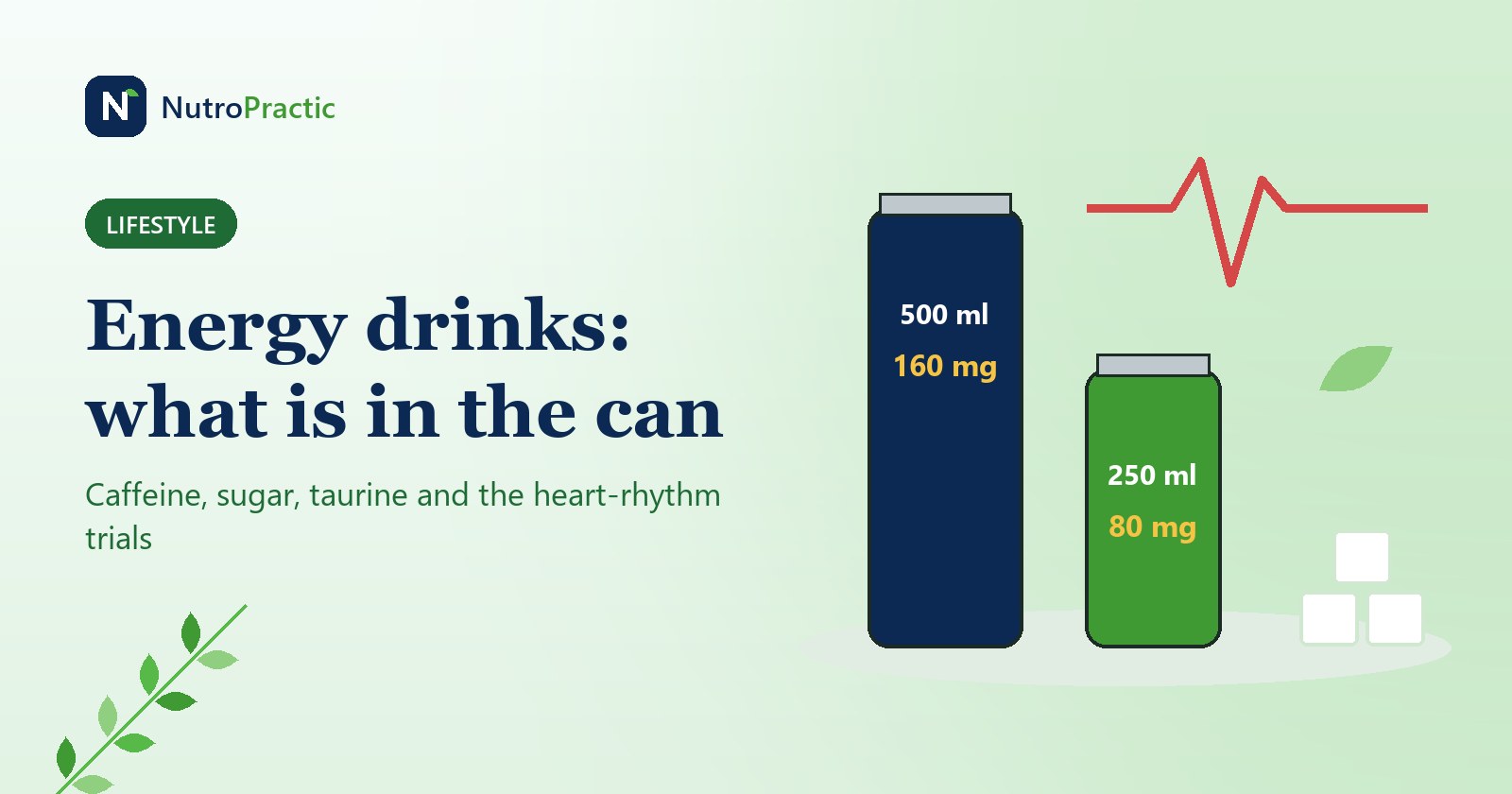
Energy drinks: caffeine, sugar and taurine per can, and what the emergency-visit and heart-rhythm studies found
From 80 mg to 300 mg of caffeine, and up to 55 g of sugar in one can. The numbers by brand, what they mean for a 50 kg teenager, what the QT and blood pressure trials measured, the old emergency-visit data and England's coming under-16 ban.
4 Nov 2026
Newsfeed for your website
Want this feed on your website?
Add it to any site with one copy-and-paste snippet. No sign-up, and it updates itself every hour.
Start with a virtual consultation
Tell Dr. Triveni what you want to change. You will leave with a clear next step, whether you are in Toronto, London, New York or Chennai.