Gut health · November 14, 2026
Inflamed bowel tissue lost several of its fluid-absorbing signals — and regained them when the lining healed
Biopsies from people with Crohn's disease and ulcerative colitis linked worse diarrhoea with lower expression of intestinal ion transporters. The tissue study maps a mechanism; it does not test a food, supplement or treatment.
Researchers collected biopsies along the bowel, from the end of the small intestine to the rectum, in people with inflammatory bowel disease and healthy controls. They measured RNA and protein markers involved in salt, short-chain-fatty-acid and fluid absorption, alongside inflammation, tissue damage and diarrhoea severity.
Inflamed segments had lower expression of four key transporter systems — NHE3, DRA, MCT1 and the epithelial sodium channel — and more claudin-2, a protein associated with a leakier barrier. Markers that mature intestinal absorptive cells normally carry were lower, while the proliferation marker Ki67 was higher. Worse diarrhoea scores tracked with lower transporter expression.
Tissue from areas that had healed showed normal segment-by-segment transporter patterns again. That supports a reversible link between inflammation, cell maturation and absorption, but the observational biopsy comparison cannot identify which change came first or prove that directly targeting a transporter would ease symptoms.
Several parts of absorption shifted together
4
absorptive transporter systems reported lower in inflamed tissue
3
absorptive-cell maturation markers reported lower
Higher
claudin-2 leak-protein expression
Restored
segmental transporter pattern after mucosal healing
The abstract reports expression patterns and correlations rather than a treatment effect. It does not provide a diet prescription for inflammatory bowel disease.
- NHE3 exchanges sodium and hydrogen ions, while DRA exchanges chloride and bicarbonate; both help the bowel reclaim salt and water.
- MCT1 transports short-chain fatty acids made when gut microbes ferment certain carbohydrates.
- Goblet-cell differentiation was also impaired in the most inflamed areas; goblet cells make protective mucus.
- Aberrant absorptive enterocyte differentiation is associated with altered ion transport and chronic inflammatory diarrhea in IBD patientsClinical Science · Primary human biopsy study with transporter, differentiation and healing findings; published online 3 November 2026.
This newsfeed item is for general education and does not replace gastroenterology care. Persistent diarrhoea, bleeding, dehydration or weight loss requires medical assessment.
Analysis by NutroPractic from the sources listed. Written for general readers; it does not replace advice from your own doctor.
From our articles
Our guides on this subject
Plain-language guides on nutrition and wellness, backed by research.
Gut health
Probiotic capsules: which ones have trial evidence, what they can do, and when to skip them
Children on antibiotics: 8% got diarrhoea with a probiotic, 19% without. Older hospital patients: 10.8% with, 10.4% without. Which capsules have evidence, what three guidelines say about IBS, what a course costs per case prevented, and who shouldn't take them.
2 Nov 2026
Gut health
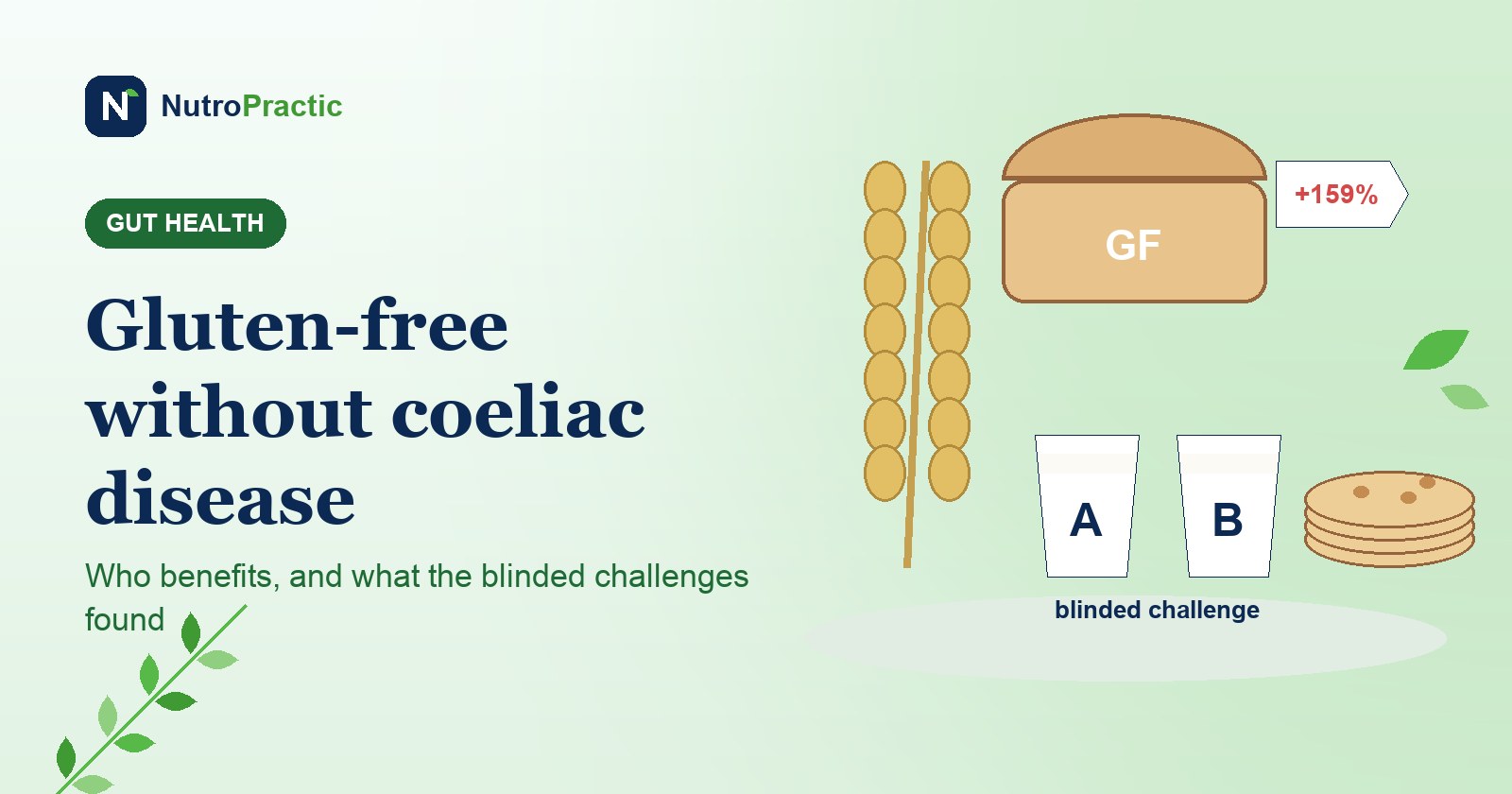
Gluten-free without coeliac disease: who actually benefits, and what the blinded gluten challenges found
In blinded trials only 16% of people who said gluten made them ill reacted to gluten rather than placebo, and in Oslo fructans caused more bloating than gluten. Who really needs to avoid it, how to get tested before you stop, how much gluten is in a slice of bread or a roti, and what gluten-free food costs (159% more in the UK) and lacks.
1 Nov 2026
Gut health
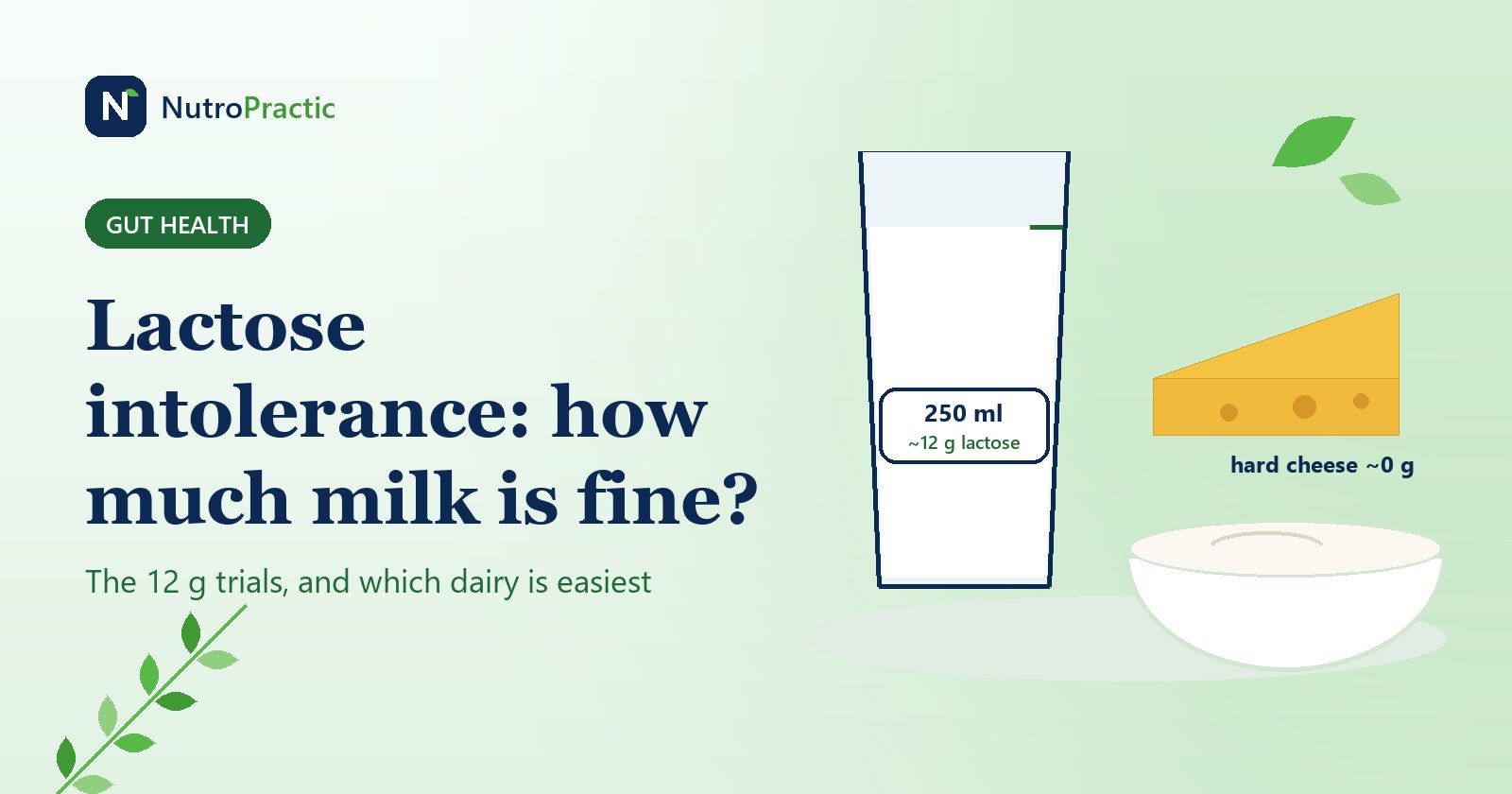
Lactose intolerance: how much milk most people can actually tolerate, and which dairy is easiest
Most adults who don't digest lactose well still handle about 12 g at once, roughly a 250 ml glass of milk, in blinded trials. What the 12 g studies found, a lactose table for milk, yoghurt, cheese, chai and dahi, how lactase tablets and A2 milk compare, why the famous 68% figure was retracted, and how to keep calcium up if you cut back.
25 Oct 2026
Newsfeed for your website
Want this feed on your website?
Add it to any site with one copy-and-paste snippet. No sign-up, and it updates itself every hour.
Start with a virtual consultation
Tell Dr. Triveni what you want to change. You will leave with a clear next step, whether you are in Toronto, London, New York or Chennai.