Digestive health & botanical supplements · November 29, 2026
Standardized Paeonia and Inula botanical extract HT074 shows mixed outcomes in randomized dyspepsia trial
An 8-week randomized, double-blind, placebo-controlled trial of 144 Korean adults with dyspeptic symptoms found no significant differences in overall symptom or quality of life scores between HT074 and placebo, though exploratory secondary analyses suggested high-dose reductions in early upper abdominal discomfort and heartburn.
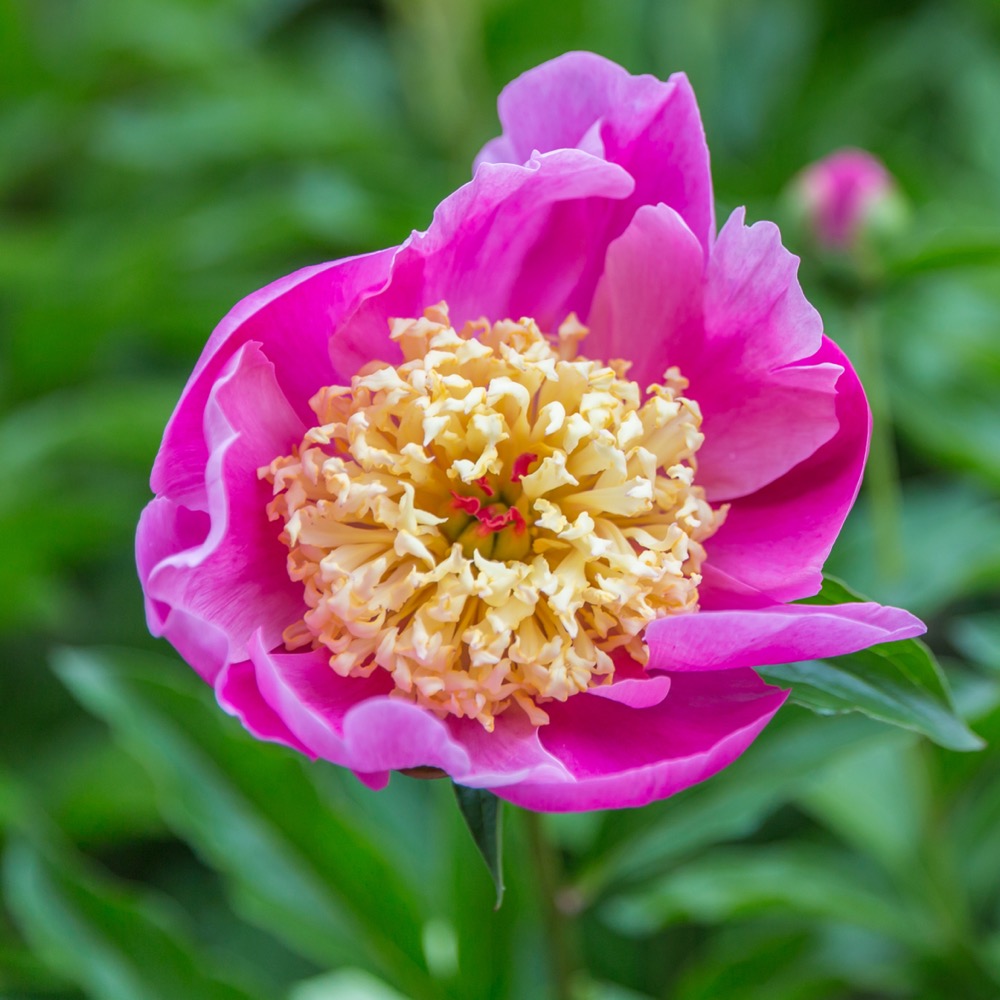
Functional dyspepsia affects approximately 10% to 20% of the global adult population, presenting with bothersome postprandial fullness, early satiety, epigastric pain, or burning without identifiable structural disease. In traditional East Asian medicine, roots of Paeonia lactiflora (Paeoniae Radix) and flowers of Inula britannica (Inulae Flos) have long been used for gastrointestinal distress, prompting the development of HT074, a standardized aqueous herbal extract combination.
In a randomized, double-blind, placebo-controlled trial conducted in Seoul, Republic of Korea, investigators recruited 144 adults with persistent dyspeptic symptoms. Participants were randomized 1:1:1 to receive twice-daily doses of placebo, low-dose HT074 (350 mg/day), or high-dose HT074 (700 mg/day) over an 8-week intervention period. Validated clinical endpoints—including the Nepean Dyspepsia Index Korean version (NDI-K), Gastrointestinal Symptom Rating Scale (GSRS), and Functional Dyspepsia-Related Quality of Life (FD-QOL)—were administered at baseline, week 2, week 4, and week 8.
In per-protocol analyses of 126 completed participants, the trial did not meet its primary efficacy endpoints: changes in total NDI-K, total GSRS, and total FD-QOL scores showed no statistically significant differences between either HT074 dosing arm and placebo across the 8-week trial.
However, exploratory symptom-specific analyses identified signals in the high-dose (700 mg/day) arm. High-dose HT074 produced a significantly greater reduction in upper abdominal discomfort on the NDI-K subscale at week 2 (-3.4 ± 2.2 vs. -1.8 ± 2.6 for placebo; p = 0.002), alongside significant improvements in GSRS reflux symptoms at week 2 and GSRS heartburn at week 8. These analyses were not adjusted for multiple comparisons. Two participants in the high-dose group reported mild adverse events and no serious adverse events occurred, but the results need confirmation before HT074 can be recommended for dyspeptic symptoms.
Randomized double-blind placebo-controlled trial of HT074 in dyspeptic adults
p > 0.05
difference in total NDI-K, GSRS, and FD-QOL scores vs placebo over 8 weeks
-3.4 vs -1.8
week-2 drop in NDI-K upper abdominal discomfort (700 mg/day vs placebo, p = 0.002)
144 adults
randomized participants across placebo, 350 mg/day, and 700 mg/day arms
8 weeks
double-blind intervention period evaluating gastroprotective herbal mixture
Randomized controlled trial published in Nutrients, November 2026. Evaluated standardized Paeoniae Radix and Inulae Flos extract mixture HT074 in adults with dyspeptic symptoms.
- Paeonia lactiflora root contains paeoniflorin, a monoterpene glucoside investigated for spasmolytic and anti-inflammatory properties in smooth muscle.
- In functional dyspepsia trials, placebo response rates commonly reach 30% to 40%, making rigorous sham-controlled designs critical to separate actual pharmacological effect from psychological expectation.
- Supplementation with HT074, a Standardized Mixture of Paeoniae Radix and Inulae Flos Extracts, in Adults with Dyspeptic Symptoms: A Randomized, Double-Blind, Placebo-Controlled TrialNutrients (MDPI), 27 Nov 2026 · Primary randomized, double-blind, placebo-controlled trial.
This article is general information about published research, not medical advice. It does not diagnose, treat or replace care from a qualified health professional. Talk to your doctor before starting a supplement or changing your diet, especially if you are pregnant, have a medical condition or take medicines.
Analysis by NutroPractic from the sources listed. Written for general readers; it does not replace advice from your own doctor.
From our articles
Read, then eat a little better
Plain-language guides on nutrition and wellness, backed by research.
Gut health
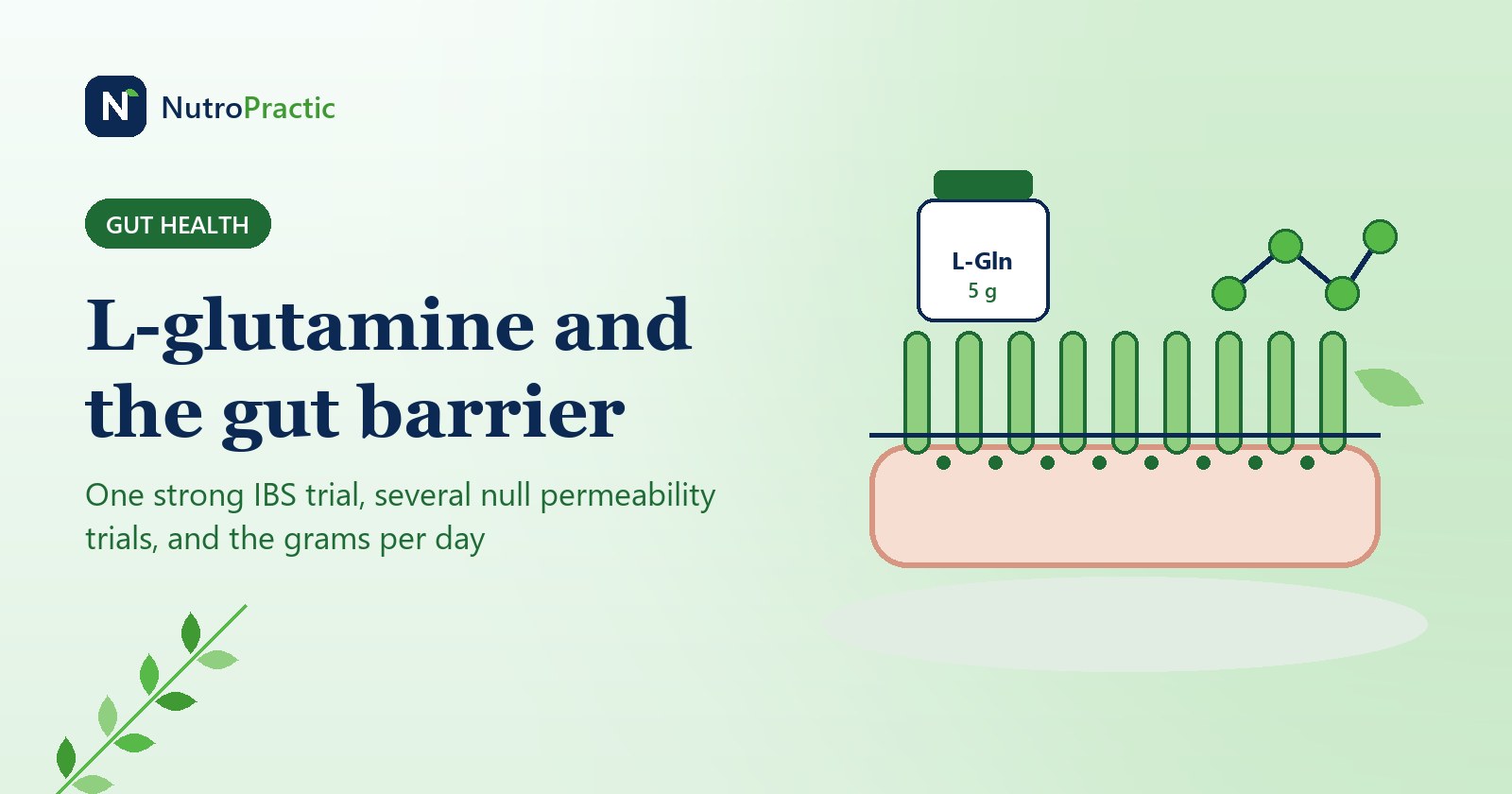
L-glutamine for gut barrier integrity: what the post-infectious IBS and permeability trials measured, and the dose in grams
At 15 g a day, glutamine took 79.6% of post-infection IBS-D patients to a clinical response against 5.8% on placebo. Trials that measured gut permeability directly in Crohn's, pancreatitis and heat stress found no clear benefit, and a 10-trial meta-analysis found none overall. The doses, the 14 g a day safe level, and who might try it.
27 Nov 2026
Supplements and vitamins
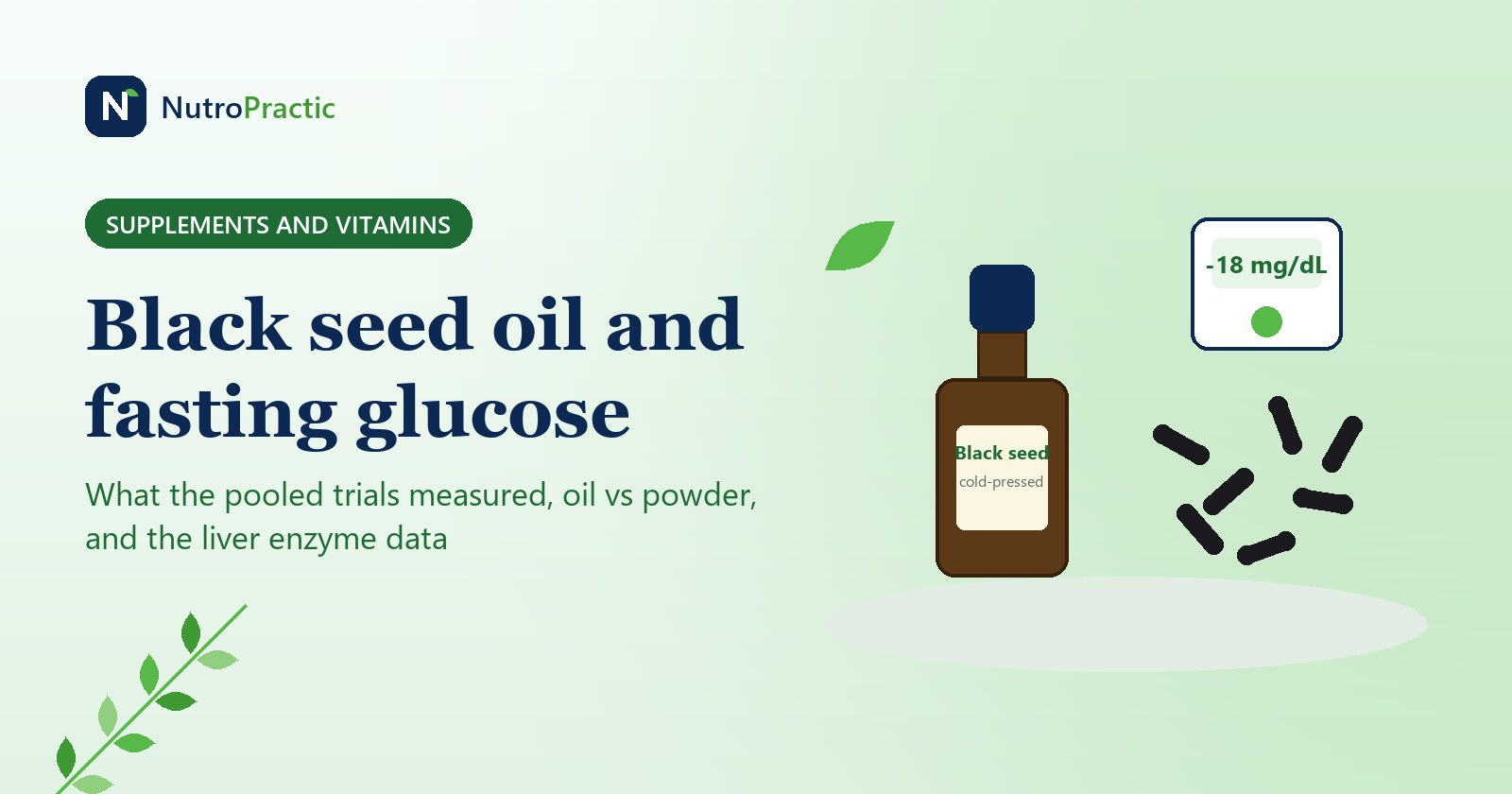
Black seed oil (Nigella sativa) and fasting glucose: what the pooled trials measured, oil vs powder doses, and the liver enzyme data
Meta-analyses of randomised trials put black seed's effect at roughly 10 to 20 mg/dL lower fasting glucose and about half a point of HbA1c, mostly as an add-on to diabetes tablets. The 1 to 3 g a day doses tested, why two bottles can differ 263-fold in thymoquinone, and what the liver and kidney markers showed.
27 Nov 2026
Supplements and vitamins
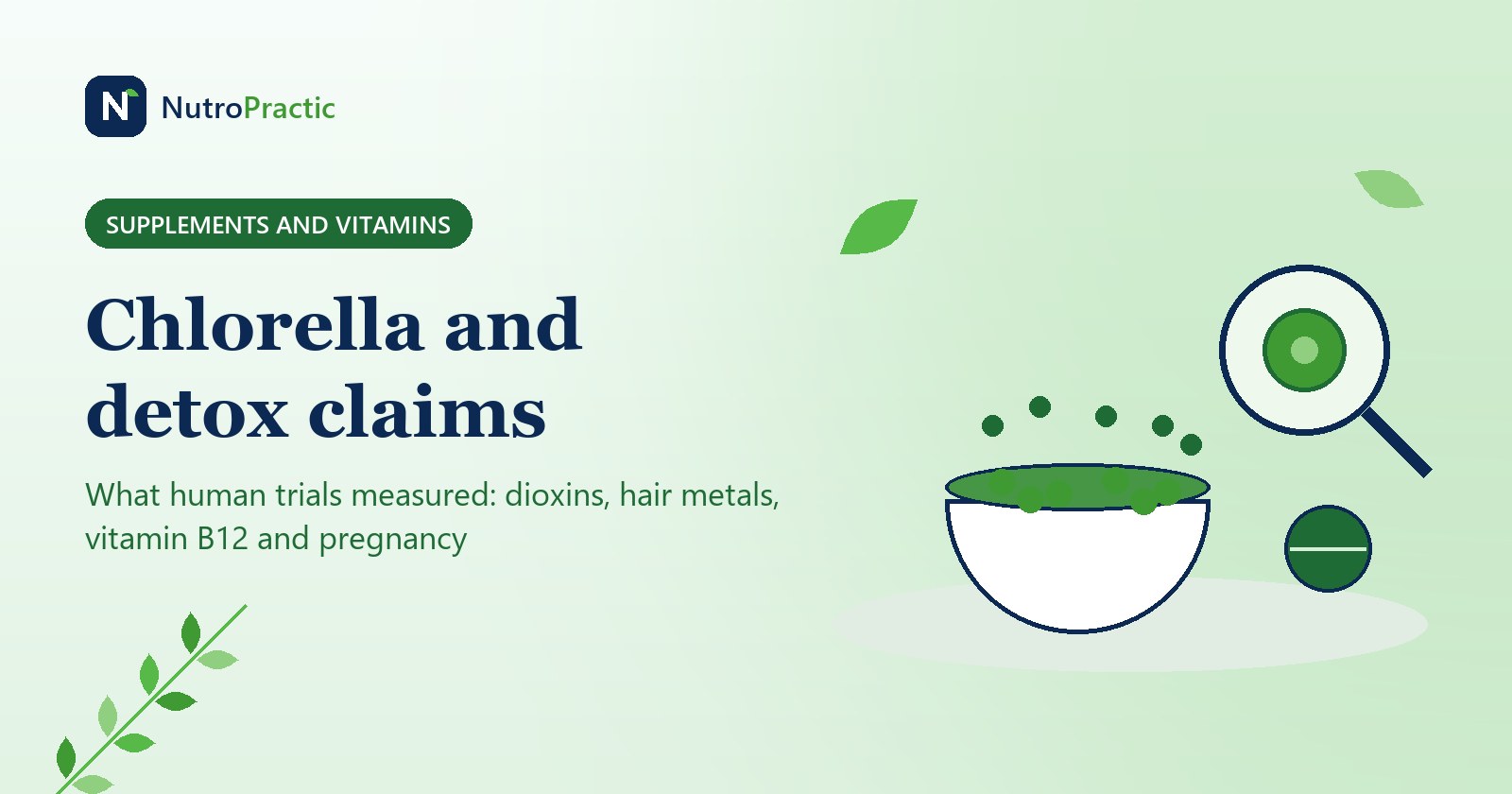
Chlorella and detox claims: what the human studies measured on hair metals, dioxins and vitamin B12, and what they did not
We found no placebo-controlled trial of chlorella removing mercury or lead. One 16-person study saw hair mercury and lead fall 39% on a chlorella-seaweed mix with no control group; breast-milk dioxin was about 30% lower in Japanese mothers; B12 ranges from under 0.1 to 415 micrograms per 100 g between brands.
26 Nov 2026
Newsfeed for your website
Want this feed on your website?
Add it to any site with one copy-and-paste snippet. No sign-up, and it updates itself every hour.
Start with a virtual consultation
Tell Dr. Triveni what you want to change. You will leave with a clear next step, whether you are in Toronto, London, New York or Chennai.