Kidney health · October 15, 2026
A third of dialysis patients described a diet too small to keep them alive. Fixing that one error made their salt look worse, not better
Researchers in Bangladesh asked 181 people on hemodialysis what they had eaten on three separate days. For 57 of them the totals were too low to keep a stable body going. Set those records aside and the protein picture improved sharply, while the sodium picture got worse. The same mistake in a food diary bends advice in two opposite directions at once.
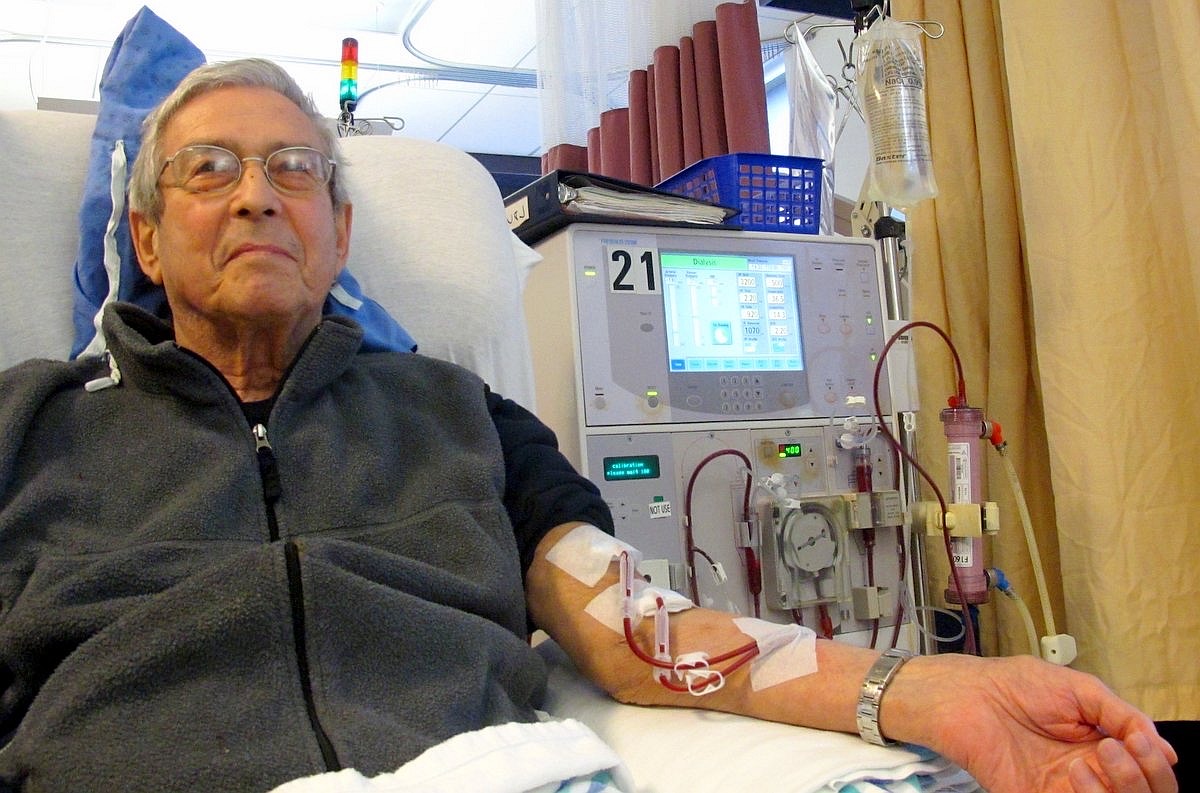
Ask anyone what they ate yesterday and you get a story, not a record. Portions shrink, the second helping disappears, the biscuits with tea are forgotten. For most of us that hardly matters. For someone on hemodialysis, whose kidneys have failed and whose diet is managed nutrient by nutrient, that story is often the only thing the care team has to work with.
A study published on 12 October 2026 in PLOS One looked at how much those stories can be trusted. Researchers from Noakhali Science and Technology University, the University of Dhaka, Daffodil International University and the Kidney Foundation Hospital in Dhaka recruited 181 adults on maintenance hemodialysis at four hospital units in Bangladesh, in Dhaka, Cumilla, Noakhali and Mymensingh, between January and June 2022. Trained interviewers took each person through everything they had eaten on three separate days: a dialysis day, a day without dialysis and a weekend day, using household measures and a kitchen scale to pin down portions, and a food database of about 380 local foods and 150 mixed recipes.
Then came the check that most diet surveys skip. For each person the team estimated the energy their body would burn at rest, from height, weight after dialysis and age, and compared it with the energy in the food they reported, allowing for a very inactive day. A ratio below 0.8 means the reported food cannot keep a stable body going for long. By that test, 57 of the 178 people with complete records (32%) under-reported, 5 over-reported and 116 gave plausible accounts. The under-reporters described about 1,160 kcal a day, or 17.9 kcal per kilogram of body weight, about 60% of the 30 kcal per kilogram the study used as the lower target. Yet they were clinically stable, and their BMI was no different from everyone else's. As the authors put it, the simpler explanation is a wrong record, not a starving patient.
Here is the twist. Kidney diets have two kinds of target. Energy and protein are floors to reach. Sodium and phosphorus are ceilings not to cross. A diary that leaves food out fails the floors and passes the ceilings, from the same mistake. Taken at face value, 33% of the whole group met the protein floor of 1.0 g per kilogram a day. Among the plausible reporters it was 47%. For energy, 11% rose to 16%. The ceilings moved the other way: 74% appeared to keep sodium within 2,300 mg a day, but among plausible reporters only 66% did. Phosphorus within 1,000 mg went from 88% to 85%.
In the clinic, that could mean a dietitian pushing protein at a patient who may already be eating enough, while feeling reassured about a salt intake that may in fact be high. The authors point out that the check needs nothing new: height, weight and age are already in every dialysis file.
Appetite turned out to be a poor guide too. 42% of the patients rated their appetite as poor, and more than half of the women did. But the people who said their appetite was good reported the least food of the three groups. The one difference that reached significance was between the good and fair groups, with fair eating the most. A single question about how someone feels about eating, the authors write, is not a measure of how much they ate.
One finding holds up whichever records you trust. In all but five patients, the diet carried more than 12 mg of phosphorus for every gram of protein; the average was about 15 mg. So most were getting phosphorus without the protein that should come with it. The authors draw a counselling message that runs against habit: rather than cutting protein foods, which these patients already eat too little of, go after foods that are rich in phosphorus but poor in protein, especially processed foods with phosphate additives.
Some context matters here. Four in five of these patients were dialysed twice a week, which the authors say is common in South Asia for reasons of cost, while most guidance was written for three sessions a week. Their intakes did not differ by schedule. Average BMI was a normal-looking 22.8, but average blood albumin was 36 g per litre and haemoglobin 8.9 g per decilitre, the kind of picture in which slow malnutrition can hide behind a normal weight.
The study has real limits, and the authors list them. It is a convenience sample from four hospital units, so patients at small private centres, or those who cannot afford regular dialysis, are probably missing. The cut-offs used to judge plausibility were developed in healthy people with stable weight and have not been validated in dialysis, where fluid shifts and altered metabolism can blur them. Only five people over-reported, too few to say anything about that group. The apparent shortage of almost every vitamin is likely exaggerated by gaps in the food database for local foods, and prescribed kidney vitamins were not counted. No correction was made for testing many nutrients at once, and the data are from 2022. There was no specific funding, and the authors declare no competing interests.
If you or someone close to you keeps a food diary for a kidney team, the lesson is simple and a bit uncomfortable: write down everything, including the small things and the bad days. A diary that looks too good on salt may be a diary that is missing meals.
Cross-sectional study: three 24-hour diet recalls from 181 adults on maintenance hemodialysis at four hospital units in Bangladesh (January to June 2022), checked for plausibility and compared with KDOQI targets
32%
Under-reported their food: 57 of 178 people with complete data reported energy below 0.8 times their estimated resting needs (activity level 1.2). 5 over-reported, 116 were plausible
17.9 kcal/kg
Average daily energy reported by the under-reporters (about 1,160 kcal), against a target of 30 to 35 kcal per kg. Plausible reporters: 26.1 kcal/kg
33% → 47%
Share meeting the protein floor of 1.0 g per kg a day: whole group (58 of 176) compared with plausible reporters only (55 of 116)
74% → 66%
Share appearing to keep sodium at or below 2,300 mg a day: whole group (131 of 178) compared with plausible reporters only (76 of 116)
173 of 178
People whose diet had more than 12 mg of phosphorus per gram of protein (average 14.7 mg/g)
42%
Rated their appetite as poor (52% of women, 33% of men). The good-appetite group reported the lowest energy intake of the three groups
Figures are from the open access paper (PLOS One 21(10): e0360654, doi 10.1371/journal.pone.0360654, published 12 October 2026), its abstract, text and Tables 1 to 7. Plausibility used the ratio of reported energy to resting energy estimated with the Harris–Benedict equation from post-dialysis weight; cut-offs of 0.8 and 1.3 (Goldberg) have not been validated in dialysis. Adherence figures use 176 people for weight-based targets and 178 for others. Energy targets met: 11.4% of the whole group, 15.5% of plausible reporters. Phosphorus at or below 1,000 mg a day: 88.2% and 84.5%. 145 of 181 people (80.1%) had dialysis twice a week. The 173 of 178 is derived from the paper's 'all but five participants'. Vitamin shortfalls were not shown here because the authors say gaps in the local food data likely overstate them. The authors report no specific funding and no competing interests; the paper notes that some values were recomputed from the primary dataset after the original submission.
- The check used in this study is known as the Goldberg cut-off. It compares the energy someone reports eating with the energy their body needs at rest; a ratio far below 1 over several days is hard to square with a steady weight.
- The Harris–Benedict equation, which the researchers used to estimate resting energy needs from height, weight, age and sex, is more than a hundred years old and is still in everyday use in clinics.
- In dialysis, weight is best measured after a session. The water that builds up between sessions adds kilograms that are not body tissue, which would throw off any calculation per kilogram.
- The US NIDDK advises people on hemodialysis to avoid salt substitutes, because many swap sodium for potassium, a mineral that failing kidneys struggle to clear. It also notes that too much sodium makes you thirsty, and every extra drink has to be removed at the next session.
- Once someone starts hemodialysis, NIDDK says renal dietitians encourage most of them to eat high-quality protein such as meat, poultry, fish and eggs. That surprises many patients who were told to eat less protein while their kidneys were failing but before dialysis began.
- Dietary intake patterns and KDOQI guideline compliance among hemodialysis patients in Bangladesh: Gaps, misreporting, and clinical implicationsPLOS One, 21(10), e0360654, published 12 October 2026 (open access, CC BY) · The study: methods, plausibility screening, adherence figures before and after screening, appetite, phosphorus-to-protein ratio, limitations and funding
- PubMed Central full text PMC13657316US National Library of Medicine · Free full text with Tables 1 to 7
- KDOQI Clinical Practice Guideline for Nutrition in CKD: 2020 UpdateAmerican Journal of Kidney Diseases, 76(3) Suppl 1, 2020 · The guideline the study benchmarked against, including protein of 1.0 to 1.2 g per kg a day for stable patients on hemodialysis
- Eating and Nutrition for HemodialysisNational Institute of Diabetes and Digestive and Kidney Diseases (NIDDK) · Plain-language advice on protein, sodium, salt substitutes, phosphorus and fluids on hemodialysis
- Patient receiving dialysis 03.jpgWikimedia Commons · Image, CC0, by Anna Frodesiak
General information, not medical advice. This study looked at how people on dialysis reported their diet, not at their health outcomes. Kidney diets are set individually; do not change your protein, salt, potassium, phosphorus or fluid intake without talking to your kidney doctor or a renal dietitian.
Analysis by NutroPractic from the sources listed. Written for general readers; it does not replace advice from your own doctor.
From our articles
Our guides on this subject
Plain-language guides on nutrition and wellness, backed by research.
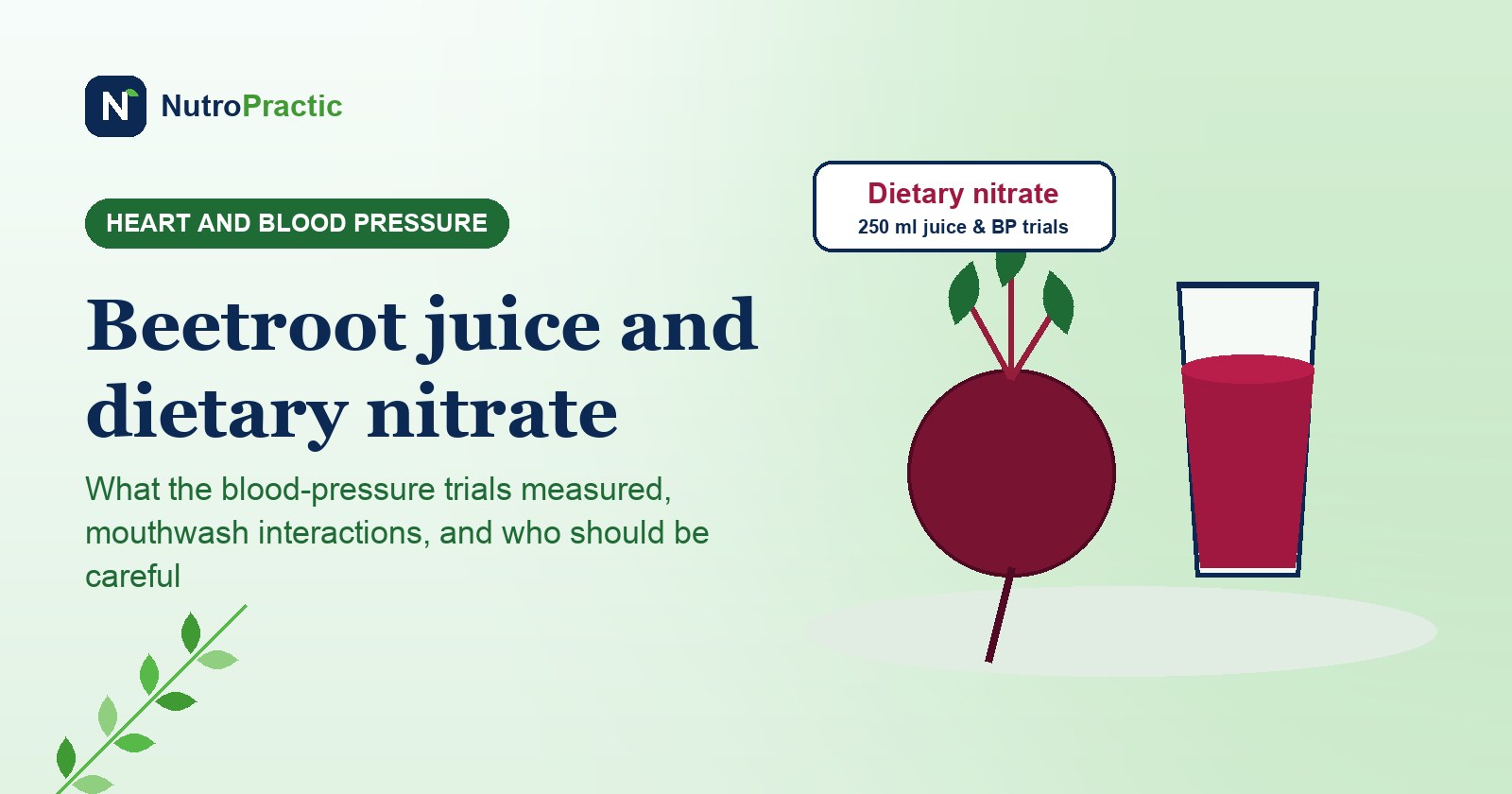
Heart and blood pressure
Beetroot juice and dietary nitrate: what the blood-pressure trials measured, and who should be careful
Drinking 250 ml of beetroot juice dropped clinic systolic blood pressure by 7.7 mmHg in 4-week clinical trials. Here is how tongue bacteria convert dietary nitrate to nitric oxide, why antiseptic mouthwash blocks it completely, and the oxalate kidney stone warning.
18 Nov 2026
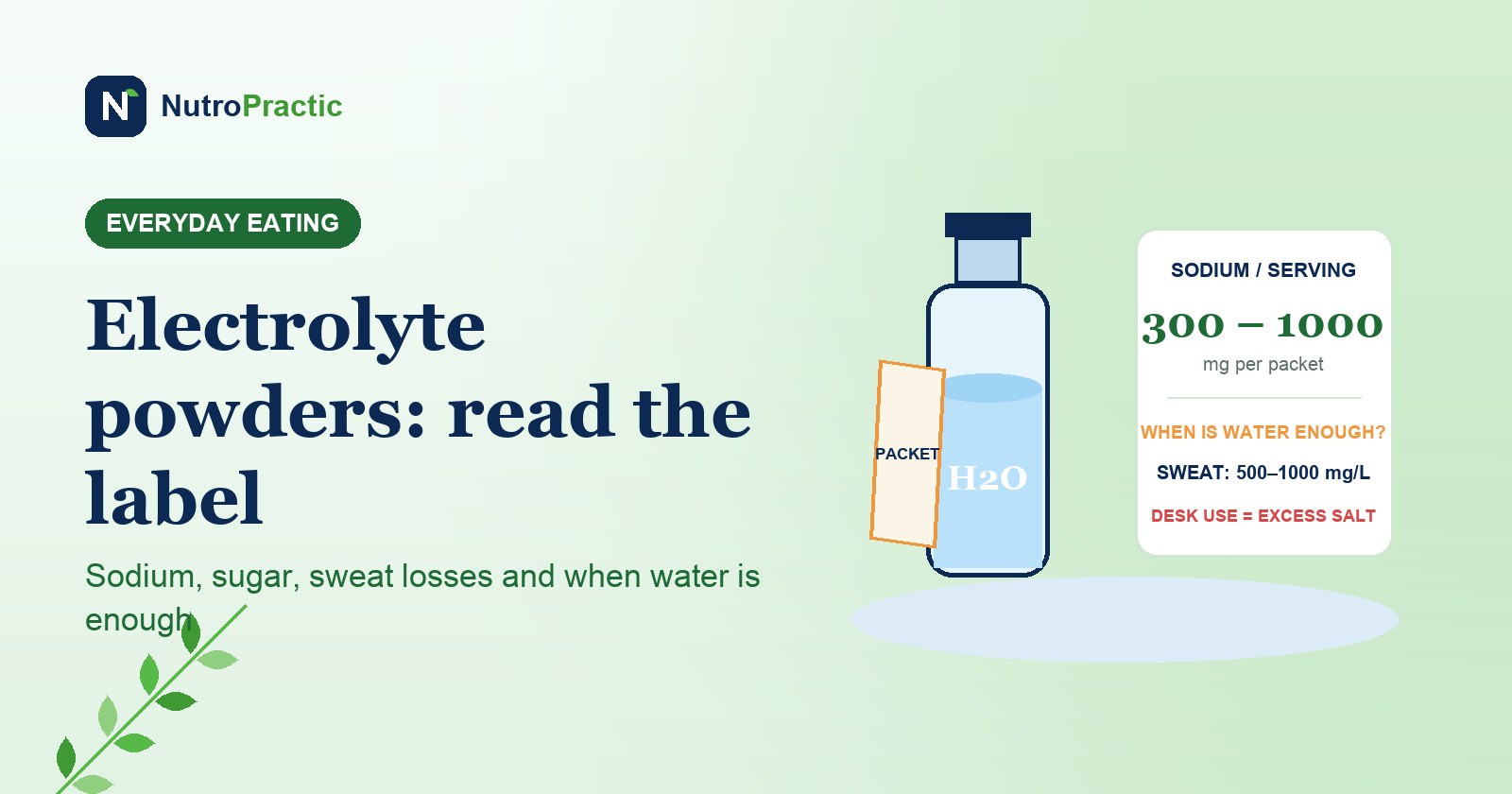
Everyday eating
Electrolyte powders: sodium and sugar per bottle, and when water is enough
Packets deliver 300 to 1,000 mg sodium and up to 11 g sugar. Here is how popular drink mixes compare with actual sweat losses—and who actually needs them.
10 Nov 2026

Everyday eating
Instant noodles: the sodium in the whole packet, and what actually reduces it
Three official labels range from 750 to 1,520 mg sodium per packet. Here is the whole-pack arithmetic, what the broth study measured, and how to turn noodles into a more complete meal.
6 Nov 2026
Newsfeed for your website
Want this feed on your website?
Add it to any site with one copy-and-paste snippet. No sign-up, and it updates itself every hour.
Start with a virtual consultation
Tell Dr. Triveni what you want to change. You will leave with a clear next step, whether you are in Toronto, London, New York or Chennai.