Food insecurity · October 27, 2026
Food-insecure adults with high blood pressure got produce boxes or grocery money plus monthly calls from a community health worker. A year on, the calls had not got them moving more, and easing their food worries didn't either
A North Carolina trial gave adults who were short of food either twice-monthly produce boxes or $40 a month, and half of them phone coaching too. In 338 people with full data, the coached group's weekly activity was no different, and the authors think the dose of coaching was simply too light.
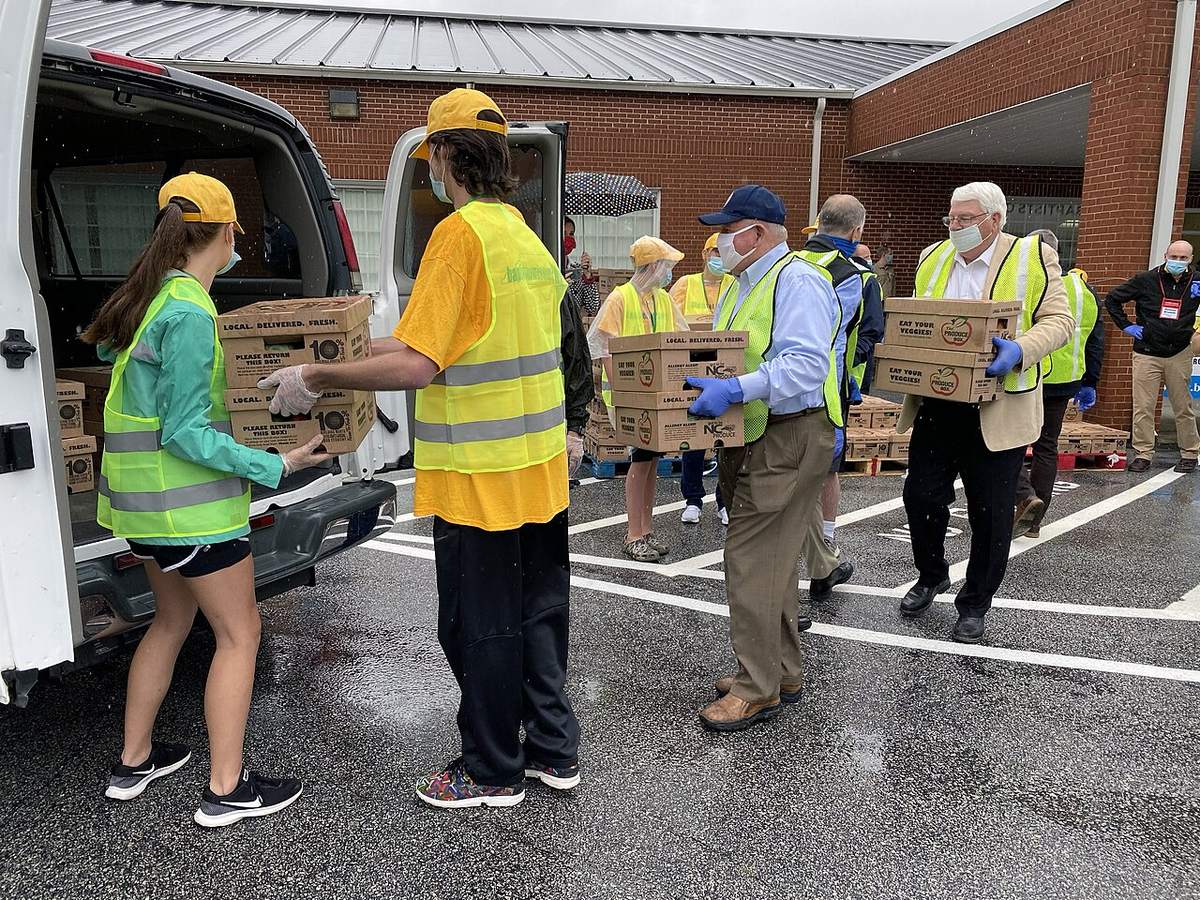
"Food is medicine" programmes, which hand out produce or grocery money through the health system, are spreading across the United States, and community health workers are often added to help people use them. These are trusted lay workers who coach people on diet, blood pressure and getting the help they are entitled to. One hope is that once the worry about the next meal eases, people have more time, energy and headspace to be active. A secondary analysis of the Healthy Food First trial, published on 23 October in the American Journal of Lifestyle Medicine, tested that idea and found no sign of it.
The trial ran from 2021 to 2024 and enrolled 458 adults from 364 clinics in North Carolina. Everyone had a Medicaid managed care or Blue Cross Blue Shield of North Carolina plan, screened positive for food insecurity and had a systolic blood pressure above 130 mmHg. It tested three choices at once: produce boxes delivered twice a month or a $40 monthly food subsidy, support for six or twelve months, and monthly phone coaching from a community health worker or none. The coaching focused on Mediterranean-style eating, problem solving and finding food resources; gentle, everyday movement was added once people said they were ready for it.
Physical activity was asked by phone at 12 and 18 months with a standard short questionnaire (IPAQ) and turned into MET-minutes a week, a measure of how much and how hard people moved. Among the 338 people with complete answers (average age 50, 77.5% women, 53% Black, average household income $44,766), those offered coaching reported 2,191 MET-minutes a week at 12 months and those without it 2,039. In the adjusted models the difference was small, pointed in different directions depending on the model, and was well within the play of chance: about 364 MET-minutes more across both follow-ups (P = 0.23), or about 198 fewer at 12 months, with a confidence range from 856 fewer to 501 more.
Food security did improve: the average score on the USDA's 10-item adult questionnaire fell from 4.69 to 3.28 over the year (lower is better). But changes in food security explained essentially none of the link between coaching and activity (the indirect effect was 16 MET-minutes a week). The study had been sized to spot a difference of 450 MET-minutes a week, the gap linked in earlier work to better blood pressure and heart health, and the gaps it saw were smaller than that.
The authors are frank about why. Activity was a side topic in coaching that centred on diet and blood pressure, and attendance fell from 73.6% of those offered coaching at the first session to 23.8% by the fourth. There was no supervised exercise, no step counters and no help with gym costs. Activity was self-reported, wasn't measured before the trial began, and the questionnaire can't separate exercise from activity at work or getting around. Their conclusion is not that coaching or food help is pointless, but that programmes wanting people to move more will probably need to build that in directly rather than hope it follows from better food security.
Community health worker coaching, change in food insecurity and physical activity among food-insecure adults with high blood pressure in the Healthy Food First trial, North Carolina, 2021 to 2024 (American Journal of Lifestyle Medicine, 23 October 2026)
458
Adults enrolled from 364 North Carolina clinics; 338 had complete food security and activity data, 259 in the fully adjusted models
2,191 vs 2,039
Average MET-minutes a week at 12 months with and without health worker coaching (self-reported)
+364
Adjusted MET-minutes a week with coaching across 12 and 18 months, P = 0.23 (95% CI −230 to 957)
450
MET-minutes a week: the difference the study was designed to detect, about 80% power with 338 people
4.69 → 3.28
Average food insecurity score (USDA 10-item adult module, lower is better) at the start and at 12 months
73.6% → 23.8%
Share of people offered coaching who attended the first session and the fourth
Secondary analysis of a randomised factorial trial, preregistered. Physical activity was self-reported by phone (IPAQ short form) only at 12 and 18 months, with no baseline measure. About a quarter of those enrolled were missing outcome data and more were missing covariates. Estimates average over the other trial arms (produce box or subsidy, 6 or 12 months). Funded by Blue Cross Blue Shield North Carolina. Open access under CC BY-NC 4.0.
- On the IPAQ's standard scoring, walking counts as 3.3 METs, so 150 minutes of walking a week works out to 495 MET-minutes, just above the 450 the trial was powered to detect.
- In the adjusted model, men reported about 1,812 more MET-minutes a week than women, and each extra year of age went with about 26 fewer.
- The authors cite more than 47 million people in the United States living with food insecurity.
- Everyone in the trial got food help: the choice was between produce boxes delivered twice a month and a $40 monthly subsidy, for six or twelve months.
- The authors suggest pairing food-is-medicine schemes with Exercise Is Medicine programmes and text or app prompts, rather than relying on monthly calls.
- Community Health Worker Coaching, Food Insecurity, and Physical Activity in the Healthy Food First Trial: A Causal Mediation and Longitudinal AnalysisAmerican Journal of Lifestyle Medicine · The study, open access (CC BY-NC 4.0), published 23 October 2026
- Full text with tablesPubMed Central · Participant characteristics, mediation and longitudinal estimates, limitations
- Healthy Food First trial registration (NCT05048836)ClinicalTrials.gov · Design of the parent trial
- Agriculture Secretary Perdue Food Box event NC (20200615-OSEC-AV-0031)Wikimedia Commons (USDA) · The photo, public domain
General information, not medical advice. This analysis looked at self-reported activity in one trial and cannot say what would work for any one person. If you have high blood pressure, talk to your doctor or a registered dietitian before changing your diet, medicines or exercise, and if you are struggling to afford food, ask your clinic or local food bank about help in your area.
Analysis by NutroPractic from the sources listed. Written for general readers; it does not replace advice from your own doctor.
From our articles
Our guides on this subject
Plain-language guides on nutrition and wellness, backed by research.
Heart and blood pressure
Beetroot juice and dietary nitrate: what the blood-pressure trials measured, and who should be careful
Drinking 250 ml of beetroot juice dropped clinic systolic blood pressure by 7.7 mmHg in 4-week clinical trials. Here is how tongue bacteria convert dietary nitrate to nitric oxide, why antiseptic mouthwash blocks it completely, and the oxalate kidney stone warning.
18 Nov 2026
Everyday eating
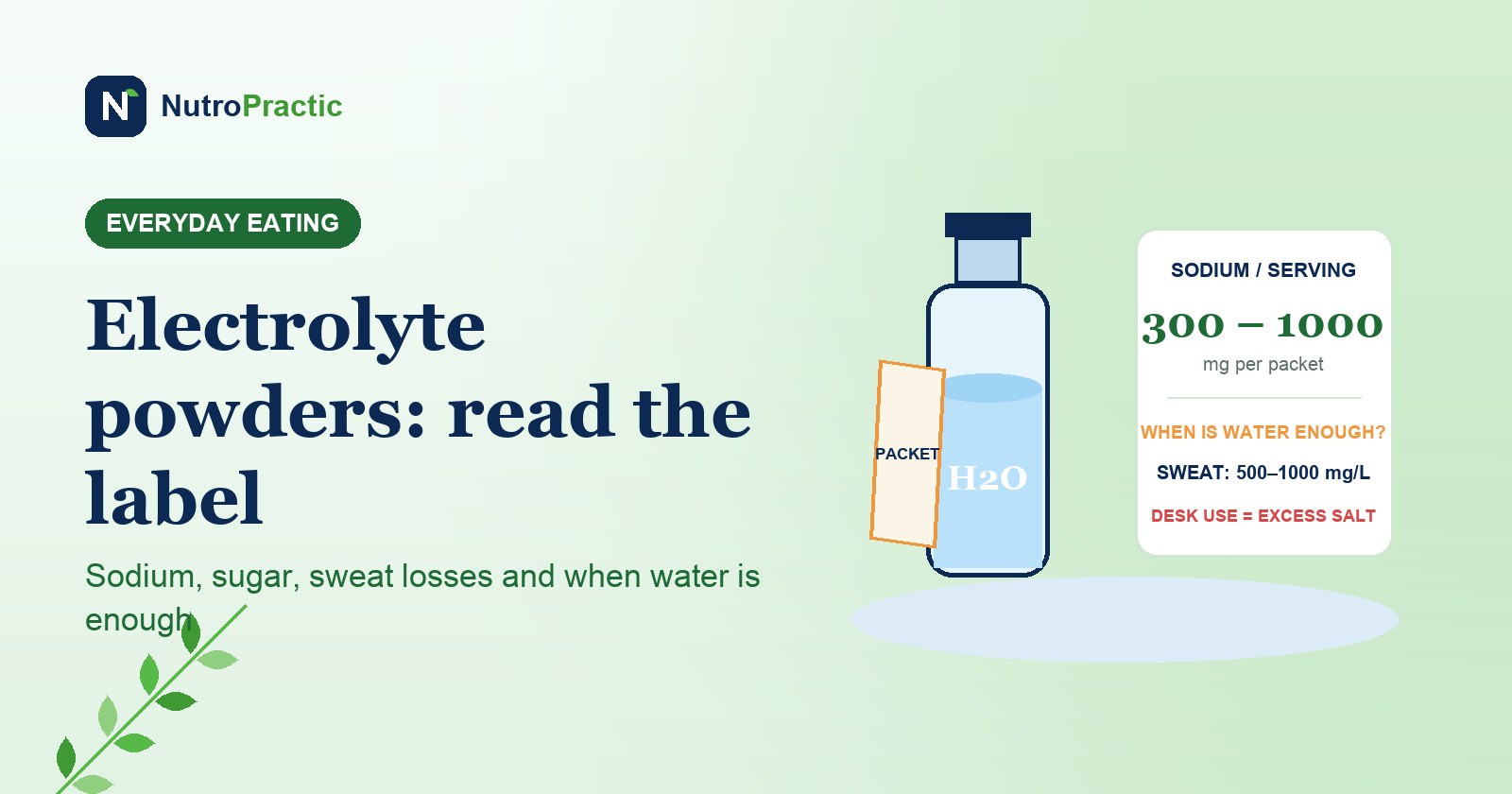
Electrolyte powders: sodium and sugar per bottle, and when water is enough
Packets deliver 300 to 1,000 mg sodium and up to 11 g sugar. Here is how popular drink mixes compare with actual sweat losses—and who actually needs them.
10 Nov 2026

Everyday eating
Instant noodles: the sodium in the whole packet, and what actually reduces it
Three official labels range from 750 to 1,520 mg sodium per packet. Here is the whole-pack arithmetic, what the broth study measured, and how to turn noodles into a more complete meal.
6 Nov 2026
Newsfeed for your website
Want this feed on your website?
Add it to any site with one copy-and-paste snippet. No sign-up, and it updates itself every hour.
Start with a virtual consultation
Tell Dr. Triveni what you want to change. You will leave with a clear next step, whether you are in Toronto, London, New York or Chennai.