Gut health · November 7, 2026
A 13-part ‘gut microbiota’ diet score tracked with 19% lower bowel-disease risk. In 198,204 UK adults, coffee was the only ingredient that stood alone
Over 9.46 years, 1,170 people developed Crohn's disease or ulcerative colitis. The pattern held after extensive adjustment, but weakened in people with repeated food records and never measured anyone's microbiome.
Researchers gave 198,204 UK Biobank participants a score built around foods that earlier literature linked with gut microbes. Avocado, broccoli, chickpeas, coffee, cranberries, fermented dairy, fibre, green tea, soybeans and whole grains counted favourably; a high-fat pattern, red or processed meat and refined grains counted unfavourably. The study did not collect stool samples, so the score is a dietary label, not a reading of anyone's microbiome.
During a median 9.46 years of follow-up, 1,170 people received a new inflammatory bowel disease diagnosis. Each 1.68-point increase in the score — one standard deviation in this sample — was associated with an 8.6% lower relative hazard after adjustment. Comparing the high group, seven points or more, with the low group, zero to four, gave a hazard ratio of 0.806: about 19% lower.
The model adjusted for age, sex, ethnicity, body mass index, education, deprivation, employment, smoking, alcohol, physical activity, medicines, diabetes, high blood pressure and supplement use. Results were directionally similar when early diagnoses were removed and when death was treated as a competing event.
But a useful stress test softened the claim. Among the 120,589 people who had at least two food questionnaires, the estimated hazard ratio per standard deviation was 0.939, with a confidence interval from 0.866 to 1.017. That interval includes no association. Nearly four in ten participants had only one 24-hour recall, which may be a poor portrait of their usual diet.
Coffee was the only single score component that remained significant after correction for testing many ingredients, with a hazard ratio of 0.828. That does not make coffee a treatment or show it caused the overall pattern. People with early bowel symptoms may already change what they eat, healthier diets cluster with other advantages, and UK Biobank volunteers are not a random slice of the population. The score is best read as a clue for trials and better repeated dietary studies, not as a 13-item prescription.
The score, the diagnoses and the weaker repeat-record result
198,204
UK Biobank participants in the main analysis
9.46 years
Median follow-up after the final food questionnaire used for scoring
1,170
New inflammatory bowel disease cases: 374 Crohn's and 801 ulcerative colitis in subtype analyses
0.914
Adjusted hazard ratio per 1-SD, or 1.68-point, higher diet score
0.806
Hazard ratio for high score (7+) versus low score (0–4)
0.939
Per-SD hazard ratio among people with at least two diet records; 95% CI 0.866–1.017
Prospective cohort association using up to five 24-hour recalls, with a median of two and 39.2% of participants contributing only one. The score was based on prior diet–microbiome literature, but this study did not measure gut organisms. Diagnosis records and statistical adjustment cannot prove that the scored foods prevented IBD.
- Inflammatory bowel disease is an umbrella term that includes Crohn's disease and ulcerative colitis; it is not the same as irritable bowel syndrome.
- One 24-hour recall records yesterday's food, not a person's permanent diet. Repeating it on different days reduces, but does not remove, random error.
- The score awarded points relative to sex-specific median intakes, so a point does not equal a universal serving target.
- The coffee result survived false-discovery-rate correction, but people who drink coffee can differ from non-drinkers in many measured and unmeasured ways.
- Removing diagnoses in the first two years is one way to reduce reverse causation, where early symptoms alter diet before the disease is formally recorded.
- Dietary index for gut microbiota score and incident inflammatory bowel disease: a prospective cohort study in the UK BiobankFrontiers in Nutrition, 5 November 2026 · Primary open-access paper; cohort construction, score components, follow-up, diagnoses, adjusted models and sensitivity analyses checked against the full text.
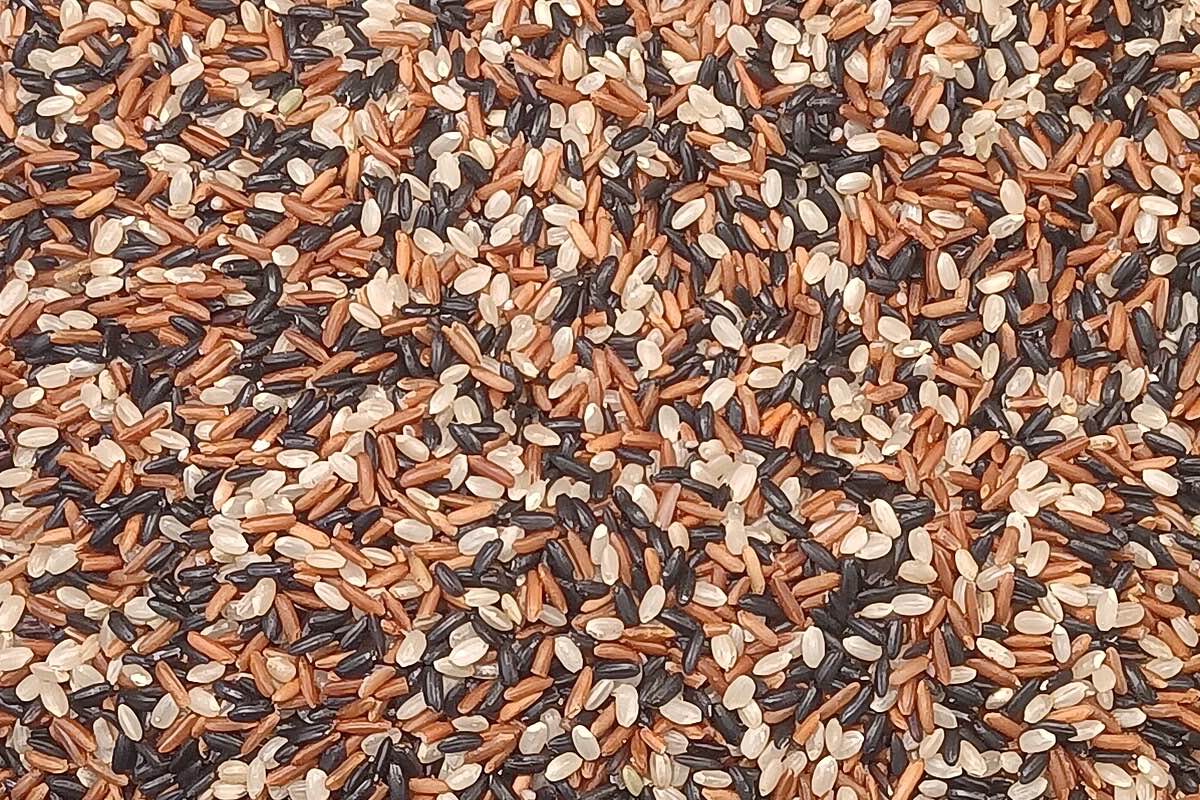
- Tricolor brown riceWikimedia Commons · Photo by Fumikas Sagisavas, CC0; reused as a general whole-grain illustration.
General information, not medical advice. A diet score associated with lower risk is not a prevention plan and does not replace medical care. Persistent diarrhoea, bleeding, abdominal pain or unexplained weight loss needs clinical assessment.
Analysis by NutroPractic from the sources listed. Written for general readers; it does not replace advice from your own doctor.
From our articles
Our guides on this subject
Plain-language guides on nutrition and wellness, backed by research.
Gut health
Constipation and food: kiwis, prunes, psyllium and what the head-to-head trials found
Two green kiwis a day added about 1.5 complete bowel movements a week in a 2023 trial across New Zealand, Italy and Japan, and beat psyllium overall; prunes beat psyllium in an earlier one. The doses the trials and the 2025 British dietitians' guideline used, what water, magnesium, coffee and rye bread add, IBS-C, isabgol, a four-week plan and the warning signs.
25 Oct 2026
Gut health
Heartburn and acid reflux: which food triggers the trials confirm, and what late meals, weight and a raised bed do
Up to 28% of North American adults get heartburn every week. Coffee showed no link across 15 studies, but going to bed within three hours of dinner came with 7.5 times the odds, a 1,000 kcal meal brought 65% more acid time than a 500 kcal one, and losing 3.5 BMI units cut the odds by about a third. What the trials say about food, weight, late meals and raising the bed, with a four-week plan.
22 Oct 2026
Women's health
Eating while breastfeeding: extra calories, iodine, caffeine, fish and alcohol, with the actual numbers
Breastfeeding usually adds about 330–400 kcal a day, but the smaller numbers can matter more: 290 mcg iodine, 400 IU vitamin D for baby, 8–12 oz fish a week, and a caffeine total you can actually add up.
6 Nov 2026
Newsfeed for your website
Want this feed on your website?
Add it to any site with one copy-and-paste snippet. No sign-up, and it updates itself every hour.
Start with a virtual consultation
Tell Dr. Triveni what you want to change. You will leave with a clear next step, whether you are in Toronto, London, New York or Chennai.