Breastfeeding · October 26, 2026
Pregnant women in a South Carolina trial who had their check-ups in groups of eight to ten knew more about breastfeeding and more often left hospital doing it, 78% against 73%, but by the six-week visit the gap was no longer clear
The 1,561 mothers who went to group visits scored higher on a breastfeeding quiz than those seen one to one, yet felt no more confident about doing it. The authors' conclusion: classes alone may not be enough to keep babies on the breast.
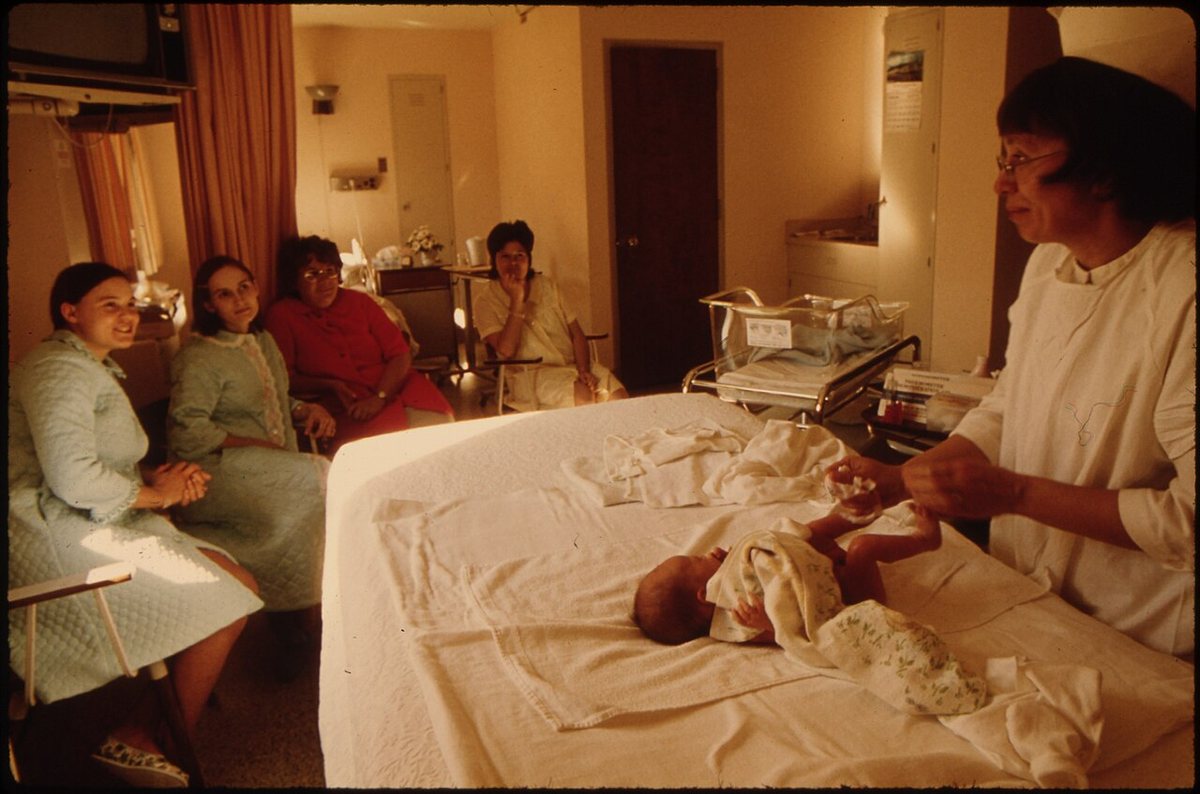
Most prenatal care is a string of short one-to-one appointments. In group prenatal care, best known through the CenteringPregnancy model, eight to ten pregnant women due at about the same time meet together: each still has a few minutes alone with the clinician, but most of the visit is a guided discussion that follows a set curriculum, including sessions on feeding a baby. Observational studies have suggested that women in such groups start breastfeeding more often, but they compared women who chose groups with women who did not. The CRADLE trial in Greenville, South Carolina, assigned women to one or the other at random. A planned secondary analysis of its breastfeeding results was published in the journal Pregnancy on 22 October.
CRADLE enrolled 2,350 women aged 14 to 45 with low-risk single pregnancies at one practice between February 2016 and March 2020, when COVID-19 stopped the in-person groups. Its main question was preterm birth. This analysis kept the 1,561 women who attended at least five visits in the arm they were assigned to and gave birth at the study hospital: 609 in group care and 952 in individual care. They were 25 years old on average; 38% were Black, 24% Hispanic and 36% White, about 97% were eligible for Medicaid and around two-thirds said the pregnancy was unintended.
At hospital discharge, 78.2% of the group-care mothers were giving their babies at least some breast milk, against 72.8% in individual care, odds about a third higher (adjusted odds ratio 1.32, 95% confidence interval 1.02 to 1.72). In late pregnancy the group-care women also scored higher on a six-question breastfeeding knowledge quiz, 18.5 against 17.5 out of 24, agreeing more strongly that breastfed babies get fewer ear, gut and chest infections and that any amount of breastfeeding helps. But on four questions about confidence, such as 'I can breastfeed my baby even when I am tired', the two groups scored almost the same, 12.8 and 12.5 out of 16.
By the postpartum visit four to six weeks after birth, 54.6% of the group-care mothers who came were still breastfeeding against 49.1% in individual care, a difference that could be chance once other factors were allowed for (adjusted odds ratio 1.18, 0.92 to 1.51). Among first-time mothers the group-care women again knew more, but neither breastfeeding difference was clear. Both arms also stayed below the national figure the authors quote: about 86% of US babies start breastfeeding. Their reading is that knowing more is not the same as feeling able to do it, and that education may need to be paired with confidence-building and practical support after the birth, along with the work, leave and money pressures many of these mothers faced.
The main caution is in how the sample was chosen. Counting only women who attended at least five visits removes some of the protection randomisation gives, and more women dropped out of the group arm than the individual arm. When the team analysed everyone as randomised, the discharge difference all but vanished (odds ratio 1.02, 0.84 to 1.23). The trial was designed to detect a difference in preterm birth, not breastfeeding; it ran at a single site; and breastfeeding was only recorded at discharge and at a postpartum visit some women did not attend. The study was funded by the US National Institute of Child Health and Human Development, and the authors declared no conflicts of interest. We read the full paper; the figures here are from it.
Group vs individual prenatal care and breastfeeding, CRADLE randomised trial, Greenville, South Carolina, 1,561 women who attended at least five visits (Pregnancy, 22 October 2026)
2,350 / 1,561
Women randomised in the CRADLE trial / included here (609 group care, 952 individual care)
78.2% vs 72.8%
Any breastfeeding at hospital discharge, group vs individual care (adjusted odds ratio 1.32)
54.6% vs 49.1%
Still breastfeeding at the 4 to 6 week postpartum visit (not statistically clear)
18.5 vs 17.5
Breastfeeding knowledge score out of 24, group vs individual care
12.8 vs 12.5
Breastfeeding confidence score out of 16: no real difference
1.02
Odds ratio for breastfeeding at discharge when every randomised woman was counted
97%
Share of the women eligible for Medicaid; about two-thirds reported an unintended pregnancy
Planned secondary analysis of the Centering and Racial Disparities (CRADLE) randomised trial (ClinicalTrials.gov registration December 2015; enrolment 24 February 2016 to 16 March 2020), single practice site, Prisma Health, Greenville, South Carolina. Per-compliance cohort: at least five visits in the assigned arm; excluded were women lost to follow-up before delivery, those delivering at an outside hospital, and pregnancy losses or neonatal deaths before discharge. Breastfeeding = any breast milk, exclusive or with formula, from chart review. Knowledge: 6 items adapted from the Infant Feeding Practices Study II, scored 0 to 4 each (max 24), first item reversed; confidence: 4 items adapted from Wells' 20-item Prenatal Breast-feeding Self-Efficacy Scale (max 16). Discharge: OR 1.34 (95% CI 1.05 to 1.70), aOR 1.32 (1.02 to 1.72), adjusted for race and ethnicity, parity, maternal age, education and pre-pregnancy smoking. Postpartum visit (742 individual-care and 495 group-care women attended): OR 1.25 (0.99 to 1.57), aOR 1.18 (0.92 to 1.51). First-time mothers (n = 667): discharge 77.0% vs 74.2%, aOR 1.31 (0.87 to 1.97); postpartum 51.7% vs 43.6%, aOR 1.34 (0.92 to 1.96). Knowledge p < 0.001; confidence p = 0.13. Intention to treat OR 1.02 (0.84 to 1.23); modified intention to treat (at least one visit) OR 1.18 (0.96 to 1.46). Funding: NICHD R01HD082311. No conflicts of interest declared.
- The American College of Obstetricians and Gynecologists and the American Academy of Pediatrics recommend breast milk alone for about the first six months, then breastfeeding alongside solid foods for a year or more.
- The CDC data the authors quote show that for US babies in 2022, 85.7% started breastfeeding but only 27.9% were still breastfed exclusively at six months.
- In the quiz, the statement 'Infant formula is as good as breast milk' drew the least agreement in both groups, about 1.6 to 1.8 on a scale from 0 (strongly disagree) to 4 (strongly agree).
- The CRADLE trial itself was set up to test whether group prenatal care reduces preterm birth and low birthweight, with a focus on racial gaps in those outcomes. Its main results were published in 2022; breastfeeding was a planned add-on question.
- The impact of group prenatal care on breastfeeding: A planned secondary analysis of the CRADLE randomized controlled trialPregnancy (Society for Maternal-Fetal Medicine, Wiley) · The study, published 22 October 2026
- Full text (PMC13689531)PubMed Central · Methods, Tables 1 to 5, sensitivity analyses, limitations and funding
- Group vs traditional prenatal care for improving racial equity in preterm birth and low birthweight: the Centering and Racial Disparities randomized clinical trial studyAmerican Journal of Obstetrics and Gynecology · The parent trial's protocol and main results (2022)
- A baby care class for new and expectant mothers at Loretto Hospital in New Ulm, MinnesotaWikimedia Commons (US National Archives) · The photo, public domain
General information, not medical advice. This analysis counted only women who attended most of their assigned visits, and when every randomised woman was included the difference in breastfeeding at discharge disappeared. If you are pregnant and want help planning how to feed your baby, ask your midwife, obstetrician or a lactation consultant what prenatal classes and support after the birth are available to you.
Analysis by NutroPractic from the sources listed. Written for general readers; it does not replace advice from your own doctor.
From our articles
Our guides on this subject
Plain-language guides on nutrition and wellness, backed by research.
Women's health
Eating while breastfeeding: extra calories, iodine, caffeine, fish and alcohol, with the actual numbers
Breastfeeding usually adds about 330–400 kcal a day, but the smaller numbers can matter more: 290 mcg iodine, 400 IU vitamin D for baby, 8–12 oz fish a week, and a caffeine total you can actually add up.
6 Nov 2026
Women's health
Nausea in pregnancy: ginger, vitamin B6, small meals and when it's hyperemesis, from the trials
Only 1.8% of women in one diary study had nausea just in the morning. Ginger at 1 g a day, B6 at 30 to 75 mg and doxylamine with B6 each have trial data, while diet advice has none. The score to track it, the doses, and the signs that mean a phone call.
5 Nov 2026
Women's health
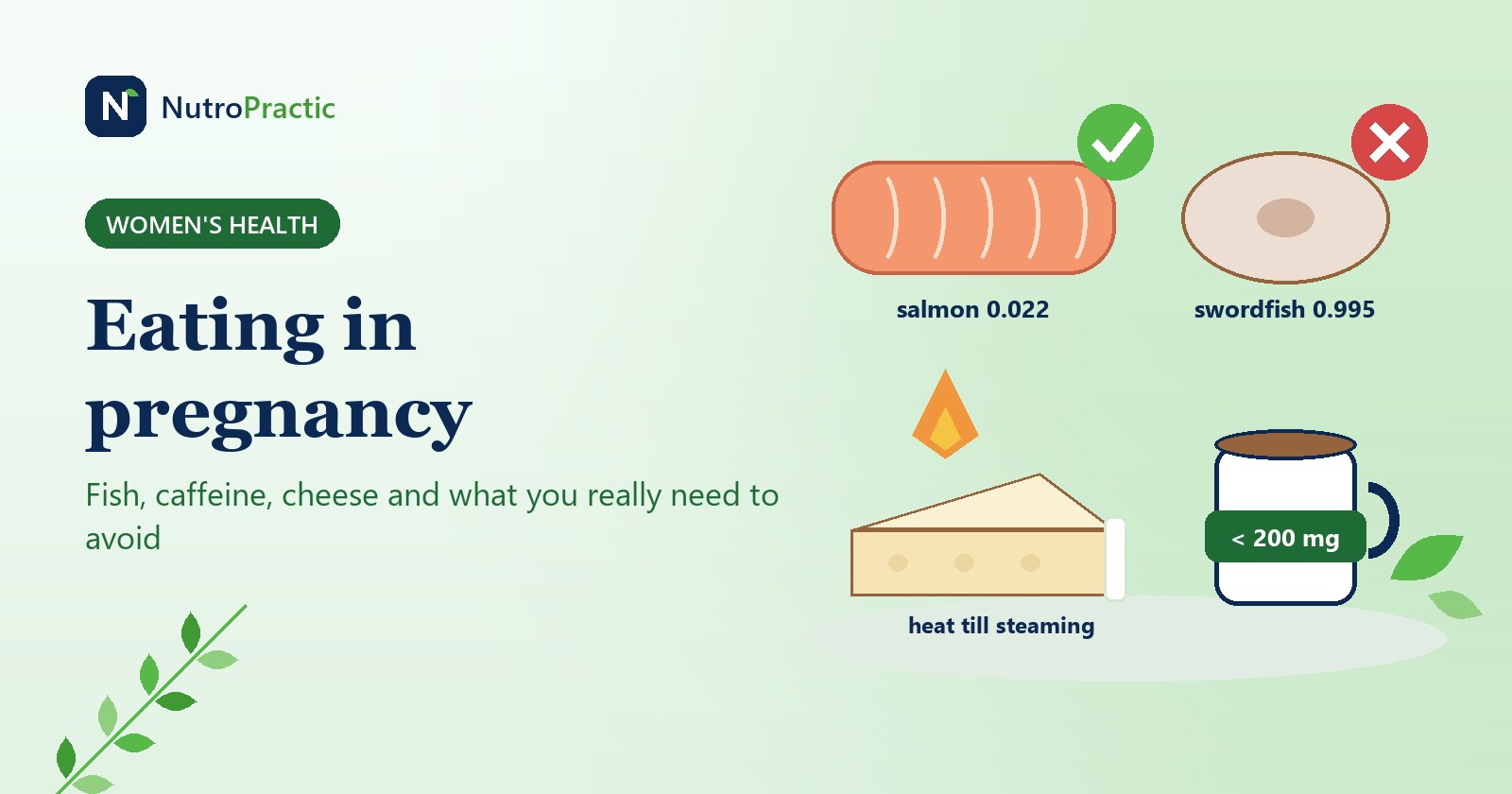
Eating in pregnancy: fish, caffeine, cheese and what you really need to avoid
Most fish is encouraged in pregnancy, not banned: 8-12 oz a week from the low-mercury list. The mercury numbers per fish, what 200 mg of caffeine looks like in real cups, which cheeses carry the listeria risk and how many cases there actually are, why liver is on the list, and how much weight to gain for your BMI.
29 Oct 2026
Newsfeed for your website
Want this feed on your website?
Add it to any site with one copy-and-paste snippet. No sign-up, and it updates itself every hour.
Start with a virtual consultation
Tell Dr. Triveni what you want to change. You will leave with a clear next step, whether you are in Toronto, London, New York or Chennai.