Nutrigenetics & metabolic health · November 27, 2026
Dietary patterns and FTO and MC4R genotypes in South Asian adults: exploratory case–control study finds strong associations but wide imprecision
An exploratory case–control study in Lahore, Pakistan examined how frequent sugary consumption, low fruit intake, and common FTO and MC4R gene variants correlate with obesity defined by Asia-Pacific BMI criteria. While dietary and genetic factors were linked to higher obesity odds, small sample size and extreme-group design produced wide confidence intervals and non-significant gene-diet interactions.
South Asian populations experience cardiometabolic complications and type 2 diabetes at lower body mass index (BMI) thresholds than European populations, prompting the adoption of tailored Asia-Pacific BMI criteria (obesity defined as BMI ≥ 25.0 kg/m²). However, the interplay between local dietary habits and well-known obesity-associated risk alleles remains poorly characterized in South Asian cohorts.
In an exploratory case–control study published in Nutrients, Anam Farzand, Mohd Adzim Khalili Rohin, Abdul Momin Rizwan Ahmad, and Sana Javaid Awan compared 50 adults with obesity against 50 normal-weight controls (BMI 18.5–22.9 kg/m²) in Lahore, Pakistan. Dietary patterns were captured using 24-hour recalls, and participants were genotyped for FTO (rs9939609) and MC4R (rs17782313) single nucleotide polymorphisms.
Multivariable Firth penalized logistic regression revealed that consuming sugary items three or more times daily (adjusted odds ratio [AOR] = 16.0, 95% CI 3.9–93.9) and low fruit intake (≤0.5 servings/day: AOR = 14.5, 95% CI 3.7–84.1) were strongly associated with obesity. Risk genotypes also showed elevated odds (MC4R CC/TC: AOR = 10.5, 95% CI 2.2–81.2; FTO AA/AT: AOR = 6.1, 95% CI 1.5–32.2).
Nonetheless, the authors highlighted critical methodological constraints. Bootstrap internal validation revealed substantial model overfitting (calibration slope = 0.70 to 0.82), confidence intervals were extremely wide due to sparse data, and gene–diet interaction analyses were underpowered and statistically non-significant. The researchers cautioned that these findings cannot determine causality or the relative importance of genetics versus diet, emphasizing the need for larger prospective cohorts.
Case-control analysis of dietary intake and FTO/MC4R genotypes in South Asian adults
100 Adults
exploratory case-control cohort in Lahore (50 with obesity, 50 normal-weight controls)
BMI ≥ 25.0
kg/m² Asia-Pacific regional threshold utilized to define obesity among South Asian participants
AOR 16.0
Firth-adjusted odds ratio for obesity associated with consuming sugary items ≥3 times per day
Overfitting
calibration slope of 0.70–0.82 and wide confidence intervals reflect sparse data and sample limits
Exploratory case-control study published in Nutrients, 25 November 2026 (doi: 10.3390/nu18233936).
- The World Health Organization recommended lower BMI cutoff points (overweight ≥ 23 kg/m², obesity ≥ 25 kg/m²) for Asian populations due to higher body fat percentages at given BMI levels.
- The FTO gene encodes fat mass and obesity-associated protein, which influences central appetite regulation and energy homeostasis.
- Firth penalized regression uses a modified score function to reduce small-sample bias and handle quasi-separation in logistic models.
- Dietary Exposures, FTO and MC4R Variants and Obesity in Adults in Lahore, Pakistan: An Exploratory Case–Control StudyNutrients · Case-control study by Anam Farzand et al. Published 25 November 2026.
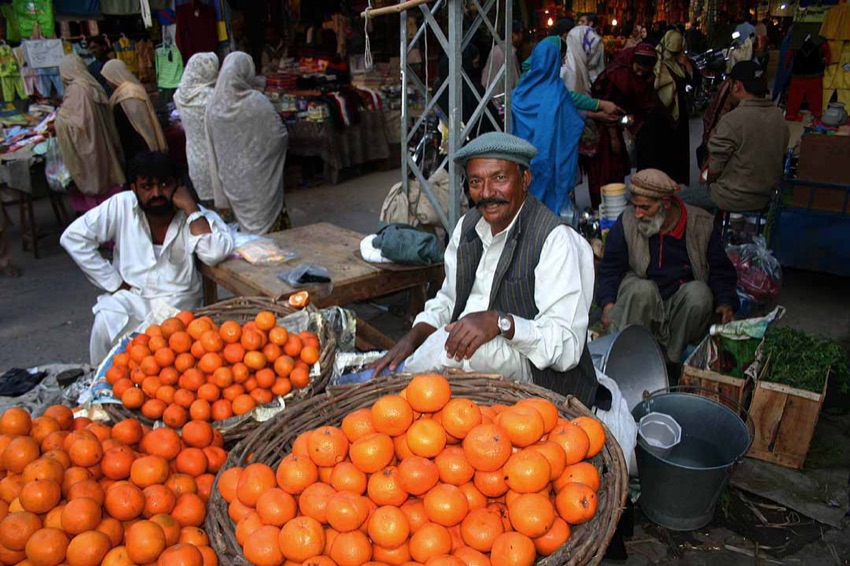
- File:Pakistan Orange Seller.jpgWikimedia Commons · Photo by Steve Evans via Wikimedia Commons, CC BY 2.0.
Educational summary of nutrition research, not personal medical advice. Speak to your doctor or dietitian before changing your diet or supplements, especially if you are pregnant, take medicines or have a medical condition.
Analysis by NutroPractic from the sources listed. Written for general readers; it does not replace advice from your own doctor.
From our articles
Read, then eat a little better
Plain-language guides on nutrition and wellness, backed by research.

Gut health
L-glutamine for gut barrier integrity: what the post-infectious IBS and permeability trials measured, and the dose in grams
At 15 g a day, glutamine took 79.6% of post-infection IBS-D patients to a clinical response against 5.8% on placebo. Trials that measured gut permeability directly in Crohn's, pancreatitis and heat stress found no clear benefit, and a 10-trial meta-analysis found none overall. The doses, the 14 g a day safe level, and who might try it.
27 Nov 2026
Supplements and vitamins
Black seed oil (Nigella sativa) and fasting glucose: what the pooled trials measured, oil vs powder doses, and the liver enzyme data
Meta-analyses of randomised trials put black seed's effect at roughly 10 to 20 mg/dL lower fasting glucose and about half a point of HbA1c, mostly as an add-on to diabetes tablets. The 1 to 3 g a day doses tested, why two bottles can differ 263-fold in thymoquinone, and what the liver and kidney markers showed.
27 Nov 2026

Supplements and vitamins
Chlorella and detox claims: what the human studies measured on hair metals, dioxins and vitamin B12, and what they did not
We found no placebo-controlled trial of chlorella removing mercury or lead. One 16-person study saw hair mercury and lead fall 39% on a chlorella-seaweed mix with no control group; breast-milk dioxin was about 30% lower in Japanese mothers; B12 ranges from under 0.1 to 415 micrograms per 100 g between brands.
26 Nov 2026
Newsfeed for your website
Want this feed on your website?
Add it to any site with one copy-and-paste snippet. No sign-up, and it updates itself every hour.
Start with a virtual consultation
Tell Dr. Triveni what you want to change. You will leave with a clear next step, whether you are in Toronto, London, New York or Chennai.