Produce prescriptions · October 25, 2026
A $15 prescription for fruit and vegetables at every check-up: 304 children in Flint, Michigan were followed for a year, and their blood pressure readings came down. The catch: there was no comparison group
When a third Flint children's clinic started handing out produce prescriptions in 2021, researchers enrolled 304 families with children aged 8 to 16 and tracked them for 12 months. The share of children with elevated blood pressure fell, and children whose families cashed at least one prescription in the first six months were less likely to be in the obesity range a year in. Their vegetable intake, though, did not change.
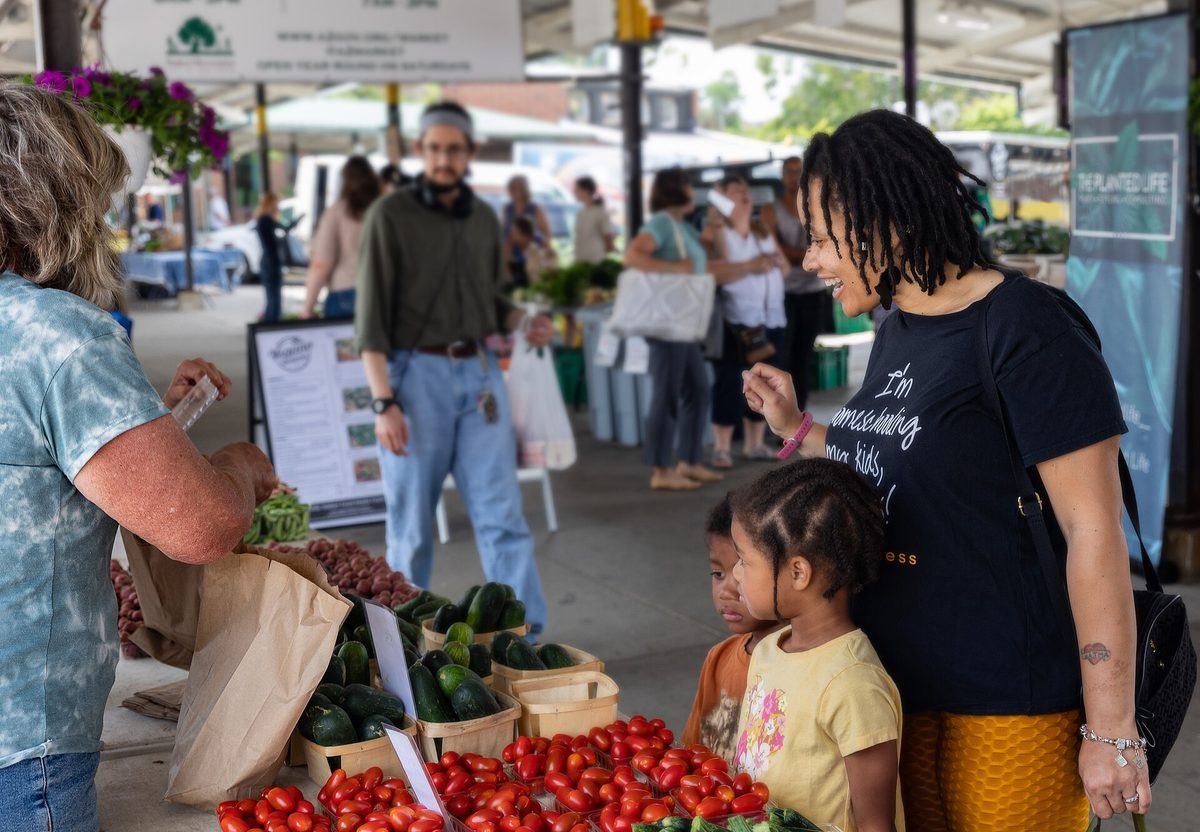
In Flint, Michigan, a visit to the paediatrician ends with an unusual piece of paper. At a growing number of the city's children's clinics, doctors print a fruit and vegetable prescription at the end of every office visit, ordered through the electronic medical record like any other prescription. Each one is worth $15 of fresh produce and can be cashed within 90 days at the downtown farmers' market or at a mobile market that delivers to the home. The programme began in February 2016 at Hurley Children's Center, which shares a building with the farmers' market, and reached a third clinic, Mott Children's Health Center, in 2021. That roll-out gave a team led by Michigan State University a chance to follow children from the day the prescriptions arrived. Their results were published in Nutrients on 23 October.
Between March 2021 and May 2023 the researchers enrolled 304 caregiver and child pairs at the Mott clinic, one child per household, aged 8 to 16. The children's average age was 12, 68% were African American, about 74% of the families lived in Flint and about 64% received SNAP food benefits. Children were weighed and measured at the start, at six months and at 12 months, blood pressure readings were taken from their medical charts, and families filled in surveys on diet, food security and physical activity.
Over the year the children's blood pressure moved in the right direction. Their systolic blood pressure percentile, which compares a reading with children of the same age, sex and height, was 3.99 points lower at six months and 7.5 points lower at 12 months than at the start, and the diastolic percentile was 5.12 points lower at 12 months. The odds of having an elevated systolic reading were roughly halved, multiplied by 0.44 at six months and 0.48 at a year, and the odds of elevated blood pressure overall by 0.52 at a year. BMI percentile was 2.28 points lower after 12 months. Children whose families redeemed at least one prescription in the first six months did better on weight than those who redeemed none: at 12 months their BMI percentile was 7.48 points lower and their odds of being in the obesity range were 0.47 times as high.
The diet results were thinner. Fruit intake rose by 0.22 cups a day at six months and then held steady, but vegetable intake and food security did not change significantly. Physical activity scores went up, by 2.46 points at six months and 1.89 at 12 months on a scale of 8 to 40. The authors point out that the first surveys were done while the expanded US Child Tax Credit was paying families extra each month (July to December 2021), which may have made diets and food security look better at the start, and that the pandemic cut the number of clinic visits, so fewer prescriptions were handed out.
The biggest limit is in the design: there was no control group. Every child at the clinic was offered prescriptions, so the study cannot say how much of the change would have happened anyway, for example as children grew, as clinic visits went back to normal after the pandemic, or simply through regression to the mean. Families who chose to cash prescriptions may also have differed from those who didn't in motivation or support, which the authors say they cannot rule out. The study was designed around fruit and vegetable intake, so it may be underpowered for blood pressure and weight, and it covers one clinic in one city. It was funded by the US National Institutes of Health (NICHD), the trial was registered in advance (NCT04767282), and the authors declare no conflicts of interest. We read the full open-access paper.
304 children aged 8-16 at a Flint, Michigan clinic, followed for 12 months after $15 produce prescriptions began (published 23 October 2026)
304
Caregiver and child pairs enrolled at Mott Children's Health Center, March 2021 to May 2023
$15
Value of each fruit and vegetable prescription, given at every office visit and good for 90 days
-7.5
Change in systolic blood pressure percentile after 12 months (points)
0.48×
Odds of an elevated systolic reading at 12 months compared with the start
0.47×
Odds of obesity at 12 months for children who redeemed at least one prescription in the first six months, versus none
+0.22 cups
Daily fruit intake at six months; vegetable intake did not change significantly
Source: Saxe-Custack A, Haggerty D, LaChance J, Egan S, Todem D, 'Longitudinal Associations Between Fruit and Vegetable Prescription Program Participation and Pediatric Blood Pressure and Weight Status', Nutrients 2026;18(21):3476, published 23 October 2026, doi 10.3390/nu18213476, open access (CC BY 4.0). Michigan State University. Non-controlled longitudinal intervention trial (NCT04767282, registered 23 February 2021) at Mott Children's Health Center, Flint, as the programme was introduced there; children aged 8-16, one per household, English-speaking. Mean child age 11.98 years; 68% African American; 73.58% of households in Flint; 63.67% on SNAP. Measurements at baseline, 6 and 12 months; blood pressure from medical charts (about 92% taken by trained clinic staff), percentiles from 2017 AAP reference data. Baseline-only data from two clinics with an established programme were used to estimate variance, not as a comparison group. Changes from baseline: systolic BP percentile -3.99 (6 mo, p = 0.04) and -7.5 (12 mo, p < 0.001); diastolic BP percentile -5.12 (12 mo, p = 0.003); odds ratio for elevated systolic BP 0.44 (6 mo) and 0.48 (12 mo), elevated diastolic BP 0.46 and elevated BP overall 0.52 (12 mo); BMI percentile -2.28 (12 mo, p = 0.004). Children redeeming at least one prescription between baseline and 6 months versus none: BMI percentile -7.48 at 12 months (p = 0.02); odds ratio for obesity 0.47 (p = 0.01) and for elevated systolic BP 0.51 (p = 0.05). Fruit intake +0.22 cups/day at 6 months (p = 0.04); vegetables and food security not significant. PROMIS physical activity score (8-40) +2.46 at 6 months and +1.89 at 12 months. Limitations stated by the authors: primary outcome was fruit and vegetable intake, so possibly underpowered for these outcomes; one location; COVID relief and the expanded Child Tax Credit not measured; residual confounding; possible bias from missing data. Funded by NICHD grant R01HD102527; no conflicts of interest declared.
- Under the American Academy of Pediatrics' 2017 guideline, 'prehypertension' was renamed 'elevated blood pressure'. For children under 13 it is judged against percentiles for age, sex and height; from 13 it uses adult-style numbers, with 120-129 systolic and under 80 diastolic counted as elevated.
- A 2025 review in The Lancet Child & Adolescent Health pooled 81 studies across 21 countries and put childhood hypertension at 4.28%. Between 2000 and 2020 it nearly doubled, from 3.40% to 6.53% in boys and from 3.02% to 5.82% in girls.
- In a 2017 CDC survey of US high school students, only 7.1% ate the recommended amount of fruit and 2.0% the recommended amount of vegetables. For 14- to 18-year-olds that is at least 1.5 to 2 cups of fruit and 2.5 to 3 cups of vegetables a day.
- Longitudinal Associations Between Fruit and Vegetable Prescription Program Participation and Pediatric Blood Pressure and Weight StatusNutrients · The study, open access, published 23 October 2026
- Clinical Practice Guideline for Screening and Management of High Blood Pressure in Children and AdolescentsPediatrics (American Academy of Pediatrics) · The 2017 definitions of elevated blood pressure in children
- Global prevalence of hypertension among children and adolescents aged 19 years or younger: an updated systematic review and meta-analysisThe Lancet Child & Adolescent Health · Pooled prevalence and the 2000-2020 trend
- Percentage of Adolescents Meeting Federal Fruit and Vegetable Intake Recommendations - Youth Risk Behavior Surveillance System, United States, 2017CDC, Morbidity and Mortality Weekly Report · How many US teenagers eat enough fruit and vegetables
- WIC Environments in Michigan (20230621-USDA-FNS-UNK-0003)Wikimedia Commons · The photo, public domain (USDA)
General information, not medical advice. This study had no comparison group, so it cannot show that the prescriptions caused the changes. If you are concerned about a child's blood pressure or weight, talk to their paediatrician; a registered dietitian can help with family meals.
Analysis by NutroPractic from the sources listed. Written for general readers; it does not replace advice from your own doctor.
From our articles
Our guides on this subject
Plain-language guides on nutrition and wellness, backed by research.
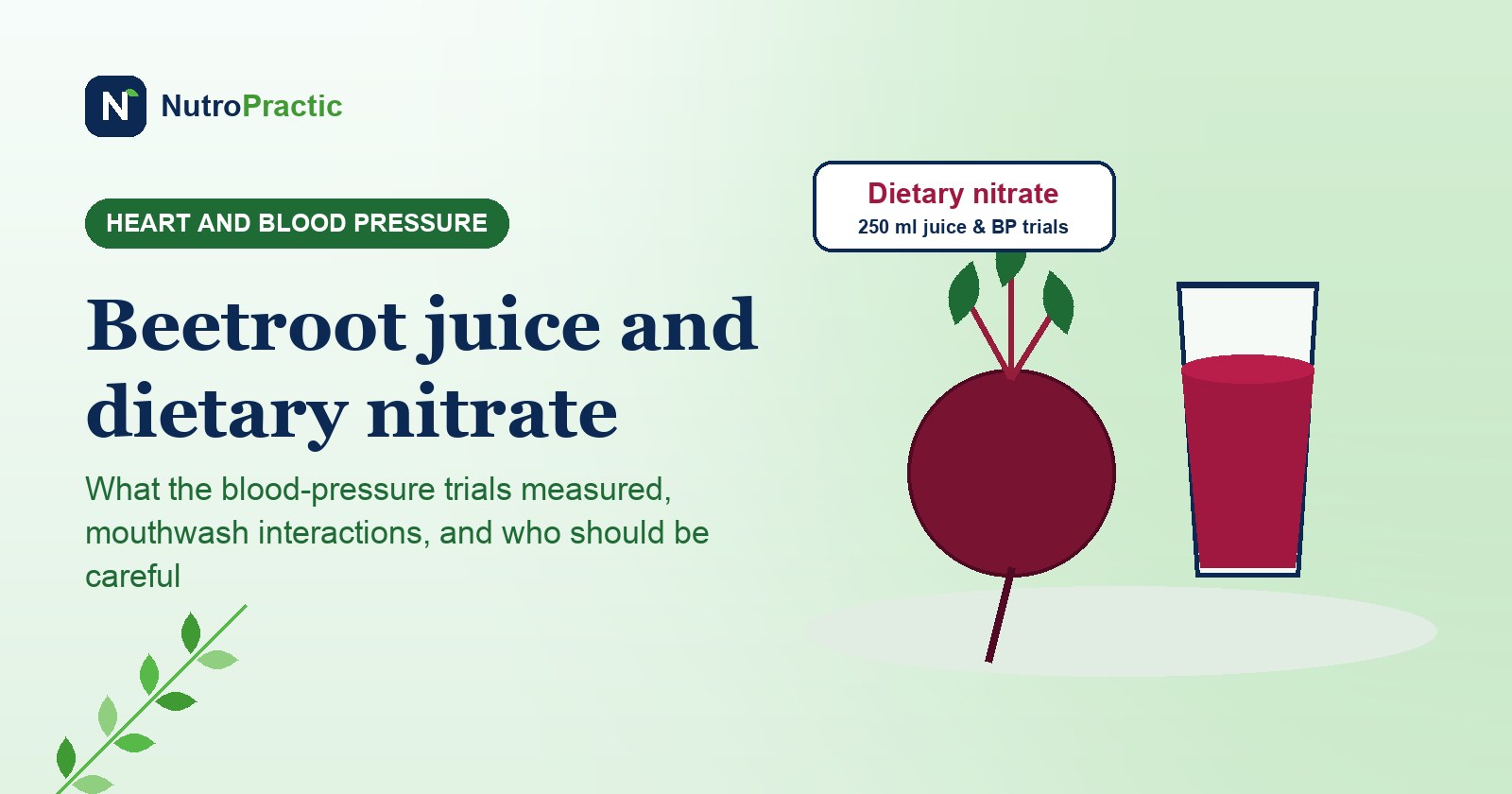
Heart and blood pressure
Beetroot juice and dietary nitrate: what the blood-pressure trials measured, and who should be careful
Drinking 250 ml of beetroot juice dropped clinic systolic blood pressure by 7.7 mmHg in 4-week clinical trials. Here is how tongue bacteria convert dietary nitrate to nitric oxide, why antiseptic mouthwash blocks it completely, and the oxalate kidney stone warning.
18 Nov 2026
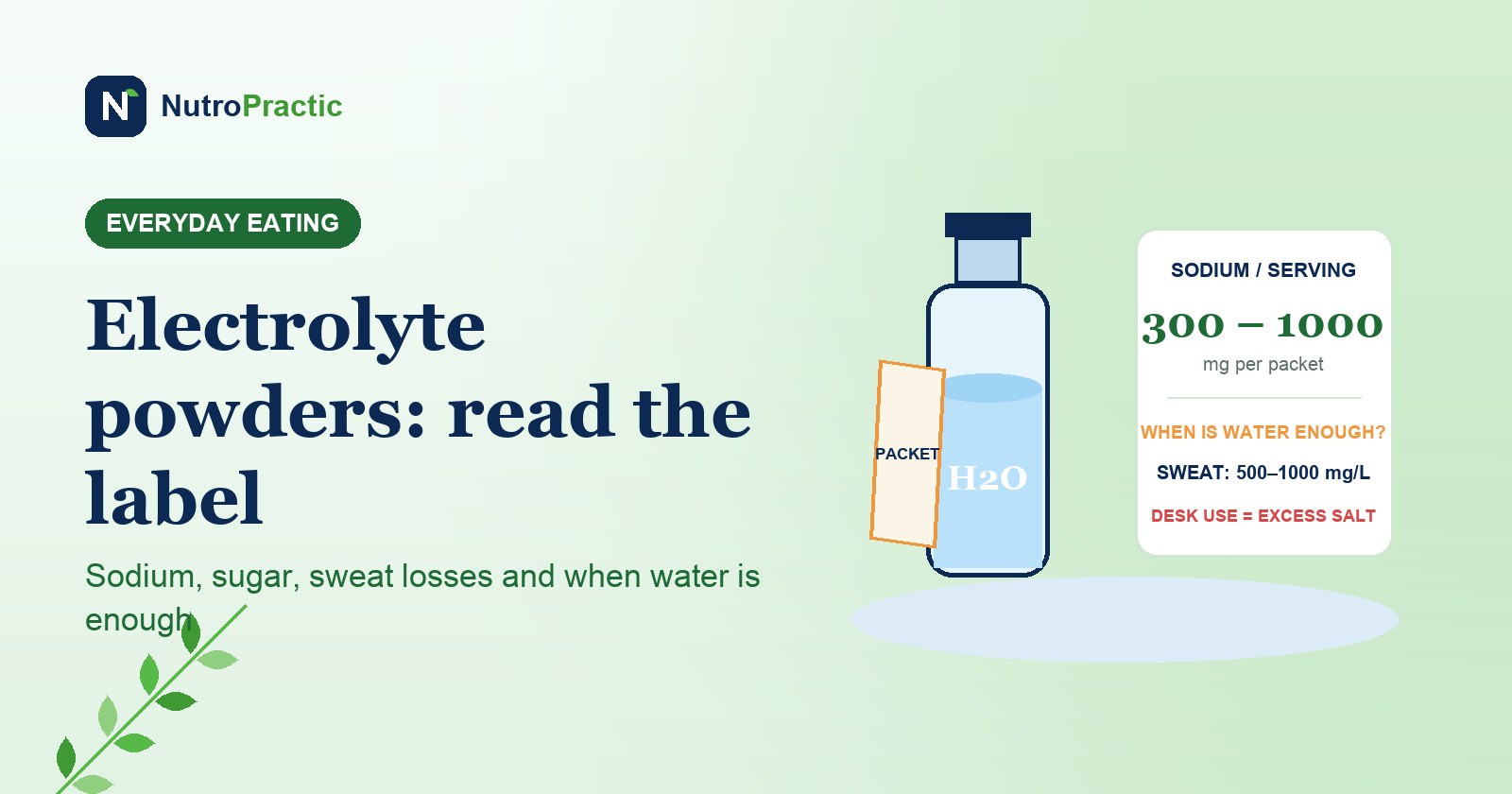
Everyday eating
Electrolyte powders: sodium and sugar per bottle, and when water is enough
Packets deliver 300 to 1,000 mg sodium and up to 11 g sugar. Here is how popular drink mixes compare with actual sweat losses—and who actually needs them.
10 Nov 2026
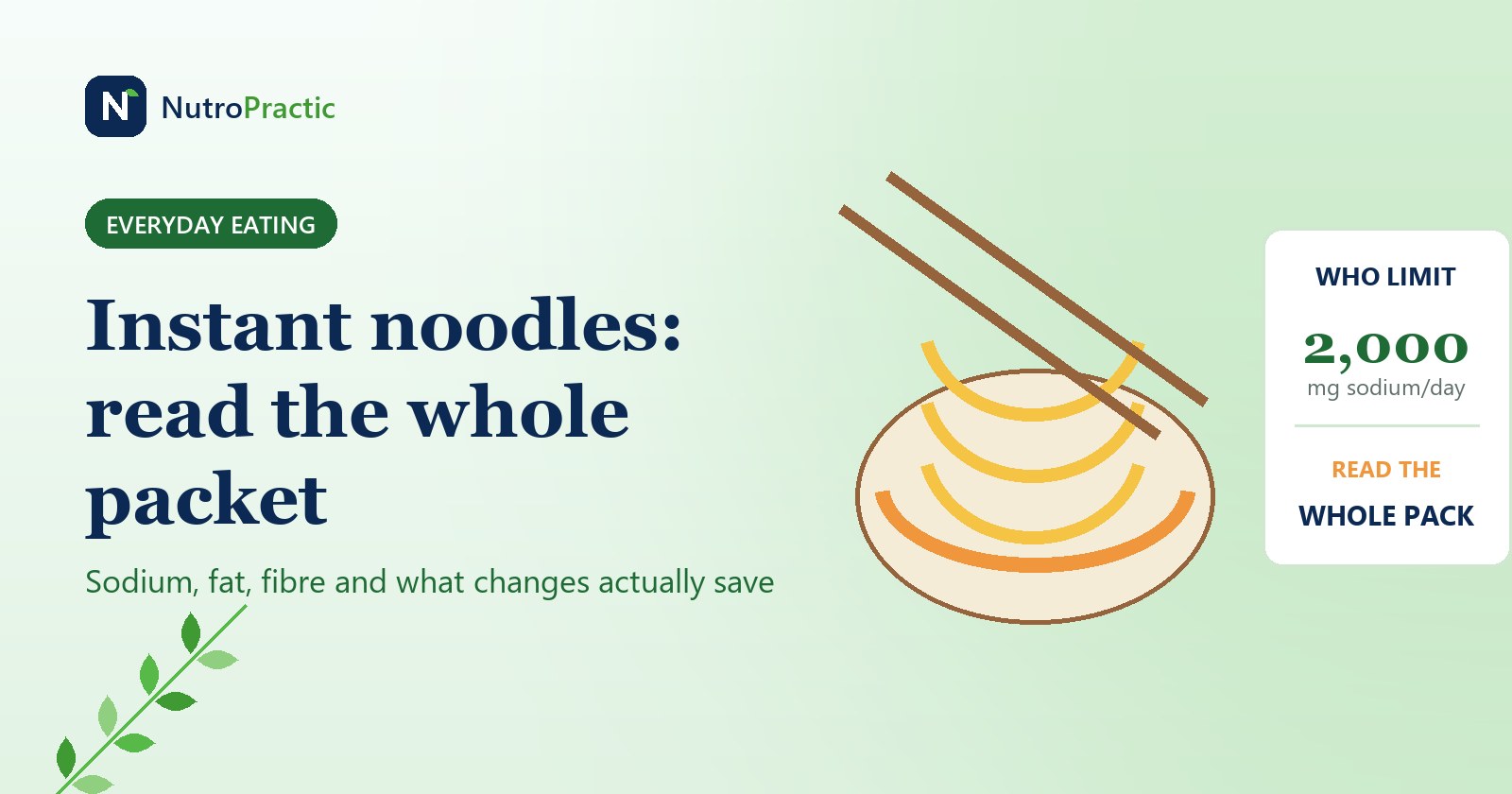
Everyday eating
Instant noodles: the sodium in the whole packet, and what actually reduces it
Three official labels range from 750 to 1,520 mg sodium per packet. Here is the whole-pack arithmetic, what the broth study measured, and how to turn noodles into a more complete meal.
6 Nov 2026
Newsfeed for your website
Want this feed on your website?
Add it to any site with one copy-and-paste snippet. No sign-up, and it updates itself every hour.
Start with a virtual consultation
Tell Dr. Triveni what you want to change. You will leave with a clear next step, whether you are in Toronto, London, New York or Chennai.