Food as medicine · October 23, 2026
Free healthy groceries, meal deliveries and produce vouchers for people with type 2 diabetes who struggle to afford food: across 7 US trials, fewer households went short of food, but average blood sugar barely moved
A Toronto team pooled every randomised trial that gave people with diabetes healthy food at no cost. Food insecurity fell in all four trials that measured it. The drop in HbA1c, the three-month blood sugar marker, was a tenth of a point and could have been chance, and most of the trials lost a quarter of their volunteers along the way.
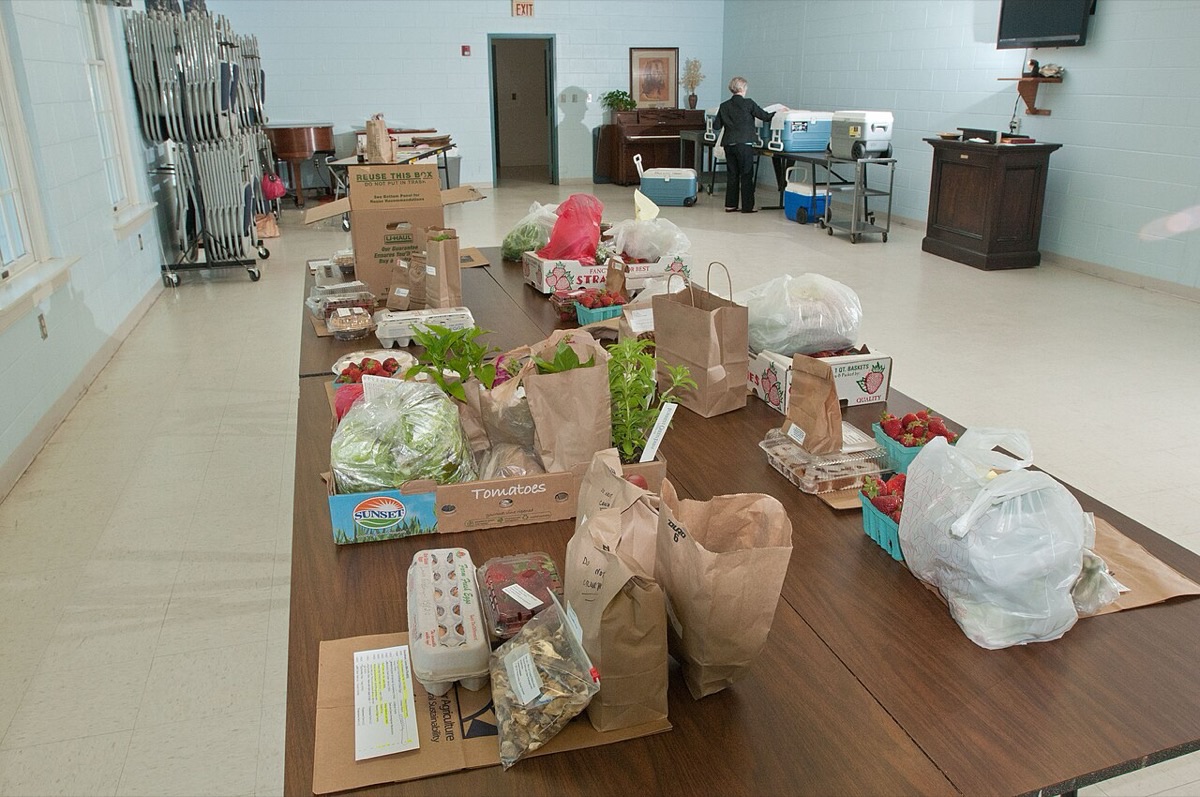
If money is tight, the cheapest calories tend to be refined grains, sugar and fat, which is the opposite of what a person with type 2 diabetes is told to eat. That is the logic behind 'food as medicine': medically tailored meals delivered to the door, grocery boxes picked up at the clinic, or a voucher to spend on fruit and vegetables. Health systems and charities in the United States have been trying all three. The question is whether handing out healthy food actually changes diabetes control.
Researchers at St. Michael's Hospital (Unity Health Toronto) and the University of Toronto searched seven databases in July 2025 for controlled trials that gave free healthy food to adults with type 2 diabetes or prediabetes who were on a low income or short of food. Of 745 records they kept seven randomised trials, all in the United States, with 2,055 people between them. Three delivered meals or grocery boxes to people's homes, three handed out food packages at a clinic or food bank, and one gave $10 a visit, up to $80, to spend at a farmers' market outside a Detroit health centre. They ran from 12 weeks to about a year, and several added recipes or diabetes classes. Because new trials are under way in the US, Canada and Australia, the team calls this a 'living' review and plans to search again every month. It was published in BMC Public Health on 20 October.
Food insecurity fell in all four trials that measured it; pooled, the risk of still being food insecure at follow-up was 13% lower with the programmes. HbA1c, the blood test that reflects average blood sugar over the past two to three months, was reported in all seven trials. Five showed a fall and two a rise, and the pooled difference was 0.10 of a percentage point lower with free food, a result that could easily be chance and is well short of the 0.5 point the authors cite as the usual threshold for a difference that matters clinically. Vegetable and fruit intake, diet quality scores, overall health, body mass index and blood pressure all leaned in the programmes' favour, but none of these pooled results was clearly beyond chance, and the trials measured diet in very different ways. Pooled outpatient visits were slightly higher in the programme groups.
The authors are blunt about the weak spots. Six of the seven trials were judged at high risk of bias, mostly because 23% to 30% of participants dropped out in five of them, and the certainty of the evidence was low or very low for every outcome except food insecurity. With only seven trials of quite different programmes, and all of them in the US, the results may not carry over to other countries or to any one type of scheme. There are also small inconsistencies in the paper, which is an early 'Article in Press' version: the abstract rates the food insecurity evidence as low certainty while the summary table says moderate, and the abstract gives its upper confidence limit as 0.96 in one place and 0.95 elsewhere. The review was funded by the Canada Research Chairs Program and the authors declared no competing interests. We read the full article.
Free access to healthy food for people with type 2 diabetes or prediabetes and low income or food insecurity (living systematic review of randomised trials)
7 trials, 2,055 people
Randomised trials in the United States: meal deliveries, grocery packages, a farmers' market voucher (our total of the trial sizes)
−0.10 points
HbA1c with free food vs usual access, pooled (95% CI −0.36 to 0.17), not significant; 1,697 observations
0.87
Risk ratio for still being food insecure at follow-up (95% CI 0.80 to 0.95), 4 trials, 909 observations
5 of 7
Trials in which HbA1c fell; in the other two it rose
−1.86 mmHg
Systolic blood pressure, pooled (95% CI −4.53 to 0.80), not significant; 4 trials
6 of 7
Trials judged at high risk of bias, mostly from 23% to 30% dropout
Study: Muhiuddin M, Ul Haq MZ, Workentin A, Sinha L, Ziegler C, Persaud N, 'Effect of free healthy food access on diabetes control: a living systematic review', BMC Public Health, published 20 October 2026 (Article in Press), doi 10.1186/s12889-026-29337-2, open access (CC BY-NC-ND 4.0). PROSPERO CRD420251090371. Searched MEDLINE, Embase, PsycINFO, Social Services Abstracts, Web of Science, CINAHL and CENTRAL from 1980 to 30 July 2025; 745 unique records, 54 full texts, 7 RCTs (one crossover, two wait-list). Trials (Table 2): Berkowitz 2019, Boston, medically tailored meals, 44 people, 12 weeks; Bryce 2021, Detroit health centre, fruit and vegetable prescription of $10 a visit up to $80 at an on-site farmers' market, 530, 15 weeks; Clark 2025, Medicaid adults, 12 frozen tailored meals plus a produce bag weekly for 3 months and dietitian calls, 74; Doyle 2024, medically tailored groceries for 2 meals a day, 5 days a week for the whole household, 500, about a year; Ferrer 2019, food bank produce at a clinic every two weeks plus dietitian and community health worker, 58, 6 months; Kempainen 2023, Minneapolis, home-delivered FOODRx boxes every two weeks, 281, 24 weeks; Seligman 2018, food banks in Oakland, Detroit and Houston, diabetes-appropriate packages of about 22 meals a month plus self-management classes, 568, 6 months. The 2,055 total is our sum of these trial sizes. Random-effects (REML) meta-analyses: HbA1c MD −0.10 (−0.36 to 0.17), p = 0.48, I² 47%, 7 trials, n = 1,697, GRADE low; food insecurity RR 0.87 (0.80 to 0.95), p = 0.0013, I² 35%, 4 trials, n = 909, rated moderate in the summary table and low in the abstract (which also gives the upper limit as 0.96 in the PDF version); vegetables MD 1.29 (−0.01 to 2.60), p = 0.05, I² 98%, very low; fruit MD 0.94 (−0.30 to 2.17), I² 96%, very low; diet quality MD 12.64 (−5.80 to 31.08), I² 99%, very low; overall health good or better RR 1.20 (0.91 to 1.59), low; BMI MD −0.36 (−1.22 to 0.50), very low; systolic BP MD −1.86 mmHg (−4.53 to 0.80) and diastolic −0.53 (−1.93 to 0.88), 4 trials, n = 790, low; outpatient visits MD +0.83 (0.02 to 1.64), 2 trials, n = 781, very low (the summary table's wording says 'may reduce', but the pooled estimate is an increase). Fruit, vegetable and diet measures differed between trials. Risk of bias (RoB 2): 6 high, 1 some concerns; dropout 23% to 30% in five trials; one trial did not use intention-to-treat. Orwin's fail-safe N for HbA1c was 7. Funding: Canada Research Chairs Program; no competing interests declared.
- HbA1c measures how much of the haemoglobin in red blood cells is coated with glucose; glucose stays stuck for as long as the cell lives, about three months, which is why one test reflects months of blood sugar rather than a single day.
- A 'living' systematic review is never finished: this one is set to search the databases on the first working day of every month and to fold in each new trial within about three months of its publication.
- In the largest trial, run through food banks in Oakland, Detroit and Houston, each package was designed to cover about 22 meals a month, roughly a fifth to a quarter of a person's monthly food needs.
- The authors note that in 2023, 13.5% of households in the United States experienced food insecurity, meaning limited or uncertain access to enough nutritious food.
- Effect of free healthy food access on diabetes control: a living systematic reviewBMC Public Health · The paper, open access (Article in Press version)
- Hemoglobin A1C (HbA1c) TestMedlinePlus, U.S. National Library of Medicine · What the HbA1c test measures
- Food Hub- Lulus Local Food Pick-Up (20110505-RD-LSC-1466)Wikimedia Commons · The photo, public domain (U.S. Department of Agriculture)
General information, not medical advice. The trials were few, mostly at high risk of bias, and all in the United States. Changes in what or how much you eat can affect blood sugar, especially if you take insulin or tablets such as sulfonylureas that can cause low blood sugar; talk to your doctor or a registered dietitian before changing your diet or diabetes treatment. If you are struggling to afford food, a doctor, diabetes educator or local social services can point you to support.
Analysis by NutroPractic from the sources listed. Written for general readers; it does not replace advice from your own doctor.
From our articles
Our guides on this subject
Plain-language guides on nutrition and wellness, backed by research.

Cardiovascular wellness
Psyllium husk: how much soluble fibre lowers LDL cholesterol and stabilizes post-meal glucose in clinical trials
Viscous soluble fibre forms a thick gel matrix in the small intestine that binds bile acids and blunts post-meal glucose spikes. Across dozens of randomized controlled trials, 7 to 10.2 grams of psyllium daily lowers LDL cholesterol by 6% to 12% without stripping HDL, while reducing postprandial glucose surges by 15% to 25% in metabolic syndrome and type 2 diabetes. Discover the bile acid sequestration mechanism, trial meta-analyses, exact timing before meals, water ratios, and titration protocols to avoid gas and cramping.
13 Nov 2026
Diabetes
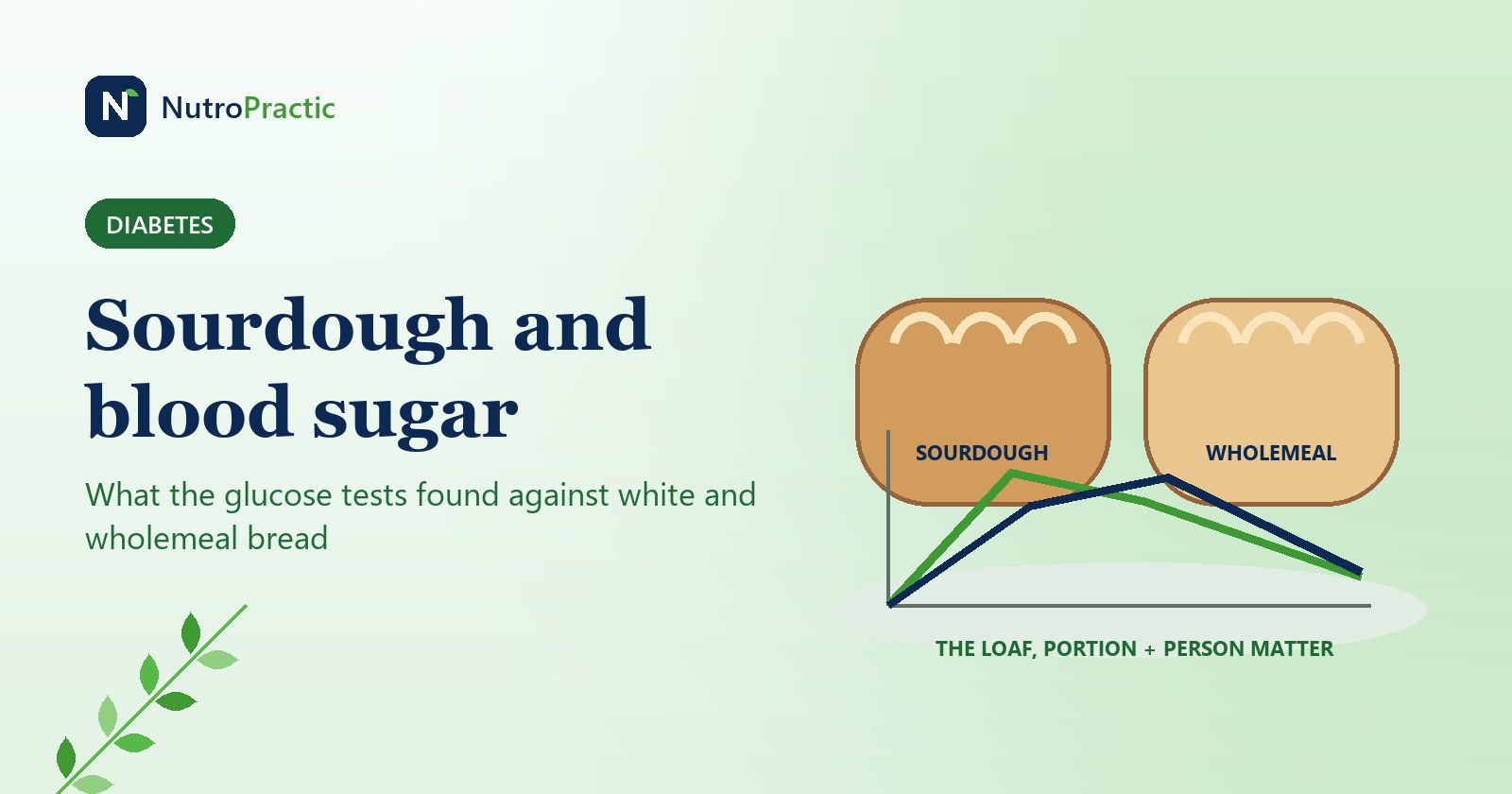
Sourdough and blood sugar: what the glucose tests found against white and wholemeal bread
Sourdough did not beat white bread on average in a 20-person crossover trial, and half responded better to white. A trial-by-trial look at fermentation, flour, portions, GI and how to test your own loaf fairly.
6 Nov 2026
Diabetes
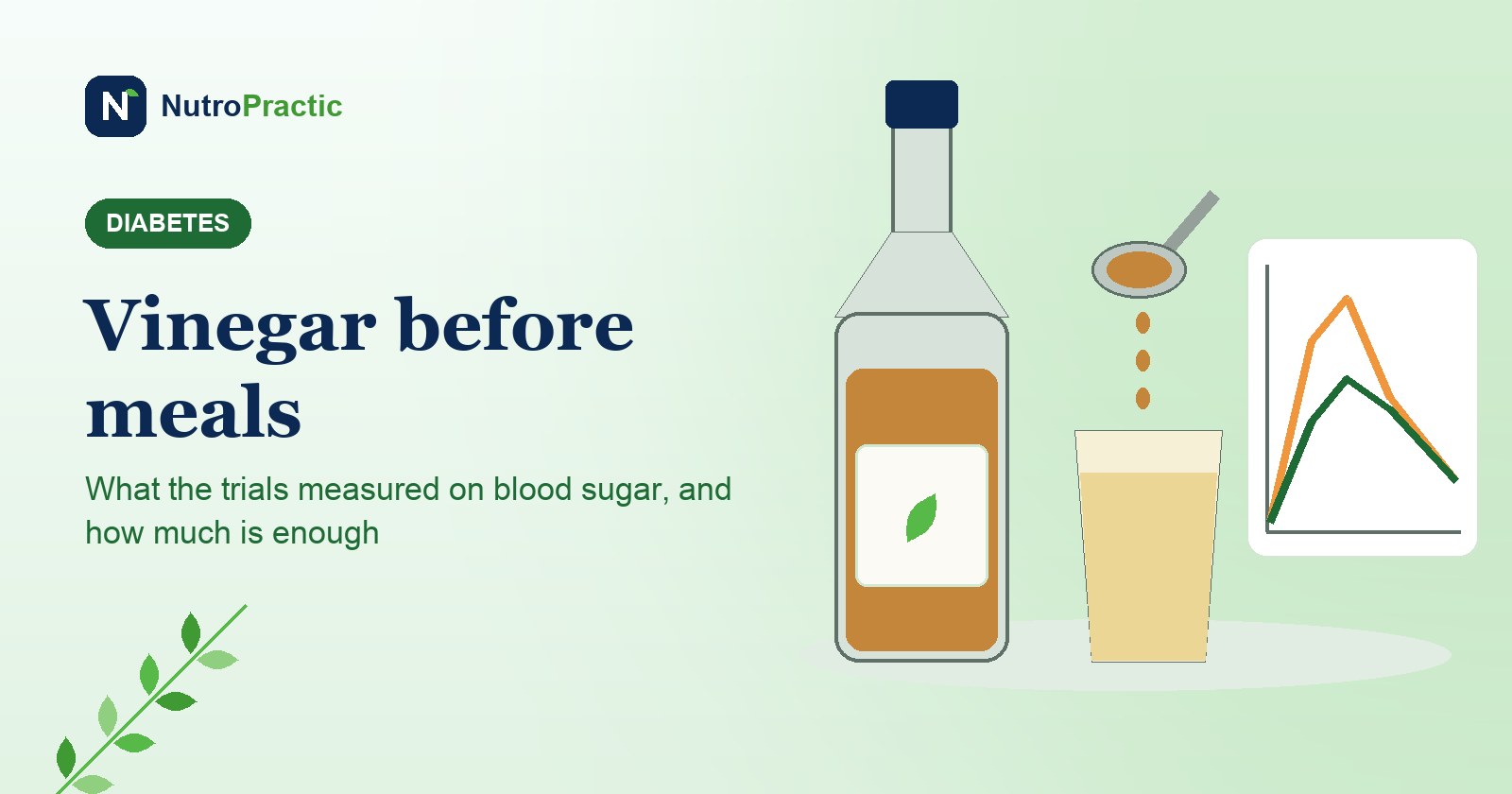
Vinegar before meals: what the trials measured on blood sugar, and how much is enough
Two teaspoons to a tablespoon with a starchy meal trims the glucose peak at 30 minutes, and the gap fades by two hours. HbA1c reviews range from -0.39 to -1.53, and we explain which to trust. Two gummies hold about 50 mg of acetic acid against 750 mg in a tablespoon.
5 Nov 2026
Newsfeed for your website
Want this feed on your website?
Add it to any site with one copy-and-paste snippet. No sign-up, and it updates itself every hour.
Start with a virtual consultation
Tell Dr. Triveni what you want to change. You will leave with a clear next step, whether you are in Toronto, London, New York or Chennai.