Infant feeding · October 24, 2026
A jar of breast milk, a pan of water, heat until it boils: 24 studies say this kitchen method stops bacteria and HIV in the milk and keeps its fats, sugars and most vitamins. Its antibodies take a bigger hit
When an outbreak makes doctors unsure whether breastfeeding is safe, babies are often switched to formula, which carries its own risks where clean water is short. A Johns Hopkins-led review gathered every study of 'flash-heating', a low-cost way to pasteurise expressed milk at home. No growth of the tested germs, fats, sugars and oligosaccharides intact, but only 16 to 30% of the lactoferrin left, and in half the germ studies nobody measured how hot the milk actually got.
During outbreaks of a new disease, mothers have repeatedly been told to stop breastfeeding, and sometimes not to give their expressed milk either, because nobody yet knew whether the germ could pass through milk or close contact. Early in COVID-19 some guidance said exactly that. The authors of a new review call it a misapplication of the precautionary principle: the babies were switched to formula or other substitutes, whose risks (more diarrhoea, chest infections and deaths) are well documented and are worst where clean water and fuel are scarce. Milk banks avoid the problem by pasteurising milk, but with equipment no household has. A review published in Frontiers in Nutrition on 15 October asks whether a kitchen method could fill that gap.
The method is flash-heating, developed more than 20 years ago so that mothers with HIV in poor settings could give their babies their own milk without passing on the virus. As the review describes it, 50 to 120 mL of expressed milk goes into an open 450 mL glass jar, which stands in about 450 mL of water in a 1 to 2 litre pan, the water two fingers above the milk. Both are heated together on a stove until the water reaches a rolling boil, then the jar comes straight out and is cooled in cold water. It is meant to imitate the industrial 'high-temperature short-time' process of 72 °C for 15 seconds. Nine researchers from Johns Hopkins, the University of Washington, Western Sydney University, KwaZulu-Natal and elsewhere searched five databases and the grey literature (last on 30 August 2026): of 7,030 records, 24 studies, published 2005 to 2025, tested flash-heating. Twelve came from South Africa, three each from Tanzania and Zimbabwe, two from Canada and one each from Indonesia, the US and the Netherlands.
On germs, the studies found no growth after flash-heating for the bacteria they tested, including E. coli, Staphylococcus aureus, group B streptococcus and Klebsiella, and in one study of 98 samples, no growth of HIV. Staph aureus is fairly heat-tolerant, and the authors note that complete kill was not always achieved. On nutrition, fats, carbohydrates and the milk's oligosaccharides, its special sugars that feed a baby's gut bacteria, came through fully. Vitamins A, B1, B6, B12 and E were well kept; vitamin B2 kept 59 to 100%, folate 76 to 100% and vitamin C anywhere from 39 to 100%, depending on the procedure. Lipase, the enzyme that helps babies digest fat, was almost entirely destroyed, as it is by other heat treatments.
The immune side is where heating costs most. Two signalling proteins, IL-8 and IL-10, were kept at about 100% and 97%. The antibodies IgA and IgG kept 25 to 80%. Lactoferrin, an iron-binding protein that fights bacteria, kept only 16 to 30% of its concentration and lysozyme 21 to 60%, though both kept more of their germ-killing activity (39 to 89% and 43 to 78%). Flash-heating took more off the immune proteins than milk-bank HTST does. In practice, in a Tanzanian study of mothers with HIV counselled at home, 51.4% started flash-heating within six months and kept it up for 9.6 weeks on average; 20 mothers in rural Zimbabwe did it for 4.5 months on average, using jars, aluminium pans and kerosene or charcoal, and their milk peaked at 79 to 81 °C. Barriers were trouble expressing milk, running out of fuel, and conflicting advice from health workers; peer counsellors and supportive husbands helped.
The authors are frank about the gaps. In half of the germ studies the milk's temperature was never measured; it was simply assumed to have reached 72 °C for 15 seconds. Only HIV and bacteria have been tested, not Ebola, cytomegalovirus, Zika or heat-resistant viruses without an envelope, and how altitude, different pans and recontamination after heating change things is unknown. A scoping review maps evidence rather than grading it, and no quality assessment was done; the studies differed widely in design and size. Their conclusion is that in an outbreak in a poor setting, the real choice is not between flash-heating and something risk-free but between flash-heating and formula, and they ask for a standard protocol, cheap thermometers and testing in outbreaks. No funding, no conflicts declared. We read the full open-access paper.
Flash-heating expressed breast milk: what 24 studies (2005 to 2025) found for germs, nutrients and immune proteins
24
Studies of flash-heating included, from 7,030 records screened; 12 from South Africa
No growth
Of the bacteria tested (E. coli, Staph aureus, group B strep and others) in the tabled studies, nor of HIV in 98 samples
100%
Retention of fats, carbohydrates and total oligosaccharides
25 to 80%
Antibody (IgA) retention, depending on volume and peak temperature; IgG 67%
16 to 30%
Lactoferrin concentration kept; lipase activity under 10%
51.4%
Tanzanian mothers with HIV who started flash-heating within six months of home counselling
Source: Natalia H, Guzman C, Borg B, Chase J, Coutsoudis A, Israel-Ballard K, Gribble K, Koniz-Booher P, Ververs M, 'A scoping review of microbiological safety, bioactive components, nutrient retention, and feasibility of flash-heating expressed breastmilk: exploring potential use during infectious disease outbreaks', Frontiers in Nutrition 13 (2026), published 15 October 2026, doi 10.3389/fnut.2026.1926806, open access (CC BY). Scoping review following JBI methods and PRISMA-ScR, protocol registered on the Open Science Framework; PubMed and Scopus searched 15 December 2025, then PubMed, Scopus, Web of Science, Embase and CINAHL on 30 August 2026, plus grey literature (WHO, PATH) and citation searching. 7,030 records, 3,587 duplicates, 3,443 screened, 158 full texts, 24 included (2005 to 2025): South Africa 12, Tanzania 3, Zimbabwe 3, Canada 2, Indonesia 1, United States 1, Netherlands 1, one not stated. Two reviewers screened and extracted independently; no quality or risk-of-bias assessment. Studies of HTST pasteurisation were used as context only. Retention figures come from individual studies with different volumes (50 or 120 mL) and with or without milk temperature monitoring; some values were read off graphs. Nutrients: total oligosaccharides 100%; carbohydrates and fats 100%; vitamin A 94 to 100%; B1 100%; B2 59 to 100%; B6 96 to 100%; folate 76 to 100%; B12 100%; vitamin C 39 to 100%; vitamin E 90%; lipase activity under 1% to under 10%. Immune: IL-8 100%; IL-10 97%; total IgA 25 to 80%; total IgG 67%; lactoferrin 16 to 30%; lysozyme 21 to 60%; lactoferrin bactericidal activity 39 to 89%; lysozyme bactericidal activity 43 to 78%. Pathogens: no growth reported for 15 named bacterial types and non-specified pathogens across seven studies, and for HIV in one study (98 samples); the text notes Staph aureus was not always completely inhibited; milk temperature not measured in 50% of pathogen studies. Uptake: Tanzania 51.4% initiated within 6 months, mean 9.6 weeks of use; Zimbabwe 20 mothers, mean 4.5 months; peak milk temperatures 79.3 to 80.5 °C. No funding; no conflicts of interest declared; authors state no generative AI was used.
- Milk banks mostly use Holder pasteurisation, which holds donated milk at 62.5 °C for 30 minutes. Flash-heating is meant to mimic the dairy industry's faster method, 72 °C for 15 seconds, with nothing more than a jar, a pan and a stove.
- Global feeding guidance sets an order of preference when a baby can't breastfeed: the mother's own expressed milk first, then milk from a healthy wet-nurse, then donor milk from a milk bank, and only after those a breast-milk substitute.
- In the Tanzanian study, families often reused the hot water from flash-heating for cooking or bathing, so the fuel did double duty.
- Two research devices, FoneAstra and PiAstra, track the milk's temperature during flash-heating; the review notes that heating with this kind of monitoring was shown to be effective and workable.
- Heat-treated breast milk still has the oligosaccharides that formula lacks; they feed a baby's helpful gut bacteria and stop some germs from sticking to the gut wall, the authors point out.
- A scoping review of microbiological safety, bioactive components, nutrient retention, and feasibility of flash-heating expressed breastmilk: exploring potential use during infectious disease outbreaksFrontiers in Nutrition · The review, open access, published 15 October 2026
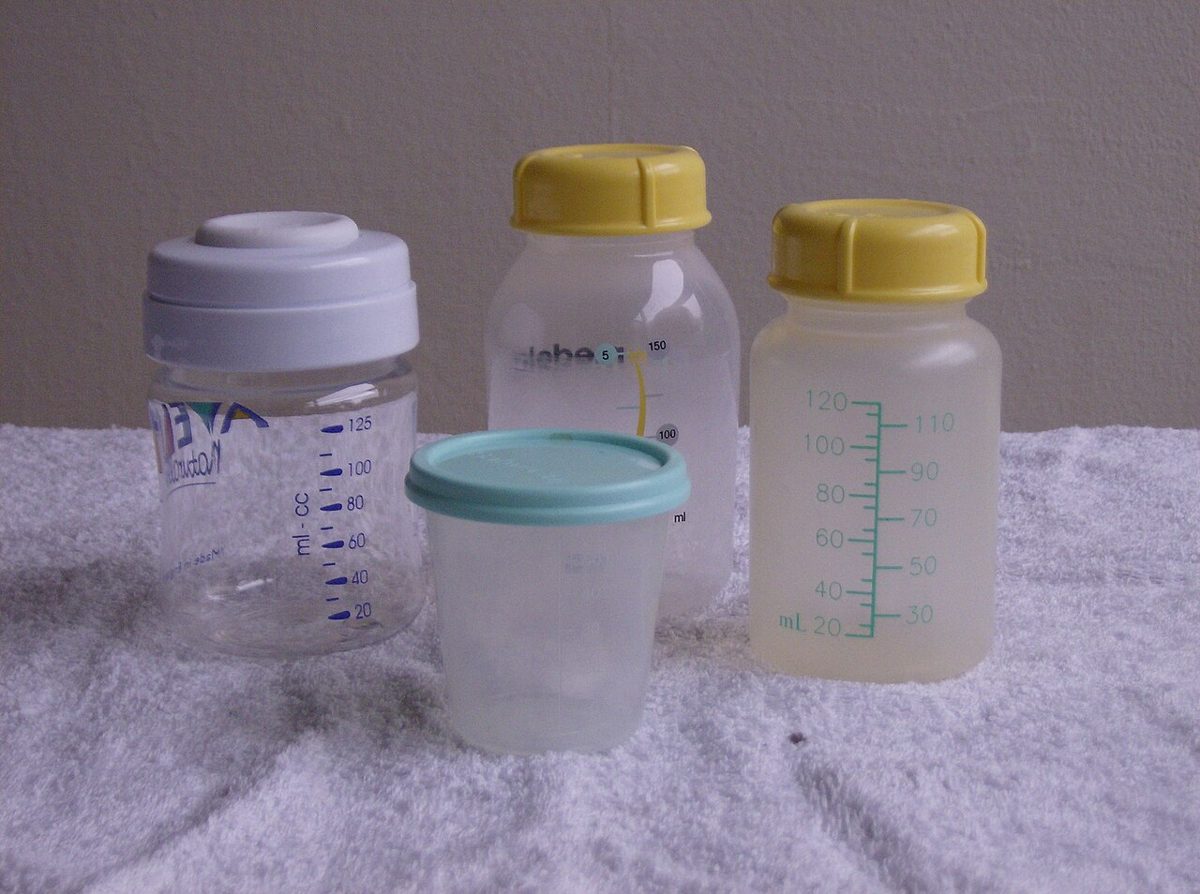
- Breast milk storage containers bottlesWikimedia Commons · The photo, public domain (Beukbeuk)
General information, not medical advice. This review summarises lab and field studies of a method meant for outbreaks in low-resource settings; it is not a recommendation to heat-treat breast milk at home in everyday life. If you have an infection or are told not to breastfeed, ask your doctor, midwife or a lactation consultant how to keep feeding your baby safely, and follow their advice on expressing, storing and heating milk.
Analysis by NutroPractic from the sources listed. Written for general readers; it does not replace advice from your own doctor.
From our articles
Our guides on this subject
Plain-language guides on nutrition and wellness, backed by research.
Women's health
Eating while breastfeeding: extra calories, iodine, caffeine, fish and alcohol, with the actual numbers
Breastfeeding usually adds about 330–400 kcal a day, but the smaller numbers can matter more: 290 mcg iodine, 400 IU vitamin D for baby, 8–12 oz fish a week, and a caffeine total you can actually add up.
6 Nov 2026
Women's health
Nausea in pregnancy: ginger, vitamin B6, small meals and when it's hyperemesis, from the trials
Only 1.8% of women in one diary study had nausea just in the morning. Ginger at 1 g a day, B6 at 30 to 75 mg and doxylamine with B6 each have trial data, while diet advice has none. The score to track it, the doses, and the signs that mean a phone call.
5 Nov 2026
Women's health
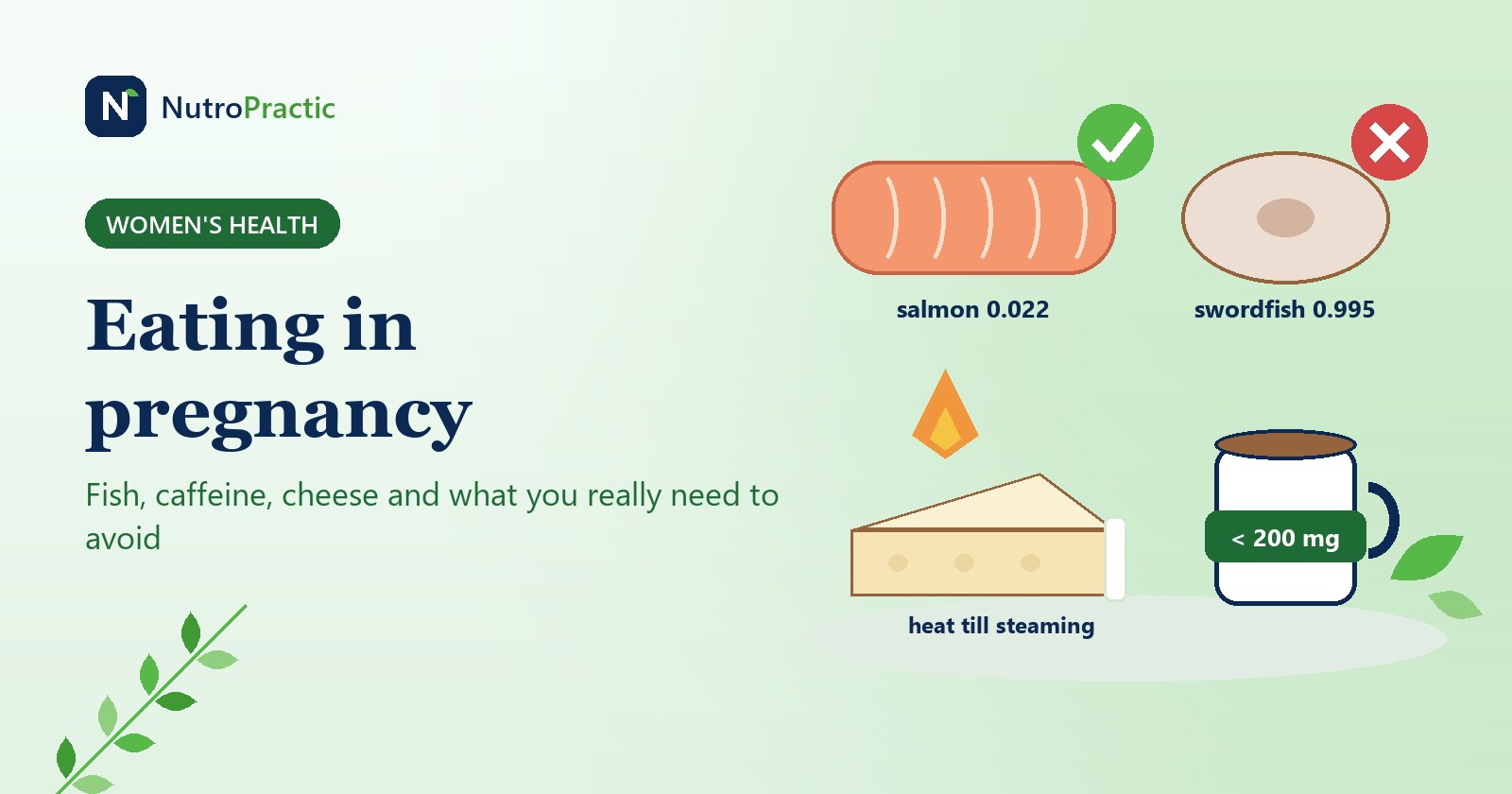
Eating in pregnancy: fish, caffeine, cheese and what you really need to avoid
Most fish is encouraged in pregnancy, not banned: 8-12 oz a week from the low-mercury list. The mercury numbers per fish, what 200 mg of caffeine looks like in real cups, which cheeses carry the listeria risk and how many cases there actually are, why liver is on the list, and how much weight to gain for your BMI.
29 Oct 2026
Newsfeed for your website
Want this feed on your website?
Add it to any site with one copy-and-paste snippet. No sign-up, and it updates itself every hour.
Start with a virtual consultation
Tell Dr. Triveni what you want to change. You will leave with a clear next step, whether you are in Toronto, London, New York or Chennai.