Blood sugar · October 20, 2026
Five breads, 12 young adults, one finger-prick meter: the wholemeal flours with six times the fibre didn't give the gentlest blood sugar curve. A refined flour mixed with berry and vegetable extracts did
Ask most people which bread is kindest to blood sugar and they'll point to the dark, wholemeal, old-grain loaf. Researchers in Türkiye baked five breads from five flours off the supermarket shelf and fed each one to the same 12 people. The ranking didn't follow the fibre on the label, and the study's own caveats are as interesting as its result.
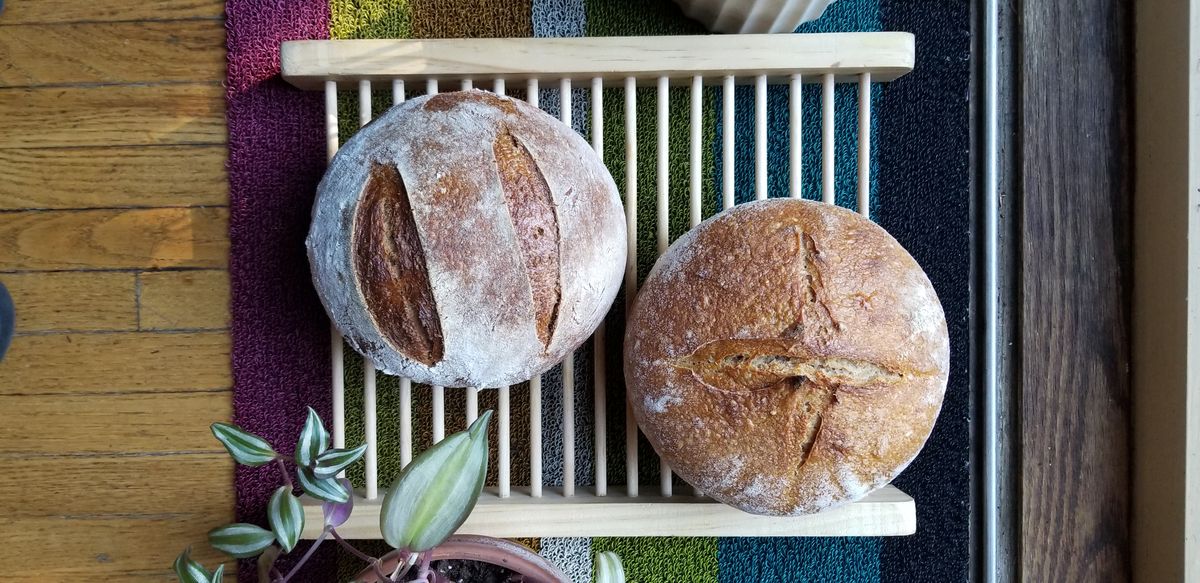
Two slices of bread can carry the same amount of carbohydrate and still push blood sugar up in very different ways. How fast the starch is digested depends on the wheat, how finely it is milled, how much fibre and protein come with it, and how the loaf is proofed and baked. Shoppers mostly judge by colour and by words like wholemeal, ancient grain or traditional. A small study published on 16 October in Nutrients put four of those labels to the test against plain white bread.
Nutrition researchers in Istanbul bought five flours from a single Turkish miller: ordinary refined white flour as the reference; a refined 'purple' flour, which is not purple wheat but wheat flour with vitamin C and extracts of blackberry, mulberry, blueberry, pomegranate, sour cherry, aubergine and purple onion skin; wholemeal einkorn, one of the oldest cultivated wheats; refined yellow durum; and wholemeal Karakılçık, a durum landrace native to Türkiye. They baked every loaf the same way, with the same yeast, salt, water ratio, proofing and oven, and cut portions holding 50 g of available carbohydrate by the label. Twelve healthy adults aged 21 to 25 ate one bread per session after an overnight fast, at least a week apart, while the team took finger-prick glucose readings over two hours.
The refined purple-flour bread came out lowest. Its total rise in blood sugar over two hours, measured as the area under the curve above fasting, was about a third smaller than white bread's (2,051 against 3,023 mg·min/dL), and so was the rise in the first hour. At the 30-minute mark, when every bread peaked, glucose had climbed an average of 32 mg/dL above fasting after purple bread against 46 after white. In the comparisons among the four test breads, purple bread also had a smaller first-hour rise than each of the other three.
The two wholemeal flours, each declaring 13 g of fibre per 100 g against about 2 g for purple and yellow durum, did not lead the table. Einkorn landed in the middle: about 17% below white bread over two hours, a gap too small to be sure of in 12 people, though its first hour was clearly gentler than yellow durum's. Karakılçık, the landrace, was almost exactly level with white bread. Yellow durum, refined and low in fibre, gave the highest response of all. The authors' own summary: higher declared fibre was not consistently linked with a lower response in these products.
The paper is unusually frank about why none of this is settled. White bread was always eaten in the first session, so its result can't be separated from first-day effects such as nerves or unfamiliarity with the routine; it also had the lowest fasting glucose. The other breads followed one of two fixed orders, not a random one, and the trial wasn't registered in advance. The headline comparison with white bread held in the main analysis but not in two sensitivity checks; the first-hour difference held in both analyses the authors ran. Carbohydrate came from the labels, not a lab, and nobody measured the anthocyanins in the purple flour or how much of the extracts and vitamin C went in, so the paper can't say which ingredient, if any, made the difference. The results apply to these commercial flours only, not to purple wheat, einkorn or durum as grains.
What carries over to an ordinary kitchen is the warning rather than the winner. One meal's glucose curve in a dozen healthy 20-somethings says nothing yet about long-term health, and other trials show that the same bread can affect two people in opposite ways. But 'wholemeal' and 'ancient grain' on a bag of flour don't guarantee a gentler curve once the flour has been milled fine and baked into a soft loaf. For people managing their blood sugar, the most reliable test of a bread is still their own: a meter or sensor reading after it, at the portion they actually eat.
Blood sugar after five breads made from commercial Turkish flours, each portion holding 50 g available carbohydrate (12 healthy adults)
−32%
Two-hour blood sugar rise (iAUC) after purple-flour bread compared with white bread: 2,051 vs 3,023 mg·min/dL
32 vs 46
Average rise above fasting at 30 minutes, mg/dL: purple-flour bread against white bread
3,371
Two-hour rise after refined yellow durum bread, the highest of the five (mg·min/dL)
3,069
Two-hour rise after wholemeal Karakılçık landrace bread, level with white bread (mg·min/dL)
13 g vs 2 g
Declared fibre per 100 g of flour: wholemeal einkorn and Karakılçık against refined purple and yellow durum
12
Participants (8 women, 4 men, aged 21 to 25), each eating all five breads at least a week apart
Study: Seçkiner S, Atar-Uğurlu A, Akgün B, Çelik EE, Kaya B, Üneş ZA, Özgür S, Velibeyoğlu FM, Baş M, 'Acute Postprandial Glycemic Responses to Breads Made from Five Commercial Wheat-Flour Formulations: A Small Exploratory Nonrandomized Within-Participant Crossover Study', Nutrients 2026, 18(20), 3396, published 16 October 2026, doi 10.3390/nu18203396 (open access, CC BY). Acibadem Mehmet Ali Aydinlar University, Istanbul Gelisim University and Ege University, Türkiye. All flours from one manufacturer (Nora Un, Ankara), bought by the team; the manufacturer had no role in the study. 13 enrolled, 12 completed; sessions at home, July to October 2025; capillary glucose at 0, 30, 60, 90 and 120 min with one meter. Mean total iAUC (0 to 120 min, mg·min/dL): white 3,023, purple 2,051, einkorn 2,500, yellow durum 3,371, Karakılçık 3,069. Purple minus white: −972 (95% CI −1,645 to −299), Holm-adjusted p = 0.035 by t-test, 0.064 by Wilcoxon, 0.058 on the log scale. Early iAUC (0 to 60 min) purple minus white: −588, Holm p = 0.041 (t-test) and 0.049 (Wilcoxon). Mean rise at 30 min: purple 31.8, white 46.3, yellow durum 48.5 mg/dL. White bread was always eaten first (confounded with period); test breads in two fixed orders; not registered; carbohydrate and fibre from labels, not analysed; fibre for the white flour not declared. All four test flours contained vitamin C (E-300); amounts of E-300 and extracts not disclosed. No external funding; no conflicts declared.
- In an Australian trial of 20 healthy adults, bread made from high-amylose wheat, which carries more starch that resists digestion, gave a blood sugar response 39% smaller than ordinary wheat bread. Whether the flour was refined or wholemeal made no difference.
- Coarse grains in a loaf can slow starch digestion, but chewing undoes much of it. In a New Zealand study, a bread made mostly of kibbled purple wheat behaved like a low-GI food when swallowed unchewed, and like white bread when eaten normally.
- In 15 adults with type 2 diabetes in New Zealand, wholegrain breads made with bigger grain particles raised blood sugar less than nutrient-matched wholegrain breads made from finer flour.
- An Israeli trial gave volunteers a week of industrial white bread and a week of sourdough wholegrain bread. On average neither bread came out ahead, but people differed: some had the lower glucose response on white bread, others on sourdough, and the gut microbes they started with predicted which bread suited whom.
- Acute Postprandial Glycemic Responses to Breads Made from Five Commercial Wheat-Flour Formulations: A Small Exploratory Nonrandomized Within-Participant Crossover StudyNutrients, October 2026 · The study: full text, open access
- High-Amylose Wheat Lowers the Postprandial Glycemic Response to Bread in Healthy Adults: A Randomized Controlled Crossover TrialJournal of Nutrition, 2019 · The Australian high-amylose wheat trial
- Glycaemic potency reduction by coarse grain structure in breads is largely eliminated during normal ingestionBritish Journal of Nutrition, 2022 · Chewed, unchewed and blended bread
- Wholegrain Particle Size Influences Postprandial Glycemia in Type 2 Diabetes: A Randomized Crossover Study Comparing Four Wholegrain BreadsDiabetes Care, 2020 · Grain particle size and blood sugar in type 2 diabetes
- Bread Affects Clinical Parameters and Induces Gut Microbiome-Associated Personal Glycemic ResponsesCell Metabolism, 2017 · White bread against sourdough wholegrain, person by person
General information, not medical advice. This small study measured blood sugar after a single meal of five particular commercial breads in healthy young adults; it does not show that any bread prevents or treats diabetes. If you have diabetes or prediabetes, talk to your doctor or dietitian before changing your diet or medicines, and check your own readings with the breads you eat.
Analysis by NutroPractic from the sources listed. Written for general readers; it does not replace advice from your own doctor.
From our articles
Our guides on this subject
Plain-language guides on nutrition and wellness, backed by research.

Cardiovascular wellness
Psyllium husk: how much soluble fibre lowers LDL cholesterol and stabilizes post-meal glucose in clinical trials
Viscous soluble fibre forms a thick gel matrix in the small intestine that binds bile acids and blunts post-meal glucose spikes. Across dozens of randomized controlled trials, 7 to 10.2 grams of psyllium daily lowers LDL cholesterol by 6% to 12% without stripping HDL, while reducing postprandial glucose surges by 15% to 25% in metabolic syndrome and type 2 diabetes. Discover the bile acid sequestration mechanism, trial meta-analyses, exact timing before meals, water ratios, and titration protocols to avoid gas and cramping.
13 Nov 2026
Everyday eating
The fibre gap: why most adults fall short, and an easy 30-gram day
Most adults in the US, Canada and Europe eat far less fibre than recommended, even though higher intakes are linked to lower rates of heart disease, type 2 diabetes and bowel cancer. How much you need, where it hides, and a sample day that gets you to 30 grams.
3 Oct 2026
Diabetes
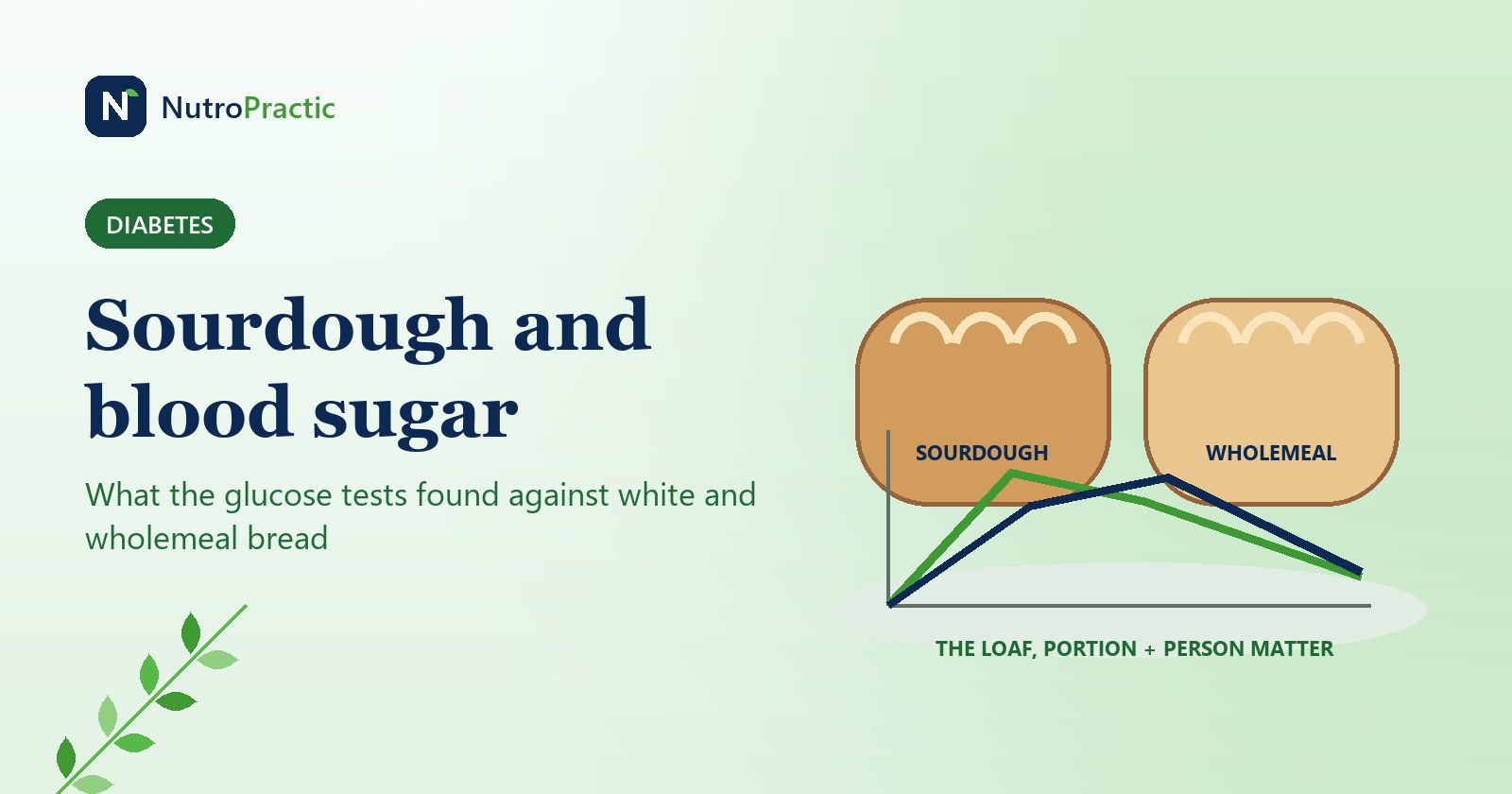
Sourdough and blood sugar: what the glucose tests found against white and wholemeal bread
Sourdough did not beat white bread on average in a 20-person crossover trial, and half responded better to white. A trial-by-trial look at fermentation, flour, portions, GI and how to test your own loaf fairly.
6 Nov 2026
Newsfeed for your website
Want this feed on your website?
Add it to any site with one copy-and-paste snippet. No sign-up, and it updates itself every hour.
Start with a virtual consultation
Tell Dr. Triveni what you want to change. You will leave with a clear next step, whether you are in Toronto, London, New York or Chennai.