Gluten-free eating · October 24, 2026
Twice the fibre, no extra bloating: 30 Norwegian women with coeliac disease swapped their gluten-free bread for a buckwheat and quinoa loaf for three weeks
Gluten-free bread is usually starch with little fibre, and people with coeliac disease tend to eat too little of it. In a small Oslo trial, bread, rolls and muesli made with oats, buckwheat, quinoa and chia doubled the fibre from the study foods without stirring up gut symptoms. Blood sugar after a glucose drink fell within that group, but the gap against shop-bought gluten-free bread was too small to call.
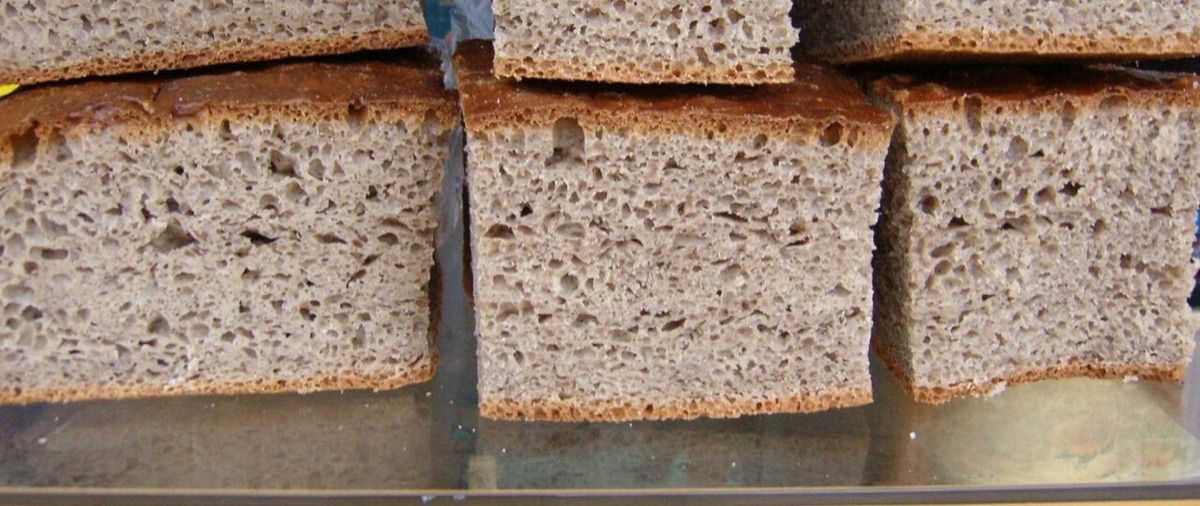
For someone with coeliac disease the only treatment is a gluten-free diet for life, and that means giving up wheat, rye and barley, the grains that supply much of the fibre in a European kitchen. The gluten-free breads and cereals that take their place are mostly made from rice, maize and potato or pea starch, and tend to carry less fibre and protein and more salt, sugar and saturated fat than the originals. A team at Oslo Metropolitan University, working with a small Oslo gluten-free bakery, wanted to know what happens when the everyday loaf is made from oats and pseudocereals, the seeds of buckwheat and quinoa that are eaten like grain but are not grasses. Their trial was published in Nutrients on 22 October.
Thirty women with a medically confirmed diagnosis took part, all of it run remotely during the pandemic: deliveries by post, video check-ins, finger-prick blood on filter cards and stool smeared on sampling cards sent back by mail. They were young (median age 31) and slim (median BMI 22.4), with normal blood sugar. After a week on standard shop-bought gluten-free bread and cornflakes, 16 were assigned the bakery's new products, two loaves, seven rolls and a bag of muesli with chia a week, and 14 stayed on the standard ones, for three weeks. The packaging was plain, though some may have recognised the supermarket bread. Each woman replaced all her bread and cereal with the study foods.
The new foods were not just higher in fibre. At the minimum daily amounts they gave 24.8 g of fibre against 12.3 g from the standard products, but also 33.9 g of protein against 9.3 g, 39.6 g of fat against 13.2 g, 85.3 g of carbohydrate against 146.3 g, and 882 kcal against 773. So any difference belongs to the whole product, not to fibre alone, as the authors point out.
The main test was a 75 g glucose drink at home with finger-prick readings over two hours, before and after. The change in the overall blood sugar rise did not differ significantly between the groups. Within the new-bread group it did fall (p = 0.049), and the two-hour reading dropped more than in the standard group (p = 0.04). Twelve of 16 women on the new bread had a smaller rise afterwards, against 5 of 13 on the standard bread. Gut symptoms, the worry with a sudden doubling of fibre, did not get worse: no increase on a 13-question symptom scale or the Bristol stool chart. The one difference ran the other way, a larger drop in diarrhoea scores on the standard bread.
The gut bacteria were checked with a panel of 108 species, 83 of them common enough to analyse. Five, among them the butyrate-maker Faecalibacterium prausnitzii, fell on the standard bread compared with the new one, but none of those differences survived correction for testing 83 species at once. The authors call it a pilot for generating hypotheses: no power calculation, a few missing samples filled in with group averages, five inflammation markers dropped because the home blood spots were not good enough. The bakery that developed the products helped fund the study and one of its staff is an author, who the paper says took no part in data collection or analysis; the Norwegian Coeliac Society and regional research funds also paid for it. What it does show, for a small group over three weeks, is that a gluten-free diet does not have to mean a low-fibre one, and that doubling the fibre this way was well tolerated. We read the full open-access paper.
Fibre-rich gluten-free bread in coeliac disease: the Oslo pilot trial in numbers (published 22 October 2026)
30
Women with confirmed coeliac disease, randomised 16 to the new products and 14 to standard gluten-free bread for 3 weeks
24.8 g vs 12.3 g
Fibre a day from the minimum amounts of new versus standard products
33.9 g vs 9.3 g
Protein a day from the same amounts; the new foods also had more fat and less carbohydrate
12 of 16 vs 5 of 13
Women whose blood sugar rise after a glucose drink got smaller, new versus standard bread
Not significant
Difference between groups in the overall blood sugar rise, the trial's main measure
No increase
In gut symptoms on the higher-fibre products, by symptom scale and stool chart
Source: Watters SIN, Myhrstad MCW, Austad E, Gaundal L, Roager HM, Gjøvaag TF, Hellmann MJ, Garnweidner-Holme L, Pedersen LF, Lundin KEA, Henriksen C, Telle-Hansen VH, 'The Effect of Fibre-Rich Gluten Free Products on Glycaemic Regulation, Gut Symptoms, and Targeted Gut Microbial Taxa in Women with Coeliac Disease: A Randomised Controlled Trial', Nutrients 18(21):3462, published 22 October 2026, doi 10.3390/nu18213462, open access (CC BY). Remote, double-blind, parallel pilot trial at Oslo Metropolitan University; recruited September to November 2021; ClinicalTrials.gov NCT05135923 (first submitted 12 October 2021, start 1 September 2021, per the registry; the paper's statement gives 12 August 2024). One-week run-in on control products, then 3 weeks of experimental products (bread, rolls and chia muesli with oats, buckwheat and quinoa, made by Det Glutenfrie Verksted to the Nordic Keyhole and EFSA 'rich in fibre' standards) or control products (commercial gluten-free grain and oat breads and cornflakes). Daily minimum amounts: experimental 882 kcal, 33.9 g protein, 39.6 g fat, 85.3 g carbohydrate, 24.8 g fibre; control 773 kcal, 9.3 g, 13.2 g, 146.3 g, 12.3 g. Primary outcome: fasting and 0 to 120 min capillary glucose after a 75 g oral glucose tolerance test (29 analysed; two control values at the first visit estimated). Change in glucose iAUC not significantly different between groups; within the experimental group p = 0.049; change in 120 min glucose different between groups, p = 0.04. Five species lower after control versus experimental products (Anaerostipes hadrus, Bacteroides caccae, Dorea longicatena, Escherichia coli, Faecalibacterium prausnitzii A2-165), none significant after Benjamini-Hochberg correction. No power calculation; missing values imputed with means; total and soluble fibre of participants' whole diet not measured. Funding: Forregion, Regional Research Funds Oslo, Det Glutenfrie Verksted, the Norwegian Coeliac Society, the University of Oslo and OsloMet; one author represents the bakery and was not involved in data collection or analysis.
- Coeliac disease affects roughly 1 to 1.4% of people worldwide, the paper notes, and many of them are never diagnosed.
- Buckwheat is not related to wheat at all: it is the seed of a plant in the same family as rhubarb and sorrel, which is why it is safe on a gluten-free diet.
- Oats don't contain gluten themselves, but they are often grown and milled alongside wheat, barley and rye, so people with coeliac disease are advised to choose oats labelled gluten-free.
- The main fibre in oats, beta-glucan, has an EU-approved health claim for lowering the rise in blood sugar after a meal; buckwheat and quinoa fibre is mostly the insoluble kind, which the authors think may be why the glucose effect was small.
- Under EU rules a food can be labelled 'high in fibre' only if it has at least 6 g of fibre per 100 g, the level the new products were designed to meet.
- The Effect of Fibre-Rich Gluten Free Products on Glycaemic Regulation, Gut Symptoms, and Targeted Gut Microbial Taxa in Women with Coeliac Disease: A Randomised Controlled TrialNutrients (MDPI) · The trial, open access, published 22 October 2026
- Glutenfree, Gut Microbiota and Metabolic Regulation (NCT05135923)ClinicalTrials.gov · The trial registration
- Coeliac diseaseNHS · Symptoms, diagnosis and the gluten-free diet
- Chleb tatarczuchWikimedia Commons · The photo, CC BY 3.0 PL (Polish Ministry of Agriculture)
General information, not medical advice. This was a small three-week pilot in young women with coeliac disease and no other conditions. If you have coeliac disease, keep to a strict gluten-free diet, check that oats and other products are certified gluten-free, and raise fibre gradually. Talk to your doctor or a registered dietitian before making big changes to how you eat.
Analysis by NutroPractic from the sources listed. Written for general readers; it does not replace advice from your own doctor.
From our articles
Our guides on this subject
Plain-language guides on nutrition and wellness, backed by research.

Cardiovascular wellness
Psyllium husk: how much soluble fibre lowers LDL cholesterol and stabilizes post-meal glucose in clinical trials
Viscous soluble fibre forms a thick gel matrix in the small intestine that binds bile acids and blunts post-meal glucose spikes. Across dozens of randomized controlled trials, 7 to 10.2 grams of psyllium daily lowers LDL cholesterol by 6% to 12% without stripping HDL, while reducing postprandial glucose surges by 15% to 25% in metabolic syndrome and type 2 diabetes. Discover the bile acid sequestration mechanism, trial meta-analyses, exact timing before meals, water ratios, and titration protocols to avoid gas and cramping.
13 Nov 2026
Everyday eating
The fibre gap: why most adults fall short, and an easy 30-gram day
Most adults in the US, Canada and Europe eat far less fibre than recommended, even though higher intakes are linked to lower rates of heart disease, type 2 diabetes and bowel cancer. How much you need, where it hides, and a sample day that gets you to 30 grams.
3 Oct 2026
Everyday eating
Eating well on a tight food budget: what the cost studies found, and the cheapest protein and fibre per dollar
Healthier diets cost about $1.48 a person a day more, according to a meta-analysis of 27 studies. What the USDA's Thrifty Food Plan costs in 2026, our price check of protein and fibre per dollar at September 2026 prices, why frozen and tinned vegetables are not second best, and a batch-cooked stew at $1.40 a serving.
20 Oct 2026
Newsfeed for your website
Want this feed on your website?
Add it to any site with one copy-and-paste snippet. No sign-up, and it updates itself every hour.
Start with a virtual consultation
Tell Dr. Triveni what you want to change. You will leave with a clear next step, whether you are in Toronto, London, New York or Chennai.