Liver health · October 18, 2026
297 Belgians with fatty liver got a year of dietitian coaching, a liver app, or a leaflet and one good talk. All three groups lost about the same amount of liver fat
The coached group went to 16 sessions and lost the most weight, about 3 kg. Their livers did no better than those of people sent home with a brochure. The trial says a lot about advice, and a little about how hard weight loss is.
Fat that builds up inside the liver, now called metabolic dysfunction-associated steatotic liver disease (MASLD), is one of the most common long-term conditions in the world; the paper puts it at more than 38% of adults. For most people the treatment is a change of lifestyle: eat better, move more and lose some weight. The open question is how best to help people do that. A team from Hasselt University, the Ziekenhuis Oost-Limburg hospital in Genk, Maastricht University and Antwerp University Hospital compared three ways head to head, and published the result in Hepatology International on 5 October 2026.
From November 2022 to March 2025 the trial enrolled 297 adults whose liver fat was raised on a FibroScan, an ultrasound-based scanner that estimates fat in the liver with a score called CAP. They were on average 51 years old with a BMI of 31, and fewer than one in ten had type 2 diabetes. People taking weight-loss drugs such as GLP-1 medicines were left out. They were split at random into three groups for a year. The 'minimal' group got the usual care plus an information brochure and an explanation of the Mediterranean diet and of being more active from the research team. The coaching group got nine one-to-one and seven group sessions with a dietitian. The app group used Happi, a free Dutch-language liver app with food-photo calorie estimates, a step counter and weekly tips.
After 12 months liver fat had fallen by almost exactly the same amount in all three groups: about 24 points on the CAP scale with the brochure, 24 with coaching and 22 with the app, from a starting average of about 292. The difference between groups was nowhere near significant (p = 0.998), and the share of people who ended with a CAP below the usual cut-offs for fatty liver did not differ either. Liver stiffness, a sign of scarring, did not change in any group. Weight did differ: the coached group lost 2.9 kg on average, the app group 1.5 kg and the brochure group 0.7 kg, which was not a clear loss. The coached group also improved most on a Mediterranean-diet score and cut its fat intake.
Why didn't more help mean more liver fat lost? The authors' own explanation is that the brochure group was not really 'minimal': the research team spent more time explaining diet and activity than a busy clinic usually would. If that is right, it is good news, because time spent explaining by a doctor or nurse may do much of the work. Another reading is that simply being in a trial, with scans at the start, at six months and at a year, nudges everyone. The weight losses were modest, under 5% of body weight on average, so most of the fall in liver fat came without the weight loss that guidelines usually aim for.
There are reasons for caution. A third of the app group (33 of 98) did not finish the year, against 24 of 102 in the brochure group and 18 of 97 in the coaching group, and app users opened it on only about half of the days. The person running the FibroScan knew which group each patient was in. The app's one apparent advantage, a small fall in the liver enzyme AST of 2.8 U/L, about 5%, is reported as significant against the other groups in the main results table (p = 0.034) but described as not significantly different between groups in the paper's conclusion; the authors also say the secondary results were not corrected for multiple testing and should be treated as exploratory. The app itself was developed in a project involving some of the authors' universities, though the paper says its development team saw neither the data nor the manuscript. The trial was registered in advance (NCT05792488) and funded by Research Foundation Flanders.
The practical message is gentle. If you have been told you have a fatty liver, there is no need to wait for an expensive programme: a Mediterranean-style diet, more activity and some weight loss if you carry extra are what all three groups were pointed to, and those steps worked about equally well however they were delivered. Guidelines say that losing about 5% of body weight reduces liver fat, and 7 to 10% is needed to calm inflammation and help scarring, which is more than people in this trial managed on average. Whether an app, a coach or a clinic conversation suits you best may come down to which one you will actually keep using.
Brochure plus advice vs 16 dietitian sessions vs a liver app for 12 months: randomised trial in 297 adults with fatty liver (MASLD), Genk, Belgium
297
Adults randomised (102 brochure, 97 coaching, 98 app); 222 finished the year
−24 / −24 / −22
Change in liver fat score (CAP, dB/m) after 12 months: brochure, coaching, app
p = 0.998
Difference in liver-fat change between the three groups
−0.7 / −2.9 / −1.5 kg
Average weight change after 12 months: brochure, coaching, app
No change
Liver stiffness (scarring) in any group
43%
Of those who finished, share whose liver fat score fell by more than 30 points (no group difference)
53%
Days the app group actually used the app; coaching attendance was 89% for one-to-one and 68% for group sessions
33 of 98
App group who did not finish the year, vs 24 of 102 (brochure) and 18 of 97 (coaching)
Figures from Robaeys W, Heyens LJM, Bruckers L and colleagues, 'Randomised trial of lifestyle interventions for improving metabolic dysfunction-associated steatotic liver disease', Hepatology International, published online 5 October 2026, doi 10.1007/s12072-026-11153-w (abstract, Results, Tables 2 to 4). Changes are model estimates from an intention-to-treat analysis; the 43% figure is among the 222 who finished. CAP is a FibroScan measure of liver fat in decibels per metre; the trial counted a CAP above 215 dB/m as fatty liver, and recent guidelines use 248 dB/m as the cut-off.
- The condition's name changed in 2023. What used to be called non-alcoholic fatty liver disease (NAFLD) is now MASLD, metabolic dysfunction-associated steatotic liver disease, to tie it to its usual causes such as excess weight, high blood sugar and high blood pressure rather than to what it is not.
- A FibroScan works a little like an ultrasound. A gentle pulse is sent through the liver: how fast it travels shows how stiff (scarred) the liver is, and how much the ultrasound signal is weakened shows how much fat there is. It takes a few minutes and needs no needle.
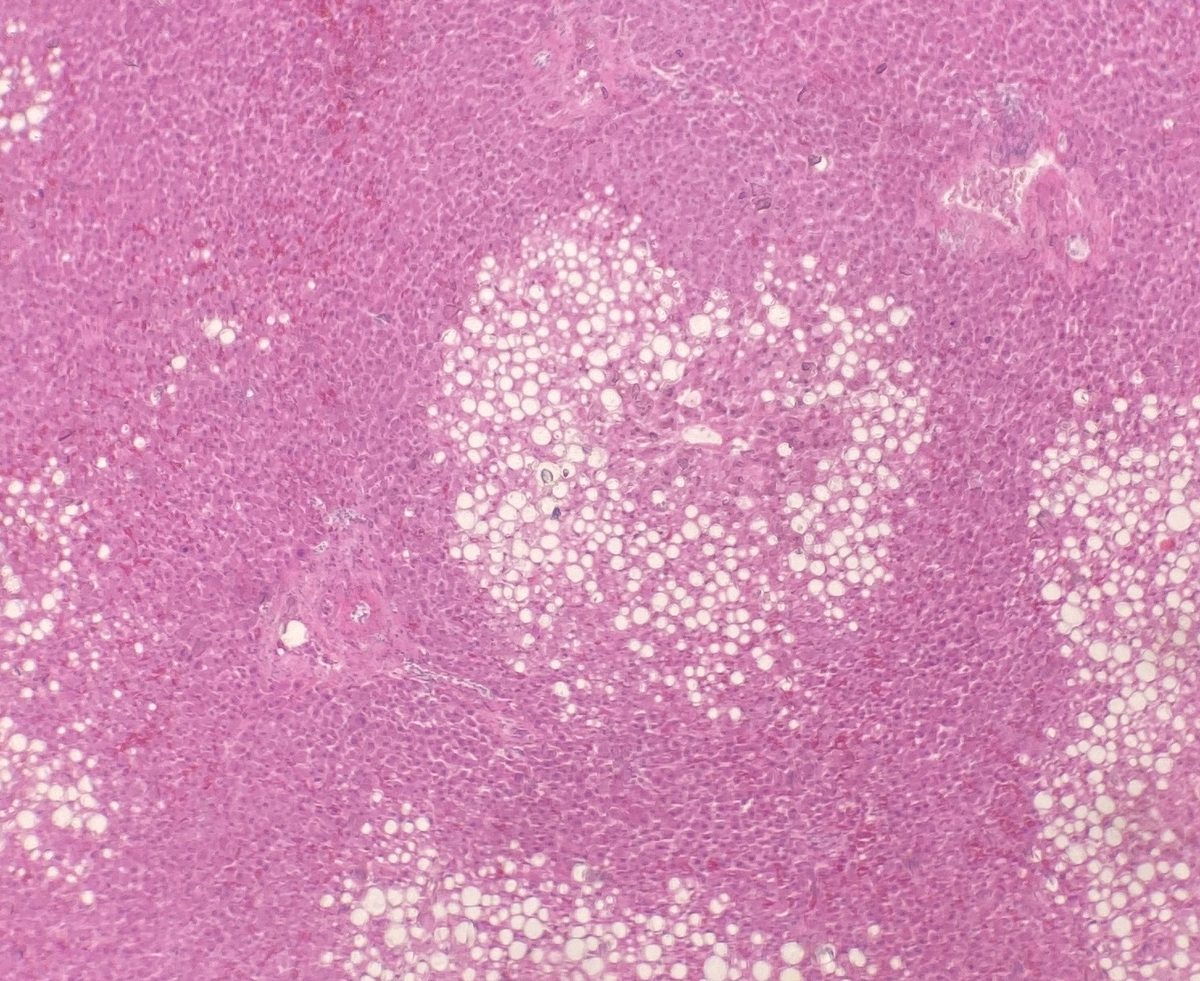
- In the picture above, the round white holes are where fat droplets sat inside liver cells. The fat dissolves away when the tissue is prepared for the microscope, leaving empty spaces.
- According to European guidelines, losing about 5% of body weight lowers liver fat, about 7 to 10% helps settle liver inflammation, and 10% or more is linked to scarring going backwards.
- People in the coaching group already found 16 sessions in a year intensive, the authors report. The most common reasons for missing a session were holidays and illness.
- Randomised trial of lifestyle interventions for improving metabolic dysfunction-associated steatotic liver diseaseHepatology International, 5 October 2026 · The trial paper: design, the three groups, results, funding and limitations
- Trial registration NCT05792488ClinicalTrials.gov · The trial's registered plan
- EASL–EASD–EASO Clinical Practice Guidelines on the management of metabolic dysfunction-associated steatotic liver disease (MASLD)Journal of Hepatology, 2024 · European guidelines, including the weight-loss targets for liver fat, inflammation and scarring
- Eating, Diet, & Nutrition for NAFLD & NASHUS National Institute of Diabetes and Digestive and Kidney Diseases (NIH) · Plain-language guide to diet and weight loss for fatty liver
General information, not medical advice. This trial compared ways of supporting lifestyle change in adults with fatty liver, mostly without diabetes or advanced liver scarring. If you have been told you have a fatty liver, talk to your doctor about the right plan for you, including how much weight to aim to lose, and check before starting a new diet or exercise programme if you have other health conditions or take medicines.
Analysis by NutroPractic from the sources listed. Written for general readers; it does not replace advice from your own doctor.
From our articles
Our guides on this subject
Plain-language guides on nutrition and wellness, backed by research.
Liver health
Fatty liver (MASLD): how much weight loss reverses it, and what coffee and alcohol do
About one adult in three has a fatty liver, and most find out by accident on a scan. Biopsy studies show how much weight loss clears the fat, calms the inflammation and even shrinks scarring. Here are the numbers, what diet and drinks do, the new medicines and the one blood test worth asking for.
30 Oct 2026
Liver health
Choline: how much you need, which foods have it, and what the PEMT gene variant and fatty liver research found
Most adults eat less choline than the 425 mg (women) or 550 mg (men) target: the average is 278 mg for women and 402 mg for men. In one feeding trial, 80% of women with two copies of a common PEMT gene variant developed liver or muscle damage on a low-choline diet, against 13% with none. A table of foods in mg, a worked day that reaches 540 mg, and what the fatty-liver studies do and don't show.
16 Nov 2026

Supplements and vitamins
Spermidine from food or capsules: measured milligrams in wheat germ, soybeans and cheese, and what the one year-long trial found
Wheat germ holds about 22 to 34 mg of spermidine per 100 g, matured cheese about 0.12 mg. The only year-long capsule trial used 0.9 mg a day and found no memory benefit. Measured values, worked doses and safety.
22 Nov 2026
Newsfeed for your website
Want this feed on your website?
Add it to any site with one copy-and-paste snippet. No sign-up, and it updates itself every hour.
Start with a virtual consultation
Tell Dr. Triveni what you want to change. You will leave with a clear next step, whether you are in Toronto, London, New York or Chennai.