Dietary patterns & mental wellness · November 27, 2026
Fasting patterns and mood disorders: scoping review highlights breakfast skipping associations but inconsistent evidence across fasting protocols
A PRISMA-guided scoping review synthesizing 31 clinical studies evaluated how distinct fasting patterns relate to mental health. While habitual breakfast skipping was generally linked to higher depressive and anxiety symptoms, findings for Ramadan and intermittent fasting varied widely, and evidence does not establish fasting protocols for treating or preventing mental disorders.
Fasting-related dietary patterns have grown widely popular for weight control and metabolic health, yet their potential psychological consequences remain heavily debated. Public discussions often conflate planned intermittent fasting protocols with erratic meal skipping driven by morning stress, raising questions about how distinct fasting approaches correlate with affective well-being.
In a scoping review published in Nutrients, Lucía del Pozo-Calvo, Diego Fernández-Lázaro, Mohammad Hassan Sohouli, and Luis Cabañas-Alite evaluated 31 eligible articles identified through MEDLINE via PubMed. The review organized evidence across three distinct fasting modalities: habitual breakfast skipping, Ramadan dawn-to-dusk fasting, and intermittent or prolonged fasting regimens.
The authors found that habitual breakfast skipping was generally associated with less favorable psychological outcomes, particularly higher rates of depressive symptoms, anxiety, and psychological distress across diverse cohorts. In contrast, Ramadan fasting showed favorable changes in mood and anxiety in several studies, though outcomes varied depending on individual baseline traits. Other intermittent fasting protocols demonstrated inconsistent associations with mental health.
Crucially, the authors emphasized that substantial methodological heterogeneity across study designs, fasting protocols, and psychological assessment tools limits direct comparisons and prevents causal interpretations. They concluded that current clinical literature does not establish the effectiveness of any specific fasting protocol for preventing or treating mental disorders, calling for rigorous randomized trials to clarify relationships.
Scoping review of fasting modalities and psychological outcomes
31 Studies
articles evaluating fasting patterns and mental health synthesized under PRISMA-ScR
Less Favorable
psychological outcomes, including distress and depression, generally linked to breakfast skipping
Inconsistent
psychological findings reported across other intermittent and prolonged fasting regimens
Non-Causal
observational nature and design heterogeneity preclude clinical treatment claims
Evidence-informed scoping review published in Nutrients, November 2026 (doi: 10.3390/nu18233909).
- Habitual breakfast skipping in observational cohorts is frequently accompanied by unmeasured lifestyle confounding, including irregular sleep schedules and higher stress.
- Ramadan fasting involves complete abstention from food and liquids during daylight hours, representing a combined circadian and caloric shift distinct from voluntary time-restricted eating.
- Scoping reviews map the volume and nature of available literature across broad questions rather than pooling quantitative effect sizes via meta-analysis.
- Fasting-Related Dietary Patterns and Mental Health: Breakfast Skipping, Ramadan Fasting, and Intermittent Fasting—A Scoping ReviewNutrients · Scoping review by Lucía del Pozo-Calvo, Diego Fernández-Lázaro, Mohammad Hassan Sohouli, and Luis Cabañas-Alite. Published 23 November 2026.
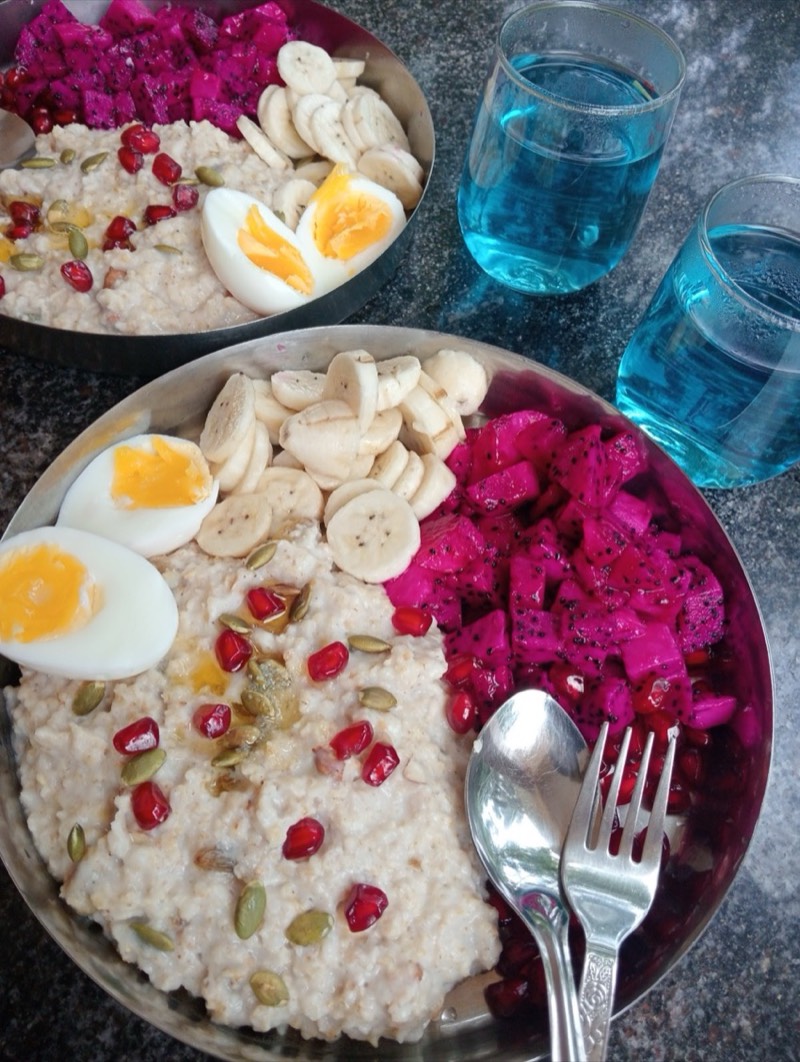
- File:Oatmeal Bowl with Boiled Egg, Banana, Dragon Fruit, Pomegranate, and Seeds.jpgWikimedia Commons · Photo via Wikimedia Commons, CC BY-SA 4.0.
Educational summary of nutrition research, not personal medical advice. Speak to your doctor or dietitian before changing your diet or supplements, especially if you are pregnant, take medicines or have a medical condition.
Analysis by NutroPractic from the sources listed. Written for general readers; it does not replace advice from your own doctor.
From our articles
Read, then eat a little better
Plain-language guides on nutrition and wellness, backed by research.

Gut health
L-glutamine for gut barrier integrity: what the post-infectious IBS and permeability trials measured, and the dose in grams
At 15 g a day, glutamine took 79.6% of post-infection IBS-D patients to a clinical response against 5.8% on placebo. Trials that measured gut permeability directly in Crohn's, pancreatitis and heat stress found no clear benefit, and a 10-trial meta-analysis found none overall. The doses, the 14 g a day safe level, and who might try it.
27 Nov 2026
Supplements and vitamins
Black seed oil (Nigella sativa) and fasting glucose: what the pooled trials measured, oil vs powder doses, and the liver enzyme data
Meta-analyses of randomised trials put black seed's effect at roughly 10 to 20 mg/dL lower fasting glucose and about half a point of HbA1c, mostly as an add-on to diabetes tablets. The 1 to 3 g a day doses tested, why two bottles can differ 263-fold in thymoquinone, and what the liver and kidney markers showed.
27 Nov 2026

Supplements and vitamins
Chlorella and detox claims: what the human studies measured on hair metals, dioxins and vitamin B12, and what they did not
We found no placebo-controlled trial of chlorella removing mercury or lead. One 16-person study saw hair mercury and lead fall 39% on a chlorella-seaweed mix with no control group; breast-milk dioxin was about 30% lower in Japanese mothers; B12 ranges from under 0.1 to 415 micrograms per 100 g between brands.
26 Nov 2026
Newsfeed for your website
Want this feed on your website?
Add it to any site with one copy-and-paste snippet. No sign-up, and it updates itself every hour.
Start with a virtual consultation
Tell Dr. Triveni what you want to change. You will leave with a clear next step, whether you are in Toronto, London, New York or Chennai.