Crohn's disease · October 25, 2026
219 people newly diagnosed with Crohn's disease in Riyadh, 395 other clinic patients: daily fast food was reported by 62% of the Crohn's group against 20% of the others. Eating more vegetables, dairy, coffee or tea did not offset it
A Saudi team went back to nine years of questionnaires from one Riyadh clinic, filled in before anyone knew their diagnosis. Fast food and fizzy drinks stood out, spicy food a little, and fruit, oddly, too. The study asked people to remember how they ate before their symptoms began, so it shows a link, not a cause, and the authors say so.
Crohn's disease, a lifelong inflammation that can affect any part of the gut, used to be thought of as a North American and European illness. It is now rising in places where it was once rare, including the Arab world, where a review cited by the authors puts the yearly rate at about 1.46 new cases per 100,000 people. Diet is one of the few suspected factors a person can change, so a team from King Abdulaziz University, the Saudi Public Health Authority and the Ministry of Health looked at what newly diagnosed patients in Riyadh had been eating. Their study was published in Frontiers in Nutrition on 23 October.
They used records from one private polyclinic in Riyadh between 2009 and 2017. The 219 cases were adults with a new Crohn's diagnosis confirmed by colonoscopy and biopsy. The 395 comparison patients came to the same clinic for other gut complaints, mostly gastroenteritis (87%), and had no sign of inflammatory bowel disease. Everyone filled in a short questionnaire before their test results came back, saying how often they had eaten eight foods and drinks in the period before their symptoms began: monthly or less, weekly, twice a week, or daily. Ramadan and other fasting periods were left out.
The differences were large. Daily fast food was reported by 61.6% of the Crohn's patients against 19.7% of the others, and daily fizzy soft drinks by 65.8% against 24.8%. After adjusting for age, sex, body mass index, smoking and blood markers of inflammation, each step up the four-step frequency scale went with about four times the odds of Crohn's for fast food (odds ratio 4.12) and for soft drinks (3.89), and 1.67 times for spicy food. Fruit was the surprise: each step up went with 3.48 times the odds. That runs against earlier research, most Crohn's patients sat in the twice-a-week fruit group rather than daily, and the authors call it exploratory. Vegetables, dairy, coffee and tea showed no clear link either way once everything was adjusted for.
The team then sorted people by two scores: one for the foods linked to Crohn's in their data (fast food, soft drinks, spicy food and fruit) and one for foods they had classed as protective (vegetables, dairy, coffee and tea). Compared with people high on the first and low on the second, those who ate the first group less often had about 85% lower odds of Crohn's (odds ratios 0.16 and 0.14), whether their protective score was low or high. People high on both scores did no better than the reference group (1.15, not significant). In this dataset, eating the 'good' foods did not cancel out frequent fast food and fizzy drinks.
The limits are spelled out in the paper. Diet was recalled after symptoms had started, so people who already felt unwell may have remembered or changed their eating differently, and the comparison group had gut problems of its own. The questionnaire counted only how often eight items were eaten, not portions or the rest of the diet, and was not formally validated. The 'risk' and 'protective' groupings came partly from earlier work on the same patients, many comparisons were run without correction, and the data come from a single private clinic and are eight to 16 years old. The Crohn's patients were also younger (33.8 against 37.6 years) and leaner (BMI 22.6 against 27.2), which fits weight loss from the disease itself. The authors conclude that the results should not be read as cause and effect and call for prospective studies. The work was funded by King Abdulaziz University, with no conflicts declared. We read the full open-access paper.
Case-control study, one private clinic in Riyadh, 2009-2017: 219 adults newly diagnosed with Crohn's disease and 395 clinic patients with other gut conditions (published 23 October 2026)
219 vs 395
Newly diagnosed Crohn's patients (confirmed by colonoscopy and biopsy) and comparison patients
61.6% vs 19.7%
Reported eating fast food daily before symptoms, Crohn's group against comparison group
65.8% vs 24.8%
Reported drinking fizzy soft drinks daily
4.12
Odds ratio for Crohn's per step up in fast-food frequency (3.89 for soft drinks, 1.67 for spicy food)
3.48
Odds ratio per step up in fruit, the unexpected finding the authors call exploratory
0.14-0.16
Odds of Crohn's with infrequent 'risk' foods, against frequent 'risk' foods and few 'protective' ones
Source: Malibary M, Sheerah HA, Arafa A, et al., 'Food consumption and combined dietary patterns in relation to Crohn's disease: a case-control study in Saudi Arabia', Frontiers in Nutrition 2026;13, published 23 October 2026, doi 10.3389/fnut.2026.1989162, open access (CC BY). King Abdulaziz University (Jeddah), Public Health Authority and Ministry of Health (Riyadh), Taibah University, King Saud University Medical City and Beni-Suef University. Hospital-based case-control study at one private polyclinic in Riyadh, January 2009 to December 2017. Cases: adults (18+) with new Crohn's disease confirmed by colonoscopy and histopathology (n = 219). Controls: adults at the same clinic with other gastrointestinal conditions, 87.1% gastroenteritis, no inflammatory bowel disease (n = 395). Self-administered questionnaire completed before test results, on usual frequency before current symptoms (fasting periods excluded) of fast food, carbonated soft drinks, spicy food, fruits, vegetables, dairy, coffee and tea, scored 1 (monthly or less) to 4 (daily); no portions, energy or nutrients; not formally validated. Cases vs controls: age 33.8 vs 37.6 years; BMI 22.6 vs 27.2; men 69.4% vs 64.8%; daily fast food 61.6% vs 19.7%; daily soft drinks 65.8% vs 24.8%; daily spicy food 41.1% vs 30.9%. Odds ratios per one-step increase, adjusted for age, sex, BMI, smoking, WBC, ESR and CRP: fast food 4.12 (95% CI 3.02-5.63), soft drinks 3.89 (2.74-5.52), spicy food 1.67 (1.33-2.09), fruits 3.48 (2.41-5.02), vegetables 0.85 (0.59-1.22), dairy 0.83 (0.56-1.24), coffee 1.01 (0.80-1.28), tea 0.93 (0.73-1.18). Daily vs non-daily: fast food 6.16 (3.90-9.72), soft drinks 5.38 (3.47-8.32). Combined patterns (mean score 3 or more = high), reference high risk-promoting/low protective: high/high 1.15 (0.69-1.92); low risk-promoting/low protective 0.16 (0.07-0.35); low risk-promoting/high protective 0.14 (0.07-0.27). No effect modification by sex (p for interaction > 0.10). Limitations stated by the authors: retrospective recall after symptom onset (recall bias, reverse causation), symptomatic controls, frequency-only unvalidated questionnaire, food groupings partly from the same source population, residual confounding, no correction for multiple comparisons, single clinic and 2009-2017 data. Funded by the Deanship of Scientific Research, King Abdulaziz University (IPP: 1391-253-2026); no conflicts of interest declared.
- The disease takes its name from Burrill Crohn, the first author of 'Regional ileitis', a paper by Crohn, Ginzburg and Oppenheimer published in the Journal of the American Medical Association on 15 October 1932.
- The US National Institute of Diabetes and Digestive and Kidney Diseases estimates that about 1 million people in the United States have Crohn's disease, and says it is more likely to start between the ages of 20 and 29.
- The same institute says researchers have not found that specific foods cause or worsen Crohn's symptoms, though studies suggest healthy foods and drinks may lower the risk of developing inflammatory bowel disease. It suggests a food diary to spot foods that seem to make symptoms worse.
- Food consumption and combined dietary patterns in relation to Crohn's disease: a case-control study in Saudi ArabiaFrontiers in Nutrition · The study, open access, published 23 October 2026
- Definition & Facts for Crohn's DiseaseNational Institute of Diabetes and Digestive and Kidney Diseases (NIH) · How common Crohn's disease is in the US and who is more likely to develop it
- Eating, Diet, & Nutrition for Crohn's DiseaseNational Institute of Diabetes and Digestive and Kidney Diseases (NIH) · What is and is not known about food and Crohn's disease
- Regional ileitisJournal of the American Medical Association · Crohn, Ginzburg and Oppenheimer, 1932;99:1323
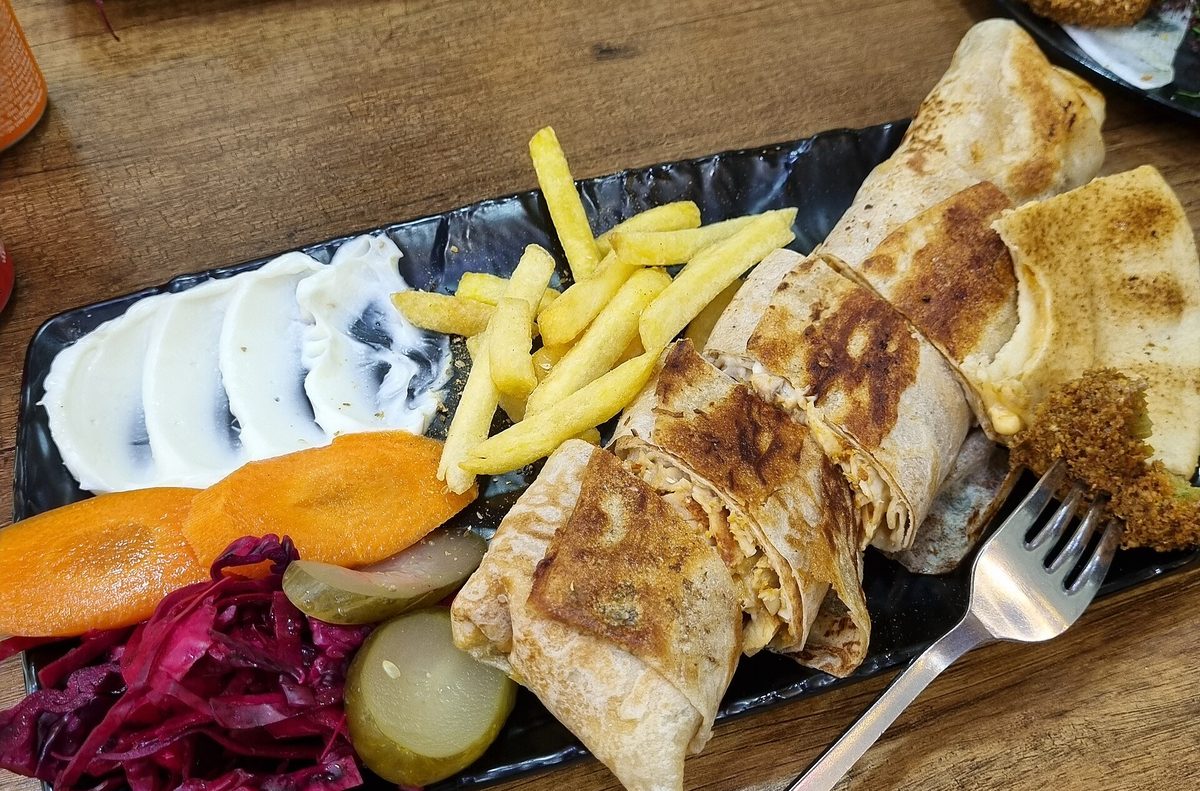
- Chicken Shawarma in Istanbul, TürkiyeWikimedia Commons · The photo, CC0 (Sezenkerem)
General information, not medical advice. This study shows an association in people asked to recall their diet after symptoms began, not that any food causes Crohn's disease. If you have ongoing abdominal pain, diarrhoea, blood in your stool or weight loss, see a doctor, and if you have Crohn's disease, talk to your gastroenterologist or a registered dietitian before changing your diet.
Analysis by NutroPractic from the sources listed. Written for general readers; it does not replace advice from your own doctor.
From our articles
Our guides on this subject
Plain-language guides on nutrition and wellness, backed by research.

Food and nutrition
L-theanine and caffeine: what cognitive trials measured on sustained attention, and milligrams in matcha vs green tea
Combining L-theanine with caffeine produces clean focus without caffeine jitters. Here is what randomized trials measured on attention-switching, EEG alpha brain waves, and the exact milligrams across ceremonial matcha, culinary powder, gyokuro, and sencha.
20 Nov 2026
Women's health
Eating while breastfeeding: extra calories, iodine, caffeine, fish and alcohol, with the actual numbers
Breastfeeding usually adds about 330–400 kcal a day, but the smaller numbers can matter more: 290 mcg iodine, 400 IU vitamin D for baby, 8–12 oz fish a week, and a caffeine total you can actually add up.
6 Nov 2026
Lifestyle
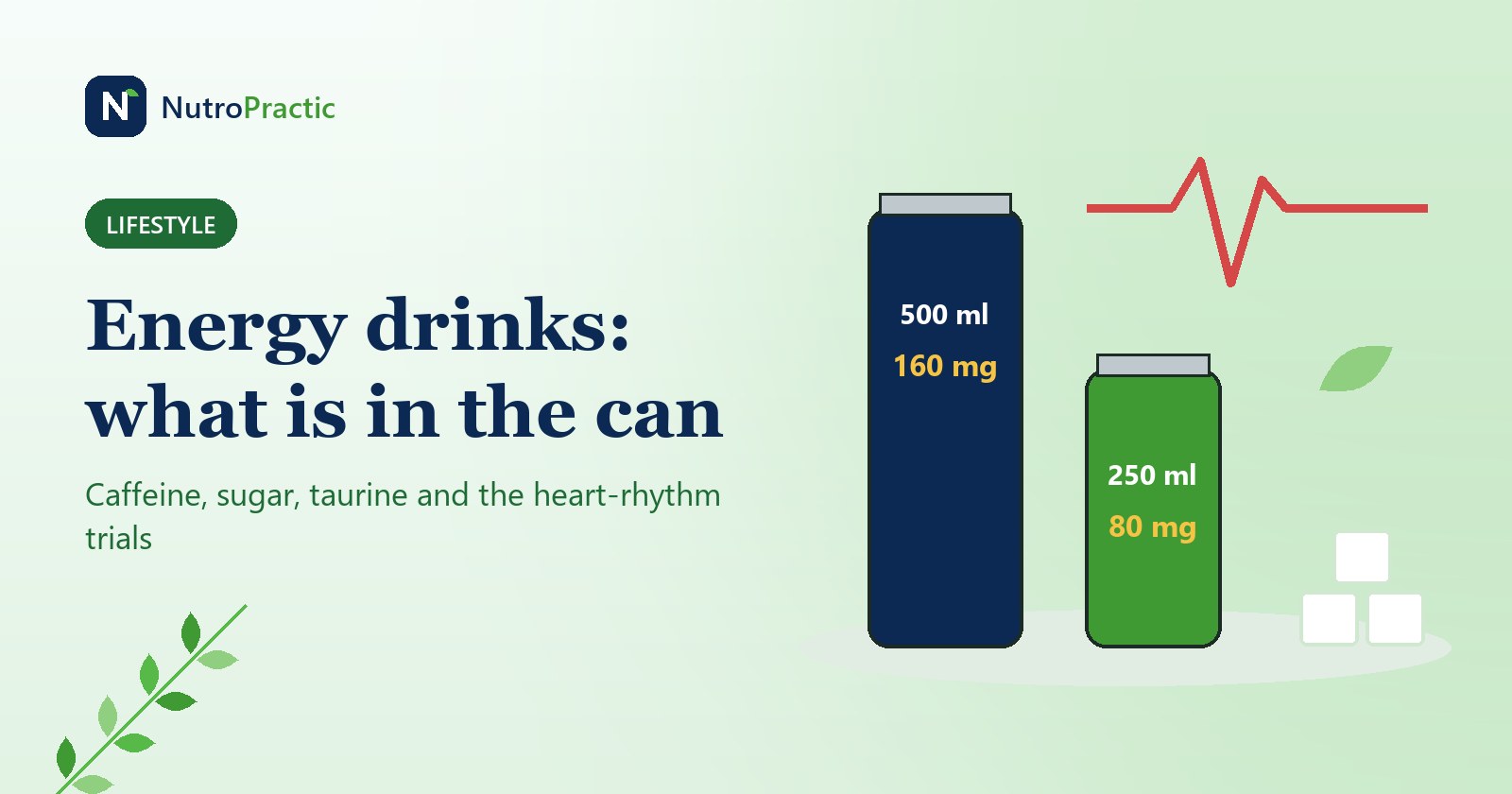
Energy drinks: caffeine, sugar and taurine per can, and what the emergency-visit and heart-rhythm studies found
From 80 mg to 300 mg of caffeine, and up to 55 g of sugar in one can. The numbers by brand, what they mean for a 50 kg teenager, what the QT and blood pressure trials measured, the old emergency-visit data and England's coming under-16 ban.
4 Nov 2026
Newsfeed for your website
Want this feed on your website?
Add it to any site with one copy-and-paste snippet. No sign-up, and it updates itself every hour.
Start with a virtual consultation
Tell Dr. Triveni what you want to change. You will leave with a clear next step, whether you are in Toronto, London, New York or Chennai.