Food processing · October 9, 2026
Same recipe, same sugar, one extra machine: this milk chocolate sent insulin up less
A Japanese confectioner's lab made two milk chocolates from identical ingredients, but pushed half the sugar, cocoa and milk powder of one through a hot, high-pressure extruder first. Eighteen men ate 76 grams of each on separate mornings. The extruded bar raised insulin less in the first half hour and kept them feeling full a little longer. Here is what the numbers do and don't show.
We usually judge a food by what's in it: grams of sugar, fat and protein on the label. A small trial published in Food Science & Nutrition on 30 September 2026 asks whether the same ingredients, put together a different way, land differently in the body. The researchers work at the research institute of Morinaga, a Japanese confectionery company, which also paid for the study and made the chocolate.
They made two milk chocolates with exactly the same recipe: 33.55% sugar, 6.6% cocoa mass, 24.75% whole milk powder, 11% skim milk powder, 24% cocoa butter equivalent and a pinch of lecithin. For one of them, the sugar, the cocoa mass and part of the whole milk powder (about 55% of the recipe) first went through a twin-screw extruder, the kind of machine used to make puffed snacks and breakfast cereals. Inside, the mix was kneaded at up to 95°C and forced out through a 13 mm hole at about 105°C, then ground and turned into chocolate in the usual way. Lab tests found the two bars matched on nutrients: 33.5 g of sucrose per 100 g in both, 11.1 against 11.3 g of protein, 33.6 against 34.1 g of fat.
Eighteen healthy Japanese men aged 20 to 60 (average 48.7 years, average BMI 22.5) came in after a 12-hour fast on two mornings at least a week apart in February 2025. Each time they ate 20 small pieces, 76 grams in all, within five minutes, without knowing which chocolate it was; the staff didn't know either. Blood was taken seven times over three hours. Thirty minutes in, insulin was about 23% lower after the extruded chocolate (20.6 against 26.8 μU/mL), and the total insulin response stayed significantly smaller at every point checked up to two hours. Blood glucose rose less too, by 17.8 against 25.1 mg/dL above fasting at 45 minutes, but that gap fell short of statistical significance. Blood fats (triglycerides) were lower at 30 and 45 minutes, and at the two-hour mark the men rated themselves fuller after the extruded bar. In a test tube with simulated saliva and stomach fluid, less sugar dissolved out of the extruded chocolate in the first 5 and 15 minutes, which the authors think explains the slower response: the extruder may lock some of the sugar into a structure that takes longer to break up.
It is an interesting idea, and a careful design: the same people ate both bars, so differences between people cancel out. But it is one study of 18 lean, middle-aged men after a single portion, run and funded by a company that makes chocolate. There were no women, nobody with diabetes or prediabetes, and no test of what happens when the chocolate is eaten every day, with a meal, or in smaller amounts. Fasting triglycerides happened to be higher before the extruded bar (111 against 95 mg/dL, not a significant difference), and the hormone GLP-1, which helps control appetite, wasn't measured. The full data are available only on request. What the study does show is that processing is not just a label word: how a food is made can change how quickly its sugar reaches the blood, even when the nutrition panel doesn't change at all.
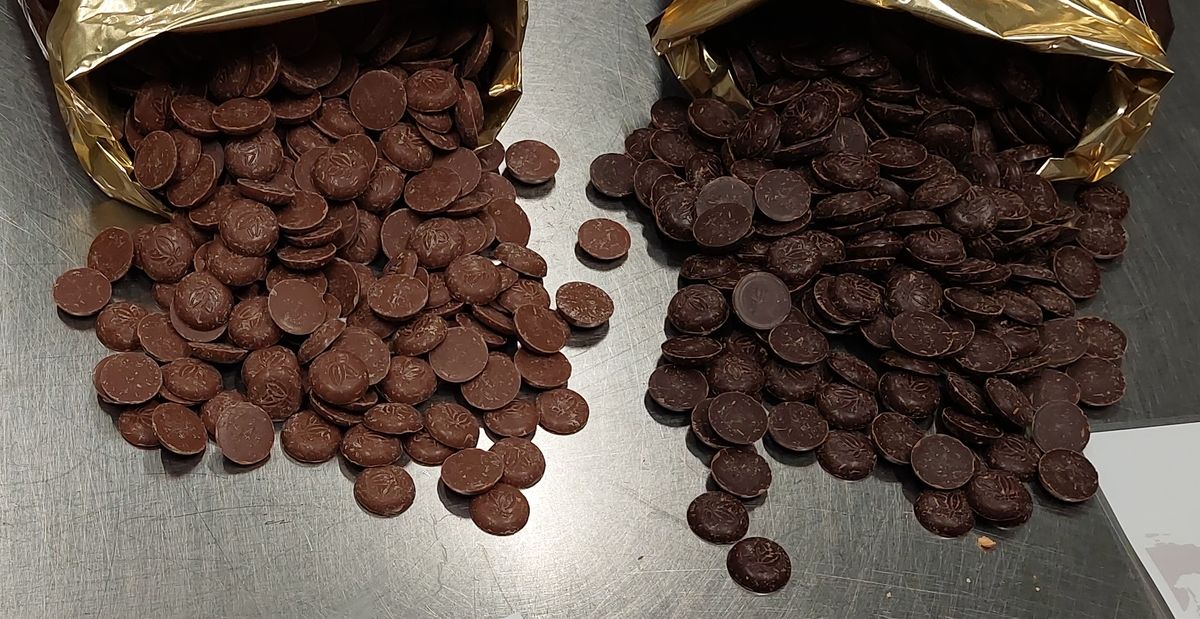
Two chocolates, one recipe
−23%
Insulin 30 minutes after the extruded chocolate, 20.6 against 26.8 μU/mL (significant)
17.8 vs 25.1
Rise in blood glucose above fasting at 45 minutes, mg/dL (a trend, not significant)
76 g
Chocolate eaten each morning: 20 pieces of 3.8 g, in five minutes
33.5 g
Sucrose per 100 g in both bars, identical by lab analysis
18
Healthy Japanese men, average age 48.7, who ate both bars in random order
2 hours
Point at which the men felt significantly fuller after the extruded bar; hunger and desire to eat didn't differ
Figures from the open-access paper in Food Science & Nutrition (published 30 September 2026): a randomised, double-blind crossover trial in 18 healthy men in Japan, registered as UMIN000056919, with a test-tube dissolution test. Values are means; the paper reports them with standard errors. The authors are employees of Morinaga & Co., which funded the study and supplied the chocolate; the clinic doctor was paid to run the trial.
- Extrusion is widely used to make snacks and breakfast cereals because it is cheap and fast: rotating screws knead a hot mix and push it through a small opening under pressure.
- Seventy-six grams of the test chocolate holds about 25 grams of sucrose, the same as the 25 grams a day of free sugars below which WHO says people would get extra health benefits.
- The milk powder in milk chocolate adds lactose, a sugar of its own: about 15 grams per 100 g in both test bars, on top of the sucrose.
- The chocolate was tempered by hand on a marble slab, cooled from 40°C to about 28°C and brought back to about 30°C, the classic way to get a glossy bar that snaps.
- In the test tube, about 14% less sugar had dissolved from the extruded chocolate after 5 minutes, but by 30 minutes the two were no longer significantly different.
- Chocolate Processed by Extrusion Cooking Affects Glucose and Lipid Metabolism in Humans: A Randomized, Double-Blind, Crossover TrialFood Science & Nutrition, 30 September 2026 · The study (open access, CC BY); methods, results, limits and declared interests in this item come from its full text
- Full text on PubMed Central (PMC13625205)PubMed Central, US National Library of Medicine · Free full text, including the recipe and nutrient tables
- Trial registration UMIN000056919UMIN Clinical Trials Registry, Japan · The registered protocol
- WHO calls on countries to reduce sugars intake among adults and childrenWorld Health Organization, 4 March 2015 · Free sugars under 10% of energy, with further benefit below 5%, roughly 25 grams a day
- Chocolate pistoles (photo)RudolfSchreier, via Wikimedia Commons · CC0 image, cropped
General information, not medical advice. This was a single-serving test in 18 healthy men, funded by a chocolate maker, and it doesn't show that any chocolate is good for blood sugar or weight. If you have diabetes, prediabetes or another reason to watch your sugar, talk to your doctor or a qualified nutrition professional before changing what you eat.
Analysis by NutroPractic from the sources listed. Written for general readers; it does not replace advice from your own doctor.
Newsfeed for your website
Want this feed on your website?
Add it to any site with one copy-and-paste snippet. No sign-up, and it updates itself every hour.
Start with a virtual consultation
Tell Dr. Triveni what you want to change. You will leave with a clear next step, whether you are in Toronto, London, New York or Chennai.