Fasting · November 4, 2026
Eight days on water, and 9 of 15 men felt better than usual by the end, up from 3 on day one. All of them had done it before and expected it to help
Tension eased a little, while energy and pleasant mood didn't budge. Blood cortisol after a hard cycling test was higher than before the fast, yet no hormone change tracked how the men felt. There was no comparison group, and the three who quit, both women among them, were left out.
Ask most people how the eighth day without food would feel and they will guess miserable. Researchers in Poland put a plainer question to a group of men living through it: "How do you feel today?" Each day the men picked one of three answers, worse than usual, same as usual or better than usual. The paper, published in Nutrients on 31 October, followed them through an eight-day water-only fast while they stayed at home and kept up their work, family and social lives.
On the first day, 20% said better than usual and 40% said worse. On the last, 60% said better and 13% said worse. With 15 men in the analysis, that works out by our count at 3 men against 9, and 6 against 2. The road between was bumpy. Day two was the low point, with 47% feeling worse, and on day seven a third still did. In the researchers' model, the odds of a man landing in a higher category rose 24.5% with each passing day (odds ratio 1.245, 95% CI 1.055 to 1.467).
Who these men were matters more than any of those numbers. To take part, a volunteer had to have already fasted for at least seven days on mineral water alone. They were 37 to 77 years old, 59.8 on average, mostly with higher education, and went in with what the authors call a positive attitude, expecting better health and lower weight. Three of the original 18 volunteers chose not to continue, including both women, and their data were dropped. So the result describes experienced fasters who wanted to be there and stuck it out. By our division, one volunteer in six is missing from that picture.
There was also no comparison group. Nobody was randomised, nobody ate normally alongside them, and nobody could be blinded to going without food. The authors themselves name expectation and placebo effects as a limitation. Well-being is exactly the sort of answer that can drift upward as a hard thing nears its end, and a man counting down to the last day of something he chose may feel better for that reason alone. This design cannot separate that feeling from anything the fast did to the body.
A fuller mood questionnaire, filled in daily, gives a narrower result than the headline number suggests. Tense arousal, the checklist's measure of tension and anxiety, fell from an average of 20.0 to 17.3 between the first and last days (p = 0.011). Hedonic tone, which captures how pleasant a mood is, did not change. Nor did energetic arousal. So the men did not report becoming happier or more energetic on these scales; they reported less tension. Time also explained only 3.8% of the variation in tension scores across the fast, while differences between the men accounted for much more.
Blood tests were taken at rest and three minutes after a maximal cycling test, before and after the fast. Post-exercise cortisol rose from an average of 333 to 530 ng/mL across the fast (p = 0.004). Serotonin after exercise was far higher than serotonin at rest once the fast was over, 632 against 251 ng/mL (p = 0.028). Alpha-endorphin was highest in the same after-fast, after-exercise measurement. Oxytocin showed no significant change. Resting cortisol went from 296 to 469 ng/mL, which looks large, but the paper does not list it as a significant difference after its correction for several comparisons, a reminder of how noisy 15 people can be.
It would be tempting to tie those hormones to the mood story: endorphins up, tension down. The data don't allow it. Changes in resting cortisol, serotonin, oxytocin and alpha-endorphin showed no significant link with changes in well-being or any mood score. The authors say a small sample may be part of the reason, and they offer their account of how body and mind adapt only as a hypothesis for later studies. A blood sample also can't show what is happening inside the brain, and the paper itself notes that more than 90% of the body's serotonin is made in the gut.
What this adds is modest but useful: a day-by-day record showing that, in a small group of practised and medically screened men, an eight-day fast did not bring a steady slide in how they felt. It doesn't show that fasting lifts mood, and it says nothing about women, first-timers, or anyone with a medical reason not to stop eating. These men had a medical examination three days before they started and stayed in phone contact with a physician and a psychologist during the fast and for two weeks afterwards. A proper test would need a control group, a far larger sample and people who haven't already decided that fasting works for them.
Well-being, mood and blood hormones across an eight-day water-only fast (Nutrients, 31 October 2026)
18 → 15
Volunteers who started and men analysed; the three who stopped included both women
20% → 60%
Men answering 'better than usual', day 1 to day 8
40% → 13%
Men answering 'worse than usual', day 1 to day 8; day 2 was the peak at 47%
20.0 → 17.3
Average tension (tense arousal) score, day 1 to day 8 (p = 0.011)
No change
Hedonic tone (pleasant mood) and energetic arousal across the fast
333 → 530 ng/mL
Average cortisol after a maximal cycling test, before and after the fast (p = 0.004)
251 → 632 ng/mL
Average serotonin at rest and after exercise, both after the fast (p = 0.028)
0 of 16
Links between changes in resting hormones and changes in well-being or mood that held up as significant; count is ours from the paper's table
A single-group study with no controls: every volunteer had fasted for at least seven days before, and results exclude the three who stopped. The percentages are of 15 men, so one man moves a figure by nearly seven points. Well-being was one three-choice question a day. Hormones were measured only before and after the fast, not during it, and in blood, not in the brain.
- The top serotonin figure printed in the paper's table, 900 ng/mL, is also the top of the test kit's stated detection range of 14.07 to 900 ng/mL. A reading that high may not be able to go any higher. That observation is ours, not the authors'.
- Before the fast, men with higher serotonin after exercise tended to report lower well-being (rho −0.71) and less pleasant mood (rho −0.63). That runs against serotonin's 'happy hormone' nickname, though in a group this small it is only a curiosity.
- The men took the mood questionnaire once a day at rest and deliberately not straight after the cycling test, so that the lift or slump of a hard workout wouldn't be mistaken for an effect of the fast.
- An earlier paper on the same men and the same fast reported that they felt better about their bodies afterwards, which the authors suggest may have fed into the better well-being scores.
- The study had no outside funding, and the authors declared no conflicts of interest. They disclosed using a chatbot to help with language editing and to discuss other readings of the results.
- Trajectory of Psychological Adaptation During an 8-Day Fast: Changes in Subjective Well-Being, Mood, and Neuroendocrine ResponsesNutrients, 31 October 2026 · Primary open-access paper (CC BY); methods, all tables, discussion, limitations, funding and conflict statements checked. Percentages converted to men, the dropout share and the kit-range observation are ours.
- Empty table setting plate fork knifeWikimedia Commons · CC BY 2.0 photograph by Stock Catalog.
- Stock Catalogwww.quotecatalog.com · Credit link the photographer asks for.
General information, not medical advice. This small uncontrolled study does not show that fasting improves mood or is safe. A multi-day water-only fast can be dangerous, particularly for anyone with diabetes, heart or kidney disease, a history of eating disorders, or who is pregnant, breastfeeding, under 18 or taking regular medicines. Speak to your doctor before attempting one, and get prompt help for fainting, confusion, chest pain or a racing heartbeat.
Analysis by NutroPractic from the sources listed. Written for general readers; it does not replace advice from your own doctor.
From our articles
Read, then eat a little better
Plain-language guides on nutrition and wellness, backed by research.
Everyday eating
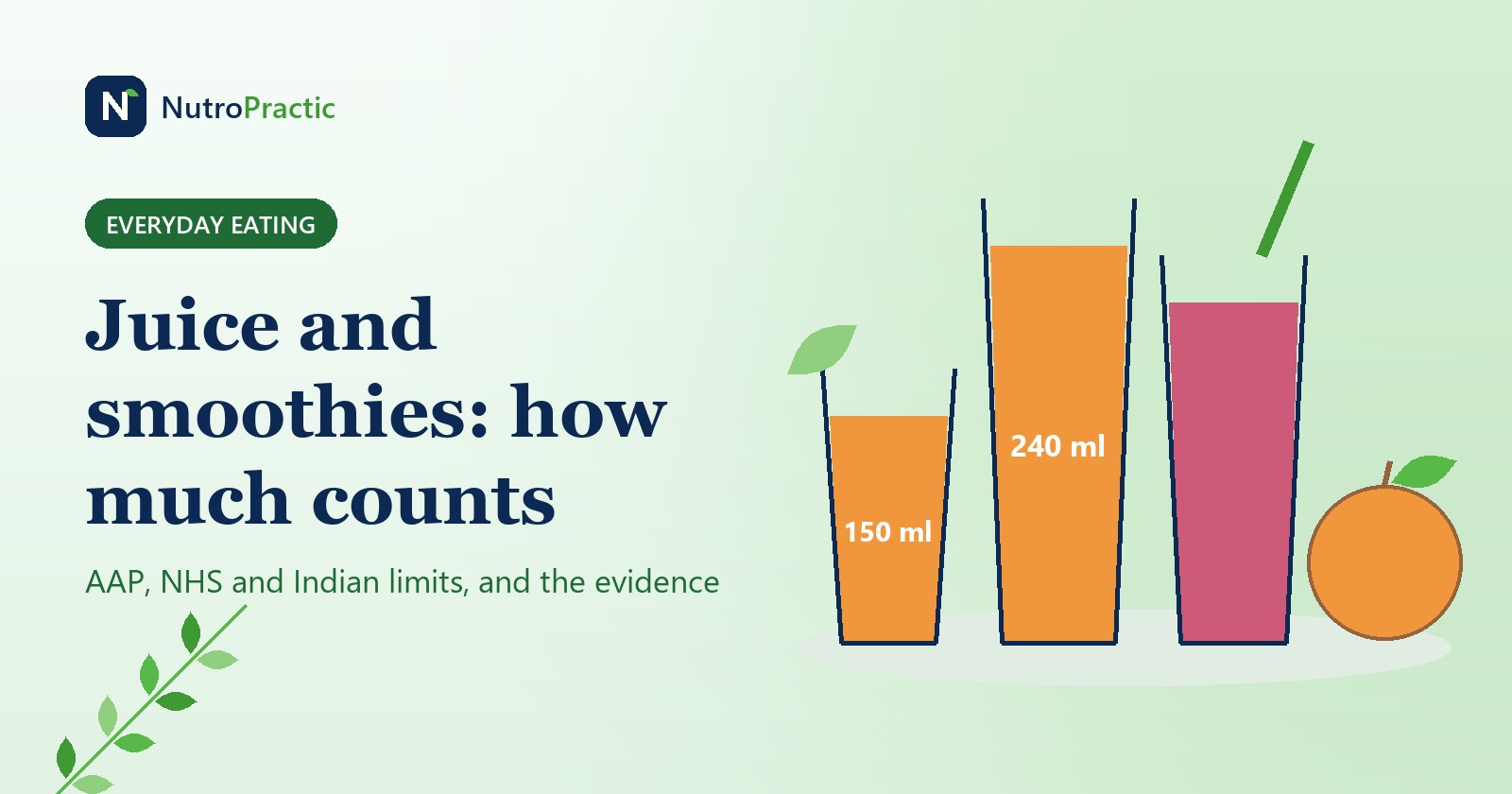
Fruit juice and smoothies for children and adults: how much counts, and what the AAP and NHS limits are based on
None under 1, 120 ml at 1 to 3, 150 ml for British adults, 250 ml for older Indian children. The limits side by side, sugar per glass against whole fruit, what the cohort studies on weight and diabetes found, and why smoothies are a closer call.
3 Nov 2026
Everyday eating
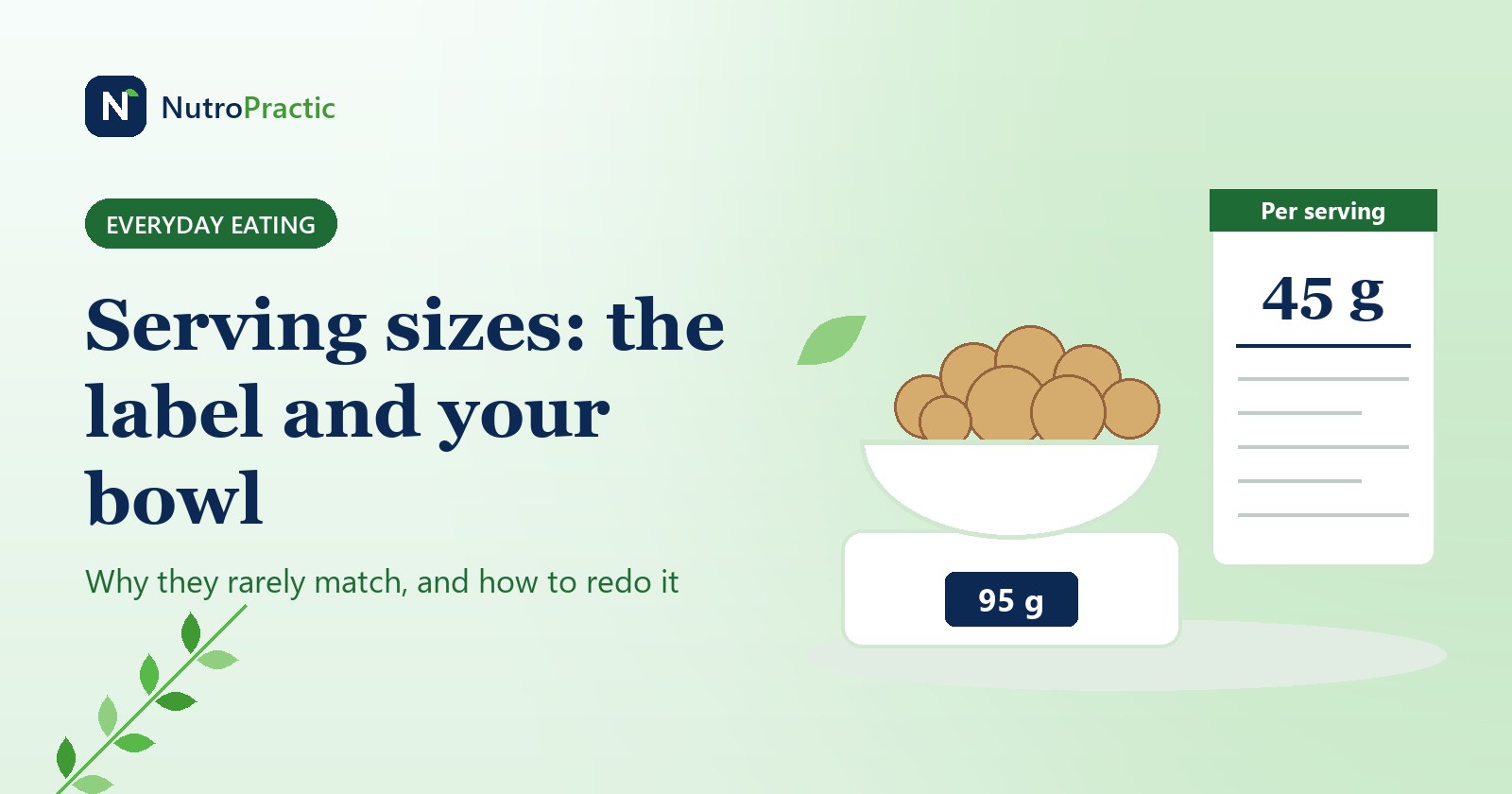
Serving sizes on food labels: why the numbers on the pack rarely match what you eat, and how to recalculate them
Adults in one UK test poured about 95 g of granola against a 45 g serving. Tropicana lists 150 ml in Britain and 240 ml in the US. What the FDA, EU and Indian rules require, and worked sums for cereal, crisps and peanut butter.
3 Nov 2026
Everyday eating
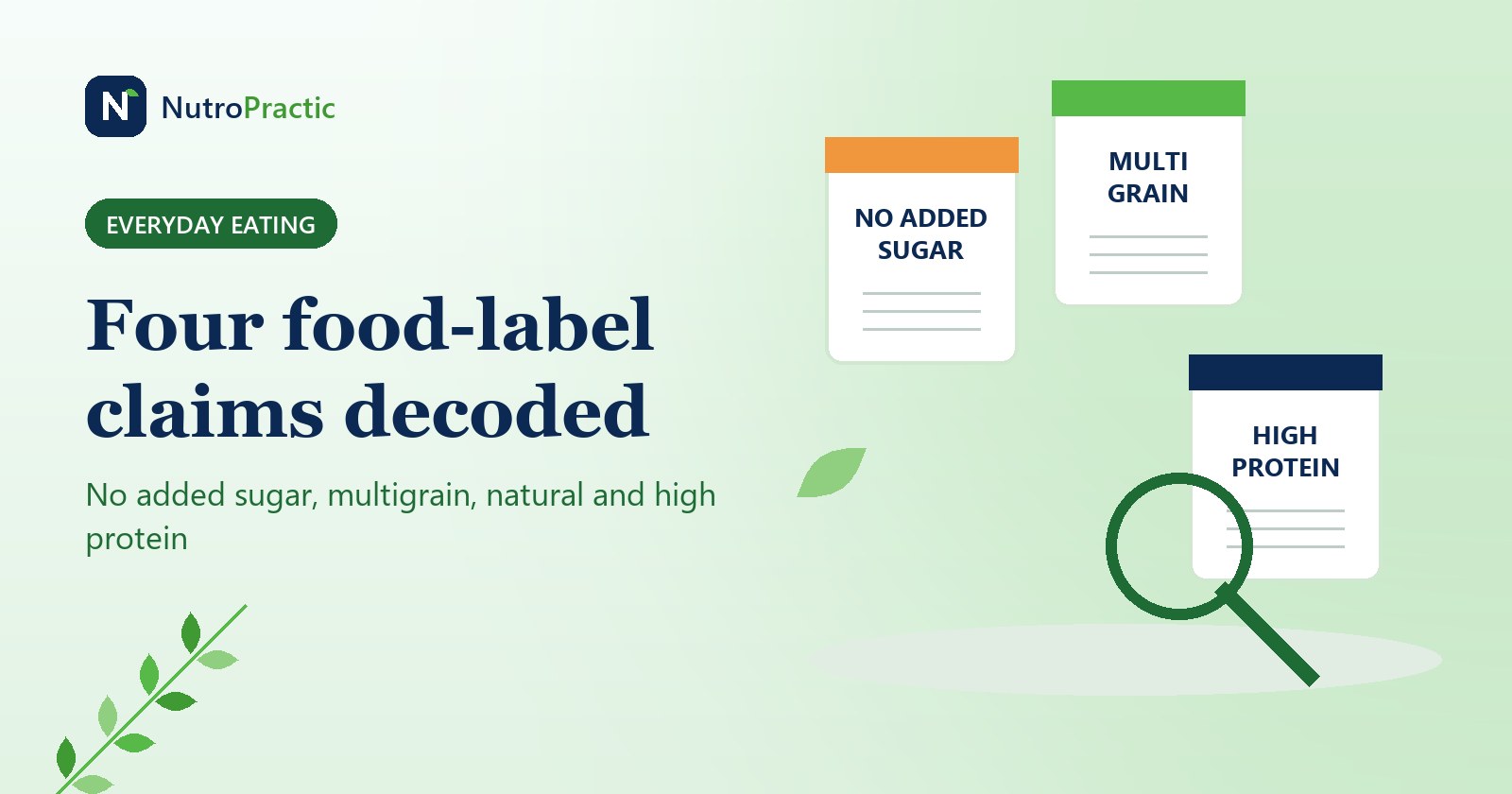
Food label claims decoded: 'no added sugar', 'multigrain', 'natural' and 'high protein'
A no-added-sugar biscuit with only 13% fewer calories. A 7-grain loaf with refined flour listed first. A 'high protein' bar that clears the legal line at 21%. What each claim legally requires in the EU/UK, US and India, with worked reads of real packs.
2 Nov 2026
Newsfeed for your website
Want this feed on your website?
Add it to any site with one copy-and-paste snippet. No sign-up, and it updates itself every hour.
Start with a virtual consultation
Tell Dr. Triveni what you want to change. You will leave with a clear next step, whether you are in Toronto, London, New York or Chennai.