Diabetes · October 15, 2026
Ten Swedes with type 2 diabetes lived on 850-calorie shakes for 12 weeks and saw their care team only on video. At six months all ten were off their tablets with HbA1c under 6.5%
A small pilot in Umeå matched the best results of the big meal-replacement trials without any clinic visits for support. But a sugar-drink test at the end told a less tidy story: three of the ten still had diabetes-range readings two hours later.
Big trials have shown that type 2 diabetes can go into remission when people lose a lot of weight quickly. In the best known, DiRECT in the UK, people replaced all their food with about 840 kcal a day of formula shakes and soups for three to five months, and 46% were in remission a year later. But DiRECT relied on face-to-face visits in primary care every two weeks, which is hard to offer everyone. A pilot study from Umeå University in Sweden, published on 6 October 2026 in JMIR Diabetes, tried the same approach with every bit of support delivered remotely.
Ten adults took part, recruited mostly through local newspaper adverts and run between April and December 2021. Nine were men, all were White, their average age was 58.5 and their average BMI 35.3. All had been diagnosed within the last six years (2.8 years on average) and all took metformin; their average HbA1c, the long-term blood sugar measure, was 6.8%. On day one they stopped all their diabetes and blood pressure tablets and switched to a formula diet of 820 to 890 kcal a day for 12 weeks. From week 12 to week 18 they swapped formula meals back for ordinary food one at a time, and from week 19 to 26 they ate normal meals on a calorie plan from a dietitian.
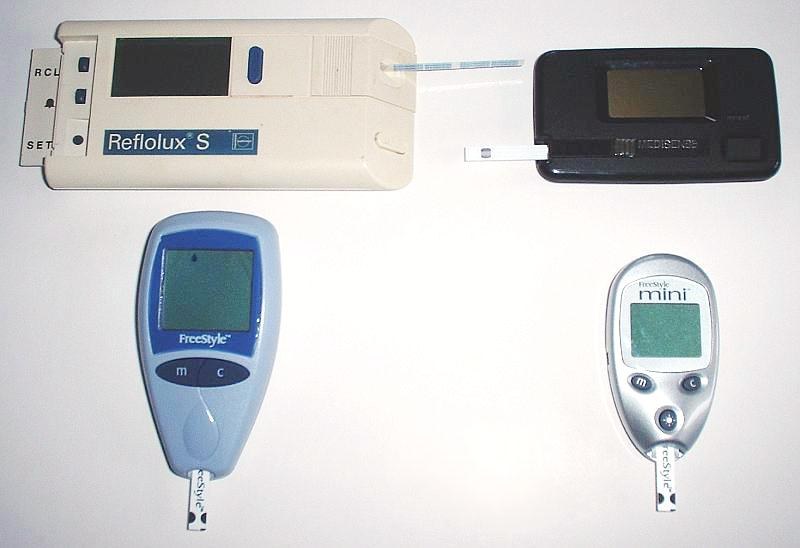
Each participant got a Bluetooth scale, a finger-prick glucose meter and a blood pressure monitor, and measured all three every morning. The readings went through a phone app to the study team, and a nurse checked them every weekday. Support came only through video calls and chat: a doctor every two weeks for the first three months, then a dietitian every two weeks to month four and monthly after that. HbA1c was measured each month from finger-prick samples sent in by post. Blood pressure tablets were restarted only if readings stayed high.
By six months, weight had fallen by an average of 16.9 kg. Six of the ten reached the target of losing at least 15 kg and the other four lost more than 10 kg. HbA1c fell by an average of 1.0 percentage point even though metformin had been stopped, and all ten met the standard definition of remission: HbA1c below 6.5% without diabetes medication. Nobody restarted diabetes medication. The daily home readings showed that fasting glucose dropped sharply within the first week of the formula diet, before much weight had been lost. Insulin sensitivity roughly doubled, but the test the team used showed no change in how much insulin people produced.
Other tests were less clear-cut. At six months, fasting glucose measured in the lab was normal in only four people; five were in the prediabetes range and one was still in the diabetes range. In a two-hour glucose tolerance test, three were still in the diabetes range and the other seven had impaired glucose tolerance. The authors say remission here should be read by the HbA1c definition, not as blood sugar control being fully back to normal. Resting energy use fell by a median of 387 kcal a day in the eight people it could be measured in, though some of them were probably still losing weight when tested.
Side effects in the first weeks were common: headache in six people, a drop in blood pressure on standing up in six, dizziness in five and constipation in four. Two had episodes of low blood sugar and one of high blood sugar. These eased on their own or with more fluids. One person could not continue the formula diet beyond the first month because of other health problems and moved to a low-calorie diet of ordinary food. All ten finished the study.
This was a pilot with ten participants and no comparison group, so it cannot show that remote care works as well as clinic care, and the authors warn that the small numbers may make results look more certain than they are. The participants had fairly mild, recent diabetes, which makes remission more likely, and people who answer newspaper adverts may be unusually motivated. Six months is short, and remission tends to fade if weight comes back. GLP-1 weight-loss drugs were deliberately not used. The study was funded by Swedish diabetes and medical research foundations, Umeå University and Region Västerbotten; Navamedic AB paid for all the formula used, and the authors report no conflicts of interest. A randomised trial comparing remote and face-to-face care is planned.
eHealth Diabetes Remission pilot (Umeå, Sweden, 2021): 10 adults with type 2 diabetes diagnosed within 6 years, 12 weeks of total diet replacement (820-890 kcal a day), then food reintroduction and weight maintenance, with all support by video, chat and connected home devices
10 of 10
In remission at 6 months: HbA1c below 6.5% without diabetes medication
16.9 kg
Average weight lost by 6 months; 6 of 10 lost at least 15 kg
-1.0 point
Average fall in HbA1c by 6 months, from 6.8% on metformin at the start, with metformin stopped
3 of 10
Still in the diabetes range two hours into a glucose tolerance test at 6 months; the other 7 had impaired glucose tolerance
8.4 → 6.1
Median fasting plasma glucose in mmol/L, baseline to 6 months
-387 kcal
Median fall in resting energy use a day (8 people measured)
Figures are from Chninou and colleagues, 'An eHealth-Delivered Total Diet Replacement Intervention for Type 2 Diabetes Remission: Single-Arm Pilot Study', JMIR Diabetes 11, e93074 (2026), doi 10.2196/93074, published 6 October 2026 (open access, CC BY 4.0), registered as NCT04805996. Of 43 people screened, 10 were enrolled and all completed the study (9 men, 1 woman; mean age 58.5, BMI 35.3, diabetes duration 2.8 years). Remission follows the ADA/EASD consensus definition. Insulin sensitivity (Matsuda index) rose by a median of 100%; the insulinogenic index did not change. The DiRECT comparison (46% in remission at one year, 36% at two years) is as quoted in the paper. This was a single-arm pilot without a control group; P values from 10 people should be read with caution.
- The biggest drop in fasting glucose came in the first week of the formula diet, before people had lost much weight, which the authors put down to the sharp cut in calories itself.
- Participants were told not to step up exercise during the 12 formula weeks; once food came back they got an activity tracker and were encouraged to work up to as many as 15,000 steps a day.
- Psyllium husk was allowed as needed to help with constipation, a common problem on liquid diets.
- The plan had a rescue step: anyone who regained more than 4 kg, or whose diabetes came back, would go back on formula for all meals for four weeks.
- In DiRECT, 86% of people who lost more than 15 kg were in remission after a year, which is why 15 kg was used as the target here too.
- An eHealth-Delivered Total Diet Replacement Intervention for Type 2 Diabetes Remission: Single-Arm Pilot StudyJMIR Diabetes, published 6 October 2026 (open access, CC BY 4.0) · The study: design, remote support, results, side effects and limitations
- Full text on PubMed CentralPMC (PMC13641317) · Open-access full text with tables and figures
- The eHealth Diabetes Remission Trial - Pilot Study (NCT04805996)ClinicalTrials.gov · The trial registration
- Primary care-led weight management for remission of type 2 diabetes (DiRECT): an open-label, cluster-randomised trialThe Lancet, 2018 · The UK trial this pilot was modelled on
- Glucose metersWikimedia Commons · Image, public domain, by Christopher Tidy
General information, not medical advice. Very low-calorie diets and stopping diabetes or blood pressure medicines can be risky without supervision. Talk to your doctor before changing your diet or medication if you have diabetes.
Analysis by NutroPractic from the sources listed. Written for general readers; it does not replace advice from your own doctor.
From our articles
Our guides on this subject
Plain-language guides on nutrition and wellness, backed by research.

Cardiovascular wellness
Psyllium husk: how much soluble fibre lowers LDL cholesterol and stabilizes post-meal glucose in clinical trials
Viscous soluble fibre forms a thick gel matrix in the small intestine that binds bile acids and blunts post-meal glucose spikes. Across dozens of randomized controlled trials, 7 to 10.2 grams of psyllium daily lowers LDL cholesterol by 6% to 12% without stripping HDL, while reducing postprandial glucose surges by 15% to 25% in metabolic syndrome and type 2 diabetes. Discover the bile acid sequestration mechanism, trial meta-analyses, exact timing before meals, water ratios, and titration protocols to avoid gas and cramping.
13 Nov 2026
Diabetes
Sourdough and blood sugar: what the glucose tests found against white and wholemeal bread
Sourdough did not beat white bread on average in a 20-person crossover trial, and half responded better to white. A trial-by-trial look at fermentation, flour, portions, GI and how to test your own loaf fairly.
6 Nov 2026
Diabetes
Vinegar before meals: what the trials measured on blood sugar, and how much is enough
Two teaspoons to a tablespoon with a starchy meal trims the glucose peak at 30 minutes, and the gap fades by two hours. HbA1c reviews range from -0.39 to -1.53, and we explain which to trust. Two gummies hold about 50 mg of acetic acid against 750 mg in a tablespoon.
5 Nov 2026
Newsfeed for your website
Want this feed on your website?
Add it to any site with one copy-and-paste snippet. No sign-up, and it updates itself every hour.
Start with a virtual consultation
Tell Dr. Triveni what you want to change. You will leave with a clear next step, whether you are in Toronto, London, New York or Chennai.