Sports supplements · October 22, 2026
Twelve trained cyclists in London drank a seaweed extract or a dummy drink before an hour on the bike and three all-out sprints. Their blood sugar came out a touch higher on the seaweed. Their sprint power did not budge
Ecklonia cava, an edible brown seaweed from Korea and Japan, is sold as a polyphenol supplement, and one small 2010 study suggested it helped students run longer. Researchers at Kingston University gave cyclists the highest daily dose Europe's food safety agency has judged safe for adults, then measured everything from oxygen use to peak watts. Almost nothing moved.
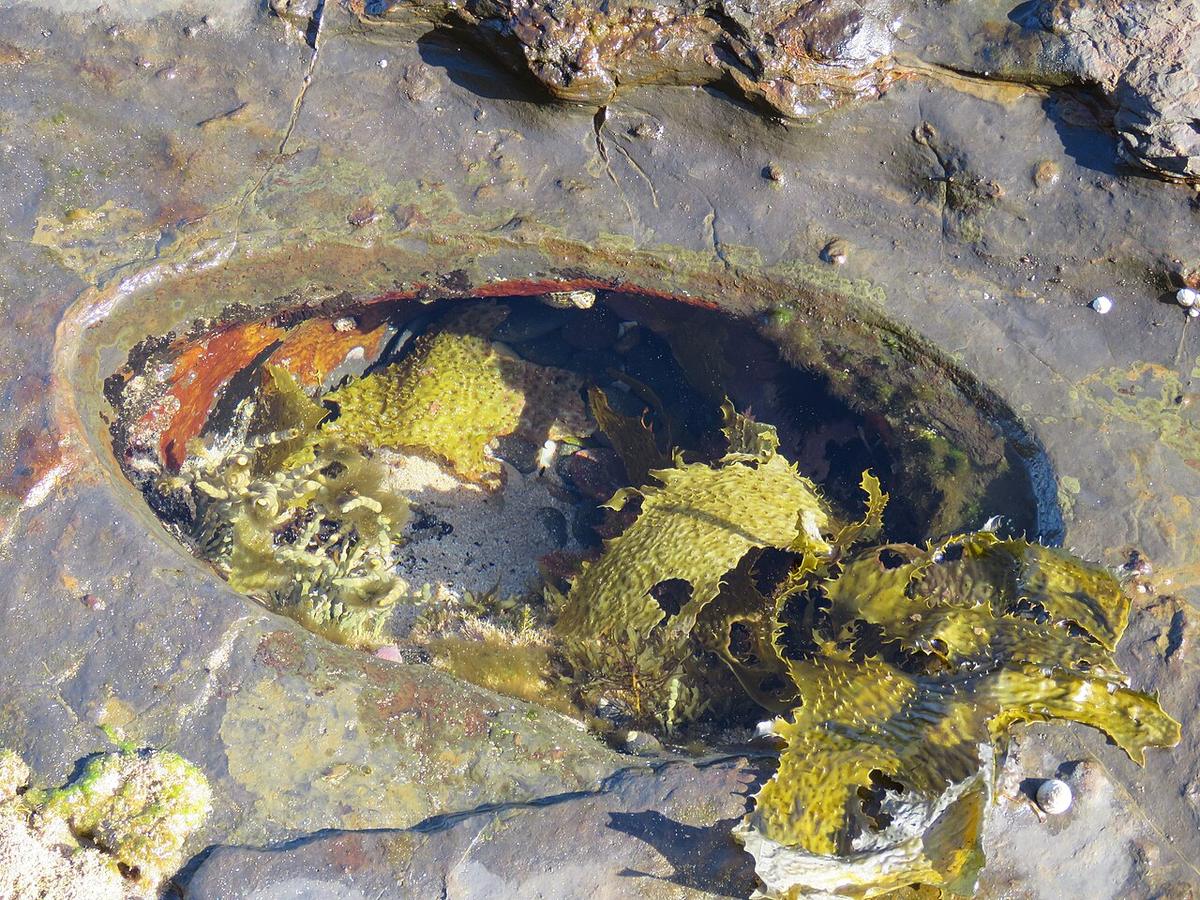
Ecklonia cava is a brown seaweed that grows off the coasts of Korea and Japan. It is rich in phlorotannins, polyphenols found only in brown algae, and an extract of it is authorised in the European Union as a novel food and sold as a supplement. Lab and animal studies credit it with antioxidant, blood-vessel and blood-sugar effects, which is why sports scientists have wondered whether a dose before exercise could help. The human evidence has been thin: one 2010 study in 20 male college students found that 72 mg of the polyphenols, taken 30 minutes before a treadmill test, added 2.39 minutes to their time to exhaustion.
A trial published in Nutrients on 19 October put the idea to trained cyclists. Twelve men, average age 25, who rode about 180 km and 8 hours a week, each came to the Kingston University laboratories in London four times: once for a fitness test, once to practise, and twice for the real thing, a week apart. On those two days they drank 150 mL of sugar-free squash, with or without 263 mg of a commercial Ecklonia cava extract, from identical opaque bottles prepared by a technician who kept the code. Thirty minutes later they cycled for an hour at 55% of their maximum work rate, rested 10 minutes, then did three flat-out 20-second sprints with four minutes of easy pedalling between them.
The seaweed did not make them faster. Peak sprint power averaged 781.5 W after the extract and 784.1 W after the dummy drink; mean power was 604.1 W against 598.2 W. Both gaps were well within chance (p = 0.832 and 0.167). During the hour of steady riding, heart rate (141.9 against 142.1 beats a minute), oxygen use, blood lactate and the mix of fuel being burned were all about the same. The one measurable difference was blood sugar, which averaged 4.23 mmol/L on the extract and 4.02 mmol/L on the dummy drink, a gap of 0.21 mmol/L (about 4 mg/dL). It held from start to finish rather than growing as the ride went on, and it did not show up after the sprints.
The authors are careful about what that glucose result means. The trial had no single primary outcome named in advance, so they call the blood sugar finding exploratory and in need of confirmation. Twelve riders is a small sample, they note, and several confidence intervals were wide enough to fit a useful effect in either direction, so no difference here is not proof of no effect. Only men signed up. The trial was registered only after it was done, in May 2026, and the extract batch was not chemically tested. The dose was picked because 263 mg is the most the European Food Safety Authority judged safe per day for adults, not because it is known to work best. The blinding seems to have held: 11 of the 12 riders said they could not taste a difference, and nobody reported side effects. The study had no outside funding and the authors declare no conflicts of interest.
For anyone eyeing a seaweed pre-workout: in this trial, one dose before a ride did nothing for performance that the researchers could measure. Whether weeks of taking it, other doses, other people or other kinds of exercise would turn out differently is still an open question.
One 263 mg dose of Ecklonia cava extract or placebo before cycling, 12 trained male cyclists, Kingston University, London
12
Trained male cyclists, average age 25, riding about 8 hours and 180 km a week; each took both drinks, a week apart, in random order
781.5 W vs 784.1 W
Peak sprint power after the extract vs the dummy drink: a difference of -2.6 W (95% CI -29.5 to 24.4; p = 0.832)
604.1 W vs 598.2 W
Mean sprint power, extract vs dummy: +5.9 W (95% CI -2.5 to 14.3; p = 0.167)
+0.21 mmol/L
Higher average blood sugar over the hour's ride on the extract: 4.23 vs 4.02 mmol/L (95% CI 0.05 to 0.38; p = 0.023), with no difference in the pattern over time
141.9 vs 142.1
Average heart rate during the ride, beats a minute, extract vs dummy (p = 0.883); oxygen use and lactate were also unchanged
11 of 12
Riders who said they could not taste a difference between the drinks; no side effects reported
Study: Ali Y, Gurney T, Brouner J, Spendiff O, 'Effects of Acute Ecklonia cava Supplementation on Submaximal Cycling and Repeated-Sprint Performance in Trained Cyclists: A Randomised Double-Blind Placebo-Controlled Crossover Trial', Nutrients 2026, 18(20), 3430, published 19 October 2026, doi 10.3390/nu18203430 (open access, CC BY; read in full). Randomised, double-blind, placebo-controlled crossover with a 7-day washout. Extract: 263 mg SeaPolynol (SEANOL-P, Botamedi Inc., Korea), specified at 90 ± 5% phlorotannins (about 237 mg nominally), in 150 mL sugar-free squash, 30 min before exercise; placebo was the squash alone. Protocol: 60 min at 55% of maximum work rate at 80 rpm, 10 min rest, three 20 s maximal sprints against 8.5% of body mass with 4 min recovery. Average VO2max 50.0 mL/kg/min. Linear mixed-effects models with treatment, time, period and sequence. Sprint lactate 8.62 vs 8.17 mmol/L (p = 0.060). Ethics approved by Kingston University in 2020; registered retrospectively on 28 May 2026 (NCT07611877). No external funding; the authors declare no conflicts of interest. The mg/dL conversion (x18) in the story is our arithmetic.
- Phlorotannins are made only by brown algae such as kelps and wracks. Dieckol, one of the best studied, makes up about 6.6 to 9.9% of the extract used in this trial, by the product's specification.
- The European Food Safety Authority's 2017 opinion on Ecklonia cava phlorotannins as a novel food is where the trial's dose came from: 263 mg a day, the most it judged safe for adults.
- Heart rate and oxygen use crept up over the hour of steady cycling on both days. The authors put this down to the normal cardiovascular drift of long rides, not to anything in the drinks.
- In a crossover trial every rider acts as their own comparison, which is why 12 people can be enough to spot a medium-sized effect, though smaller effects can still slip past.
- Blood lactate after the sprints was about 0.5 mmol/L higher on whichever test day came first, whatever the drink, an order effect the analysis adjusted for.
- Effects of Acute Ecklonia cava Supplementation on Submaximal Cycling and Repeated-Sprint Performance in Trained Cyclists: A Randomised Double-Blind Placebo-Controlled Crossover TrialNutrients, October 2026 · The paper: full text, open access
- Effect of Supplementation with Ecklonia cava Polyphenol on Endurance Performance of College StudentsInternational Journal of Sport Nutrition and Exercise Metabolism, 2010 · The earlier treadmill study the trial set out to test
- Safety of Ecklonia cava phlorotannins as a novel food pursuant to Regulation (EC) No 258/97EFSA Journal, 2017 · The EU safety opinion behind the 263 mg dose
- NCT07611877ClinicalTrials.gov · The trial's registration, made after it finished
- Ecklonia radiata (41712275205).jpgWikimedia Commons · The photo, CC BY 2.0 (Donald Hobern)
General information, not medical advice. This was a small trial of a single dose in 12 healthy, trained young men; it says nothing certain about women, older adults, people with diabetes or longer use. Seaweed products can contain iodine and supplements can interact with medicines, so talk to your doctor or a sports dietitian before adding one.
Analysis by NutroPractic from the sources listed. Written for general readers; it does not replace advice from your own doctor.
From our articles
Our guides on this subject
Plain-language guides on nutrition and wellness, backed by research.
Diabetes
Fenugreek, cinnamon and turmeric for blood sugar: what the trials in an Indian kitchen measured
Fenugreek seed at 5-10 g a day lowered HbA1c by about 0.85 points in pooled trials, and in a 3-year Hyderabad study 23% went on to diabetes against 55%. Cinnamon trims fasting glucose by 15-25 mg/dL, but a teaspoon of cassia tops the coumarin limit. Curcumin: about 0.3-0.4 points, and rare liver injury from capsules. Doses in teaspoons, and a fair way to test it at home.
1 Nov 2026

Cardiovascular wellness
Psyllium husk: how much soluble fibre lowers LDL cholesterol and stabilizes post-meal glucose in clinical trials
Viscous soluble fibre forms a thick gel matrix in the small intestine that binds bile acids and blunts post-meal glucose spikes. Across dozens of randomized controlled trials, 7 to 10.2 grams of psyllium daily lowers LDL cholesterol by 6% to 12% without stripping HDL, while reducing postprandial glucose surges by 15% to 25% in metabolic syndrome and type 2 diabetes. Discover the bile acid sequestration mechanism, trial meta-analyses, exact timing before meals, water ratios, and titration protocols to avoid gas and cramping.
13 Nov 2026
Diabetes
Sourdough and blood sugar: what the glucose tests found against white and wholemeal bread
Sourdough did not beat white bread on average in a 20-person crossover trial, and half responded better to white. A trial-by-trial look at fermentation, flour, portions, GI and how to test your own loaf fairly.
6 Nov 2026
Newsfeed for your website
Want this feed on your website?
Add it to any site with one copy-and-paste snippet. No sign-up, and it updates itself every hour.
Start with a virtual consultation
Tell Dr. Triveni what you want to change. You will leave with a clear next step, whether you are in Toronto, London, New York or Chennai.