Premature babies · October 22, 2026
A Tel Aviv newborn unit started offering donated breast milk to its smallest babies. They reached full milk feeds in half the time, but once the doctors allowed for how much bigger the later babies were, growth looked the same
When a mother can't yet make enough milk for a very premature baby, the next best thing is meant to be another mother's milk, pasteurised and banked. Doctors at a large Israeli hospital compared 236 tiny babies born before and after their unit began using it. The headline numbers looked dramatic. Most of the gap had a simpler explanation.
For babies born very early or very small, milk is treated almost like medicine. A mother's own milk is the first choice, because it lowers the risk of necrotising enterocolitis (NEC), a dangerous inflammation of the gut that mostly strikes premature babies. When there isn't enough of it, which is common in the first days after an early birth, the options are formula or donor milk: milk given by other mothers, pooled, pasteurised and frozen by a milk bank. A 2024 Cochrane review of 12 trials found that donor milk instead of formula roughly halves the risk of NEC. What is less settled is what else it changes, and whether pasteurised, often late-lactation donor milk does as much as a mother's own.
A study published in Nutrients on 12 October looked at what happened when one unit made the switch. The neonatal intensive care unit at Tel Aviv Sourasky Medical Center began using milk from Israel's national milk bank in August 2020. The team went back through the records of babies born there from January 2018 to June 2023 who weighed under 1,500 g or arrived before 32 weeks of pregnancy. After leaving out 21 babies who died and 69 whose feeding didn't fit the groups being compared, 236 remained: 98 born before donor milk arrived and 138 after. In the later group, about half (71) got their mother's milk topped up with donor milk.
On the raw numbers the second group did far better. They reached full milk feeds after 12.8 days instead of 26.8, needed nutrition through a drip for 9 days instead of 20, and went home after 58.7 days in hospital instead of 72.8. At two weeks they had gained 9% on their birth weight, against 4.9%. They also had less breathing trouble, lung damage (bronchopulmonary dysplasia) and feeding intolerance.
But they were not the same babies. Those born after the change arrived about a week later in pregnancy on average (29.3 against 28.2 weeks), were heavier at birth (a median 1,350 g against 1,080 g), and their mothers had more often received steroid injections to mature the baby's lungs. Once the researchers adjusted for size, maturity and other differences, the era a baby was born in no longer predicted weight gain at two weeks, the length of the hospital stay or the chance of NEC. The one link that held was speed: babies born after donor milk arrived still reached full feeds sooner. The doctors on the unit said they felt more comfortable starting and stepping up feeds when the alternative to a mother's milk was donor milk rather than formula, which may be part of the reason.
The authors are frank about the limits. The study looks back through records, so babies weren't randomly assigned, and something else that changed over five years, such as staff experience or how milk was fortified, could explain the faster feeding. Day 14 was chosen for the main growth analysis because it was the only time point with a difference, which can flatter results. NEC is rare, so 236 babies can't show a small difference in it. And because some babies in the first period got formula, the results can't be read as proof that donor milk and formula are equal. The study had no funding and the authors declare no conflicts of interest. For parents in a neonatal unit, the message is modest: the strongest evidence for donor milk is still the trials on NEC, and this hospital's experience adds a hint that it helps babies move off drip feeding sooner.
Very premature or very small babies before (2018 to July 2020) and after (August 2020 to June 2023) donor milk was introduced, Tel Aviv Sourasky Medical Center
236
Babies under 1,500 g or born before 32 weeks: 98 before donor milk was available and 138 after
12.8 vs 26.8 days
Time to full milk feeds (140 mL per kg a day), after vs before (p < 0.001); the only difference that held after adjustment
9 vs 20 days
Days on drip-fed (parenteral) nutrition, after vs before (p < 0.001), unadjusted
58.7 vs 72.8 days
Length of hospital stay, after vs before (p < 0.001); no difference once size, maturity, NEC and lung disease were allowed for
9% vs 4.9%
Weight gained over birth weight by day 14, after vs before (p = 0.019); no difference after adjustment, nor at day 7 or day 28
29.3 vs 28.2 weeks
Average length of pregnancy at birth, after vs before (p < 0.001); median birth weight was 1,350 g vs 1,080 g
Study: Herzlich J, Less O, Gilboa I, Elbaum-Shiff Y, Halperin A, 'Growth and Clinical Outcomes Before and After Implementation of a Donor Human Milk Program in Very Preterm and/or Very-Low-Birth-Weight Infants', Nutrients 2026, 18(20), 3338, published 12 October 2026, doi 10.3390/nu18203338 (open access, CC BY; read in full). Retrospective before-and-after cohort, a secondary analysis of a cohort the team described in 2025. Donor milk from the national bank was Holder-pasteurised and frozen. Of 326 babies, 236 were analysed; 21 who died (10 before, 11 after) and 69 on other feeding mixes were excluded. Feeding: before, 69 own mother's milk only, 15 own milk plus formula, 14 formula only; after, 71 own milk plus donor milk, 43 own milk only, 24 own milk plus formula. Antenatal steroids 80.4% vs 65.3%. Unadjusted rates after vs before: feeding intolerance 22.4% vs 34.6%, bronchopulmonary dysplasia 41.3% vs 56.1%; no difference in NEC, bloodstream infection, brain bleeds or eye disease (retinopathy). Adjusted models: era linked to time to full feeds (standardised B = -0.255, p < 0.001), not to day-14 weight gain, hospital stay or NEC. Approved by the hospital's Helsinki Committee (0172-22-TLV). No funding; no conflicts of interest declared.
- Holder pasteurisation, the standard method in milk banks, heats milk to 62.5 °C for 30 minutes. It kills bacteria and viruses but also knocks out lipase, an enzyme in breast milk that helps babies digest fat, and many of its live immune cells.
- Donor milk often comes from mothers of full-term babies who are months into breastfeeding, and their milk carries less protein than the milk of a mother who has just given birth early. Premature babies' milk, their mother's own included, is often fortified with extra protein for the same reason.
- Oddly, babies born later in pregnancy were slightly more likely to develop NEC in this cohort, the reverse of what is normally seen. The authors call it unexplained and say it may be a quirk of this group.
- The 2024 Cochrane review that found donor milk halves NEC compared with formula found no clear difference in serious infections or deaths before discharge.
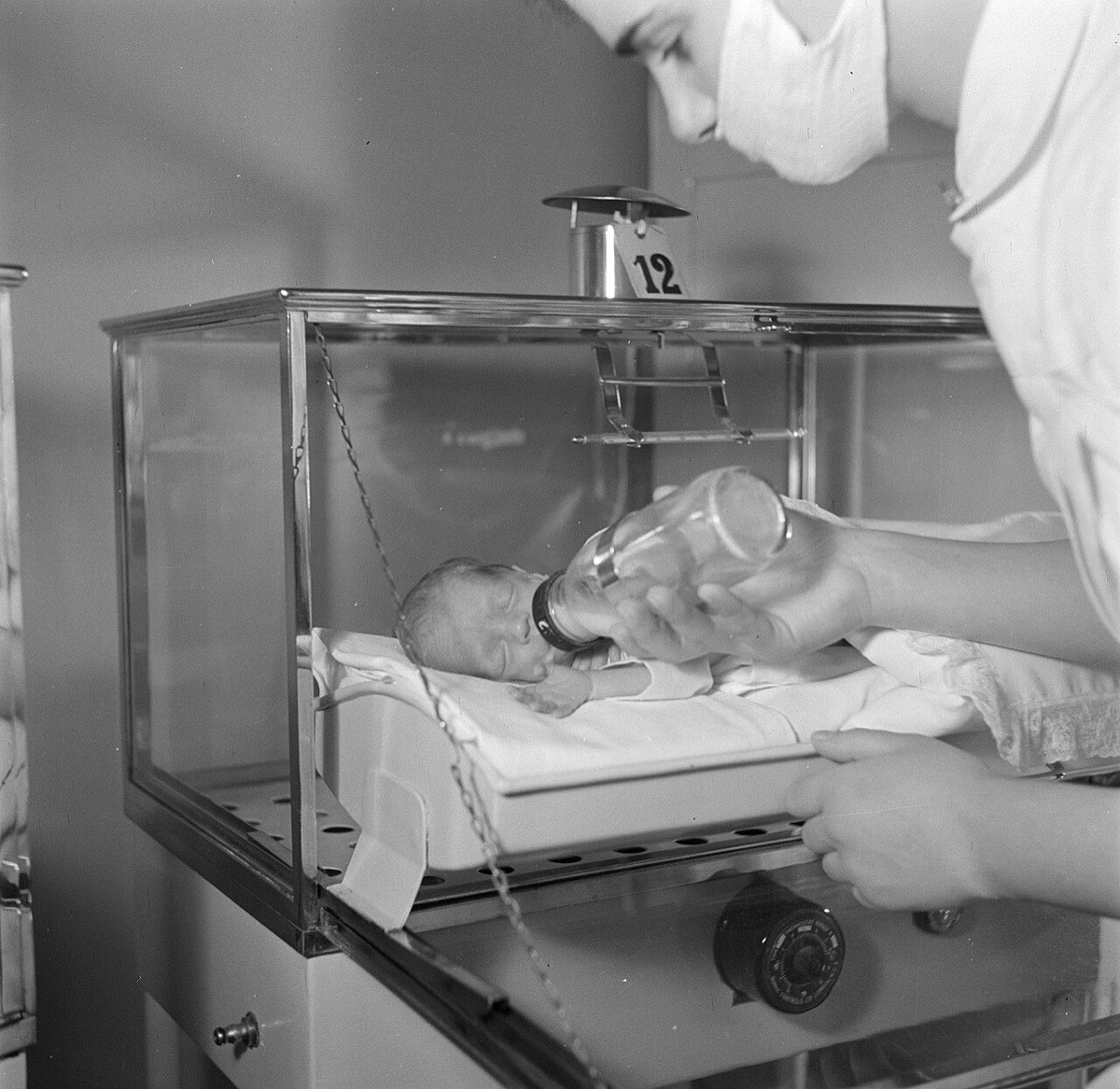
- The photo is from 1954, when the Dutch Red Cross ran a centre collecting breast milk for babies whose mothers could not feed them, an early version of today's milk banks.
- Growth and Clinical Outcomes Before and After Implementation of a Donor Human Milk Program in Very Preterm and/or Very-Low-Birth-Weight InfantsNutrients, October 2026 · The paper: full text, open access
- Donor human milk for preventing necrotising enterocolitis in very preterm or very low-birthweight infantsCochrane Database of Systematic Reviews, 2024 · 12 trials, 2,296 babies: donor milk instead of formula about halves the risk of NEC
- Growth at 2 years in children born preterm: donor milk versus preterm formulaPediatric Research, 2026 · The randomised trial the authors compare their growth findings with
- Effects of Donor Human Milk and Formula Supplementation on Bone Metabolism and Clinical Outcomes in Preterm Infants Receiving Mother's Own MilkNutrients, 2025 · The same team's earlier analysis of this cohort
- Couveusebaby Caspar krijgt de fles van een verpleegster (1954)Wikimedia Commons · The photo, CC0 (Willem van de Poll, Nationaal Archief)
General information, not medical advice. This was a look back at one hospital's records, not a trial, and feeding plans for premature babies are set by each baby's neonatal team. If your baby is in a neonatal unit, ask the team about your own milk, donor milk and fortifiers.
Analysis by NutroPractic from the sources listed. Written for general readers; it does not replace advice from your own doctor.
From our articles
Our guides on this subject
Plain-language guides on nutrition and wellness, backed by research.
Women's health
Eating while breastfeeding: extra calories, iodine, caffeine, fish and alcohol, with the actual numbers
Breastfeeding usually adds about 330–400 kcal a day, but the smaller numbers can matter more: 290 mcg iodine, 400 IU vitamin D for baby, 8–12 oz fish a week, and a caffeine total you can actually add up.
6 Nov 2026
Women's health
Nausea in pregnancy: ginger, vitamin B6, small meals and when it's hyperemesis, from the trials
Only 1.8% of women in one diary study had nausea just in the morning. Ginger at 1 g a day, B6 at 30 to 75 mg and doxylamine with B6 each have trial data, while diet advice has none. The score to track it, the doses, and the signs that mean a phone call.
5 Nov 2026
Women's health
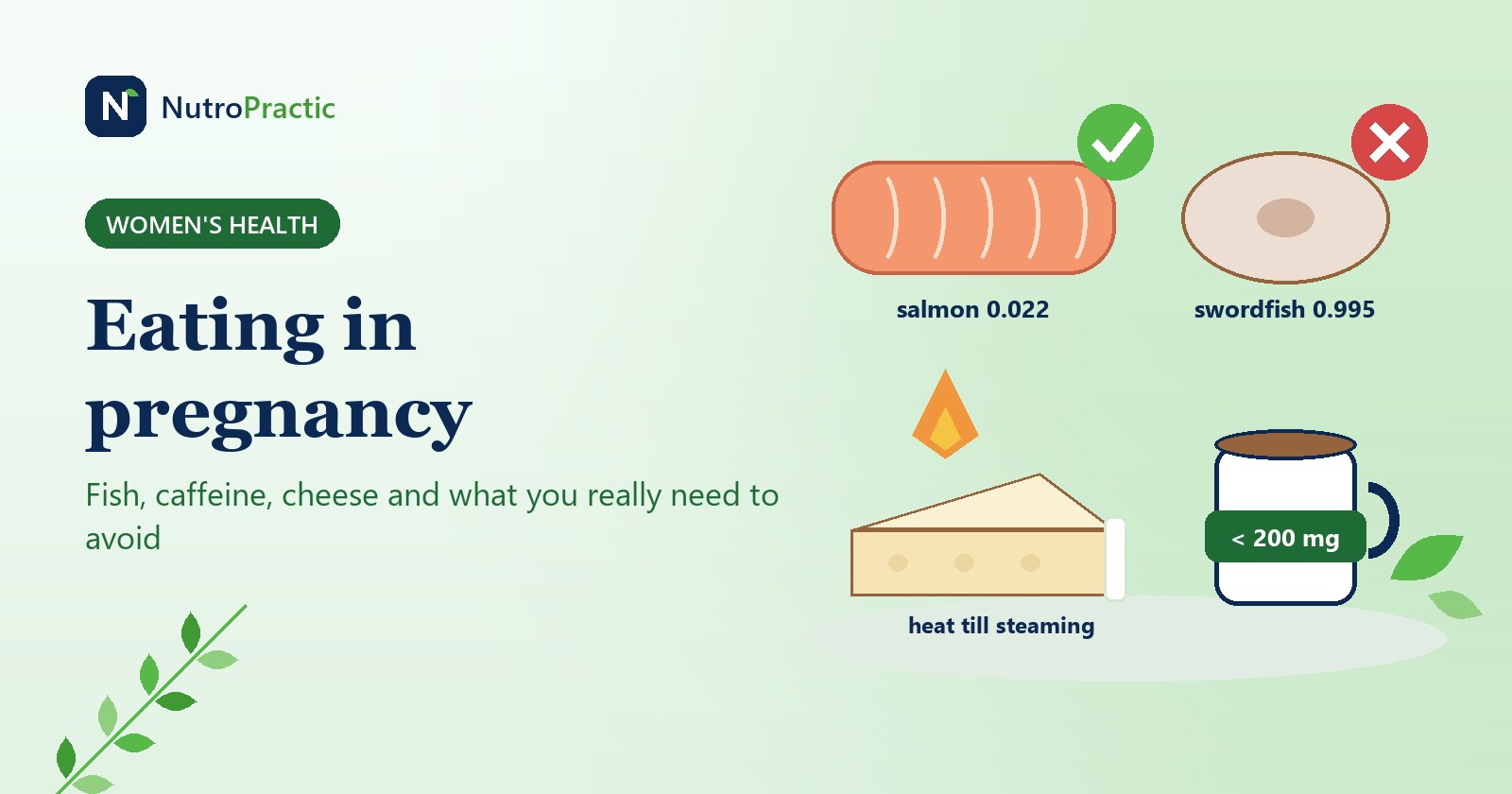
Eating in pregnancy: fish, caffeine, cheese and what you really need to avoid
Most fish is encouraged in pregnancy, not banned: 8-12 oz a week from the low-mercury list. The mercury numbers per fish, what 200 mg of caffeine looks like in real cups, which cheeses carry the listeria risk and how many cases there actually are, why liver is on the list, and how much weight to gain for your BMI.
29 Oct 2026
Newsfeed for your website
Want this feed on your website?
Add it to any site with one copy-and-paste snippet. No sign-up, and it updates itself every hour.
Start with a virtual consultation
Tell Dr. Triveni what you want to change. You will leave with a clear next step, whether you are in Toronto, London, New York or Chennai.