Brain health & ageing · November 28, 2026
Higher dietary fat linked to faster rise in a nerve-damage blood marker, but only in APOE ε4 carriers
Among older adults at risk for Alzheimer's disease, higher baseline fat intake went with a steeper rise in plasma neurofilament light over about five years in APOE ε4 carriers. Other main plasma results were null.
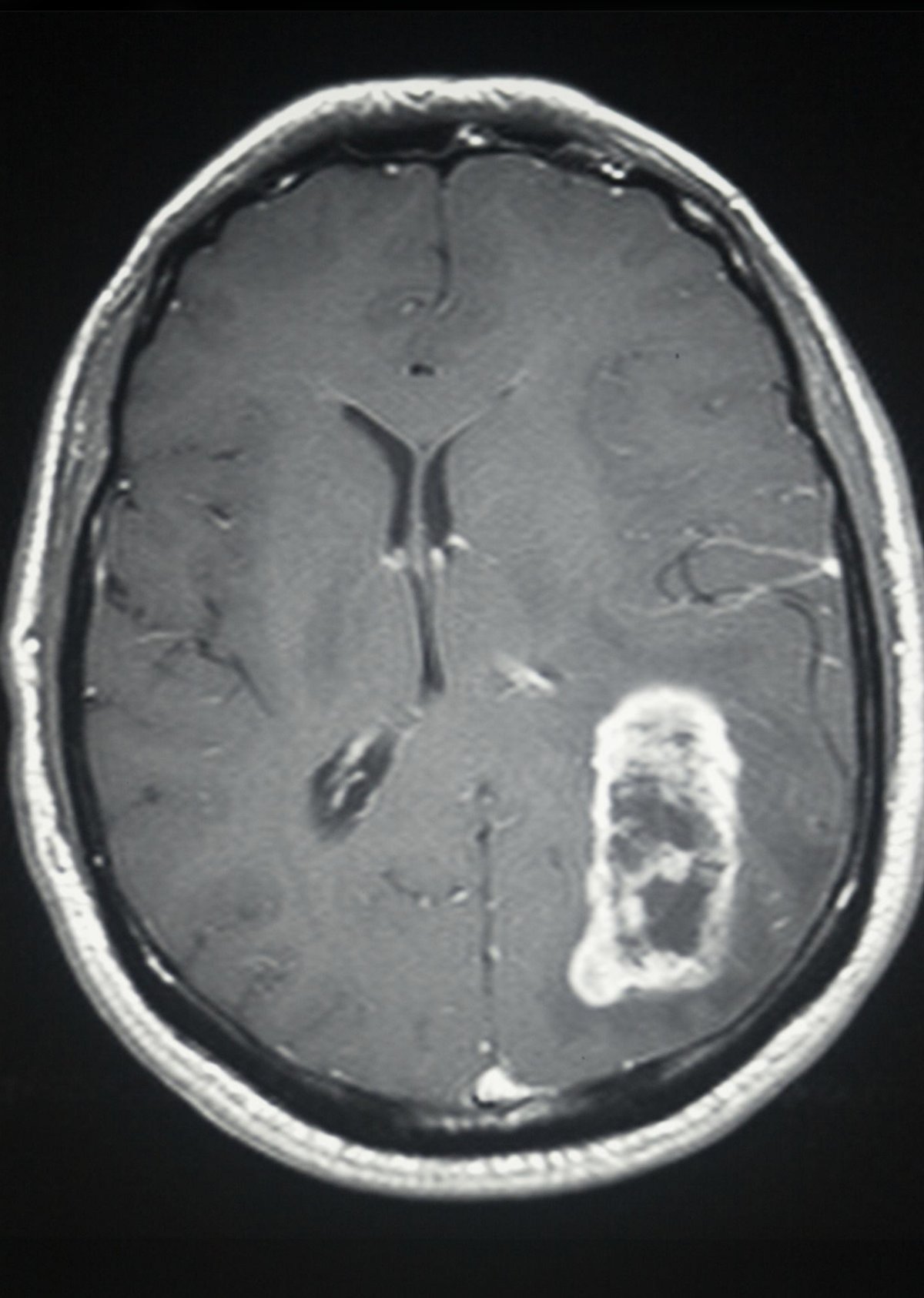
Does what older adults eat shape how fast their brains change? This study looked at fat intake and blood and spinal fluid markers of Alzheimer's disease and nerve damage.
In Alzheimer's Research & Therapy, Lei Fan and colleagues used the Vanderbilt Memory and Aging Project: 153 people in the cerebrospinal fluid (CSF) cohort (age 72±6) and 334 in the plasma cohort (73±7), either cognitively unimpaired, with early mild cognitive impairment (MCI) or MCI. Fat intake came from the Quick Food Scan, and biomarkers were followed for about 4.1 years (CSF) and 4.9 years (plasma).
The one result that survived correction: the link between total fat intake and longitudinal plasma neurofilament light (NfL, a marker of nerve damage) differed by APOE ε4 status (β=2.32, pFDR=0.028) and was driven by ε4 carriers (β=2.61, pFDR=0.038). The remaining main-effect models for plasma biomarkers were null. Two other signals, for CSF Aβ42/40 in people with MCI and CSF NfL in men, did not survive correction and are exploratory.
This is a small observational study using a brief food questionnaire, so it cannot show that fat causes neurodegeneration and does not say which fats matter. The authors say the exploratory findings need confirmation.
Dietary fat and neurodegeneration markers, Vanderbilt Memory and Aging Project
153 / 334
participants in the CSF / plasma cohorts
~4-5 years
average biomarker follow-up (4.1 CSF, 4.9 plasma)
β 2.61
total fat intake and plasma NfL change in APOE ε4 carriers (pFDR=0.038)
Null
remaining main effects for plasma biomarkers
Longitudinal cohort in Alzheimer's Research & Therapy, 17 Nov 2026. Subgroup finding in a small sample; two further signals did not survive correction.
- Neurofilament light (NfL) is a protein released when nerve cells are damaged; it can be measured in blood.
- APOE ε4 is a gene variant linked to higher Alzheimer's risk.
- Higher baseline dietary fat intake was associated with accelerated neurodegeneration among older adults at increased risk for Alzheimer's disease: a longitudinal cohort studyAlzheimer's Research & Therapy, 17 Nov 2026 · Abstract.
This article is general information about published research, not medical advice. It does not diagnose, treat or replace care from a qualified health professional. Talk to your doctor before starting a supplement or changing your diet, especially if you are pregnant, have a medical condition or take medicines.
Analysis by NutroPractic from the sources listed. Written for general readers; it does not replace advice from your own doctor.
From our articles
Our guides on this subject
Plain-language guides on nutrition and wellness, backed by research.

Women's wellness and nutrition
Creatine for women: cognitive performance, menstrual cycle phases, and bone density beyond muscle building
Creatine is widely stereotyped as a bodybuilding supplement for men, but female physiology tells a very different story. Women exhibit 70% to 80% lower endogenous creatine stores, reduced dietary intake, and cyclical fluctuations in brain creatine kinase across the follicular and luteal phases. Robust clinical trials demonstrate that 3 to 5 grams of daily creatine monohydrate enhances cognitive performance during sleep deprivation, augments clinical response in unipolar depression, preserves femoral neck bone geometry in postmenopausal women, and causes cellular intracellular hydration rather than subcutaneous bloating.
13 Nov 2026

Healthy ageing
Creatine beyond the gym: what it does for older adults and women, and what it doesn't
Across 22 trials, adults in their late fifties to seventies who took creatine while doing resistance training gained about 1.4 kg more lean mass than those who trained without it. Two two-year trials found it did nothing for bone density after menopause. Where the evidence is solid, where it's early (memory, short nights), how much to take, and who should leave it alone.
10 Oct 2026

Medicines and nutrition
CoQ10 and statins: what the muscle symptom trials found, and who might benefit
Statin-associated muscle symptoms lead up to 30% of patients to discontinue life-saving cholesterol therapy. While statins deplete circulating CoQ10 by 16% to 54%, randomized clinical trials show mixed results for myalgia relief. Explore the trials, ubiquinone vs ubiquinol bioavailability, recommended doses, and clinical guideline recommendations.
14 Nov 2026
Newsfeed for your website
Want this feed on your website?
Add it to any site with one copy-and-paste snippet. No sign-up, and it updates itself every hour.
Start with a virtual consultation
Tell Dr. Triveni what you want to change. You will leave with a clear next step, whether you are in Toronto, London, New York or Chennai.