Diabetes prevention · October 22, 2026
Eating from all five food groups most days went with less type 2 diabetes in 16,666 Korean adults, and variety in dairy stood out
A Hanyang University team followed middle-aged and older Koreans for about six years, asking about their diet up to three times. Men whose daily plates covered the most food groups had 44% fewer new diabetes cases than men who covered the fewest; in women the gap was 27%. Variety within some groups mattered too, but not within all of them.
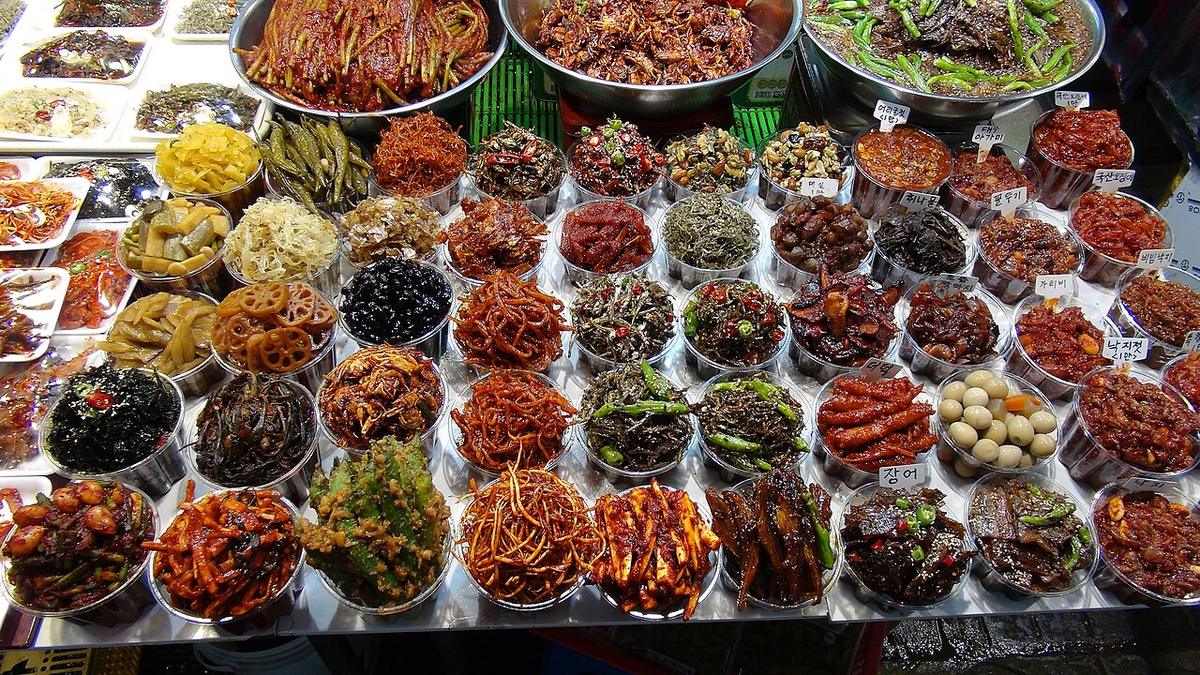
"Eat a variety of foods" appears in nearly every national dietary guideline, but whether variety itself protects against type 2 diabetes is far from settled. Of three earlier cohort studies that tested it, only one, EPIC-Norfolk in England, found a link; the Whitehall II study and the US Multi-Ethnic Study of Atherosclerosis found none. All three asked about diet only once. A new study in the British Journal of Nutrition, published online on 15 October, asked people up to three times and found a link in both men and women.
The team, led by Mi Kyung Kim of Hanyang University in Seoul, used the Korean Genome and Epidemiology Study–CVD Association Study: three community cohorts of adults aged 40 and over, recruited between 2005 and 2011 in rural areas and on Ganghwa Island. After excluding people who already had diabetes or a high fasting blood sugar, and those with incomplete questionnaires or missing data, 16,666 people were analysed: 6,162 men and 10,504 women. Trained interviewers asked about 106 foods face to face at the start and at up to two later visits two to four years apart, and the researchers averaged each person's answers over time.
Two kinds of score were built from 94 of those foods (drinks, coffee, sweets, pizza and hamburgers, and oils and sugars were left out). The overall score, from 0 to 5, gave one point for each of five groups eaten at one serving a day or more: grains; meat, seafood, eggs, legumes and nuts; vegetables, seaweed and mushrooms; fruits; and milk and dairy. Within-group scores counted how many different foods in a group someone ate at least once a week. New diabetes meant starting diabetes medicine or a fasting blood sugar of 126 mg/dL (7.0 mmol/L) or more at a check-up. Over 96,609 person-years, a median of about six years each, 953 people developed type 2 diabetes.
After adjusting for age, education, exercise, smoking, alcohol, BMI, starting blood sugar and total calories, men in the top overall band (above 4 out of 5) developed diabetes at 0.56 times the rate of men at 3 or below, and women at 0.73 times. The results held when the team also adjusted for fibre, magnesium, folate, calcium, isoflavones and glycaemic load, dropped cases found in the first year, or looked only at people seen at all three visits, and the direction was the same in each of the three cohorts. Within groups, eating more kinds of milk and dairy foods went with about 30% lower rates in both sexes, more kinds of fruit with lower rates in men, and more kinds of vegetables, seaweed and mushrooms with lower rates in women. Variety within the more energy-dense groups, grains and the meat-to-nuts group, did not follow a simple pattern: middle scores looked better than the highest.
This is an observational study, so it shows a link, not that variety prevents diabetes. People with the most varied diets were also younger, better educated, exercised more and smoked less, and although the models adjusted for those, other differences may remain. A food questionnaire cannot tell whole from refined grains, and the score counts variety, not quality: a point for fruit counts the same whatever the fruit. The authors suggest the simple five-group score is the most practical message, since piling on variety within calorie-dense groups may mean eating more overall. We read the full open-access paper.
Overall dietary diversity and new type 2 diabetes, KoGES–CVD Association Study (Korean adults aged 40 and over)
16,666
Adults without diabetes at the start (6,162 men, 10,504 women)
953
New cases of type 2 diabetes over 96,609 person-years (413 men, 540 women)
~6 years
Median follow-up (5.96 years); diet asked up to three times and averaged
0.56
Men, top vs bottom diversity band: rate ratio 0.56 (95% CI 0.40 to 0.79), 44% lower
0.73
Women, top vs bottom diversity band: rate ratio 0.73 (95% CI 0.54 to 0.98), 27% lower
0.69 / 0.70
Most vs least variety in milk and dairy foods, men / women (top vs bottom quarter)
Study: Kim M-J, Woo HW, Shin M-H, Koh S-B, Kim HC, Kim Y-M, Kim MK, 'Dietary diversity and type 2 diabetes risk: evidence from a prospective Korean cohort study', British Journal of Nutrition, First View, pp. 1–10, published online 15 October 2026, doi 10.1017/S0007114526108733, open access (CC BY 4.0). Hanyang University, Chonnam National University and Yonsei University, Republic of Korea. Cohort: Korean Genome and Epidemiology Study–CVD Association Study (Multi-Rural Communities Cohort, ARIRANG and Kangwha cohorts), 19,546 enrolled 2005–2011, follow-up visits every 2–4 years to 2017; 16,666 analysed after excluding diabetes treatment or fasting glucose ≥126 mg/dL at baseline, incomplete FFQ or implausible energy intake, and missing covariates. Diet: 106-item FFQ by interview, up to three times, cumulative average; 94 items in five groups based on the 2020 Dietary Reference Intakes for Koreans. Overall score 0–5 (one point per group at ≥1 serving/day); within-group scores count items eaten ≥1 serving/week. Outcome: diabetes medicine or insulin, or fasting glucose ≥126 mg/dL. Modified Poisson regression by sex, adjusted for age, education, exercise, smoking, alcohol, BMI, baseline fasting glucose and energy intake. Overall score >4.0–5.0 v. 0–3.0: men IRR 0.56 (0.40–0.79), p-trend 0.0004, 52 cases in 4,917 person-years v. 201 in 15,077; women IRR 0.73 (0.54–0.98), p-trend 0.0325, 95 cases in 12,850 person-years v. 223 in 21,637. Middle band (>3.0–4.0): men 0.66 (0.53–0.82), women 0.85 (0.69–1.05). Pooled across the three cohorts: men 0.61 (0.43–0.87), women 0.72 (0.53–0.96). Within-group, Q4 v. Q1: milk and dairy men 0.69 (0.53–0.90), women 0.70 (0.54–0.92); fruits men 0.70 (0.52–0.94); vegetables/seaweed/mushrooms women 0.73 (0.55–0.97). No significant sex interaction (p = 0.308). The '44%' and '27%' figures are our conversion of the rate ratios.
- The study's questionnaire covered 106 foods, but only 94 went into the diversity scores: drinks, coffee with its sugar and cream, sweets, pizza and hamburgers, and the oils-and-sugars group were left out on purpose.
- The within-group scores had very different ceilings: someone could score at most 4 points for different milk and dairy foods, but up to 31 for different kinds of meat, seafood, eggs, legumes and nuts.
- Korea's food grouping puts seaweed and mushrooms in the same group as vegetables, one reason the team used a Korean classification rather than the one from England's EPIC-Norfolk study.
- A fasting blood sugar of 126 mg/dL (7.0 mmol/L) or more is the standard cut-off for diagnosing diabetes, and it is the threshold this study used at each check-up.
- Men with the most varied diets in this study had a slightly higher average BMI and fasting blood sugar at the start than men with the least varied diets, yet developed diabetes less often later on.
- Dietary diversity and type 2 diabetes risk: evidence from a prospective Korean cohort studyBritish Journal of Nutrition (Cambridge University Press) · The paper, open access
- Banchan in a traditional marketWikimedia Commons · The photo, CC0
General information, not medical advice. This observational study found an association between a more varied diet and fewer new cases of type 2 diabetes, not proof that variety prevents diabetes. If you have diabetes or prediabetes, or are worried about your risk, talk to your doctor or a registered dietitian before changing your diet.
Analysis by NutroPractic from the sources listed. Written for general readers; it does not replace advice from your own doctor.
From our articles
Our guides on this subject
Plain-language guides on nutrition and wellness, backed by research.

Cardiovascular wellness
Psyllium husk: how much soluble fibre lowers LDL cholesterol and stabilizes post-meal glucose in clinical trials
Viscous soluble fibre forms a thick gel matrix in the small intestine that binds bile acids and blunts post-meal glucose spikes. Across dozens of randomized controlled trials, 7 to 10.2 grams of psyllium daily lowers LDL cholesterol by 6% to 12% without stripping HDL, while reducing postprandial glucose surges by 15% to 25% in metabolic syndrome and type 2 diabetes. Discover the bile acid sequestration mechanism, trial meta-analyses, exact timing before meals, water ratios, and titration protocols to avoid gas and cramping.
13 Nov 2026
Diabetes
Sourdough and blood sugar: what the glucose tests found against white and wholemeal bread
Sourdough did not beat white bread on average in a 20-person crossover trial, and half responded better to white. A trial-by-trial look at fermentation, flour, portions, GI and how to test your own loaf fairly.
6 Nov 2026

Diabetes
Vinegar before meals: what the trials measured on blood sugar, and how much is enough
Two teaspoons to a tablespoon with a starchy meal trims the glucose peak at 30 minutes, and the gap fades by two hours. HbA1c reviews range from -0.39 to -1.53, and we explain which to trust. Two gummies hold about 50 mg of acetic acid against 750 mg in a tablespoon.
5 Nov 2026
Newsfeed for your website
Want this feed on your website?
Add it to any site with one copy-and-paste snippet. No sign-up, and it updates itself every hour.
Start with a virtual consultation
Tell Dr. Triveni what you want to change. You will leave with a clear next step, whether you are in Toronto, London, New York or Chennai.