Population nutrition · November 3, 2026
The biggest diet-related heart-disease signal in a new 27-country model was not processed meat. It was too little whole grain
An analysis of 1990–2023 health estimates puts low whole-grain intake at the top of the modelled diet-related heart-disease burden in Western Europe and North America. For type 2 diabetes, processed meat leads instead. These are population estimates, not a scorecard for any one breakfast — and the paper’s forecast is a warning, not a verdict.
Whole grains can get lost in a list of dietary advice. A new analysis gives them an unusually prominent place — but not in the way a food study usually does. The researchers did not ask people to eat more oats or brown bread. They used Global Burden of Disease estimates to model the share of heart and metabolic illness linked to seven dietary risks across 27 countries in Western Europe and North America from 1990 to 2023.
For ischaemic heart disease, low whole-grain intake was the largest diet-related contributor in both regions in 2023, accounting for more than 12% of the modelled age-standardised disability-adjusted life-year rate. In the same model, high processed-meat intake accounted for more than 9% of the heart-disease burden in North America and more than 6% in Western Europe. Those are not percentages of all heart disease caused by a sandwich. They are the model’s attributed shares after combining population exposure estimates with the Global Burden of Disease risk framework.
The order changed for type 2 diabetes. High processed-meat intake was the leading dietary risk in the paper’s 2023 estimates, at more than 15% of the attributed burden in both regions. High red-meat intake approached 10%, while sugar-sweetened drinks accounted for more than 12% in North America and more than 8% in Western Europe. The authors report that the diabetes burden attributed to dietary risks rose in North America over the study period while it was stable or fell modestly in Western Europe.
There is a longer view in the paper too. From 1990 to 2023, the estimated diet-related burden of ischaemic heart disease fell by more than 60% in both regions. For stroke, it fell by more than 60% in Western Europe. The authors’ forecast model projects North America to retain a slightly higher diet-related vascular and metabolic mortality rate through 2035, especially for heart disease. Forecasts are extrapolations of past patterns, though; they cannot tell us what a future food policy, price change, treatment or personal diet will do.
The paper also has an important internal caution. Its simple, pooled comparison suggested that a higher socio-demographic index tracked with lower diet-related heart disease, stroke and diabetes burden. Once the analysis accounted for each country and year, those within-country associations were no longer statistically significant and explained very little variation. In other words, the study can describe large regional patterns, but it cannot cleanly assign their cause to prosperity, policy or one food.
The practical takeaway is deliberately less dramatic than the map. Whole grains and processed meat are useful things to notice in an overall eating pattern, but this study does not test a single food swap in a person, prove that one food causes an individual diagnosis, or set a target for everyone. For someone managing diabetes, heart disease, pregnancy, kidney disease or an eating disorder, food changes belong in an individual plan with their healthcare team. For public health, the study is a reminder that the unglamorous basics — grains, drinks, sodium and processed meat — still show up when researchers zoom out to populations.
Diet-attributable vascular and metabolic disease burden in 27 countries of Western Europe and North America, 1990–2023 (iScience, 20 October 2026)
27 countries
Included in the regional analysis of Western Europe and North America
>12%
Modelled share of the 2023 diet-attributable ischaemic-heart-disease disability burden linked to low whole-grain intake in both regions
>15%
Modelled share of the 2023 diet-attributable type 2 diabetes disability burden linked to high processed-meat intake in both regions
>12% / >8%
Modelled type 2 diabetes burden linked to sugar-sweetened drinks in North America and Western Europe, respectively
>60% lower
Estimated fall in diet-attributable ischaemic-heart-disease burden from 1990 to 2023 in both regions
2024–2035
Period covered by the paper’s ARIMA forecast; it projects a slightly higher diet-related vascular/metabolic mortality rate in North America
The study analysed Global Burden of Disease 2023 estimates, rather than following individual people or testing a dietary intervention. Its percentages are shares of modelled, age-standardised disability-adjusted life-year rates attributable to specific dietary risks, not the chance that a particular person will develop disease or the share of all disease directly caused by one food. The authors used trend, frontier and projection analyses, plus Mendelian-randomisation analyses for selected associations. Their pooled socio-demographic-index findings did not persist after country and year fixed effects were included. The 2035 figures are model projections and carry uncertainty.
- A disability-adjusted life year combines years lost because of early death with years lived in less than full health. It is a population measure, not a clinical test result.
- The analysis covered ischaemic heart disease, ischaemic stroke, type 2 diabetes and lower-extremity peripheral arterial disease. Heart disease carried the largest burden across the conditions studied.
- For stroke, the paper estimated high sodium and low whole-grain intake each accounted for roughly 3% to 4% of the attributed burden in both regions in 2023.
- The authors forecast that low-whole-grain-linked heart-disease mortality in North America would decline from about 7.1 to 6.0 deaths per 100,000 people between 2024 and 2035. That is a modelled trend, not a prediction for an individual.
- The paper found larger estimated dietary-risk impacts in men than women for most of the outcomes it assessed; low whole-grain intake was an exception for type 2 diabetes, where the modelled burden was heavier in women.
- Diet-attributable vascular/metabolic disease burden comparisons and public health implications in Western Europe and North AmericaiScience, 20 October 2026 · Open full text. Methods, 1990–2023 estimates, 2023 risk contributions, trend analyses, forecasts and limitations.
- PubMed record: PMID 42959932National Library of Medicine · Journal citation, publication date, abstract and conflict-of-interest statement.
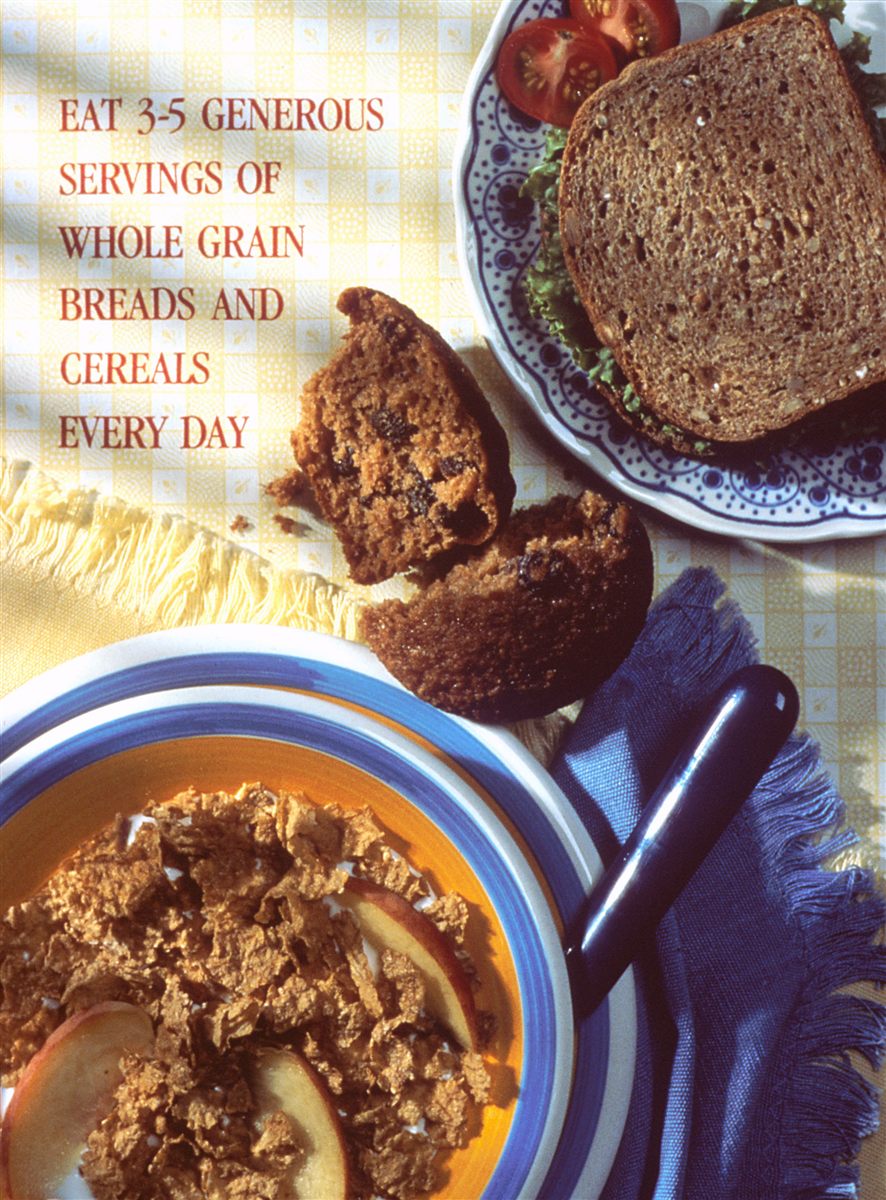
- Grain-bread-cerealWikimedia Commons / U.S. National Cancer Institute · Public-domain National Cancer Institute image by Bill Branson; a general illustration, not evidence from the analysis.
General information, not medical advice. This population modelling study cannot diagnose risk or show what one food change will do for one person. If you are managing diabetes, heart disease, pregnancy, kidney disease or an eating disorder, discuss dietary changes with your healthcare team.
Analysis by NutroPractic from the sources listed. Written for general readers; it does not replace advice from your own doctor.
From our articles
Our guides on this subject
Plain-language guides on nutrition and wellness, backed by research.

Everyday eating
The fibre gap: why most adults fall short, and an easy 30-gram day
Most adults in the US, Canada and Europe eat far less fibre than recommended, even though higher intakes are linked to lower rates of heart disease, type 2 diabetes and bowel cancer. How much you need, where it hides, and a sample day that gets you to 30 grams.
3 Oct 2026
Everyday eating
Eating well on a tight food budget: what the cost studies found, and the cheapest protein and fibre per dollar
Healthier diets cost about $1.48 a person a day more, according to a meta-analysis of 27 studies. What the USDA's Thrifty Food Plan costs in 2026, our price check of protein and fibre per dollar at September 2026 prices, why frozen and tinned vegetables are not second best, and a batch-cooked stew at $1.40 a serving.
20 Oct 2026
Everyday eating
Food label claims decoded: 'no added sugar', 'multigrain', 'natural' and 'high protein'
A no-added-sugar biscuit with only 13% fewer calories. A 7-grain loaf with refined flour listed first. A 'high protein' bar that clears the legal line at 21%. What each claim legally requires in the EU/UK, US and India, with worked reads of real packs.
2 Nov 2026
Newsfeed for your website
Want this feed on your website?
Add it to any site with one copy-and-paste snippet. No sign-up, and it updates itself every hour.
Start with a virtual consultation
Tell Dr. Triveni what you want to change. You will leave with a clear next step, whether you are in Toronto, London, New York or Chennai.